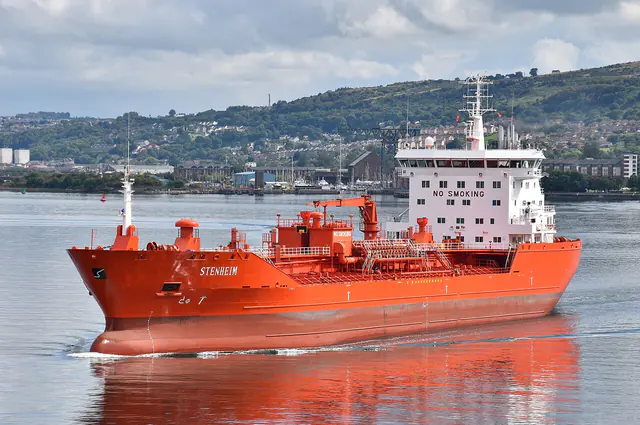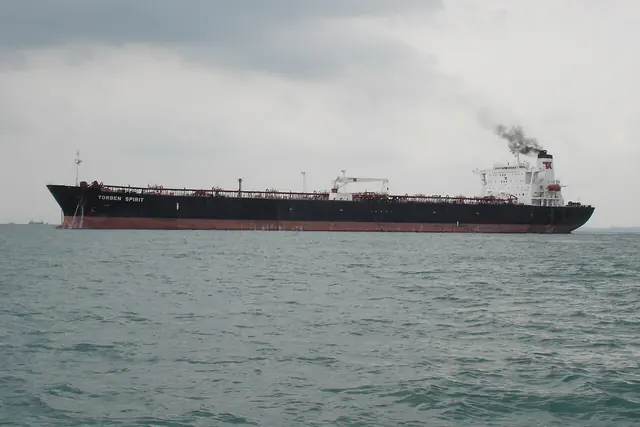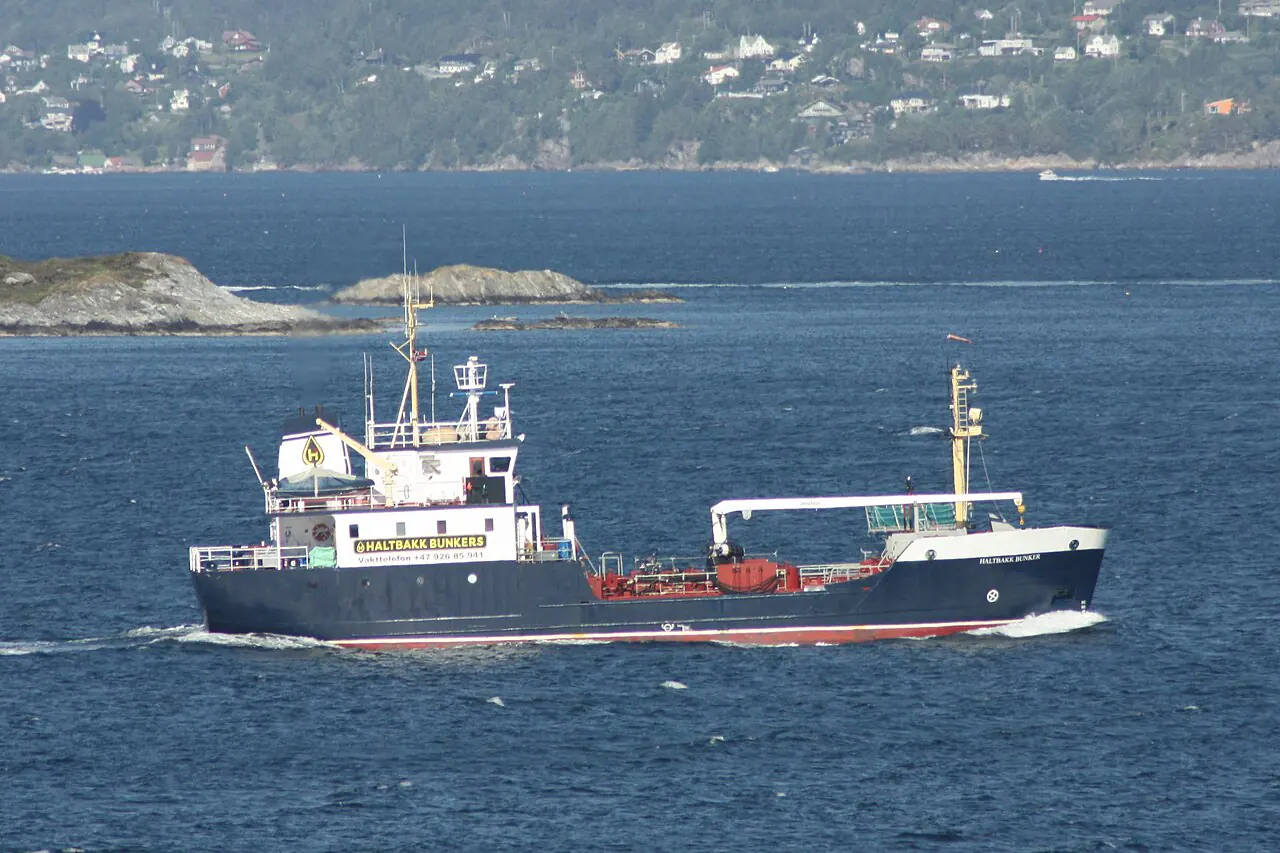
1. What Is This Ship?
A bunker vessel, also frequently referred to as a bunker tanker or bunker barge, is a specialized maritime vessel designed specifically for the transport and delivery of marine fuels (bunkers) to other ships. Unlike large crude oil tankers or product tankers that move massive quantities of fuel between terminals and storage hubs for mass distribution, a bunker vessel’s primary mission is the “last mile” delivery—transferring fuel directly into the storage tanks of a recipient vessel.
The term “bunkering” refers to the entire process of supplying a ship with the fuel and lubricants required for its operations. Depending on the scale and location of the operation, this can take several forms:
- Ship-to-Ship (STS) Bunkering: The bunker vessel pulls alongside a larger vessel, often while both are at anchor or even underway (though underway bunkering is more complex and regulated), to transfer fuel through flexible hoses.
- Barge-to-Ship Bunkering: Smaller bunker barges operate in ports or rivers, delivering fuel to ships moored at a berth.
- Terminal Bunkering: While less common for the vessel type itself, some bunker vessels act as mobile storage units in ports.
With the maritime industry’s transition toward decarbonization, the definition of “bunker vessel” is expanding. While traditionally associated with liquid petroleum products like Heavy Fuel Oil (HFO) and Marine Diesel Oil (MDO), modern bunker vessels are increasingly designed to handle alternative fuels, including Liquefied Natural Gas (LNG), Methanol, Ammonia, and Biofuels.
2. Mission and Operations
The fundamental mission of a bunker vessel is to ensure the uninterrupted operational capability of the global shipping fleet. Without a reliable supply of fuel, ocean-going vessels cannot maintain schedules, which would paralyst international trade.
Operational Modes
Bunker vessels typically operate in two primary modes:
- Port/Berth Operations: The vessel delivers fuel to ships docked at a terminal. This is often the most stable form of bunkering, as the recipient vessel is moored and the bunkering vessel can also utilize shore-side infrastructure if necessary.
- Ship-to-Ship (STS) Operations: This is the most characteristic operation for specialized bunker tankers. The bunker vessel must approach the recipient ship, often in busy anchorage areas or even in open waters. This requires high maneuverability, advanced mooring capabilities, and strict adherence to safety protocols to manage the risks of collision or oil spill during the transfer.
The Bunkering Process
A typical bunkering operation follows a highly regulated sequence:
- Pre-arrival/Planning: The supplier and receiver exchange information regarding fuel specifications, required quantities, and the estimated time of arrival (ETA).
- Mooring and Connection: The bunker vessel moars alongside the recipient. Flexible, certified hoses are connected between the bunker vessel’s manifold and the recipient’s bunker manifold.
- Safety Checks: Both crews perform a joint safety checklist (often based on ISGOTT standards), verifying communication, emergency shutdown (ESD) links, and spill containment readiness.
- Transfer: Fuel is pumped from the bunker vessel’s tanks to the recipient’s tanks. Flow rates, pressures, and temperatures are monitored continuously.
- Sampling and Documentation: During and after the transfer, fuel samples are taken (often “continuous drip” samples) to verify quality and quantity. A Bunker Delivery Note (BDN) is signed by both parties.
- Disconnection: Once the transfer is complete, hoses are flushed, disconnected, and the vessels depart.
3. Hull, Size, and Design
The design of a bunker vessel is heavily influenced by its dual role as both a carrier and a delivery platform.
Hull Construction and Protection
Because bunker vessels carry highly flammable and potentially polluting liquid cargoes, they are subject to strict construction standards.
- Double Hull Requirement: Under MARPOL Annex I, all tankers carrying oil (including those carrying HFO/MDO) must feature a double-hull design. This provides a protective void space between the outer hull and the cargo tanks, significantly reducing the risk of an oil spill in the event of a collision or grounding.
- Tank Segregation: Modern bunker vessels often carry multiple types of fuel (e.g., Gasoil and HFO, or LNG and Methanol). The hull must be designed with separate, segregated tank compartments to prevent cross-contamination and to manage different flashpoints and chemical properties.
Size and Capacity
Bunker vessels vary widely in size depending on their intended service area:
- Small Bunker Barges: Typically used in inland waterways or small ports, with capacities ranging from a few hundred to 2,000 metric tons (MT).
- Medium Bunker Tankers: The most common type for coastal and regional supply, typically ranging from 2,000 MT to 10,000 MT.
- Large Ocean-Going Bunker Vessels: Designed for long-range STS operations and supplying the largest container ships or tankers, these can exceed 15,000–20,000 MT or even much higher for gas-based fuels.
Shape and Maneuverability
- Bow Design: Many bunker vessels feature chined or spoon-shaped bows to improve sea-keeping in various weather conditions while maintaining the stability required during side-by-side operations.
- Maneuverability: High maneuverability is critical for STS operations. This is often achieved through the use of powerful bow and stern thrusters, which allow the vessel to hold position and approach recipient ships precisely without the immediate need for tug assistance.
| Feature | Typical Range (Medium Tanker) |
|---|---|
| Length Overall (LOA) | 60 – 120 m |
| Breadth (Beam) | 12 – 25 m |
| Capacity (Liquid Oil) | 2,000 – 10,000 MT |
| Capacity (LNG) | 1,000 – 20,000 m³ |
| Hull Type | Double Hull (Mandatory) |
4. Propulsion and Engines
Bunker vessels are generally self-propelled, allowing them to operate independently of tugs for most bunkering tasks.
Engine Types
The most common propulsion system is a medium-speed or low-speed diesel engine.
- Diesel Engines: Provide the necessary torque and reliability for maneuvering in tight port environments and maintaining position during STS operations.
- Single vs. Double Screw: Many smaller barges may use a single screw for simplicity and cost-effectiveness, while larger tankers almost exclusively use twin-screw (double screw) propulsion to enhance maneuverability and provide redundancy.
Maneuvering Aids
As mentioned, propulsion is supplemented by:
- Bow/Stern Thrusters: Essential for lateral movement when approaching a recipient vessel.
- Variable Pitch Propellers (VPP): Often used to allow for fine-tuned control of speed and direction, which is vital during the delicate stages of mooring and connection.
5. Electrical System and Power
The electrical system on a bunker vessel is dual-purpose: it must power the ship’s own propulsion and hotel loads, and it must support the high-demand equipment required for fuel transfer.
Fuel Transfer Power
The transfer of heavy, viscous fuels like HFO requires significant energy:
- Cargo Pumps: Large, high-capacity centrifugal or screw pumps are used to move fuel from the tanks to the manifold. These are often driven by dedicated electric motors or via the main engine through a power take-off (PTO).
- Heating Systems: To keep HFO at an appropriate viscosity for pumping and transfer, tanks and piping must be heated. This is typically achieved through electrical heating coils or steam-based systems.
- Manifold Control: Electrical systems drive the automated valves and actuators used to control the flow and direction of fuel within the manifold.
Redundancy and Safety
Given the hazardous nature of the cargo, electrical systems must be highly reliable.
- Emergency Power: An emergency generator (typically located above the waterline) must be capable of providing power for essential navigation, communication, and safety systems (like fire pumps and emergency lighting) in the event of a main engine failure.
- Explosion-Proofing (Ex-rating): In areas designated as “hazardous zones” (near manifolds or tank vents), all electrical equipment, lighting, and sensors must be explosion-proof to prevent ignition of fuel vapors.
6. Equipment and How It Is Used
The specialized equipment on a bunker vessel is what distinguishes it from a standard product tanker.
Core Bunkering Equipment
| Equipment | Purpose |
|---|---|
| Manifold | The connection point on the vessel where hoses are attached to receive or discharge fuel. |
| Bunkering Hoses | Flexible, heavy-duty, and certified pipes used to connect the bunker vessel to the recipient. |
| Cargo Pumps | Drive the movement of fuel from the storage tanks to the manifold. |
| Bunkering Meters | High-precision flow meters used to measure the exact quantity of fuel transferred. |
| Sampling Equipment | Used to collect fuel samples (e.g., continuous drip samplers) to verify quality and comply with regulations. |
| Inert Gas System (IGS) | Replaces flammable vapors in the cargo tanks with non-combustible gas (usually nitrogen or treated exhaust) to prevent explosions. |
| Emergency Shut-Down (ESD) | A system that can instantly stop all pumps and close all valves if a leak or emergency is detected. |
Safety and Environmental Protection
- Spill Containment: This includes drip trays at the manifold, scuppers (to prevent oil from reaching the sea), and specialized SOPEP (Shipboard Oil Pollution Emergency Plan) equipment like absorbent pads, booms, and pumps.
- Firefighting Systems: Specialized fixed foam systems for the manifold area, along with portable extinguishers and fire hydrants, are mandatory.
- Gas Detection: Portable and fixed sensors used to monitor for the presence of flammable or toxic vapors (especially critical for LNG or Methanol bunkering).
7. Navigation, Communications, and Safety
Safe operation requires high situational awareness and constant communication between the bunkering vessel and the recipient.
Navigation
- Radar and AIS: Essential for monitoring traffic in busy ports and for maintaining a safe distance from the recipient vessel during the approach.
- Dynamic Positioning (DP) / Precision Mooring: While many vessels rely on thrusters, some advanced bunkering vessels use DP systems to maintain an exact position relative to the recipient ship, especially during STS operations in open water.
Communication Protocols
Communication is the lifeline of a bunkering operation.
- Ship-to-Ship Communication: This involves both radio (VHF) communication and, often, physical signals or dedicated communication links (like a hardwired ESD link) to ensure both crews are synchronized.
- Safety Checklists: The exchange of a “Bunkering Safety Checklist” (as per ISGOTT) is a critical communication milestone that must occur before any fuel moves.
Safety Management
- ISGOTT Compliance: Most professional bunkering operations follow the International Safety Guide for Oil Tankers and Terminals (ISGOTT), which provides the industry standard for safe cargo transfer.
- Risk Assessment: Before any operation, a formal risk assessment must be conducted to identify potential hazards (weather, traffic, equipment failure) and implement mitigation strategies.
8. Crew and Organization
A bunker vessel requires a specialized crew trained in both traditional seafaring and the unique hazards of fuel transfer.
Key Personnel
- Master (Captain): Responsible for the overall safety of the vessel, the crew, and the successful execution of the bunkering mission.
- Chief Engineer: Manages the propulsion and the complex cargo pumping and heating systems.
- Bunkering Supervisor / Officer in Charge: A specialized role focused specifically on the bunkering operation, overseeing the connection, flow rates, and sampling.
- Deck Crew: Responsible for mooring, handling hoses, and monitoring the manifold area.
- Engine Crew: Responsible for managing the pumps, heaters, and the inert gas system.
Training Requirements
Crew members must hold valid STCW (Standards of Training, Certification, and Watchkeeping) certifications and often undergo additional training such as:
- Advanced Tanker Training: Specific to the type of cargo (Oil, Gas, or Chemical).
- Dangerous Goods Handling: Required for vessels carrying methanol, ammonia, or other hazardous alternative fuels.
- Oil Spill Response: Training in the use of SOPEP equipment and emergency procedures.
9. Certificates and Training Requirements
To operate legally and safely, a bunker vessel and its crew must hold several key certifications.
Vessel Certificates
- Certificate of Registry: Proves the vessel’s nationality.
- Class Certificate: Issued by a classification society (e.g., DNV, LR, ABS) verifying the ship meets structural and technical standards.
- MARPOL Certificate: Confirms compliance with international pollution prevention regulations.
- Safety Construction/Equipment Certificates: Issued under SOLAS to ensure the ship is fit for sea.
- International Oil Pollution Prevention (IOPP) Certificate: Specifically required for tankers.
Crew Certifications
- STCW Basic Safety Training: Mandatory for all seafarers.
- Specialized Tanker Endorsements: Required for officers and ratings working on oil or gas tankers.
- Bunker-Specific Training: Many companies mandate internal training for bunkering procedures, ESD operation, and sampling protocols.
10. Regulations, Class, and Inspections
The bunkering industry is one of the most heavily regulated sectors in the maritime world.
Key International Regulations
- MARPOL (International Convention for the Prevention of Pollution from Ships):
- Annex I: Regulation of oil pollution (double hull, SOPEP).
- Annex VI: Regulation of air pollution (sulfur limits, emission controls).
- Annex II: Regulation of Noxious Liquid Substances (relevant for chemical or biofuel bunkering).
- SOLAS (International Convention for the Safety of Life at Sea): Governs ship construction, equipment, and operational safety.
- ISM Code (International Safety Management Code): Sets the standard for safety management systems on board.
- ISGOTT (International Safety Guide for Oil Tankers and Terminals): While not a law, it is the industry “bible” for safe bunkering operations and is often required by port authorities and insurers.
Classification Societies
Vessels are “classed” by organizations like DNV, Lloyd’s Register (LR), American Bureau of Shipping (ABS), and Bureau Veritas (BV). These societies conduct regular inspections of the hull, machinery, and safety systems to ensure the vessel continues to meet technical standards.
Inspections
- Annual/Periodic Surveys: Conducted by classification societies to verify the ship’s integrity.
- Port State Control (PSC) Inspections: Conducted by national maritime authorities to ensure the vessel complies with international regulations.
- Vetting Inspections: Conducted by major oil companies or charterers to ensure the vessel meets their specific, often higher, safety and quality standards.
11. Notable Shipyards, Operators, and Example Vessels
The bunker vessel market includes a mix of specialized fuel suppliers and large-scale energy companies.
Major Operators
- Global Energy Giants: Shell plc, TotalEnergies SE, ExxonMobil, BP, Chevron.
- Specialized Bunkering Firms: Bunker Holding A/S, Peninsula Petroleum Limited, Vitol Group, Monjasa.
- Japanese/Asian Leaders: Mitsui OSK Lines (MOL), Nippon Yusen Kaisha (NYK).
Example Vessels
The following table provides examples of various bunker vessels currently in operation or planned for delivery:
| Vessel Name | Owner/Operator | Type/Fuel | Capacity/Notes |
|---|---|---|---|
| MT NORE | Bunker Holding | Methanol-Ready | 3,500 MT capacity; multi-fuel |
| Argos-GL | Various | LNG / Gasoil | Designed for seagoing/inland bunkering |
| Peninsula Vessels | Peninsula | LNG | 18,000 m³ capacity; Hyundai Mipo built |
| Seaspan Vessels | Seaspan | LNG | 7,600 m³ capacity |
| Anthony Veder Vessels | Anthony Veder | LNG/Gas | Various capacities (e.g., 15,600 m³) |
| Mitsui OSK Lines | MOL | LNG | 18,600 m³ capacity |
Notable Shipyards
Major shipbuilders for these specialized vessels include Hyundai Mipo Dockyard (Korea), CMIC (China), and various European yards specializing in complex tanker designs.
12. Environment and Future Outlook
The bunker vessel industry is currently at the center of the “Green Transition” in shipping.
The Decarbonization Challenge
The maritime industry is under intense pressure to reduce greenhouse gas (GHG) emissions. This has triggered a shift away from traditional High Sulfur Fuel Oil (HSFO) toward cleaner alternatives.
Future Fuel Trends
- LNG (Liquefied Natural Gas): Currently the most mature alternative, significantly reducing SOx and NOx emissions.
- Methanol: Gaining rapid traction due to its ease of handling compared to LNG and its potential to be “carbon neutral” if produced from biomass or captured CO2.
- Ammonia (NH3): Seen as a long-term zero-carbon solution, though it presents significant toxicity and handling challenges.
- Biofuels: A “drop-in” solution that can be used in existing engines, though availability and scale remain issues.
- Hydrogen: The ultimate zero-emission fuel, but requires massive advancements in storage and bunkering infrastructure.
Impact on Bunker Vessel Design
Future bunker vessels will not be “one size fits all.” We will see a diversification of the fleet:
- Multi-Fuel Tankers: Vessels capable of carrying different fuel types in segregated tanks.
- Cryogenic Specialized Vessels: Advanced ships designed specifically for the extreme temperatures of LNG, Ammonia, or Hydrogen.
- Digitalization: Increased use of automated bunkering, digital twins, and blockchain for more accurate, transparent, and safe fuel delivery.
13. Facts, Records, and Common Misconceptions
Common Misconceptions
- “Bunker vessels are just small tankers”: While they share similarities, their design focus on high-frequency STS operations, specialized manifold equipment, and precise fuel quality monitoring makes them a distinct class of vessel.
- “Bunkering is only done at the pier”: A significant portion of global bunkering occurs via STS operations at sea or in anchorages, requiring much higher levels of skill and specialized equipment.
Key Facts
- The “Bunker” Name: The term originates from the coal bunkers used in steamships to store the fuel required for their boilers.
- Volatility of Fuel: Bunkering is not just about volume; it is about quality. Small variations in fuel viscosity or sulfur content can cause massive engine problems for the recipient ship.
14. Glossary
- Bunkering: The process of supplying fuel and lubricants to a ship.
- Bunker Barge: A smaller vessel used for delivering fuel in ports or rivers.
- Bunker Tanker: A larger, self-propelled vessel used for fuel supply.
- Double Hull: A construction method providing two layers of steel for cargo protection.
- ESD (Emergency Shut-Down): A safety system to instantly stop fuel flow during an emergency.
- HFO (Heavy Fuel Oil): A thick, viscous, high-sulfur fuel traditionally used in large engines.
- IGS (Inert Gas System): A system that prevents explosions by removing oxygen from tanks.
- ISGOTT: The industry standard guide for safe oil tanker and terminal operations.
- LNG (Liquefied Natural Gas): Natural gas cooled to liquid form for transport.
- MDO (Marine Diesel Oil): A cleaner-burning diesel fuel used in many ships.
- MARPOL: The primary international regulation for preventing marine pollution.
- Manifold: The connection point on a ship where fuel hoses are attached.
- Methanol: A liquid fuel that is increasingly used as a low-carbon alternative.
- SOPEP (Shipboard Oil Pollution Emergency Plan): A mandatory plan for responding to oil spills.
- STS (Ship-to-Ship): The transfer of cargo or fuel between two vessels.