1. What Is This Ship?
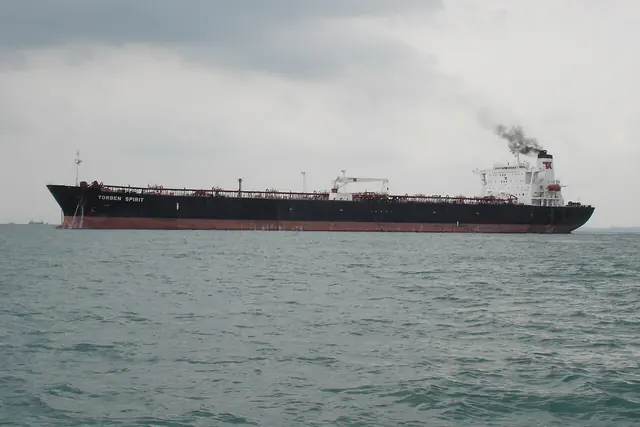
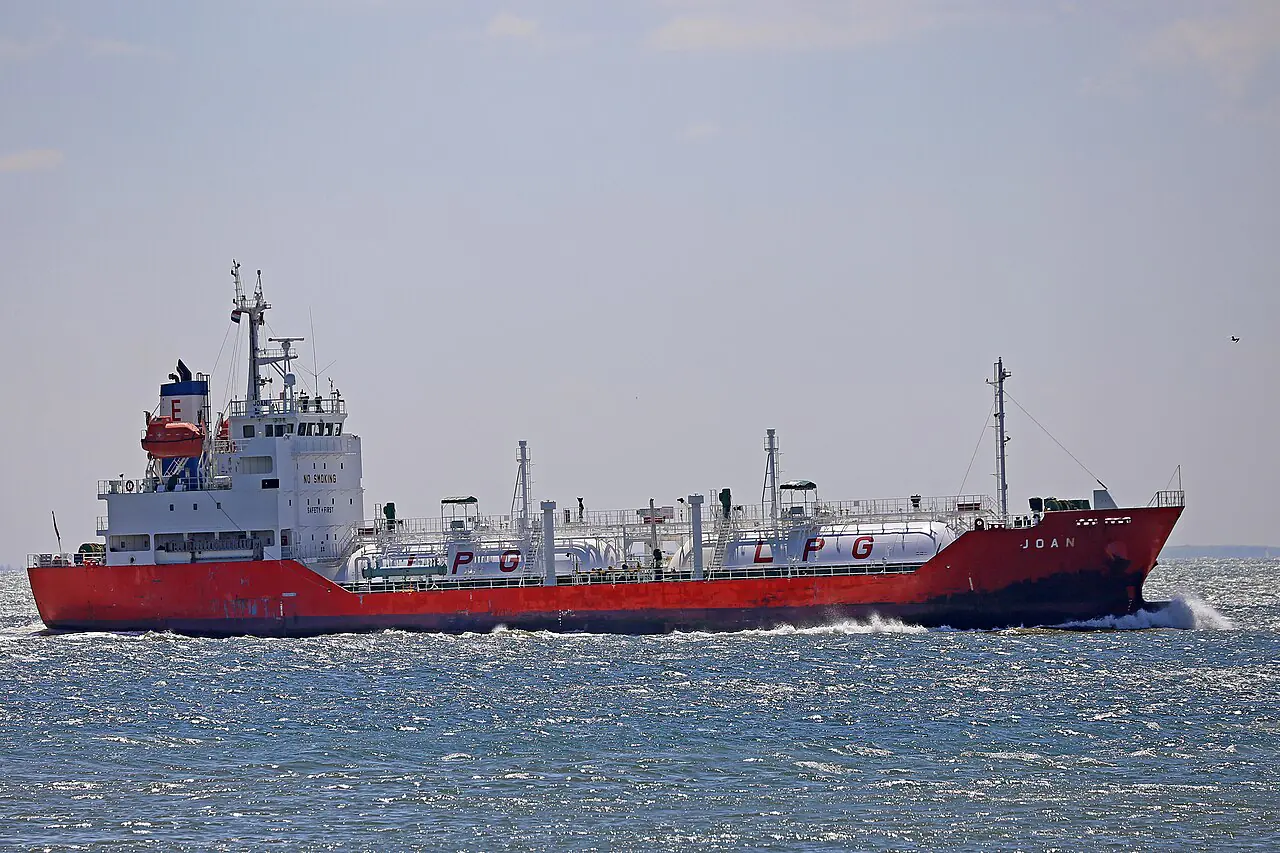
An LPG (Liquefied Petroleum Gas) carrier is a highly specialized maritime vessel designed for the bulk transport of liquefied petroleum gases. These gases, primarily propane and butane, are stored under pressure or at cryogenic temperatures to maintain them in a liquid state, which significantly reduces their volume for efficient transport compared to their gaseous form.
LPG is a versatile commodity used widely in heating, cooking, industrial feedstock, and as a transportation fuel. Because the boiling points of these gases vary significantly (propane boils at approximately –42°C at atmospheric pressure, while butane boils at –0.5°C), the design of the carrier must be tailored to the specific thermodynamic properties of the intended cargo.
While most LPG carriers focus on propane and butane, many modern vessels are multi-gas capable, allowing for the transport of other liquefied gases such as ammonia (), ethylene, propylene, and vinyl chloride monomer (VCM). This flexibility is a critical commercial driver in the modern gas shipping market.
2. Mission and Operations
The primary mission of an LPG carrier is the safe, efficient, and continuous transport of liquefied gases from production hubs (such as the US Gulf Coast or the Middle East) to global consumption centers (predominantly in Asia and Europe).
Operations of an LPG carrier are defined by the complex “cargo cycle,” which is much more intensive than that of a standard oil tanker.
The Cargo Cycle
- Inerting: Before any cargo is loaded, the tanks must be purged of oxygen and moisture using an inert gas (typically nitrogen) to prevent explosive atmospheres.
- Gassing-up: The inert gas is gradually replaced by the cargo gas (e.g., propane) through a process of displacement or evaporation.
- Cooldown: The temperature of the tanks must be lowered gradually to match the cargo’s temperature. Rapid cooling can cause thermal stress and structural damage to the containment system.
- Loading: Cargo is pumped from the shore terminal into the ship’s tanks. During this phase, the ship must manage the “displacement” of vapors.
- On-passage Management: As the ship moves, heat ingress from the environment causes some liquid to boil off, creating Boil-Off Gas (BOG). This BOG must be managed through either:
- Reliquefaction: Re-condensing the gas back into liquid and returning it to the tanks.
- Utilization: Using the BOG as fuel for the ship’s main propulsion or auxiliary engines.
- Discharging: The cargo is pumped out to the receiving terminal.
- Tank Cleaning and Stripping: After discharge, the tanks are cleaned and the remaining liquid is “stripped” to maximize cargo recovery.
3. Hull, Size, and Design
LPG carriers are categorized by their cargo-carrying capacity and the temperature/pressure at which they operate. The design of the hull and the containment system is inextricably linked to these parameters.
Vessel Classes by Capacity
| Class | Capacity (m³) | Typical Use |
|---|---|---|
| Handy Gas / Small Carrier | 5,000 – 25,000 | Coastal, regional, short-sea trades. |
| Medium Gas Carrier (MGC) | 25,000 – 50,000 | Intra-regional trades, feedstock transport. |
| Large Gas Carrier (LGC) | 50,000 – 75,000 | Intermediate long-haul routes. |
| Very Large Gas Carrier (VLGC) | 75,000 – 93,000+ | Global intercontinental trade (e.g., US to Asia). |
Containment Systems
The International Code for the Construction and Equipment of Ships Carrying Liquefied Gases in Bulk (IGC Code) defines three primary types of independent self-supporting tanks:
- Type A Tanks: Large, prismatic, or box-shaped tanks designed for low pressure. They rely on a secondary barrier (the ship’s structure or a dedicated panel) to contain any potential leaks. They are common in large VLGCs.
- Type B Tanks: These tanks (often spherical) are designed such that the probability of a leak is so low that a secondary barrier is not required. They have superior fatigue resistance and crack propagation characteristics.
- Type C Tanks: Pure pressure vessels, typically cylindrical or spherical. They can withstand much higher pressures and are used for small-volume coastal carriers or for carrying highly pressurized gases.
Hull Design
Modern LPG carriers are built with double-hull construction to provide protection against collisions and to ensure that the cargo containment system is physically separated from the outer shell. A key design driver for VLGCs is the Panama Canal. The largest VLGCs are engineered to fit within the Neopanamax lock dimensions, allowing them to transit the canal and significantly reduce voyage times between the US Gulf and Asia.
4. Propulsion and Engines
Propulsion technology in LPG carriers has undergone a revolution with the advent of Dual-Fuel (DF) technology.
Dual-Fuel Engines
The industry standard for new VLGCs is the low-speed, two-stroke, dual-fuel engine, such as the MAN B&W ME-LGIP (Liquid Gas Injection Propane).
- Fuel Flexibility: These engines can run on conventional Marine Gas Oil (MGO) or Very Low Sulphur Fuel Oil (VLSFO), but can also seamlessly switch to LPG (Propane or Butane) as the primary fuel.
- Operational Efficiency: Using LPG as fuel provides a significant economic advantage when LPG prices are low relative to oil. It also offers a 15–20% reduction in emissions compared to traditional heavy fuels.
- Injection Process: In gas mode, the engine uses a small amount of pilot fuel (typically 3% of the total energy) to initiate combustion. The LPG is supplied at high pressure (approx. 50 bar) and injected into the cylinder.
Propulsion Modes
- Mechanical Propulsion: The main engine drives the propeller directly.
- Hybrid/Electric Propulsion: Some advanced designs utilize electrical motors in conjunction with mechanical power to provide greater flexibility in torque and speed, optimizing efficiency across various load profiles.
5. Electrical System and Power
The electrical system on an LPG carrier is significantly more robust than on a standard tanker due to the high continuous power demand from specialized machinery.
Key Components
- Auxiliary Engines & Generators: Medium-speed diesel or gas-fueled engines that drive alternators to generate electricity for the ship’s grid.
- Main Electrical Switchboard: The central hub that manages power distribution between propulsion (if electric), cargo handling, and hotel loads.
- Power Demands:
- Reliquefaction Plants: High-power compressors.
- Cargo Pumps: High-capacity centrifugal or submerged pumps.
- Refrigeration Units: Constant power required to maintain tank temperatures.
- Safety Systems: Continuous operation of gas detection, ventilation, and monitoring systems.
6. Equipment and How It Is Used
Cargo Handling Equipment
- Reliquefaction Plant: Essential for managing Boil-Off Gas (BOG).
- Direct System: Uses the BOG itself as a working fluid in a refrigeration cycle.
- Cascade System: Uses multiple refrigerants (e.g., ammonia and propane) in stages.
- Indirect System: Uses an external refrigerant to cool the BOG.
- Cargo Pumps:
- Submerged Centrifugal Pumps: Located inside the cargo tanks, these are highly efficient for large-scale discharge.
- Framo-type Pumps: Specialized hydraulic-driven pumps used for precise control and handling of diverse cargo types.
Safety and Monitoring Systems
- Emergency Shutdown (ESD) System: A critical safety system that can immediately stop cargo operations, close valves, and shut down pumps in the event of an emergency.
- Gas Detection System: A network of sensors throughout the vessel (cargo deck, engine room, accommodation) to detect even trace amounts of gas leaks.
- Inert Gas Generator (IGG): Produces nitrogen-rich gas to purge tanks and prevent flammable atmospheres.
7. Navigation, Communications, and Safety
While LPG carriers utilize standard maritime navigation tools (AIS, Radar, ECDIS, GPS), they are subject to much stricter safety protocols due to the hazardous nature of the cargo.
Safety Protocols
- IGC Code Compliance: Every aspect of the ship’s design, from metallurgy to valve spacing, is dictated by the International Code for the Construction and Equipment of Ships Carrying Liquefied Gases in Bulk.
- Double-Wall Piping: Fuel and cargo lines carrying hazardous gases are often enclosed in a secondary pipe/casing to prevent leaks from reaching the atmosphere.
- Ventilation Systems: Highly specialized high-capacity ventilation is required on the cargo deck to prevent the accumulation of gas pockets.
8. Crew and Organization
Operating an LPG carrier requires a highly skilled and specialized crew. The complexity of cargo handling and the risks associated with liquefied gases necessitate advanced training.
Typical Crew Structure
- Deck Department: Master, Chief Officer (often responsible for cargo operations), Second/Third Officers.
- Engine Department: Chief Engineer, Second/Third Engineers, Electrician (critical for gas-handling automation).
- Ratings: Able Seamen (AB), Oilers, and specialized Pumpmen.
Training Requirements
Under the STCW Convention, crew members must hold specialized certificates for “Advanced Training for Gas Tanker Cargo Operations.” This includes training in thermodynamic principles, gas properties, emergency response, and the operation of specialized cargo equipment.
9. Certificates and Training Requirements
To operate legally and safely, LPG carriers must maintain several key certifications:
- Certificate of Fitness (CoF): Issued under the IGC Code, this certificate specifies the types of liquefied gases the vessel is certified to carry based on its design and equipment.
- International Certificate of Inspection (ICI): Confirms the ship meets international standards for gas carriage.
- IGC Certificate: Validates compliance with the construction and equipment requirements for gas carriers.
- Safety Management Certificate (SMC): Issued under the ISM Code.
- International Oil Pollution Prevention (IOPP) Certificate: Issued under MARPOL.
10. Regulations, Class, and Inspections
Regulatory Framework
- IMO (International Maritime Organization):
- IGC Code: The primary technical standard for design and construction.
- IGF Code: Governs the safety of ships using low-flashpoint fuels (like LPG).
- SOLAS (Safety of Life at Sea): General safety requirements.
- MARPOL (Prevention of Pollution from Ships): Environmental regulations, specifically Annex VI (Air Pollution).
- Classification Societies: Organizations like DNV, Lloyd’s Register (LR), ABS, and Bureau Veritas (BV) verify that the vessel’s design and construction meet the highest technical standards.
Inspections
Vessels undergo rigorous inspection cycles:
- Annual Surveys: Routine checks of equipment and structures.
- Intermediate Surveys: More intensive checks between annual surveys.
- Special Surveys: Every 4-5 years, involving a deep structural and mechanical assessment, often including tank inspections.
11. Notable Shipyards, Operators, and Example Vessels
Key Shipyards
The majority of modern LPG carriers are built in major South Korean shipyards:
- Hanwha Ocean (formerly DSME)
- Hyundai Samho Heavy Industries
- Kawasaki Heavy Industries
Major Operators
- BW LPG (Global leader in VLGC operations)
- Dorian LPG (Focus on VLGC and dual-fuel vessels)
- NYK Line
- MOL (Mitsui O.S.K. Lines)
- Exmar
Example Vessels
| Vessel Name | Type | Capacity (m³) | Notable Feature |
|---|---|---|---|
| Areion | Dual-Fuel VLGC/AC | 93,000 | Ammonia/LPG dual-capability |
| Captain Markos | Dual-Fuel VLGC | 84,000 | Modern dual-fuel efficiency |
| Energia Grandeur | Dual-Fuel VLGC | ~84,000 | Integrated LPG propulsion |
| Lyla Pathfinder | Dual-Fuel VLGC | ~84,000 | Advanced environmental design |
12. Environment and Future Outlook
The LPG shipping industry is at a crossroads of decarbonization and energy transition.
Decarbonization Drivers
- Dual-Fuel Propulsion: As seen with the ME-LGIP engine, switching from oil to LPG is a primary method for reducing and .
- EEDI (Energy Efficiency Design Index): New vessels must meet increasingly stringent efficiency standards set by the IMO.
The Future: Ammonia and Hydrogen
LPG carriers are uniquely positioned for the future energy economy. Many modern VLGCs are being designed as Ammonia Carriers (VLGC/AC). Ammonia () is a leading candidate for zero-carbon fuel and a key component in the hydrogen economy. The ability to transition a fleet from LPG to Ammonia provides a massive strategic advantage for operators.
13. Facts, Records, and Common Misconceptions
- LPG vs. LNG: A common misconception is that LPG and LNG are the same. While both are liquefied gases, LNG (Liquefied Natural Gas) is primarily methane and requires much lower temperatures (approx. –163°C) compared to LPG (approx. –42°C).
- The Panama Factor: It is a fact that the dimensions of the world’s largest LPG carriers are largely dictated by the width and depth of the Panama Canal’s Neopanamax locks.
- Pressure vs. Temperature: Some believe LPG is only transported under high pressure. In reality, the largest, most efficient vessels (VLGCs) use refrigeration to keep the pressure low, rather than relying solely on high-pressure tanks.
14. Glossary
- BOG (Boil-Off Gas): Gas that evaporates from the liquid cargo during transit.
- Dual-Fuel (DF): An engine capable of operating on two different types of fuel.
- ESD (Emergency Shutdown): A system to rapidly stop all cargo-related operations during an emergency.
- IGC Code: International Code for the Construction and Equipment of Ships Carrying Liquefied Gases in Bulk.
- IGF Code: International Code of Safety for Ships using Low-flashpoint Fuels.
- MGC (Medium Gas Carrier): A gas carrier with capacity between 20,000 and 50,000 m³.
- Reliquefaction: The process of cooling BOG back into liquid form.
- VLGC (Very Large Gas Carrier): A gas carrier with capacity typically exceeding 70,000 m³.
15. Sources
- UK P&I Club - Liquefied Gases Guidance
- Lloyd’s Register - Knowledge & Research
- MAN Energy Solutions - ME-LGIP Technical Data
- BW LPG - Fleet & Propulsion Information
- Dorian LPG - Fleet Specifications
- IMO - IGC and IGF Code Regulations
- Shipfinex - Vessel Classification Data
- MarineLink - Maritime Industry News