1. What Is This Ship?
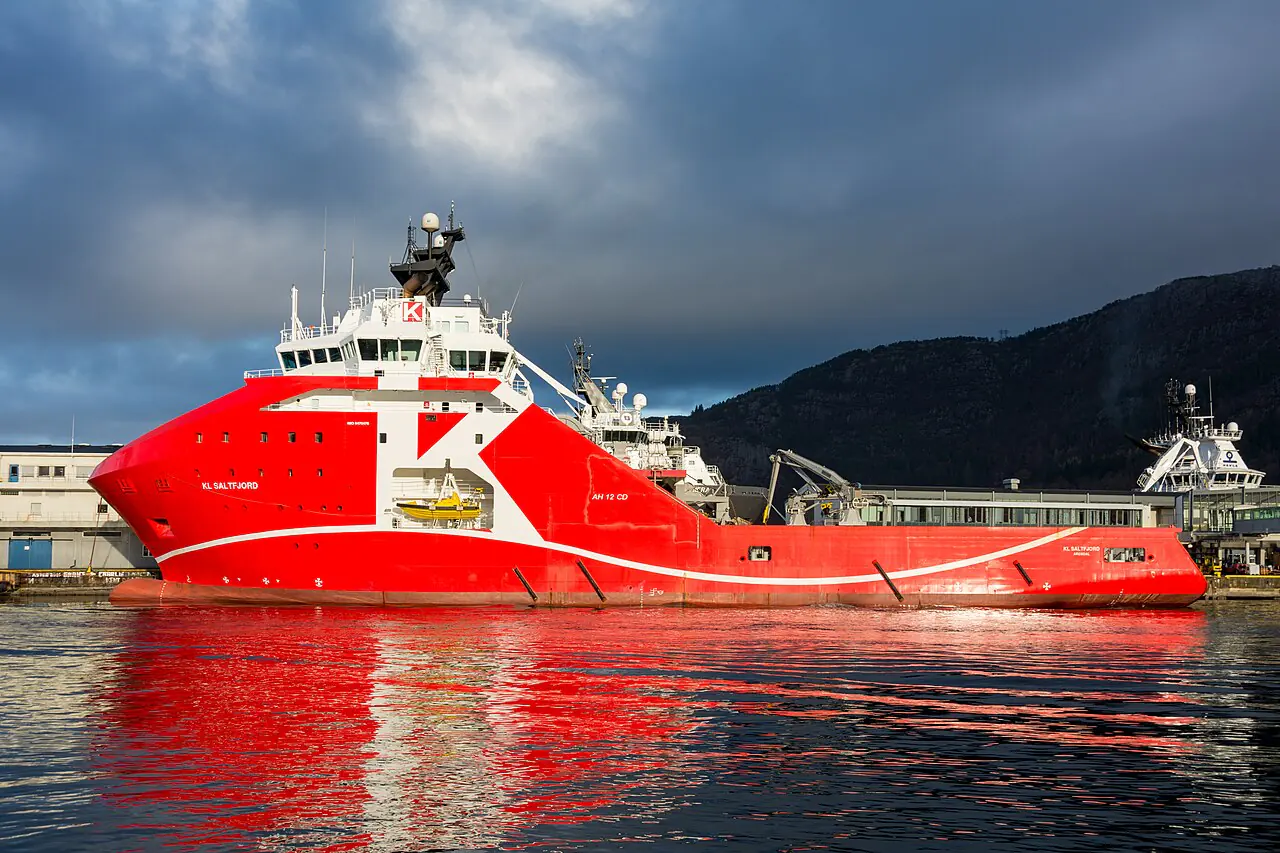
The Anchor Handling Tug Supply (AHTS) vessel is a highly versatile and specialized class of offshore support vessel (OSV) designed to perform two primary, high-stakes functions: anchor handling for offshore installations and the supply of various consumables to offshore drilling rigs and platforms.
Unlike standard tugboats, which are primarily designed for towing, or Platform Supply Vessels (PSVs), which are optimized for cargo transport, the AHTS is a hybrid powerhouse. It must possess the extreme “bollard pull” (the pulling power of a vessel) required to move massive anchors and tow heavy semi-submersible rigs, while simultaneously providing a large, stable aft deck for carrying fuel, water, drilling mud, and equipment.
Historically, these vessels evolved from traditional ocean-going tugs. As offshore oil and gas exploration moved into deeper and more hostile waters (such as the North Sea), the need arose for vessels that could not only tow platforms to their locations but also manage the immense tension of deep-water mooring systems. This led to the development of the modern AHTS, which integrates sophisticated machinery, advanced hull designs, and cutting-edge Dynamic Positioning (DP) systems to operate safely in close proximity to multi-billion-dollar offshore assets.
2. Mission and Operations
The operational profile of an AHTS vessel is diverse and demanding, often requiring the ship to transition between different roles within a single deployment.
Anchor Handling
The most critical mission is anchor handling. This involves transporting heavy anchors from land or a supply base to an offshore drilling rig or semi-submersible platform. Once at the site, the AHTS uses its massive winches to deploy the anchors to the seabed and then uses high-tension lines to secure the rig’s mooring system. This process requires extreme precision and the ability to manage enormous loads under varying sea states.
Towing Operations
AHTS vessels are often called upon to tow large structures, including mobile offshore drilling units (MODUs), decommissioned platforms, or even large tanker vessels in emergency scenarios. Their high bollard pull and robust towing winches make them capable of handling these massive static and dynamic loads.
Offshore Supply
Between anchor-handling tasks, AHTS vessels serve as supply transports. They carry essential consumables required for offshore operations, including:
- Liquid Cargoes: Fuel oil, potable water, liquid mud, and drilling fluids.
- Dry Cargo: Pipes, subsea equipment, tools, and food supplies.
- Bulk Cargo: Cement or barite used in drilling processes.
Emergency Response and Specialized Services
Many modern AHTS vessels are dual-role or multi-role, serving as:
- Emergency Response and Rescue Vessels (ERRVs): Providing standby safety for offshore installations.
- ROV Support: Utilizing Remotely Operated Vehicles for subsea inspections and repairs.
- Subsea Construction Support: Assisting in the deployment of subsea structures.
3. Hull, Size, and Design
The design of an AHTS vessel is dictated by the extreme tension and weight of its primary tasks.
Hull Form and Stability
An AHTS hull must be exceptionally stable to provide a steady platform during high-tension anchor operations and to maintain position during supply duties. The hull is typically deep and robust, designed to withstand the heavy slamming forces of rough, open-ocean environments. Stability is paramount, as the vessel often carries large, shifting liquid cargoes or heavy deck loads.
The Aft Deck and Stern Design
The most distinctive feature of an AHTS is its aft deck and stern. Unlike PSVs, which have a large, enclosed deck, AHTS vessels feature an open stern (or transom) to allow anchors and mooring lines to be passed directly over the back of the ship.
- Stern Roller: A massive, heavy-duty roller is located at the stern to facilitate the passage of heavy chains and wires from the deck to the sea.
- Deck Layout: The deck is typically clear and unobstructed to allow for the movement of large anchors and the deployment of mooring lines.
Typical Dimensions
While sizes vary significantly based on their intended service (e.g., North Sea vs. Southeast Asia), a medium-to-large AHTS typically falls within these ranges:
| Parameter | Typical Range |
|---|---|
| Length Overall (LOA) | 60 m – 110 m |
| Beam (Width) | 14 m – 25 m |
| Draught (Summer) | 5 m – 9 m |
| Deadweight (DWT) | 1,000 t – 5,000 t |
| Cargo Deck Area | 300 m² – 1,000 m² |
4. Propulsion and Engines
Propulsion is the heart of the AHTS, with the primary performance metric being Bollard Pull.
Bollard Pull
Bollard pull is a measure of the pulling power of a vessel, expressed in tonnes or kilonewtons (kN). For an AHTS, this is the most critical specification. Modern vessels can range from 50 tonnes for smaller coastal units to over 450 tonnes for the world’s most powerful ocean-going AHTS.
Propulsion Systems
To achieve high bollard pull and exceptional maneuverability, AHTS vessels utilize advanced propulsion:
- Azimuth Thrusters (Azipods/Azimuthing Propellers): These propellers can rotate 360 degrees, allowing the vessel to direct thrust in any direction. This is crucial for both towing and maintaining position via Dynamic Positioning.
- Controllable Pitch Propellers (CPP): These allow the engine to run at a constant speed while the pitch (angle) of the propeller blades is adjusted to control speed and direction (including reverse).
- Tunnel Thrusters: Often used in conjunction with main propulsion to provide lateral (sideways) movement, aiding in docking and station-keeping.
Engine Configurations
- Diesel-Mechanical: The engines are directly connected to the propulsion shafts. This is efficient for steady-state towing.
- Diesel-Electric: Engines drive generators, which produce electricity to power electric motors connected to the thrusters. This offers superior flexibility and efficiency when operating at varied power levels, which is common in DP operations.
- Hybrid Systems: Increasing numbers of modern AHTS vessels utilize hybrid configurations (e.g., battery storage + diesel) to optimize fuel consumption and reduce emissions during low-load periods.
5. Electrical System and Power
The electrical system of an AHTS is complex, supporting both the massive propulsion loads and the sensitive electronic systems required for Dynamic Positioning.
Power Generation
Power is typically generated by multiple diesel generator sets. In larger vessels, these are often high-capacity units that can be synchronized to provide a stable power bus. Many vessels also utilize Shaft Generators, which harness power from the main propulsion shafts to reduce fuel consumption during transit.
Power Management Systems (PMS)
A sophisticated PMS is essential to manage the distribution of electricity. It must automatically balance the load between generators, respond to sudden increases in demand (such as a sudden thrust requirement for DP), and ensure that power is always available to critical systems (like steering and DP).
Voltage Levels
Electrical distribution often occurs across multiple voltage levels to optimize efficiency:
- High Voltage (e.g., 6.6 kV or 11 kV): Used for large propulsion motors.
- Medium Voltage (e.g., 440 V or 690 V): Used for large auxiliary equipment and pumps.
- Low Voltage (e.g., 230 V or 110 V): Used for lighting, communications, and bridge electronics.
6. Equipment and How It Is Used
The functionality of an AHTS is defined by its specialized deck machinery.
| Equipment | Primary Function | Key Features |
|---|---|---|
| Anchor Handling Winch | Deploying/retrieving anchors and mooring lines. | Massive pulling capacity, double drums, high-tension braking. |
| Towing Winch | Towing large structures or vessels. | High-capacity drums, specialized braking systems. |
| Stern Roller | Moving anchors/chains over the stern. | Heavy-duty, often hydraulic-driven, large diameter. |
| Shark Jaws | Gripping and holding anchors or chains on deck. | Extremely high SWL (Safe Working Load), hydraulic operation. |
| Towing Pins | Guiding mooring lines around the deck. | Hydraulic, used to direct lines to specific positions. |
| Tugger Winches | Handling smaller lines and assisting deck work. | Smaller capacity, highly maneuverable. |
| Capstans | Handling smaller lines and ropes. | Electric or hydraulic-driven. |
| Deck Cranes | Moving cargo and equipment on the aft deck. | High lifting capacity, long reach. |
7. Navigation, Communications, and Safety
Operating near massive offshore rigs requires state-of-the-art navigation and position-keeping technology.
Dynamic Positioning (DP)
Dynamic Positioning is the most critical safety and operational technology on an AHTS. It is an automated system that uses computer-controlled propellers and thrusters to maintain a vessel’s position and heading automatically, without the need for anchors.
- DP1: The system can maintain position, but it does not have redundancy. A single failure (e.g., a generator or thruster) could lead to a loss of position.
- DP2: Features full redundancy. If one component fails, the vessel can still maintain its position. This is the standard for most offshore operations.
- DP3: The highest level of redundancy, designed to withstand even more severe failures, often including physical separation of components to survive fire or flooding in a single compartment.
Navigation and Communication
The bridge is equipped with a suite of tools for safe operation:
- Radar Systems: X-band and S-band radars for detecting other vessels and landmasses in all weather conditions.
- ECDIS (Electronic Chart Display and Information System): Digital navigation charts for precise positioning.
- GMDSS (Global Maritime Distress and Safety System): A set of radio and satellite communications used to ensure safety of life at sea.
- Conning Display: A centralized screen showing the vessel’s heading, speed, and thruster status.
8. Crew and Organization
An AHTS vessel requires a highly skilled and multi-disciplinary crew to manage its complex systems.
Command and Deck Department
- Master (Captain): Holds ultimate responsibility for the vessel, crew, and cargo.
- Chief Officer: Manages deck operations, cargo stability, and safety.
- Deck Officers (2nd/3rd Mates): Responsible for navigation and watchkeeping.
- Bosun: Leads the deck crew in daily maintenance and operations.
- Able Seamen (AB) and Ordinary Seamen (OS): Execute deck work, mooring, and maintenance.
Engineering Department
- Chief Engineer: Responsible for all mechanical and electrical systems.
- Second/Third Engineers: Maintain engines, generators, and auxiliary machinery.
- Electro-Technical Officers (ETO): Specialize in the complex electrical and DP systems.
Specialized Personnel
- Dynamic Positioning Operators (DPOs): Highly trained officers specialized in operating and managing the DP system.
9. Certificates and Training Requirements
Operating an AHTS requires adherence to strict international standards.
STCW (Standards of Training, Certification, and Watchkeeping)
All crew must meet the international STCW requirements for maritime competency.
DP Certification
DPOs must hold specialized DP certificates (e.g., DP Maintenance or DP Operations) issued by recognized maritime authorities. This training involves extensive simulator work and sea-time verification.
Specialty Training
Crew may also require training in:
- Advanced Anchor Handling.
- Offshore Safety (BOSIET - Basic Offshore Safety Induction and Emergency Training).
- Specialized cargo handling (e.g., Liquid Mud).
10. Regulations, Class, and Inspections
AHTS vessels are subject to rigorous regulatory oversight to ensure safety in the offshore environment.
Classification Societies
Vessels are “classed” by organizations like DNV, ABS (American Bureau of Shipping), or Bureau Veritas (BV). Classification involves regular inspections and surveys to ensure the hull, machinery, and equipment meet strict design and maintenance standards.
IMO Regulations
- SOLAS (Safety of Life at Sea): Governs ship construction, equipment, and operation.
- MARPOL (Marine Pollution): Sets strict limits on oil, sewage, and air emissions.
DP Class Compliance
The DP system must be certified to meet the specific requirements of DP1, DP2, or DP3, as determined by the classification society and the requirements of the oil companies (operators) hiring the vessel.
11. Notable Shipyards, Operators, and Example Vessels
The AHTS market is dominated by a few specialized players.
| Category | Examples |
|---|---|
| Shipyards | Damen Shipyards, Vard, Ulstein Group, MacGregor (Equipment) |
| Operators | Bourbon Offshore, Island Offshore, Solstad Offshore, Maersk Supply Service |
| Example Vessels | MV Island Victory (Island Offshore), Bourbon Orca (Bourbon), Balder Viking (Icebreaker AHTS), Damen AHTS 75 |
12. Environment and Future Outlook
The offshore industry is undergoing a massive transformation, and AHTS vessels are at the forefront of these changes.
Decarbonization and Hybridization
To meet IMO targets for reducing greenhouse gas emissions, AHTS manufacturers are focusing on:
- Hybrid Propulsion: Integrating battery technology to reduce fuel consumption and emissions.
- Alternative Fuels: Designing vessels capable of running on LNG (Liquefied Natural Gas) or biofuels.
The Offshore Wind Revolution
As the world shifts toward renewable energy, the role of AHTS vessels is expanding. They are increasingly being used to support the installation and maintenance of offshore wind farms, requiring adaptations for wind turbine components and different types of mooring systems.
Digitalization and Autonomy
The integration of AI and autonomous technologies is expected to enhance safety and efficiency, potentially leading to semi-autonomous anchor handling and improved predictive maintenance for critical machinery.
13. Facts, Records, and Common Misconceptions
AHTS vs. PSV
A common misconception is that all offshore support vessels are the same. While both AHTS and PSVs support offshore rigs, their designs are fundamentally different. A PSV is a “delivery truck” (large deck, stable, focused on cargo), while an AHTS is a “heavy-duty workhorse” (massive power, specialized winches, focused on anchoring and towing).
The Importance of Bollard Pull
In the world of AHTS, bollard pull is often more important than speed. A vessel that is slightly slower but has significantly higher bollard pull will be much more valuable for deep-water anchor handling operations.
14. Glossary
- Bollard Pull: The amount of pulling force a vessel can exert on a stationary object.
- CPP (Controllable Pitch Propeller): A propeller where the angle of the blades can be adjusted.
- DP (Dynamic Positioning): An automated system for maintaining vessel position.
- ECDIS: Electronic Chart Display and Information System.
- GMDSS: Global Maritime Distress and Safety System.
- IMO: International Maritime Organization.
- ROV (Remotely Operated Vehicle): An unmanned underwater vehicle controlled from the surface.
- Shark Jaw: A heavy-duty hydraulic device used to grip anchors on deck.
- SOLAS: Safety of Life at Sea.
- SWL (Safe Working Load): The maximum weight that an item of equipment can safely lift or hold.