1. What Is This Ship?
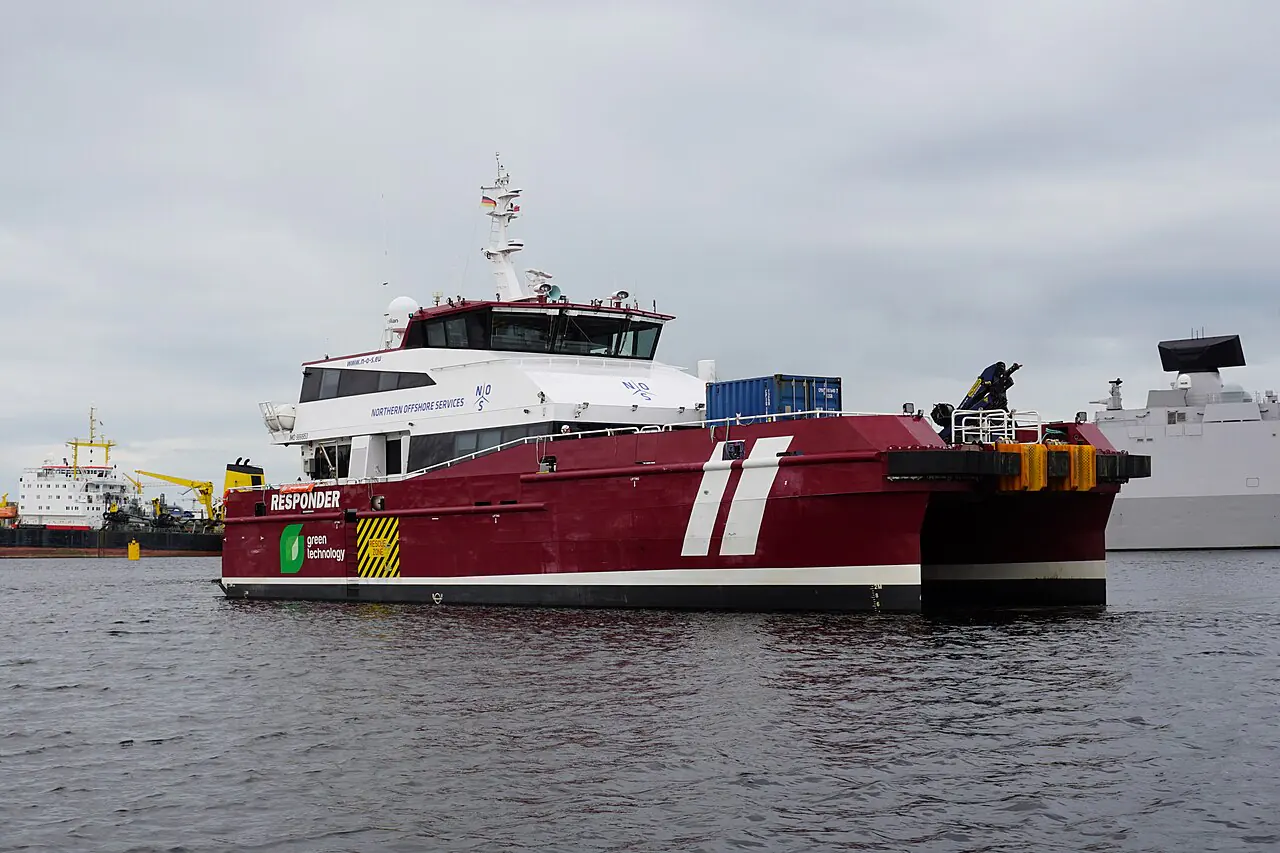
A Crew Transfer Vessel (CTV) is a high-speed, specialized maritime craft used primarily to transport offshore wind farm technicians and light equipment from shore-based facilities to wind turbine installations. As the global transition to renewable energy accelerates, CTVs have become the “workhorses” of the offshore wind industry, enabling the daily operations and maintenance (O&M) required to keep wind farms functioning efficiently.
Unlike general-purpose utility boats, a CTV is engineered for high stability, rapid transit, and safe personnel transfer in challenging marine environments. While they are most commonly seen as aluminum catamarans, their design is highly optimized for specific mission profiles: balancing speed (to minimize transit time), payload (to carry technicians and tools), and seakeeping (to allow operations in higher sea states).
In the hierarchy of offshore support vessels, CTVs occupy a specific niche. They are typically smaller and faster than Service Operation Vessels (SOVs), which act as mobile offshore bases, and they are distinct from Supply Vessels, which focus on heavy cargo and fuel transport. A CTV is essentially a bridge between the shore and the turbine, providing the agility needed for frequent, short-range trips.
2. Mission and Operations
The primary mission of a CTV is to support the lifecycle of an offshore wind farm, spanning from the construction and commissioning phases to the decades-long operations and maintenance (O&M) period.
Core Operational Roles
- Technician Transfer: The most frequent task is ferrying specialized wind technicians to the turbine’s transition piece (the platform at the base of the tower). This often involves “pushing” the vessel against the turbine structure to create a stable platform for the transfer.
- Light Cargo Delivery: CTVs carry tools, spare parts, safety equipment, and consumables (such as lubricants or small electrical components) required for turbine repairs and routine inspections.
- Site Inspection and Surveying: CTVs are often used by survey teams to monitor the structural integrity of turbine foundations or to conduct environmental monitoring.
- Emergency Response and Support: While not primary emergency vessels, CTVs can provide rapid response for medical evacuations or technical assistance during wind farm emergencies.
Operational Constraints: The Weather Window
A critical aspect of CTV operations is the “weather window.” Because CTVs are relatively small compared to larger offshore vessels, their ability to operate is strictly limited by sea state (significant wave height, ), wind speed, and current.
- Sea State Limits: Standard CTVs often operate effectively in significant wave heights up to 1.5–2.0 meters.
- The “Transfer Window”: The most sensitive moment is the physical transfer of personnel from the vessel to the turbine. If the vessel’s motion (roll, pitch, heave) is too high, the transfer becomes unsafe, leading to “downtime” where the vessel must wait for calmer seas.
CTV vs. SOV: A Strategic Distinction
The choice between using a CTV and an SOV depends heavily on the distance of the wind farm from the shore:
- Near-shore Wind Farms: CTVs are the preferred choice due to their lower day rates and ability to return to port daily for crew and supplies.
- Far-shore Wind Farms: As wind farms move further into deeper waters, the transit time for a CTV becomes inefficient. In these cases, SOVs (which stay on-site for weeks and use motion-compensated gangways) become more cost-effective despite their higher operational costs.
3. Hull, Size, and Design
The hull design of a Crew Transfer Vessel is the most critical factor in its performance, directly impacting stability, speed, and seakeeping. While monohull designs exist, the vast majority of modern CTVs utilize a catamaran configuration.
Hull Configurations
| Hull Type | Description | Advantages | Disadvantages |
|---|---|---|---|
| Catamaran | Two parallel hulls connected by a deck or crossbeams. | High stability (large metacentric height), high speed, large deck area. | Higher drag in certain conditions, complex construction. |
| Monohull | A single, continuous hull. | Simpler construction, potentially lower cost. | Generally lower stability and smaller deck area for the same beam. |
| SWATH (Small Waterplane Area Twin Hull) | A specialized catamaran where much of the buoyancy is provided by submerged hulls. | Extraordinary seakeeping; minimizes the effect of surface waves on stability. | Extremely complex and expensive to build and maintain. |
The Catamaran Advantage
The catamaran design is preferred because it provides a wide beam (width) relative to its length. This increased beam significantly raises the vessel’s metacentric height (), which is a primary measure of initial stability. A high means the vessel resists rolling and returns to an upright position more quickly, which is essential when pushing against a wind turbine transition piece.
Materials: Aluminium vs. Steel
Most high-speed CTVs are constructed from marine-grade aluminium. Aluminium is preferred over steel for several reasons:
- Weight-to-Strength Ratio: Aluminium is significantly lighter, allowing for higher speeds and greater payload capacity for the same engine power.
- Corrosion Resistance: While both materials require protection, aluminium performs well in the splash zone.
- Speed: The lighter weight of an aluminium hull is crucial for achieving the 20–30 knot speeds required for efficient transit.
Typical Technical Specifications (Ranges)
| Specification | Typical Range |
|---|---|
| Length Overall (LOA) | 20 m – 40 m |
| Beam (Width) | 7 m – 11 m |
| Draft (Draught) | 1.0 m – 2.5 m |
| Service Speed | 20 – 30 knots |
| Max Speed | 25 – 35 knots |
| Passenger/Technician Capacity | 12 – 100 persons |
| Cargo Capacity | 2 – 20 tonnes |
4. Propulsion and Engines
To achieve the high speeds necessary for efficient wind farm service, CTVs require high-performance propulsion systems. The combination of light aluminium construction and powerful engines allows these vessels to maintain rapid transit even in moderate sea conditions.
Main Engines
The primary power source for a CTV is typically one or more high-speed diesel engines. Common manufacturers include MAN Energy Solutions and Scania.
- Power Output: Depending on vessel size, total engine output can range from several hundred to several thousand horsepower (hp).
- Reliability: Given the mission-critical nature of wind farm maintenance, engines are chosen for high reliability and ease of service.
Propulsion Systems: Waterjets vs. Propellers
The method by which engine power is converted into thrust is a defining technical feature of CTVs.
Waterjet Propulsion (Preferred for Catamarans)
Most modern catamarans use waterjet propulsion (e.g., Hamilton Waterjets). In this system, an impeller inside a housing draws water in from the bottom and accelerates it through a nozzle at the rear.
- Maneuverability: Waterjets allow for incredible directional control. By vectoring the jet nozzle, the vessel can turn sharply and even move sideways (crabbing), which is vital when approaching a turbine.
- Shallow Draft: Waterjets have no protruding propellers or rudders, allowing the vessel to operate in shallower waters.
- Efficiency at Speed: Waterjets are highly efficient at the high speeds typical of CTV operations.
Conventional Propellers
Some monohull or slower CTVs may use traditional shaft-driven propellers. While efficient at lower speeds, they lack the extreme maneuverability and shallow-water capability of waterjets.
Station Keeping and Dynamic Positioning (DP)
To safely approach a wind turbine, a CTV must be able to maintain its position relative to the structure, even in currents and wind. This is achieved through Station Keeping technology:
- Dynamic Positioning (DP): A computer-controlled system that automatically maintains a vessel’s position and heading by using its propulsion (waterjets or thrusters) and sensors (GPS, laser, radar).
- Advanced Systems: Some vessels use specialized systems like JETanchor or other automated station-keeping solutions to provide high precision during the transfer phase.
5. Electrical System and Power
The electrical architecture of a CTV must support high-power propulsion, sensitive navigation equipment, and the life-support systems for the crew and technicians.
Power Generation
Primary electrical power is typically generated by multiple marine diesel generators (e.g., Cummins or Kohler).
- Redundancy: For safety and reliability, CTVs always feature redundant generator sets. If one fails, the others must be able to carry the essential loads.
- Distribution: Power is distributed via a standard marine AC system (typically 440V or 230V/50Hz).
The Hybrid/Electric Trend
A significant trend in CTV design is the move toward hybrid-electric propulsion. This involves integrating large battery banks into the vessel’s power system.
- Emissions Reduction: Using electric power for low-speed maneuvering or “loitering” near a turbine significantly reduces fuel consumption and carbon emissions.
- Noise Reduction: Electric propulsion is much quieter, which is beneficial for both the crew’s comfort and the local marine environment.
- Peak Shaving: Batteries can provide an extra burst of power during high-demand periods (e.g., during rapid acceleration) without requiring oversized diesel engines.
- Operational Range: Hybrid systems can allow a vessel to operate on battery power alone for short distances, increasing the efficiency of “last-mile” operations.
6. Equipment and How It Is Used
A CTV’s equipment is selected to maximize operational efficiency and safety during technician transfer and cargo handling.
Personnel Transfer Systems
The most specialized equipment on a CTV is the system used for transferring technicians to a wind turbine.
| System Type | Description | Usage |
|---|---|---|
| Manual Step-Over | The vessel pushes against the turbine transition piece, and technicians step across. | Low sea states; used by smaller, traditional CTVs. |
| Motion-Compensated Gangway | A stabilized bridge (e.g., Ampelmann, Ulmatec) that cancels out vessel motion. | High sea states; allows for “Walk-to-Work” (W2W) operations. |
| Fender Systems | Specialized bumpers (e.g., BMT Active Fender System®) to protect the hull and turbine. | Essential for all vessel-to-turbine contact. |
Deck Equipment
- Cranes: Small, high-capacity cranes (e.g., Palfinger) are used for loading/unloading cargo and transferring heavy tools or components to the turbine deck.
- Cargo Handling: Many CTVs feature dedicated cargo areas, often accommodating standard 10 ft or 20 ft ISO containers.
- Lashing and Securing: Robust deck fittings are required to secure cargo during high-speed transit.
7. Navigation, Communications, and Safety
Given the high-speed nature and the proximity to large offshore structures, CTVs require advanced navigation and safety systems.
Navigation and Positioning
- Radar: High-resolution X-band and S-band radars for detecting other vessels, obstacles, and wind turbines.
- AIS (Automatic Identification System): Mandatory for tracking and collision avoidance.
- GPS/GNSS: High-precision satellite navigation for accurate positioning.
- Echo Sounder: For monitoring water depth and avoiding grounding in shallow coastal areas.
Communication Systems
- GMDSS (Global Maritime Distress and Safety System): Includes VHF/DSC radio, EPIRB (Emergency Position Indicating Radio Beacon), and SART (Search and Rescue Transponder).
- Satellite Communication: For long-range voice and data connectivity, especially when operating far offshore.
Safety Systems
- Life-Saving Appliances (LSA): Life rafts, lifejackets, and immersion suits.
- Firefighting Equipment: Fixed and portable fire extinguishers, fire pumps, and hydrants.
- Man Overboard (MOB) Recovery: Specialized equipment to quickly retrieve persons from the water.
8. Crew and Organization
A CTV typically operates with a small, highly trained crew. The organization is designed for efficient transit and safe offshore operations.
Typical Crew Composition
| Role | Responsibilities |
|---|---|
| Master (Captain) | Overall command, navigation, and safety of the vessel and crew. |
| Engineer | Maintenance and operation of engines, generators, and auxiliary systems. |
| Deckhands / Officers | Vessel maneuvering, mooring, cargo handling, and assisting with transfers. |
| Technicians | (Onboard during transfer) Wind turbine specialists. |
Crew Requirements
The crew must be trained for both maritime operations and the specific requirements of the offshore wind industry. This includes familiarity with wind farm layouts, turbine transfer protocols, and emergency procedures.
9. Certificates and Training Requirements
To operate legally and safely, CTV crews and vessels must meet stringent certification standards.
Personnel Certification
- STCW (Standards of Training, Certification, and Watchkeeping): The international standard for maritime training.
- Offshore Safety Training: Specialized courses such as BOSIET (Basic Offshore Safety Induction and Emergency Training) or GWO (Global Wind Organisation) standards are mandatory for all personnel working offshore.
Vessel Certification
- Safety Certificates: Includes certificates for construction, equipment, and radio communications.
- Load Line Certificate: Verifies the vessel’s stability and buoyancy limits.
10. Regulations, Class, and Inspections
CTV operations are governed by a complex web of international and national regulations to ensure safety and environmental protection.
International Regulations (IMO)
The International Maritime Organization (IMO) provides the foundational framework through several conventions:
- SOLAS (Safety of Life at Sea): Sets minimum standards for vessel construction, equipment, and operation.
- MARPOL (Prevention of Pollution from Ships): Regulates emissions, sewage, and garbage discharge.
- STCW: Ensures crew competency.
Classification Societies
While not always strictly required by law (depending on the flag state), most offshore operators require vessels to be “classed” by a recognized society to ensure build quality and structural integrity.
- Major Societies: DNV, Lloyd’s Register (LR), American Bureau of Shipping (ABS), and Bureau Veritas (BV).
- Class Notations: Vessels often carry specific notations (e.g., “Offshore Support Vessel”) which indicate they meet higher standards for stability, deck strength, and specialized equipment.
Inspections and Surveys
- Annual Surveys: To verify that the vessel’s condition and equipment remain in compliance with class rules.
- Flag State Inspections: Conducted by the national maritime authority to ensure compliance with international conventions.
11. Notable Shipyards, Operators, and Example Vessels
The CTV market is dominated by specialized shipbuilders and operators who understand the unique requirements of the offshore wind industry.
Notable Shipyards (Builders)
- Damen Shipyards Group: A leading manufacturer of a wide range of CTVs, from small 16m models to large 40m+ hybrid vessels.
- BMT: Known for innovative hull designs and high-performance CTV concepts, including hybrid options.
- Austal: A major player in the catamaran market, providing high-speed vessels for various offshore applications.
- North American Shipbuilding: A key builder for the US Jones Act market.
Example Vessels
| Vessel Name | Builder/Type | Key Feature |
|---|---|---|
| WindServe Odyssey | Catamaran | High-speed Scania-powered catamaran. |
| Seacat Sceptre | Chartwell 24 Catamaran | Equipped with FOSS stability technology. |
| Damen FCS 2710 Hybrid | Damen Hybrid | Reduced emissions and extended range. |
| Cade Candies | Multipurpose Support | Integrated with Ampelmann gangway systems. |
12. Environment and Future Outlook
As the offshore wind industry grows, so does the pressure to reduce the environmental footprint of its support fleet.
Environmental Trends
- Hybrid and Electric Propulsion: The most significant trend. Reducing diesel consumption through battery integration and hybrid drives is essential for meeting sustainability goals.
- Alternative Fuels: Research into methanol and hydrogen-powered vessels is underway to further decarbonize offshore operations.
- Noise Reduction: Developing quieter propulsion systems to minimize the impact on marine life.
Future Technological Developments
- Autonomous CTVs: The development of remote-controlled or fully autonomous CTVs could reduce crew costs and improve safety by removing humans from high-risk transit tasks.
- Enhanced Stability Systems: Technologies like FOSS (Foil Optimisation and Stability System) will continue to evolve, allowing vessels to operate in even more challenging sea states.
- Digital Twins and Predictive Maintenance: Using real-time data to monitor vessel health and predict maintenance needs, increasing uptime.
13. Facts, Records, and Common Misconceptions
Common Misconceptions
- “CTVs are just small boats”: While smaller than SOVs, CTVs are highly specialized engineering marvels optimized for speed and stability.
- “All CTVs are catamarans”: While most are, monohulls and even SWATH designs exist depending on the mission profile.
- “CTV vs. SOV is a choice of size only”: It is a choice of mission, distance from shore, and operational strategy.
Fast Facts
- Speed: Most CTVs operate at speeds between 20 and 30 knots.
- Material: Aluminium is the industry standard for high-speed CTV hulls.
- Primary Role: The main task is the daily ferry of technicians to wind turbines.
14. Glossary
- AIS (Automatic Identification System): An automated tracking system used for collision avoidance.
- Catamaran: A vessel with two parallel hulls.
- DP (Dynamic Positioning): A computer-controlled system used to maintain a vessel’s position.
- Hs (Significant Wave Height): The average height of the highest one-third of waves in a given period.
- Metacentric Height (GM): A measure of a vessel’s initial stability.
- SOV (Service Operation Vessel): A large offshore vessel used as a base for technicians.
- SWATH (Small Waterplane Area Twin Hull): A hull design that minimizes the effect of waves on stability.
- W2W (Walk-to-Work): The process of transferring personnel via a motion-compensated gangway.