1. What Is This Ship?
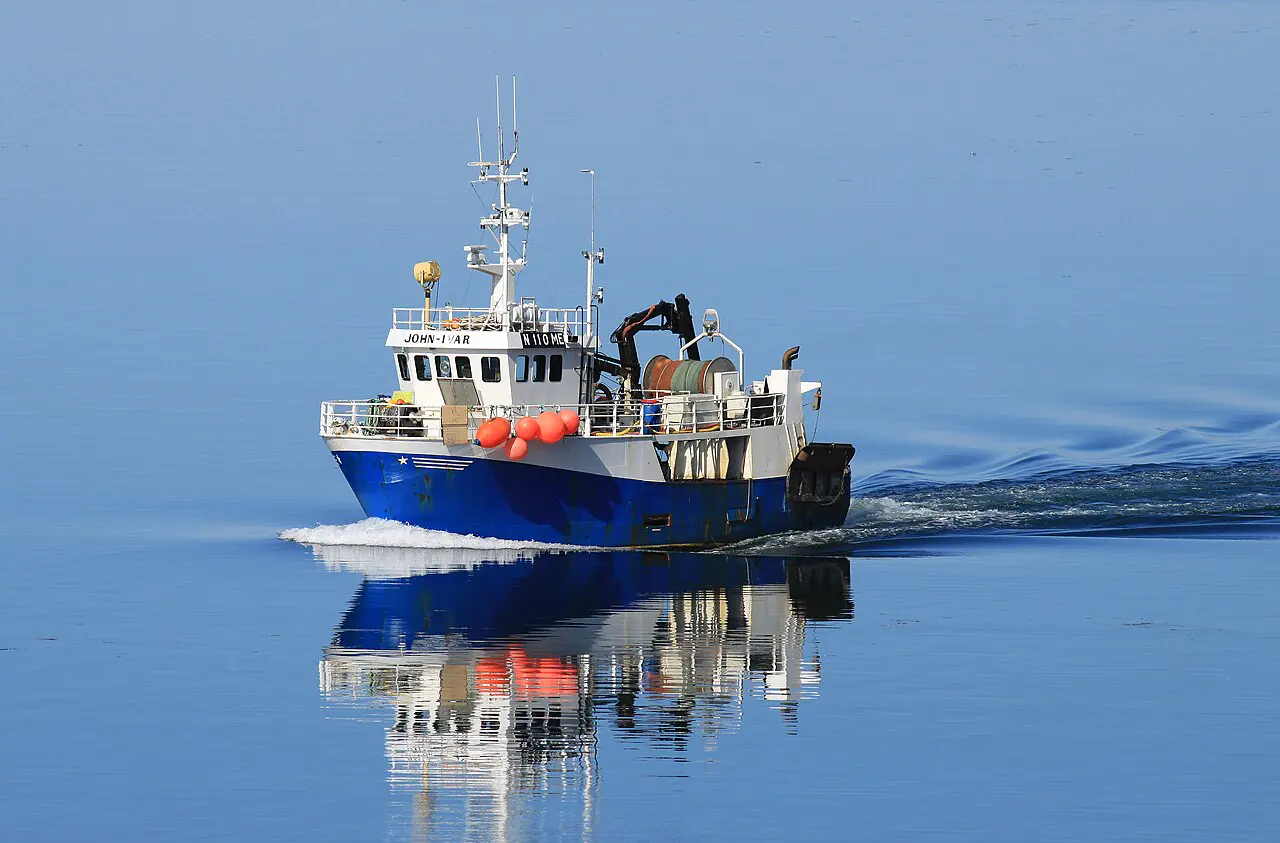
Commercial fishing vessels are specialized maritime craft engineered for the systematic capture, processing, and storage of aquatic life for commercial sale. These vessels form a critical component of the global maritime economy and the primary supply chain for the world’s seafood. Unlike recreational craft, which prioritize comfort and leisure, or naval vessels, which prioritize combat and tactical capability, commercial fishing vessels are designed around the intense technical requirements of harvesting biological resources in often extreme oceanic environments.
The scope of “commercial fishing vessels” is vast. It encompasses a spectrum of technologies and scales:
- Artisanal and Small-Scale Vessels: Typically under 12 meters, these are used for near-shore or coastal fishing, often employing manual or semi-mechanized methods.
- Industrial Coastal Vessels: Ranging from 12 to 30 meters, these vessels are highly mechanized and target specific regional species.
- Ocean-Going Mid-Range Vessels: Between 30 and 80 meters, these vessels engage in deep-sea operations like purse seining or longlining.
- Factory Trawlers and Processing Ships: Large-scale industrial giants, often exceeding 80 meters, which function as mobile, self-contained manufacturing plants capable of staying at sea for months.
2. Mission and Operations
The operational lifecycle of a commercial fishing vessel is defined by three core mission phases: harvesting, preservation, and logistics.
Harvesting (The Capture Phase)
The choice of harvesting method is the primary driver of a vessel’s design. The vessel must be able to deploy, manage, and retrieve specialized gear efficiently.
- Trawling: Vessels pull large, funnel-shaped nets through the water. Bottom trawling targets species on the seabed (like flounder or shrimp), while midwater (pelagic) trawling targets schools in the water column (like pollock or mackerel).
- Seining: Purse seiners use a massive net to encircle a school of fish. A “purse line” at the bottom of the net is pulled, closing the bottom like a drawstring bag to trap the fish.
- Longlining: This method involves deploying a “mainline” that can stretch for kilometers, with hundreds or thousands of baited hooks (gangions) branching off it. This is common for tuna and halibut.
- Gillnetting: Large, curtain-like nets are set vertically in the water. Fish are caught when they attempt to swim through the mesh and become entangled by their gills.
- Potting and Trapping: Specialized for crustaceans (crabs, lobsters), these vessels deploy baited cages that sink to the bottom and are later retrieved.
- Dredging: Used primarily for mollusks like oysters, where a heavy frame is dragged along the seabed to collect the catch.
Processing and Preservation (The Value-Add Phase)
A vessel’s mission is not complete until the catch is stabilized. The speed of temperature reduction is the single most important factor in maintaining market value.
- On-Board Processing: Industrial factory vessels feature automated lines for gutting, filleting, skinning, and even cooking or smoking fish.
- Refrigeration Technologies:
- Ice/Slurry: Small to medium vessels use crushed ice or “slush ice” (a mixture of ice and seawater) to chill fish in holds.
- RSW (Refrigerated Sea Water): A more advanced system that circulates chilled seawater through the hold to provide uniform cooling.
- Freezing Systems: High-end vessels utilize air-blast freezers or plate freezers to bring the core temperature of the fish down to sub-zero levels rapidly.
Logistics and Distribution
Smaller vessels typically operate on a “day-trip” model, returning to port to offload catch. Larger vessels may use a “mother ship” model, where smaller catching vessels meet a larger support ship at sea to transfer their catch, allowing the smaller boats to stay on the fishing grounds longer.
3. Hull, Size, and Design
The hull is the foundational element of the vessel, dictyating its stability, sea-keeping ability, and fuel efficiency.
Hull Materials
The choice of material is a trade-off between cost, weight, and durability:
- Steel: The standard for large-scale vessels. Its high strength-to-weight ratio makes it ideal for the massive loads of gear and catch. It is also easier to repair in remote shipyards.
- Aluminum: Favored for medium-sized vessels. It is lighter than steel, allowing for higher speeds and better fuel economy, though it is more expensive and requires specialized welding.
- FRP/GRP (Fiberglass Reinforced Plastic): The dominant material for small to medium coastal vessels. It is highly resistant to corrosion and relatively easy to manufacture in molds.
Hull Forms and Hydrodynamics
- Displacement Hulls: These hulls move by pushing water aside. They are characterized by high stability and massive internal volume, making them ideal for large trawlers and factory ships.
- Planing Hulls: Designed to “climb” onto their own bow wave at higher speeds, reducing drag. These are common in fast, small-scale coastal vessels.
- Semi-Planing Hulls: A hybrid design that offers a balance of stability at low speeds and moderate speed capability.
- Multi-Hull Designs:
- Catamarans: Two parallel hulls providing an exceptionally wide, stable platform and large deck area.
- SWATH (Small Waterplane Area Twin Hull): A highly advanced design where the hulls are mostly submerged, minimizing the impact of wave action and providing extreme stability in heavy seas.
Typical Vessel Dimensions
| Vessel Category | Length (m) | Beam (m) | Typical Draft (m) |
|---|---|---|---|
| Artisanal | 5–12 | 2–4 | 0.5–1.5 |
| Coastal/Medium | 12–30 | 5–8 | 2.0–4.0 |
| Industrial/Large | 30–80 | 10–18 | 4.0–7.0 |
| Factory/Ocean-Going | > 80 | > 20 | > 7.0 |
4. Propulsion and Engines
Propulsion systems in commercial fishing must provide high torque for towing gear and high reliability for long-duration missions.
Engine Technologies
- Marine Diesel Engines: The industry standard. They are valued for their high power density and the ability to run continuously for thousands of hours.
- Diesel-Electric Propulsion: A significant trend in modern vessel design. Diesel engines drive electrical generators, which power electric motors. This allows for:
- Precision Control: Much finer control over thrust and direction.
- Reduced Vibration: Essential for crew comfort and sensitive sonar equipment.
- Space Efficiency: Motors can be placed anywhere, allowing for better arrangement of holds and gear.
- Hybrid and Electric Systems: Driven by decarbonization efforts, hybrid systems use batteries to assist engines during high-load periods (like hauling a net). Full electric propulsion is becoming viable for smaller, coastal vessels.
Propulsion Hardware
- Fixed Pitch Propellers (FPP): Simple, robust, and widely used in traditional displacement hulls.
- Controllable Pitch Propellers (CPP): Allow the angle of the blades to be adjusted, providing variable speed and direction without reversing the engine. This is essential for maneuvering during gear deployment.
- Azimuth Thrusters: These are propeller units that can rotate 360 degrees. They provide unparalleled maneuverability, allowing a vessel to turn on its own axis, which is invaluable when working near fishing gear or in tight ports.
5. Electrical System and Power
The electrical system is the “nervous system” of the vessel, supporting everything from navigation to the high-power demands of refrigeration and heavy machinery.
Power Generation and Management
- Primary Generation: Multiple diesel generators (gensets) provide the base load. Many modern vessels utilize micro-turbine generators for higher efficiency and lower emissions.
- Auxiliary Power: Solar panels and wind turbines are increasingly integrated to power low-draw systems (lights, electronics) and reduce the load on main generators.
- Energy Storage: Large-scale Lithium-ion battery banks are becoming standard for hybrid vessels, serving as a buffer for peak loads and providing emergency backup.
Critical Electrical Loads
- Refrigeration & Freezing: The highest continuous load, requiring constant power to maintain catch quality.
- Deck Machinery: Winches, cranes, and net drums require high-torque, high-current power, often supplied via hydraulic-electric hybrids.
- Navigation & Comms: Must be on a dedicated, uninterruptible power supply (UPS) to ensure safety during engine failure.
6. Equipment and How It Is Used
Fishing gear is highly specialized and constitutes the vessel’s primary “working tool.”
| Equipment Category | Specific Item | Description & Use |
|---|---|---|
| Net Handling | Net Winch | A drum-driven system using steel wire to haul nets or lines. |
| Net Drum | A large, rotating cylinder used to store and deploy massive trawls. | |
| Trawl Doors | Large, hydrodynamic plates (otter boards) that use water pressure to keep the net mouth open. | |
| Deployment | Outriggers | Long booms extended from the sides to spread lines or nets (e.g., in trolling). |
| Gantry/Crane | Structural frames used to lift heavy pots, nets, or catch. | |
| Detection | Echo Sounder | Uses acoustic pulses to map the seabed and detect fish schools. |
| Sonar | Advanced acoustic imaging for high-resolution fish detection. | |
| Processing | Refrigeration Unit | Compressors and evaporators used to create ice, RSW, or freezing. |
| Processing Line | Automated machinery for gutting, filleting, and packaging. |
7. Navigation, Communications, and Safety
Operating in remote oceans requires advanced technological support for situational awareness and emergency response.
Navigation and Situational Awareness
- GNSS (Global Navigation Satellite Systems): Including GPS and GLONASS for precise positioning.
- Radar: Essential for collision avoidance and detecting land/other vessels in low visibility.
- AIS (Automatic Identification System): A mandatory broadcast system that allows vessels to identify each other and share position, speed, and heading.
- ECDIS (Electronic Chart Display and Information System): Digital navigation charts that integrate GPS, Radar, and AIS data.
Communication Systems
- VHF/UHF Radio: For short-range, line-of-sight communication.
- HF (High Frequency) Radio: For long-range communication over the horizon.
- Satellite Comms (Inmarsat/Iridium): Provides global connectivity for weather updates, business, and emergency services.
Safety and Emergency Response
- GMDSS (Global Maritime Distress and Safety System): An international standard for distress signaling, integrating satellite and radio-based systems.
- EPIRB (Emergency Position Indicating Radio Beacon): Automatically broadcasts a distress signal with precise coordinates via satellite.
- SART (Search and Rescue Transponder): A device that responds to radar signals from search vessels, appearing as a series of dots on their screens to pinpoint survivors.
- Life-Saving Appliances (LSA): Includes inflatable life rafts, life jackets, immersion suits, and, on larger vessels, enclosed lifeboats.
8. Crew and Organization
A commercial fishing vessel operates as a highly disciplined, hierarchical unit.
- Command Structure:
- Master (Captain): Holds ultimate legal and operational responsibility for the vessel, the safety of the crew, and the success of the mission.
- Mate: Assists the Master in navigation, watchkeeping, and supervising deck operations.
- Technical Department:
- Chief Engineer: Responsible for the maintenance and operation of all propulsion, electrical, and refrigeration systems.
- Engineer/Oiler: Assists in maintaining the machinery.
- Deck Department:
- Bosun: The senior deckhand who supervisos daily maintenance and gear handling.
- Deckhands: Perform the heavy physical labor of deploying gear, managing the catch, and maintaining the vessel.
- Processing Department: (On factory vessels)
- Processing Manager: Oversees the efficiency and quality of the production line.
- Production Workers: Specialized staff trained in fish handling and automated machinery.
9. Certificates and Training Requirements
Maritime safety and professionalism are enforced through rigorous certification standards.
- STCW-F (International Convention on Standards of Training, Certification and Watchkeeping for Fishing Vessel Personnel): The primary global standard. It mandates specific training for safety, fire fighting, survival at sea, and basic medical care.
- Certificates of Competency (CoC): Required for officers and engineers, demonstrating their expertise in navigation, stability, and machinery.
- Master’s License: A high-level certificate required to command a vessel, with requirements increasing based on vessel size and tonnage.
- Specialized Endorsements: For roles like “Radio Operator” or “Advanced Firefighting.”
10. Regulations, Class, and Inspections
The industry is governed by a complex web of international and national rules.
Regulatory Framework
- IMO (International Maritime Organization): Sets the global standards for vessel safety (SOLAS) and environmental protection (MARPOL).
- FAO (Food and Agriculture Organization): Provides the framework for sustainable fisheries management and the fight against Illegal, Unreported, and Unregulated (IUU) fishing.
- RFMOs (Regional Fisheries Management Organizations): International bodies that manage specific fish stocks in certain oceanic regions.
- National Authorities (e.g., USCG): Enforce domestic laws, safety inspections, and fishing quotas.
Classification and Inspection
- Classification Societies: Organizations like DNV (Det Norske Veritas), ABS (American Bureau of Shipping), Lloyd’s Register (LR), and Bureau Veritas (BV). They establish technical standards for hull construction, machinery, and electrical systems.
- Regular Surveys: Vessels must undergo periodic inspections (annual, intermediate, and special surveys) to ensure they continue to meet the class standards.
11. Notable Shipyards, Operators, and Example Vessels
Notable Shipyards
Major vessel construction is concentrated in nations with advanced maritime infrastructure:
- Norway: The global leader in high-tech, specialized fishing vessels (e.g., Vard).
- Japan: A powerhouse in large-scale industrial and factory ship construction.
- China: A massive hub for both high-volume and specialized fishing vessel manufacturing.
Example Vessels
- Katherine V: A historic vessel representing the heritage of Great Lakes fisheries.
- Atlantic Dawn: A modern example of a large-scale industrial fishing vessel.
- Silver Spectre: A contemporary vessel demonstrating the integration of advanced Yanmar diesel engines.
- FV Karoline: An example of the transition toward electric-assisted propulsion.
12. Environment and Future Outlook
The industry is at a technological and environmental crossroads.
Sustainability and Challenges
- Overfishing: The ongoing challenge of managing stocks to prevent collapse.
- Bycatch Mitigation: Developing smarter gear (e.g., selective nets) to reduce the capture of non-target species.
- Carbon Footprint: Moving away from heavy fuel oil toward cleaner energy sources.
Future Trends
- Decarbonization: The adoption of hybrid, electric, and hydrogen-powered vessels.
- Automation: The rise of autonomous fishing gear and robotic processing lines to increase efficiency and reduce human risk.
- Precision Fishing: Utilizing AI, real-time satellite data, and advanced sonar to target fish more accurately, reducing fuel use and environmental impact.
13. Facts, Records, and Common Misconceptions
- Trawlers vs. Trollers: A common point of confusion. Trawlers use large nets; trollers use baited lines or lures.
- The Scale of Modern Fishing: While often pictured as small boats, the modern industrial fleet includes vessels that rival large cargo ships in size and complexity.
- Innovation through Regulation: While regulation is often viewed as a burden, it has been a primary driver for the development of safer, more efficient, and more sustainable technologies.
14. Glossary
- AIS (Automatic Identification System): An automated tracking system for vessel identification.
- Bycatch: The incidental capture of non-target species.
- EPIRB (Emergency Position Indicating Radio Beacon): A satellite-based distress signal device.
- GMDSS (Global Maritime Distress and Safety System): International maritime distress standards.
- IUU Fishing: Illegal, Unreported, and Unregulated fishing.
- Purse Seine: A large net used to encircle fish shoals.
- SART (Search and Rescue Transponder): A radar-based survival location device.
- SWATH (Small Waterplane Area Twin Hull): A highly stable hull design.
- Trawl: A large cone-shaped net used for catching fish.
15. Sources
- Britannica: https://www.britannica.com/technology/commercial-fishing
- NOAA: https://repository.library.noaa.gov/view/noaa/41477/noaa_41477_DS1.pdf
- IMO (STCW-F): https://www.imo.org/en/ourwork/humanelement/pages/stcw-f-convention.aspx
- USCG: https://navcen.uscg.gov/
- Nuffield Australia Report: https://www.nuffieldscholar.org/sites/default/files/reports/2016_AU_Dennis-Holder_Old-Men-Older-Boats-Electric-Drive-Power-Storage-And-Power-Generation-In-Commercial-Fishing-Vessels.pdf
- Yanmar Marine: https://www.yanmar.com/eu/marine/
- DNV: https://www.dnv.com/
- ABS: https://पणा.absguide.org/
- FAO: https://www.fao.org/fishery/en
- Great Lakes Fisheries Heritage Trail: https://greatlakesfisheriestrail.org/