1. What Is This Ship?
A Roll-on/Roll-off (Ro-Ro) ship is a specialized vessel designed to transport wheeled cargo—such as automobiles, trucks, trailers, and heavy machinery—that can be driven directly onto and off the ship via built-in or shore-side ramps. Unlike conventional “Lift-on/Lift-off” (Lo-Lo) vessels, which rely on cranes to hoist cargo into holds, Ro-Ro ships utilize their own ramps and internal deck systems to facilitate rapid and efficient loading and unloading.
The Ro-Ro category encompasses several sub-types, each tailored to specific cargo profiles:
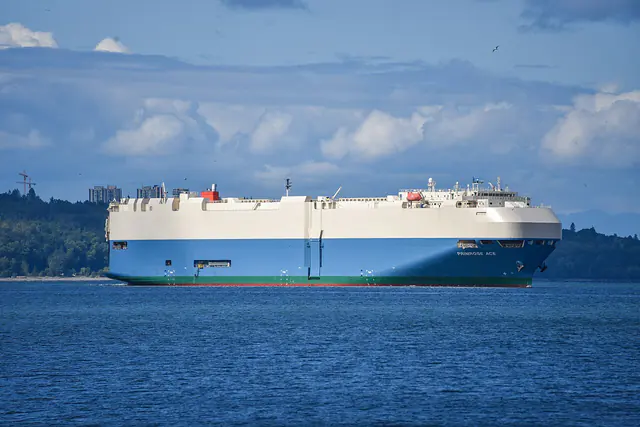
- Pure Car and Truck Carriers (PCTC): These are the most specialized Ro-Ro vessels. They feature high, boxy hulls and multiple internal decks specifically configured to maximize the density of vehicle transport. They are often used in the global automotive supply chain to move thousands of passenger cars in a single voyage.
- General Ro-Ro Vessels: These ships are more versatile, designed to carry a mix of wheeled cargo, including heavy industrial equipment, trailers, and occasionally palletized cargo on specialized decks.
- Ro-Pax Vessels: A hybrid category that combines Ro-Ro capabilities with passenger accommodation. These are commonly used for short-sea shipping and ferry services, carrying both vehicles and a significant number of passengers.
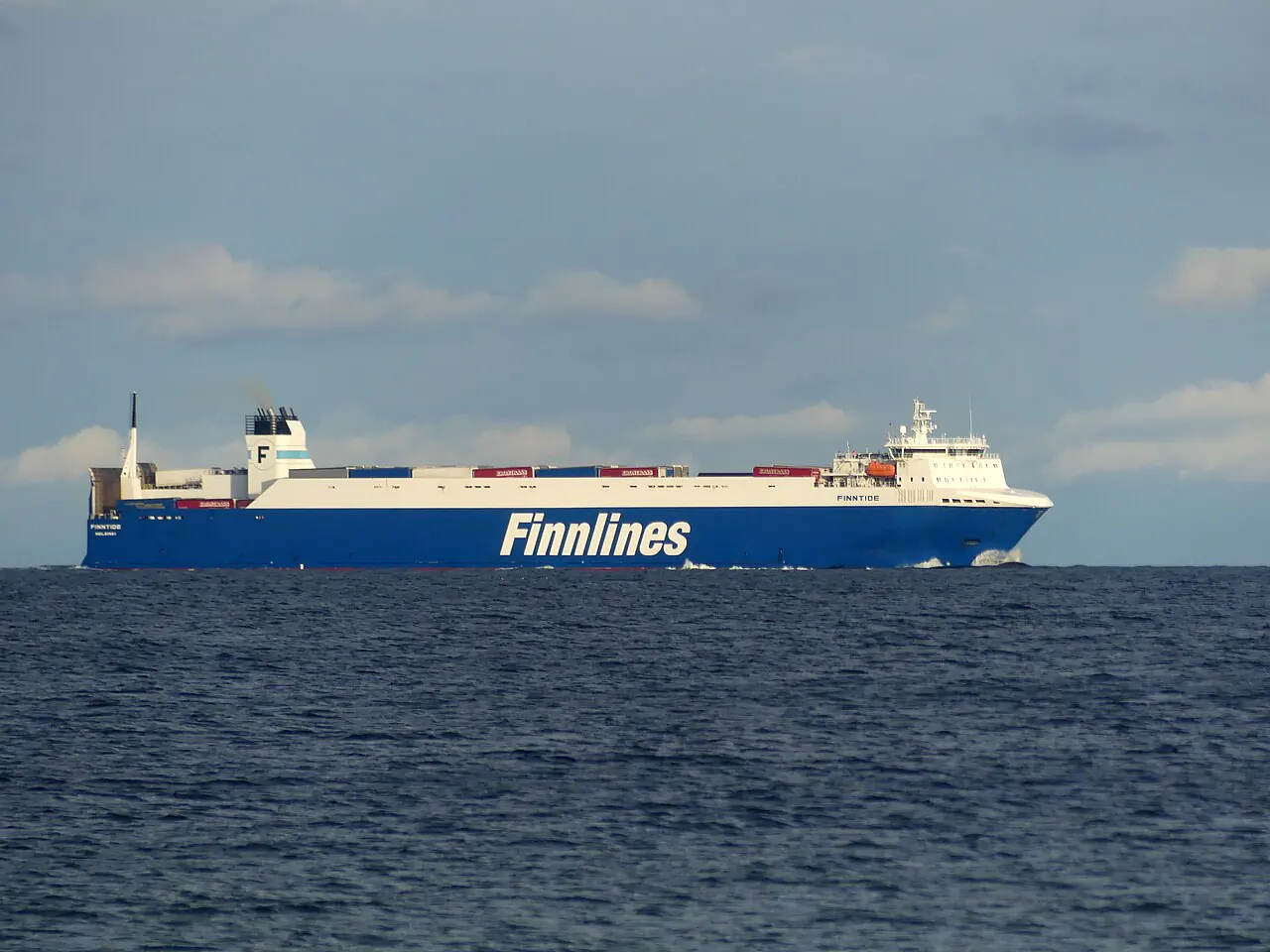
- ConRo Ships: A combination of a Container ship and a Ro-Ro ship. These vessels feature dedicated container stacks on deck and internal Ro-Ro decks for wheeled cargo, offering maximum flexibility for multi-modal logistics.
The defining technical characteristic of any Ro-Ro vessel is its ability to provide a continuous, drivable path from the quay to the vessel’s internal cargo holds.
2. Mission and Operations
The primary mission of a Ro-Ro cargo ship is to provide a highly efficient, time-sensitive logistics solution for wheeled and heavy cargo. Because loading and unloading are performed by driving vehicles on and off, the turnaround time in port is significantly lower than that of conventional bulk or container carriers, making them ideal for “just-in-time” supply chains.
The Operational Cycle
The typical operational cycle of a Ro-Ro vessel includes several critical phases:
- Berthing and Positioning: The vessel arrives at a specialized Ro-Ro terminal. Precise positioning is vital to ensure the ship’s ramps align perfectly with the shore-side ramps or linkspans.
- Ramp Deployment: Once secured, the vessel deploys its primary ramp—typically located at the stern or bow. This ramp serves as the bridge between the shore and the ship’s internal deck structure.
- Loading and Unloading: Cargo is driven on or off by specialized drivers or via automated systems. In PCTC operations, this is a highly choreographed process where vehicles are parked in precise patterns to maximize deck space.
- Securing (Lashing): Once a vehicle is in its designated position, it must be secured to the deck. This is a critical safety step to prevent cargo movement during transit, which could compromise the ship’s stability. Lashing is performed using specialized straps, chains, or tensioners.
- Deck Preparation: For multi-deck vessels, internal ramps or hoistable decks are used to move cargo between different levels.
- Departure: Once all cargo is secured and the ramps are stowed and locked, the vessel departs for its next destination.
Key Logistics Applications
- Automotive Industry: Moving new vehicles from manufacturing hubs to global markets.
- Heavy Industry: Transporting oversized machinery, such as mining equipment or construction vehicles, which would be difficult to lift by crane.
- Intermodal Logistics: Moving semi-trailers from one continent to another, often serving as a floating extension of road transport networks.
3. Hull, Size, and Design
The design of a Ro-Ro vessel is dictated by its cargo: it must provide massive internal volume and easy access for wheeled vehicles. This leads to several distinctive design features that differ significantly from bulk carriers or container ships.
Hull Geometry and Superstructure
Ro-Ro ships, particularly PCTCs, are characterized by a “boxy” appearance. They feature a very high freeboard—the distance from the waterline to the main deck—to provide the necessary internal height for multiple decks of vehicles. This high-sided hull creates a large surface area for wind to act upon (windage), which is a critical consideration for stability and maneuverability.
The hull is typically optimized for a balance between cargo capacity and hydrodynamic efficiency. While a bulbous bow is used to reduce wave-making resistance, the overall shape is often broader (higher beam) to provide a stable platform for the high center of gravity.
Internal Deck Configuration
The internal layout of a Ro-Ro vessel is a complex arrangement of decks designed to maximize the number of vehicles carried.
| Deck Type | Description | Primary Use |
|---|---|---|
| Fixed Decks | Permanent, non-moving decks built into the hull structure. | Heavy machinery, trailers, and heavy vehicles. |
| Hoistable Decks | Decks that can be raised or lowered via hydraulic systems to change deck clearance. | Varying vehicle heights (e.g., switching from cars to SUVs). |
| Liner Decks | Specialized, reinforced decks for high-density vehicle parking. | Passenger cars (PCTC). |
The use of hoistable decks allows the ship to be “reconfigured” in port, adapting to different cargo mixes (e.g., moving from a cargo of low-profile cars to a cargo of high-profile vans).
Ramp Systems
Ramps are the “umbilical cord” of the Ro-Ro vessel. There are three primary configurations:
- Stern Ramps: The most common type, located at the rear of the ship. They are often heavy-duty, hydraulic ramps capable of supporting extremely heavy loads.
- Bow Ramps: Located at the front, these are often used for vessels that require frequent, rapid loading/unloading or for specific port configurations.
- Side Ramps: Found on some specialized Ro-Ro vessels, allowing access from the side of the ship, which can be advantageous in certain terminal layouts.
Dimensions and Typical Ranges
While dimensions vary widely, typical ranges for modern Ro-Ro/PCTC vessels are:
- Length Overall (LOA): 150–250 m
- Beam (Width): 30–45 m
- Draft: 8–12 m
- Air Draft: 30–50 m (depending on superstructure)
4. Propulsion and Engines
The propulsion system of a Ro-Ro vessel must provide sufficient power to move a high-volume, high-windage hull through the water while maintaining the maneuverability required for tight port entries.
Main Engines
The heart of the Ro-Ro vessel is its main engine, typically a large-bore diesel engine.
- Diesel Engines: Most Ro-Ro vessels use either slow-speed, two-stroke diesel engines (common in larger vessels for fuel efficiency) or medium-speed, four-stroke diesel engines.
- The Dual-Fuel Revolution: To comply with stringent IMO decarbonization targets (IMO 2030/2050), there is a massive industry shift toward dual-fuel engines. These engines can run on conventional marine heavy fuel oil (HFO) or very low sulfur fuel oil (VLSFO), but can also operate on cleaner fuels like Liquefied Natural Gas (LNG) or Methanol. This significantly reduces sulfur oxides (SOx) and nitrogen oxides (NOx) emissions.
Propulsion Systems
The method by which engine power is converted into thrust varies:
- Fixed-Pitch Propeller (FPP): A traditional setup where the propeller blades are fixed to the shaft. Maneuvering is achieved through engine speed and rudder movement.
- Controllable-Pitch Propeller (CPP): Allows the angle of the propeller blades to be adjusted. This provides much better maneuverability and efficiency at varying speeds, as the engine can run at a constant RPM while the pitch is adjusted.
- Azimuth Thrusters (e.g., Azipod): These are highly advanced propulsion units that can rotate 360 degrees. They eliminate the need for a traditional rudder and provide extraordinary maneuverability, which is invaluable for large PCTCs operating in confined spaces.
Typical Performance
- Cruising Speed: 16–22 knots.
- Fuel Consumption: Highly dependent on vessel size, engine type, and weather conditions, but optimized for long-haul transit efficiency.
5. Electrical System and Power
The electrical system of a Ro-Ro vessel is as critical as its propulsion, as it must power a vast array of auxiliary systems, from heavy-duty hydraulic pumps for ramps to sophisticated navigation suites and life-support systems.
Power Generation
Electrical power is typically generated by multiple auxiliary diesel generators. These units are designed to run continuously to provide a stable electrical load. In modern vessels, these generators are often integrated into a “power management system” (PMS) that automatically starts or stops units based on the vessel’s demand, ensuring both reliability and fuel efficiency.
High-Load Systems
Several systems on a Ro-Ro vessel require significant electrical power:
- Ramp Hydraulics: The massive hydraulic pumps used to deploy, retract, and hold the heavy stern and bow ramps are major electrical loads.
- Ventilation Fans: Due to the enclosed nature of the cargo decks, high-capacity ventilation systems are required to manage air quality and temperature.
- Lashing and Securing: While many lashing systems are manual, some modern automated lashing systems rely on electric motors and sensors.
Emerging Trends: Hybrid and Battery Power
As the industry moves toward decarbonization, there is growing interest in hybrid propulsion and battery energy storage systems (BESS). These systems allow the vessel to use electricity for low-load operations (like maneuvering in port) or to supplement the main engines during peak demand, reducing overall fuel consumption and emissions.
6. Equipment and How It Is Used
A Ro-Ro vessel is essentially a highly engineered platform for moving cargo. Its equipment is specialized to ensure that vehicles are moved safely and efficiently.
Ramp Mechanisms
As previously mentioned, the ramps are the primary interface. They must be robust enough to handle the concentrated loads of heavy trucks and smooth enough for passenger cars.
| Ramp Type | Mechanism | Operational Advantage |
|---|---|---|
| Hydraulic Pivot | Uses large hydraulic cylinders to lift/lower the ramp. | High strength, capable of heavy loads. |
| Telescopic/Slide | The ramp extends outward from the hull. | Allows for easier docking in varying conditions. |
| Linkspan (Shore-side) | A floating bridge at the terminal. | Provides a stable connection regardless of tide. |
Lashing and Securing Gear
Securing cargo is the most critical task during loading. If a single vehicle shifts, it can create a domino effect, threatening the entire cargo load and the ship’s stability.
- Deck Sockets/Eyes: Reinforced points on the deck where lashing gear is attached.
- Webbing Straps: Used for lighter cargo like passenger cars.
- Chains and Tensioners: Used for heavy machinery and trailers to provide high-strength, high-tension securing.
- Lashing Bars: Specialized bars used to lock wheels or chassis in place.
Ventilation Systems
Ro-Ro cargo decks are enclosed spaces. When vehicles are driven on and off, they emit exhaust gases (CO, NOx, SOx). Specialized, high-capacity ventilation systems are mandatory to:
- Expel toxic gases to ensure safe working conditions for crew and loaders.
- Regulate temperature to prevent condensation and overheating of cargo.
- Manage the risk of fire by preventing the buildup of flammable vapors.
7. Navigation, Communications, and Safety
Like all commercial vessels, Ro-Ro ships must adhere to strict international standards for navigation and safety.
Navigation and Communication
The bridge of a Ro-Ro vessel is equipped with modern electronic navigation tools:
- ECDIS (Electronic Chart Display and Information System): The digital standard for navigation.
- Radar/ARPA: For collision avoidance and detecting other vessels/obstacles.
- AIS (Automatic Identification System): For transmitting and receiving vessel identification and position data.
- GMDSS (Global Maritime Distress and Safety System): A combination of radio and satellite communications used for distress signaling and routine maritime safety.
Safety and Stability
Safety on a Ro-Ro vessel is a dual challenge: protecting the crew/passengers and ensuring the ship remains upright.
- Stability Challenges: The “high-profile” design of Ro-Ro ships means they are susceptible to wind forces. Furthermore, the high center of gravity (CoG) resulting from the multi-deck structure makes them more sensitive to rolling.
- Stability Regulations: The IMO International Code of Safety for High-Speed Craft and specific SOLAS requirements govern the stability criteria for Ro-Ro vessels, ensuring they can withstand extreme weather and cargo shifts.
- Fire Suppression: Given the large amount of flammable material (vehicles, fuels, plastics), fire safety is paramount. Systems often include water mist, CO2 flooding, or high-expansion foam in cargo holds.
- Life-Saving Appliances (LSA): Standard requirements include lifeboats, liferafts, and personal flotation devices, sized appropriately for the vessel’s crew and passenger capacity.
8. Crew and Organization
The crew of a Ro-Ro vessel is organized into two main departments: the Deck Department and the Engine Department, both led by senior officers.
Deck Department
Responsible for navigation, cargo operations, and vessel maintenance.
- Master (Captain): The ultimate authority on the vessel.
- Chief Officer (Mate): Oversees cargo operations (loading/unloading/lashing) and deck maintenance.
- Navigation Officers (2nd/3rd Mate): Assist in bridge watches and vessel maintenance.
- Ratings (Bosun, ABs, OSs): Perform manual tasks, including mooring, lookout, and assisting with ramp operations.
Engine Department
Responsible for the operation and maintenance of the propulsion and electrical systems.
- Chief Engineer: In charge of all technical machinery.
- Second/Third Engineers: Manage engine room operations and maintenance.
- Electro-Technical Officer (ETO): Increasingly vital on modern vessels to manage complex electrical and automated systems.
- Ratings (Oilers, Wipers): Assist in engine room maintenance and cleaning.
Cargo Handling: Crew vs. Shore-side
A key operational distinction in the Ro-Ro industry is who performs the lashing and driving. On some vessels, specialized lashers are part of the ship’s crew. On others, lashing is performed by shore-side personnel during the port call to minimize the vessel’s crew requirements and port time.
9. Certificates and Training Requirements
Operating a Ro-Ro vessel requires strict adherence to international standards to ensure crew competency and vessel safety.
Mandatory Certification
All professional maritime personnel must hold certificates issued in accordance with the STCW Convention (International Convention on Standards of Training, Certification and Watchkeeping for Seafarers).
- Certificate of Competency (CoC): Issued to officers (Master, Chief Engineer, etc.) to prove their professional qualifications.
- Certificate of Proficiency (CoP): Required for specialized tasks, such as advanced fire fighting or medical care.
Vessel-Specific Certification
The ship itself must carry several essential documents:
- Document of Compliance (DOC): Issued to the shipping company, certifying that their management system meets international standards.
- Safety Management Certificate (SMC): Issued to the individual vessel, certifying that it operates in accordance with the company’s approved Safety Management System (SMS).
- International Load Line Certificate: Certifies the vessel’s limits for loading to ensure adequate buoyancy and stability.
Specialized Training
Due to the unique risks of Ro-Ro operations, crew members often undergo specialized training in:
- Cargo Securing and Lashing: Ensuring all vehicles are properly immobilized.
- Ro-Ro Stability: Understanding the specific stability challenges associated with high-sided, high-center-of-gravity vessels.
- Emergency Response: Specifically focusing on fire in enclosed cargo decks and rapid evacuation procedures.
10. Regulations, Class, and Inspections
The maritime industry is one of the most heavily regulated sectors in the world. Ro-Ro vessels must comply with a layered framework of international and national rules.
International Regulations (IMO)
The International Maritime Organization (IMO) sets the global standards for almost all maritime activities.
- SOLAS (Safety of Life at Sea): The most important treaty, covering everything from construction and stability to life-saving appliances and radio communications.
- MARPOL (Prevention of Pollution from Ships): Regulates the discharge of oil, chemicals, sewage, garbage, and air emissions.
- Load Line Convention: Regulates the maximum draft to which a ship can be safely loaded.
Classification Societies
While IMO sets the rules, Classification Societies (such as DNV, Lloyd’s Register, ABS, and Bureau Veritas) are responsible for ensuring that ships are built and maintained to the highest technical standards.
- Class Rules: Societies develop detailed rules for hull construction, machinery, and electrical systems.
- Surveys and Inspections: Class surveyors conduct regular inspections (annual, intermediate, and special surveys) to verify that the vessel remains in compliance with its class rules.
Port State Control (PSC)
Even with classification and international rules, vessels are subject to inspections by the authorities of the countries they visit. Port State Control officers can board a vessel to inspect its condition, certificates, and crew competence. If a vessel is found to be substandard, it can be detained, causing significant operational and financial loss.
11. Notable Shipyards, Operators, and Example Vessels
The Ro-Ro and PCTC industry is dominated by a few major global players.
Notable Shipyards
Most modern Ro-Ro/PCTC vessels are built in highly specialized shipyards in South Korea and Japan, known for their expertise in high-volume, complex hull construction.
- Hyundai Heavy Industries (South Korea)
- Samsung Heavy Industries (South Korea)
- Hanwha Ocean (formerly DSME, South Korea)
- Japan Marine United (Japan)
Leading Operators
A handful of companies manage the majority of the world’s specialized Ro-Ro fleet.
- Wallenius Wilhelmsen: A global leader in vehicle logistics and PCTC operations.
- Grimaldi Group: A major player in the Mediterranean and Atlantic, specializing in ConRo and multipurpose Ro-Ro vessels.
- Mitsui O.S.K. Lines (MOL): A Japanese giant with a significant presence in the global car carrier market.
- NYK Line: Another major Japanese carrier specializing in vehicle transport.
Example Vessels
To illustrate the diversity of the fleet, consider these real-world examples:
| Vessel Name | Type | Notable Feature |
|---|---|---|
| Peony Leader | PCTC | A high-capacity vessel optimized for automotive logistics. |
| Ganjiangkou | PCTC | Part of a specialized pair for efficient vehicle transport. |
| MOL Dual-Fuel Carrier | PCTC | A modern vessel utilizing LNG dual-fuel technology for reduced emissions. |
| Grimaldi Group Eco-Ro-Ro | Multi-purpose | Part of a fleet renewal program focusing on environmental sustainability. |
12. Environment and Future Outlook
The maritime industry is undergoing a massive transformation driven by the need to decarbonize. Ro-Ro vessels, with their large hulls and significant fuel consumption, are at the forefront of this change.
Decarbonization and Alternative Fuels
To meet the IMO’s greenhouse gas (GHG) reduction targets, the industry is exploring several pathways:
- LNG (Liquefied Natural Gas): Currently the most mature alternative, significantly reducing SOx and NOx, but still a fossil fuel.
- Methanol: Gaining rapid traction as a carbon-neutral option when produced as “green methanol.”
- Ammonia and Hydrogen: The “long-term” solutions, offering zero-carbon potential but presenting significant technical and safety challenges.
Technological Innovations
Beyond fuels, new technologies are being integrated into Ro-Ro design:
- Wind Assistance: Technologies like rotor sails or wing sails can provide auxiliary propulsion, reducing fuel consumption.
- Automation and Autonomy: Increasing automation in cargo handling (lashing and driving) and even autonomous navigation are being explored to improve efficiency and safety.
- Digital Twins: Using digital models of the vessel to optimize performance, predict maintenance needs, and improve fuel efficiency in real-time.
13. Facts, Records, and Common Misconceptions
Common Misconceptions
- “Ro-Ro ships are only for passenger cars.” While PCTC vessels are synonymous with cars, the broader Ro-Ro category includes heavy-duty trailers, industrial machinery, and even military vehicles. The “Roll-on/Roll-off” capability is the defining feature, not the cargo type itself.
- “Ro-Ro ships are unstable because they are so tall.” It is not that they are “unstable,” but rather that they have a different stability profile. Their high center of gravity and high windage require much more sophisticated stability management and stricter adherence to international regulations than conventional ships.
Key Facts
- Criticality of Lashing: A single unsecured vehicle can trigger a catastrophic stability failure.
- Time is Money: The efficiency of a Ro-Ro vessel is measured not just by its speed at sea, but by its turnaround time in port.
- Decarbonization Driver: The high volume of cargo moved by these vessels makes them a primary target for the maritime industry’s transition to green fuels.
14. Glossary
- Azipod / Azimuth Thruster: A propulsion unit that can rotate 360 degrees, providing high maneuverability.
- ConRo: A hybrid vessel designed to carry both containers and wheeled cargo.
- Freeboard: The distance from the waterline to the upper edge of the main deck.
- IMO (International Maritime Organization): The UN agency responsible for the safety and security of shipping and the prevention of marine pollution.
- Lashing: The process of securing cargo to the ship’s deck to prevent movement.
- PCTC (Pure Car and Truck Carrier): A highly specialized Ro-Ro vessel designed exclusively for vehicles.
- Ro-Pax: A hybrid vessel that carries both wheeled cargo and passengers.
- Ro-Ro (Roll-on/Roll-off): A vessel designed for cargo that can be driven on and off via ramps.
- SOLAS (Safety of Life at Sea): The most important international treaty concerning the safety of merchant ships.
- Windage: The surface area of a ship exposed to wind, which affects stability and maneuverability.
15. Sources
- Bureau Veritas - Ro-Ro and Ro-Pax Ships: https://marine-offshore.bureauveritas.com/marine/ship-classification/ro-ro-ships
- Marine Insight - What are Ro-Ro Ships?: https://www.marineinsight.com/what-are-ro-ro-ships/
- Marine Insight - Different Types of Ro-Ro Ships: https://www.marineinsight.com/different-types-of-roll-on-roll-off-ships/
- Whiztec - Car Carrier Glossary: https://www.whiztec.com/glossary/car-carrier/
- Baird Maritime - Vessel Review (Peony Leader): https://www.bairdmaritime.com/shipping/dry-cargo/pcc-pctc/vessel-review-peony-leader-ganjiangkou-car-carrier-pair-to-support-cosco-shippings-vehicle-transport-operations
- Baird Maritime - MOL Dual-Fuel Carrier: https://www.bairdmaritime.com/shipping/dry-cargo/pcc-pctc/mol-takes-delivery-of-lng-dual-fuel-car-carrier
- IMO - Safety of Ro-Ro Ferries: https://www.imo.org/en/OurWork/Safety/Pages/RO-ROFerries.aspx
- Wikipedia - Roll-on/Roll-off: https://en.wikipedia.org/wiki/Roll-on/roll-off