1. What Is This Ship?
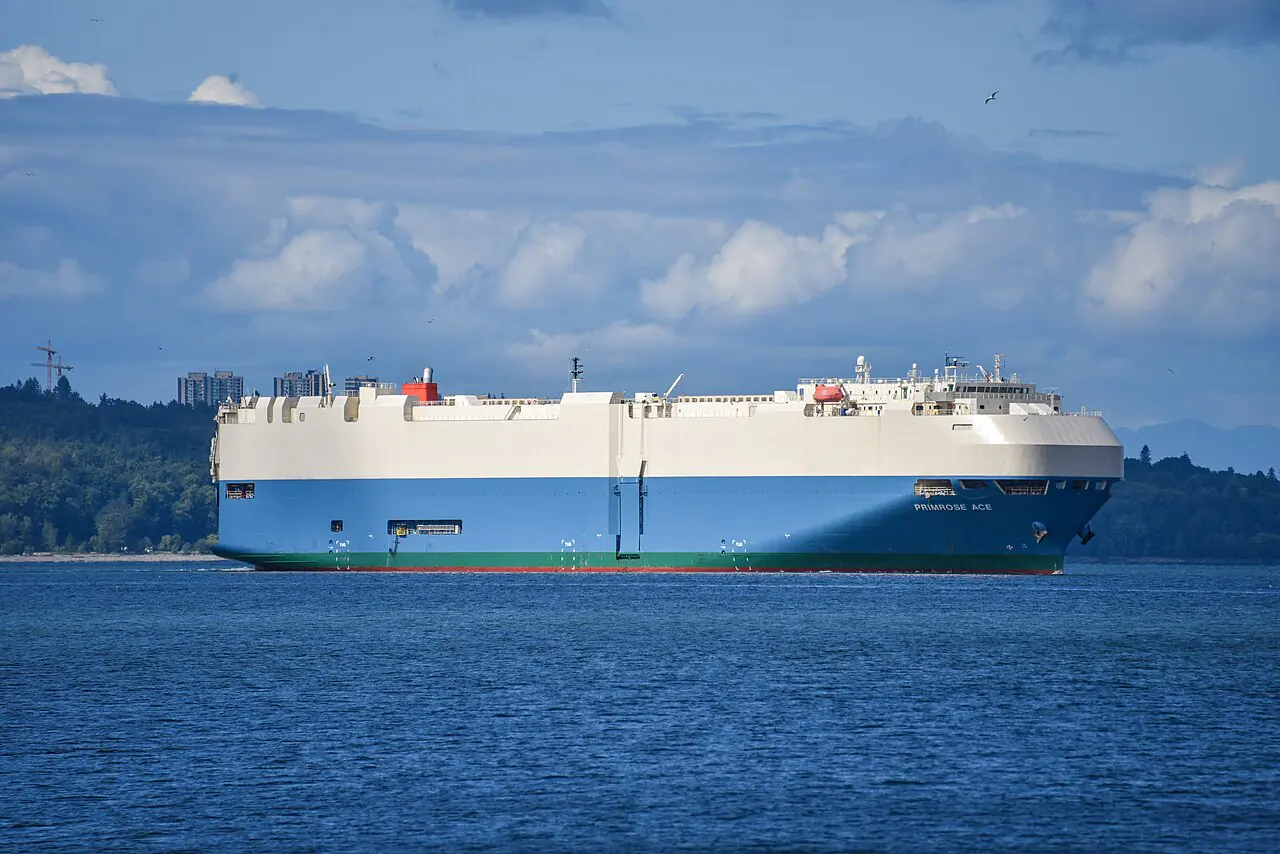
A Pure Car and Truck Carrier (PCTC) is a highly specialized type of maritime vessel designed for the bulk transport of wheeled cargo. It belongs to the broader family of Roll-on/Roll-off (RoRo) ships, characterized by the ability for cargo to be driven directly onto and off the vessel via integrated ramps, rather than being lifted by cranes.
While the terms are often used interchangeably in casual conversation, it is important to distinguish between the two primary sub-types of vehicle carriers:
- Pure Car Carrier (PCC): These vessels are purpose-built for the transport of standard passenger cars and light vehicles. They typically feature fixed deck heights optimized for maximizing the number of vehicles that can be stacked within the hull.
- Pure Car and Truck Carrier (PCTC): An evolution of the PCC, the PCTC is designed for greater versatility. It features multiple internal decks—some of which are hoistable or adjustable in height. This allows the ship to accommodate “high-and-heavy” cargo, such as commercial trucks, buses, agricultural machinery, and construction equipment, alongside standard passenger cars.
Modern PCTCs are essentially massive, floating, multi-story parking garages. However, beneath their slab-sided, boxy appearance lies a highly sophisticated piece of engineering. They must manage extreme stability challenges caused by their high center of gravity, withstand intense wind forces acting on their large profiles, and provide highly efficient loading/unloading systems to maintain the tight schedules required by global automotive supply chains.
2. Mission and Operations
The primary mission of a PCTC is to provide a seamless, high-capacity bridge between automotive manufacturing hubs and global consumer markets. The efficiency of a PCTC is measured not just by its carrying capacity, but by its turnaround time in port.
The Ro-Ro Loading and Unloading Cycle
The operational lifecycle of a PCTC voyage is a highly choreographed process involving ship’s crew, terminal operators, and specialized stevedores.
- Marshalling and Staging: Before the vessel arrives, vehicles are staged in a dedicated terminal yard. They are organized into “loads” or sequences based on their final destination and the ship’s loading plan. This ensures that vehicles destined for the first port of call are not buried under those destined for later ports.
- Ramp Deployment: Upon berthing, the vessel deplates its primary ramp (typically a stern ramp) to the quay or a linkspan.
- Driving Aboard: Vehicles are driven onto the vessel under the strict direction of a Loading Officer. For unaccompanied trailers, terminal tractors are used. The loading sequence is critical; it is designed to optimize the ship’s longitudinal and transverse weight distribution to maintain stability and trim.
- Securing (Lashing and Chocking): Once a vehicle reaches its assigned deck position, it must be secured against the motions of the sea. This involves:
- Chocking: Placing blocks or specialized chocks against the wheels to prevent rolling.
- Lashing: Using heavy-duty webbing straps or metal chains attached to dedicated “lashing points” or “deck rings” built into the ship’s structure.
- Secondary Restraints: Drivers are instructed to set handbrakes and, in many cases, leave the vehicle in gear (or in ‘Park’) as an additional layer of safety.
- Discharge: Upon arrival at the destination, the process is reversed. Vehicles are driven off the ship in a precise sequence to avoid congestion and maintain the vessel’s stability throughout the unloading process.
3. Hull, Size, and Design
The design of a PCTC is driven by two conflicting requirements: maximizing internal volume for cargo and maintaining seaworthiness despite a massive, high-profile structure.
Hull Form and Superstructure
PCTCs are instantly recognizable by their slab-sided, high-profile hulls. Unlike container ships or tankers, which have more hydrodynamic, tapered shapes, a PCTC resembles a large, rectangular box. This design maximizes the usable “parking” area within the hull. The high freeboard (the distance from the waterline to the upper deck) is necessary to accommodate the multiple decks required for high-capacity transport.
Dimensions and Capacity
While dimensions vary based on the specific service (e.g., short-sea vs. long-haul), typical ranges include:
- Length Overall (LOA): 150 m to 230 m.
- Beam (Width): 30 m to 40 m.
- Draft: 8 m to 12 m.
- Capacity: Measured in Car Equivalent Units (CEU). A large PCTC can carry between 6,000 and 9,100+ CEUs.
Stability: The Critical Challenge
The most significant engineering challenge for a PCTC is stability. Because the cargo (thousands of vehicles) is stacked high within the hull, the ship’s Center of Gravity (KG) is significantly higher than that of a bulk carrier or tanker.
- The GZ Curve and Righting Arm: Stability is determined by the ship’s ability to return to an upright position when heeled by wind or waves. This is represented by the GZ curve (the righting lever). In PCTCs, the GZ curve can be unusual, sometimes exhibiting two inflection points and a “concave” middle section. This means that if a ship heels beyond a certain point, its ability to right itself may decrease rapidly.
- Metacentric Height (GM): Designers strive to maintain an adequate GM, but there is a trade-off. A very high GM makes the ship “stiff,” causing it to roll violently and quickly, which can damage cargo or cause crew discomfort. A low GM makes the ship “tender” and potentially unstable.
- Windage: The massive, flat sides of a PCTC act like a giant sail. High winds can exert tremendous heeling moments, making docking and maneuvering in narrow channels particularly hazardous.
- Racking: Due to the unique internal structure, PCTCs are susceptible to racking—a type of transverse deformation where the decks tend to shift horizontally relative to each other due to the ship’s movement and the weight of the cargo.
4. Propulsion and Engines
PCTC propulsion systems are designed for reliability and efficient long-distance cruising, with an increasing focus on environmental compliance.
Main Propulsion
Most PCTCs utilize a single-screw, single-propeller arrangement driven by a low-speed, two-stroke diesel engine. These engines are chosen for their high thermal efficiency and ability to operate continuously for long voyages.
Maneuverability
Because PCTCs have such high windage and often operate in congested ports, high maneuverability is essential. Most modern vessels are equipped with powerful bow thrusters to assist in berthing and undocking, especially when wind or currents are present.
The Dual-Fuel Revolution
To meet stringent IMO (International Maritime Organization) emission standards (such as Tier III), the industry is rapidly transitioning toward dual-fuel engines.
- LNG (Liquefied Natural Gas): Currently the most common alternative, significantly reducing SOx and NOx emissions.
- Methanol: An emerging frontrunner (e.g., the CM Guangzhou), offering a path toward carbon neutrality if produced as “green” methanol.
- Ammonia and Hydrogen: Being researched as long-term, zero-carbon solutions for the next generation of PCTCs.
5. Electrical System and Power
The electrical plant on a PCTC must support a vast array of auxiliary systems that are more demanding than those on traditional cargo ships.
Auxiliary Power
Large diesel generators provide power for:
- Ventilation: Massive fans required to keep the vehicle decks clear of exhaust fumes and heat.
- Ramp Operations: Heavy-duty electric or hydraulic motors to deploy and retract the massive stern and internal ramps.
- Cargo Lighting: Intensive lighting required for safe nighttime loading/unloading operations.
Modern Electrical Trends
- Shaft Generators: Utilizing the main engine’s rotation to generate electricity, increasing efficiency.
- Shore Power (Cold Ironing): Allowing the ship to plug into the local electrical grid while at berth, eliminating the need to run auxiliary engines and reducing local port emissions.
- Renewable Integration: Some modern vessels have begun installing solar panels on the upper decks to offset auxiliary loads.
6. Equipment and How It Is Used
The specialized nature of PCTC cargo requires a unique suite of equipment.
Ramp Systems
The ramps are the “gateways” of the ship.
- Stern Ramp: The primary access point, typically a massive, hinged structure at the transom of the ship.
- Quarter Ramp: An angled ramp located at the corner of the stern, used in ports where the berth geometry prevents a direct stern approach.
- Bow Ramp/Door: Some vessels feature a bow ramp, allowing for “drive-through” operations where cargo is loaded at one end and discharged at the other.
- Internal Ramps: These connect the various decks within the ship, allowing vehicles to move between different levels.
Cargo Securing Equipment
Securing is a critical safety task. The decks are equipped with:
- Lashing Points/Deck Rings: Heavy-duty welded points used to anchor chains or straps.
- Chocks and Wedges: Used to prevent the lateral movement of wheels.
- Webbing Straps and Chains: Specialized tensioning tools used to tie down the cargo.
Ventilation Systems
Because vehicles are often left idling during loading or may have residual fuel/battery gases, PCTCs require massive, high-capacity ventilation systems. These systems must prevent “air stratification” (pockets of gas forming at different heights) and must be capable of rapid shutdown in the event of a fire.
7. Navigation, Communications, and Safety
Navigation on a PCTC requires constant awareness of environmental factors, specifically wind.
Navigation and Monitoring
Standard bridge equipment (Radar, ECDIS, AIS) is supplemented by:
- Stability Monitoring Systems: Real-time sensors that track the ship’s trim, list, and draft, providing officers with immediate feedback on the impact of cargo operations.
- Anemometers: Highly accurate wind speed and direction sensors are vital for calculating the windage impact on the hull.
Fire Safety: The Highest Priority
Fire is the greatest threat to a PCTC. The presence of thousands of vehicles, each containing fuel, oils, and increasingly, lithium-ion batteries, creates a high-risk environment.
- Detection: Advanced smoke, heat, and even video monitoring systems are used to identify fires early.
- Extinguishing Systems:
- Fixed Gas Systems (e.g., CO2): Used to flood cargo holds and displace oxygen.
- High-Expansion Foam: Effective at smothering fires and filling large volumes.
- Water-Based Systems: Increasingly being integrated into new builds to comply with evolving safety standards.
- Ventilation Integration: In the event of a fire, the ventilation system must be capable of rapid, effective shutdown to prevent the spread of smoke and oxygen.
8. Crew and Organization
Operating a PCTC requires a blend of traditional maritime skills and specialized logistics expertise.
Key Roles
- Master (Captain): Responsible for the overall safety of the vessel, crew, and cargo.
- Deck Officers: Manage navigation, stability, and watchkeeping.
- Chief Engineer and Engineering Crew: Maintain the complex propulsion and electrical systems.
- Loading Officer: A specialist role responsible for planning and supervising the precise sequence of vehicle loading and lashing.
- Stevedores/Lashers: The personnel responsible for the physical driving and securing of the cargo.
Training
Crew members must undergo specialized training that goes beyond standard STCW requirements. This includes dedicated courses on PCTC Maneuvering, Stability Management (specifically regarding the GZ curve and high KG), and Operational Safety (handling hazardous vehicle cargo).
9. Certificates and Training Requirements
To operate legally and safely, PCTC crews must hold specific certifications:
- STCW Certifications: Standard international requirements for all seafarers.
- PCTC Maneuvering Course: Focuses on the unique handling characteristics of high-profile vessels in restricted waters.
- Stability Training: Deep dives into the physics of high-center-of-gravity vessels and the management of the GZ curve.
- Firefighting and Safety Training: Specialized instruction on the unique fire risks posed by vehicle cargo and the operation of high-expansion foam and gas systems.
10. Regulations, Class, and Inspections
PCTCs are among the most heavily regulated ship types due to their inherent stability and fire risks.
International Regulations
- SOLAS (Safety of Life at Sea): Specifically Chapter II-2/Reg 20, which dictates the requirements for fire detection, ventilation, and extinguishing systems in vehicle spaces.
- IMO Stability Codes: Regulations governing the intact and damage stability requirements for RoRo vessels.
- MARPOL (Marine Pollution): Governs emissions (SOx, NOx, CO2) and fuel standards.
Classification Societies
Ship owners enlist their vessels with “Class” to ensure they are built and maintained to rigorous technical standards. Major societies operating in the PCTC segment include:
- DNV (Det Norske Veritas)
- NK (Nippon Kaiji Kyokai)
- Lloyd’s Register (LR)
- American Bureau of Shipping (ABS)
- Bureau Veritas (BV)
11. Notable Shipyards, Operators, and Example Vessels
The PCTC market is dominated by a few major players, with a massive shift in manufacturing toward China.
Major Shipbuilders
- China (The Global Leader): Currently accounts for approximately 79% of global PCTC deliveries. Key yards include Guangzhou Shipyard International, China Merchants Jinling Shipyard, Waigaoqiao Shipbuilding, and CIMC Raffles.
- Japan: A traditional leader with highly sophisticated yards like Mitsubishi Heavy Industries (MHI) and Imabari Shipbuilding.
Major Operators
- Wallenius Wilhelmsen: The world’s largest RoRo operator.
- Höegh Autoliners: A major player known for its high-capacity Aurora Class vessels.
- K Line (Kawasaki Kisen Kaisha): Dominates key trade lanes from Asia.
- MOL (Mitsui O.S.K. Lines): A major Japanese operator with deep manufacturer ties.
- China Merchants RoRo: A growing force in the Chinese market.
Example Vessels
| Vessel Name | Type | Capacity (CEU/RT) | Main Engine / Fuel | Key Feature |
|---|---|---|---|---|
| Iris Leader | PCTC | 7,125 RT | Diesel (7UEC60LSE-Eco-A2) | Post-Panamax design |
| RS Atlantico | PCTC | 5,500 CEU | Dual-Fuel (LNG) | High-pressure LNG propulsion |
| Global Aconcagua | PCTC | 7,000 CEU | Dual-Fuel (LNG) | MAN 6S60MC-MK 10.5-GI-EcoEGR |
| CM Guangzhou | PCTC | 7,800 CEU | Dual-Fuel (Methanol) | First methanol-fueled series |
| Royal Tern | PCTC | 9,300 CEU | Dual-Fuel (Methanol) | Part of the Shaper class |
12. Environment and Future Outlook
The PCTC industry is at a critical turning point, driven by the maritime industry’s goal to reach net-zero emissions by 2050 as mandated by the IMO.
Decarbonization Pathways
The transition is moving through several stages:
- LNG Dual-Fuel: The current standard for newbuilds, providing immediate reductions in SOx and NOx.
- Methanol-Ready: A rapidly growing trend, as methanol is easier to handle than LNG and can be made carbon-neutral if produced as “green” methanol.
- Ammonia/Hydrogen: The long-term goal for zero-carbon operation, though technical challenges regarding storage and safety remain.
Energy Efficiency Technologies
Beyond fuel type, operators are adopting:
- Battery-Hybrid Systems: To optimize engine loads and reduce emissions during port stays.
- Air Lubrication Systems: To reduce hull friction.
- Optimized Hull Forms: Using advanced CFD (Computational Fluid Dynamics) to reduce fuel consumption.
13. Facts, Records, and Common Misconceptions
- PCC vs PCTC: A common mistake is calling every vehicle carrier a PCC. If it has adjustable decks for trucks, it is a PCTC.
- “Floating Garage” vs Engineering Marvel: While the analogy works for laypeople, PCTCs are far more complex than garages. Their stability management, specialized ventilation, and structural resilience against “racking” make them unique engineering feats.
- Stability Paradox: Many assume a larger ship is inherently more stable. However, because of their high profile, a larger PCTC can actually be more sensitive to wind and stability variations if not designed with extreme care.
14. Glossary
- CEU (Car Equivalent Unit): A standard unit of measurement for vehicle capacity, representing the space occupied by one standard passenger car.
- GZ (Righting Lever): The horizontal distance between the center of gravity and the vertical line through the center of buoyancy; it determines the ship’s ability to return to upright.
- GM (Metacentric Height): The distance between the center of gravity and the metacenter; a measure of initial stability.
- KG (Height of Center of Gravity): The vertical distance from the keel to the center of gravity of the ship.
- RoRo (Roll-on/Roll-off): A method of loading cargo that can be driven on and off a vessel.
- Racking: The transverse deformation or “tilting” of internal decks due to structural stress.
15. Sources
- Mitsubishi Heavy Industries (MHI) Technical Review: https://www.mhi.com/technology/review/
- Baird Maritime (Vessel Reviews): https://www.bairdmaritime.com/
- ClassNK (Safety and Regulations): https://www.classnk.com/
- DNV (Maritime Decarbonization): https://www.dnv.com/
- IMO (International Maritime Organization): https://www.imo.org/
- Seafarer Index (RoRo Operations): https://seafarerindex.com/
- Tasneef Maritime (Structural Verification): https://www.tasneefmaritime.ae/