1. What Is This Ship?
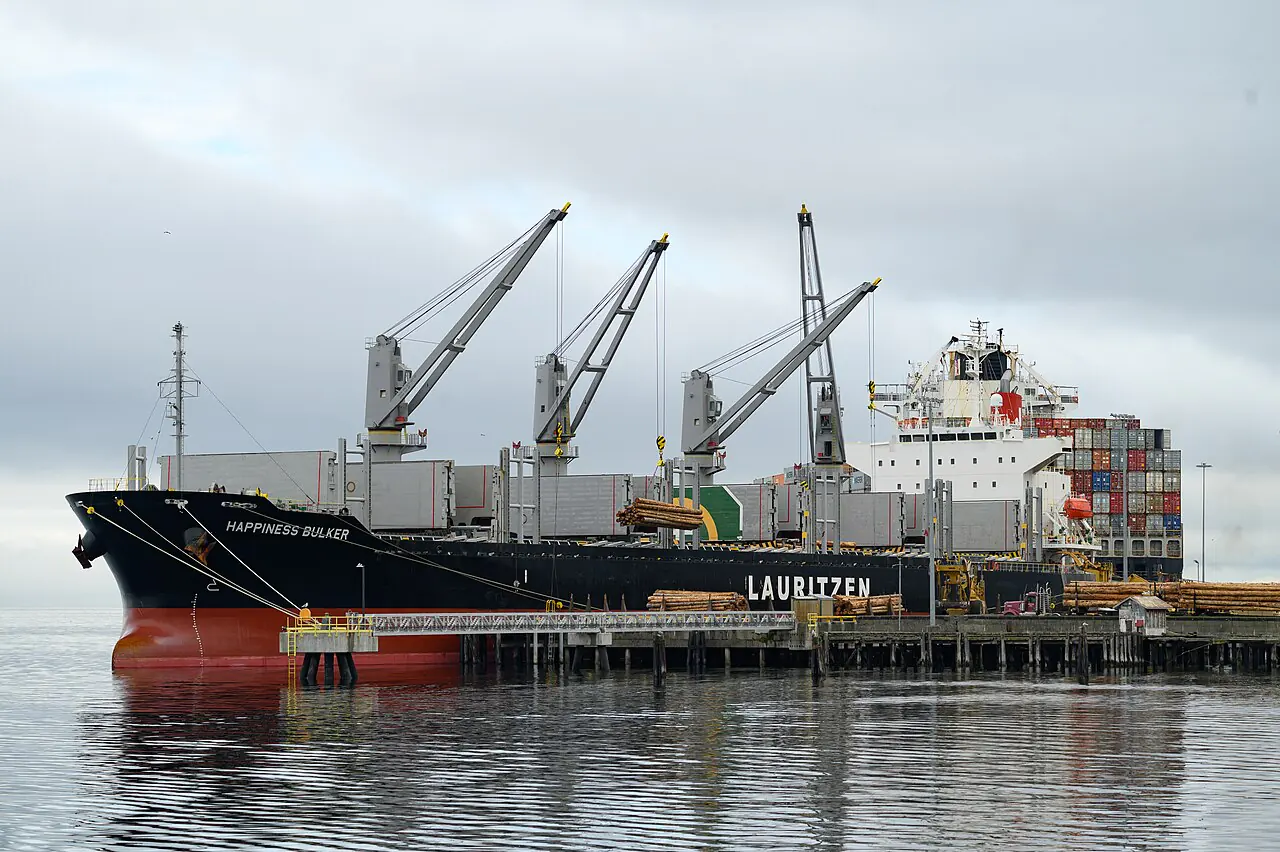
Bulk carriers, often referred to as “bulkers,” are a fundamental class of cargo ship designed specifically to transport unpackaged dry cargo in large quantities. Unlike container ships, which carry standardized units, or tankers, which carry liquids, bulk carriers utilize large, open cargo holds to accommodate commodities such as iron ore, coal, grain, cement, and various minerals.
The primary characteristic of a bulk carrier is its massive internal volume and its ability to be loaded and unloaded efficiently, often in ports with varying levels of infrastructure. The concept of purpose-built bulk carriers evolved significantly in the 19th century. A notable early example was the SS John Bowes, built in 1852, which helped pioneer the transport of bulk commodities by sea.
In the modern era, the bulk carrier is the backbone of global industrial supply chains. They facilitate the movement of raw materials from extraction sites (such as iron ore mines in Brazil or coal mines in Australia) to industrial hubs (such as steel mills in China or power plants in Europe). The design of these vessels is driven by the physical properties of the cargo they carry—ranging from the extreme density of iron ore to the light, flowing nature of grain—requiring specialized structural and stability considerations.
2. Mission and Operations
The mission of a bulk carrier is the mass transit of raw materials with maximum efficiency and minimum cost per ton. This mission dictates every aspect of their design, from hull shape to cargo handling capabilities.
Cargo Types and Characteristics
Bulk carriers are generally categorized by the types of cargo they are optimized to carry:
- Dry Bulk (Major): Includes iron ore, coal, and grain. These are the high-volume, high-tonnage commodities that drive the market.
- Minor Bulks: Includes bauxite, cement, fertilizers, soda ash, and various minerals. These often require more specialized handling or are carried by smaller, more versatile vessels.
- Specialized Bulks: Some vessels are designed for specific commodities, such as forest products (wood chips) or scrap metal.
Operational Dynamics
Operations are divided into three main phases:
- Loading: At the loading port, cargo is typically delivered via conveyor belts, chutes, or grabs from shore-based cranes into the ship’s holds. For “geared” vessels (those with their own cranes), loading can occur in less developed ports.
- Transit: During the voyage, the ship must manage stability, particularly as the center of gravity shifts during loading/unloading and as fuel is consumed. Ballast water management is critical here to maintain stability and draft.
- Discharging: At the destination, cargo is removed. High-efficiency discharge is vital to minimize “port time,” which is one of the highest operational costs for bulk carriers.
The industry often distinguishes between “geared” and “gearless” vessels. Geared vessels have onboard cranes or hydraulic grabs, providing autonomy in remote or underdeveloped ports. Gearless vessels rely entirely on sophisticated shore-side infrastructure, allowing them to be larger and more efficient on high-volume, established trade routes.
3. Hull, Size, and Design
The design of a bulk carrier is a balance of structural strength, cargo capacity, and hydrodynamic efficiency. The hull must be robust enough to withstand the immense localized pressures exerted by heavy cargoes like iron ore, which can cause significant stress on the tank top (the floor of the hold).
Structural Considerations
Bulk carrier hulls are typically constructed using high-tensile steel. Key structural elements include:
- Cargo Holds: Large, unobstructed compartments designed for easy access.
- Hatch Covers: Heavy-duty, weather-tight covers that protect the cargo from seawater and weather. Common types include folding, side-rolling, and pontoon-style covers.
- Double Bottoms: A thick structural floor that provides both strength and space for ballast tanks and fuel storage.
- Bulkheads: Internal walls that divide the holds and provide longitudinal and transverse strength.
Vessel Classes and Sizes
The bulk carrier market is segmented into several informal classes based on Deadweight Tonnage (DWT), dimensions, and the ability to transit specific canals.
| Class | Indicative DWT | Typical Length (LOA) | Typical Beam | Key Constraint / Note | Primary Cargo |
|---|---|---|---|---|---|
| Handysize | 10,000–35,000 | 150–180 m | 23–28 m | Widest port access; often geared | Grain, Fertilizer, Steel |
| Supramax | 40,000–65,000 | 185–200 m | 31–32 m | Most mid-size ports; usually geared | Coal, Grain, Bauxite |
| Ultramax | 60,000–70,000 | 190–200 m | 31–32 m | Evolution of Supramax; higher capacity | Coal, Grain, Steel |
| Panamax | 65,000–80,000 | ~294 m | ~32.3 m | Original Panama Canal locks | Coal, Grain, Phosphate |
| Kamsarmax | Up to 82,000 | ~229 m | ~32 m | Optimized for Port of Kamsar, Guinea | Bauxite, Coal |
| Capesize | 150,000–200,000 | 250–300 m | 43–47 m | Cannot use Panama/Suez; rounds Capes | Iron Ore, Coal |
| Newcastlemax | ~185,000 | ~300 m | ~45 m | Optimized for Newcastle, Australia | Coal |
| VLOC / Valemax | 200,000–400,000+ | 360+ m | 60+ m | Dedicated deep-water terminals | Iron Ore |
Note: Dimensions and DWT ranges are typical and can vary by builder and specific contract requirements.
4. Propulsion and Engines
Bulk carriers are optimized for long-haul, steady-speed voyages, which dictates their propulsion systems.
Main Engines
The heart of a bulk carrier is typically a large, low-speed, two-stroke, slow-speed diesel engine. These engines are chosen for their exceptional thermal efficiency and ability to run on heavy fuel oils (HFO) or, increasingly, Very Low Sulfur Fuel Oil (VLSFO).
- Operation: The engine is directly coupled to the propeller shaft, eliminating the need for a complex gearbox.
- Characteristics: These engines operate at very low RPM (often under 100), which minimizes mechanical wear and maximizes fuel economy over thousands of miles.
Propeller and Shafting
The engine turns a massive single propeller, usually made of bronze or stainless steel, which provides the thrust necessary to move the vessel. The propeller shaft is a heavy-duty steel component that transmits power from the engine through the stern tube to the propeller.
Speed and Efficiency
Unlike container ships that prioritize speed to meet tight schedules, bulk carriers prioritize fuel economy and cost-per-ton. Average cruising speeds typically range from 10 to 15 knots, though specialized VLOCs might move more slowly to optimize fuel consumption.
5. Electrical System and Power
A bulk carrier requires significant electrical power to support its propulsion-related auxiliaries, cargo handling equipment, and hotel loads (crew living quarters).
Power Generation
Primary electrical power is generated by multiple auxiliary diesel generators (often referred to as “aux engines”). These are medium-speed engines that provide a steady supply of AC electricity.
- Redundancy: Most vessels carry at least three generators to ensure that if one fails, the ship remains operational.
- Emergency Generator: A separate, smaller diesel engine is located above the waterline to provide emergency power for essential services (navigation, emergency lighting, steering) in the event of a total blackout.
Distribution and Management
- Main Switchboard: The central hub that receives power from the generators and distributes it throughout the vessel.
- Power Management System (PMS): Modern vessels use computerized PMS to automatically monitor load, start/stop generators as needed, and prevent blackouts through load shedding.
- Transformers: Used to step down voltages for different uses, such as 440V for heavy machinery and 220V/110V for lighting and electronics.
6. Equipment and How It Is Used
Bulk carriers are equipped with specialized tools to manage their unique cargo and operational needs.
Cargo Handling Equipment
- Deck Cranes: Common on Handysize and Supramax vessels. These allow the ship to load and unload in ports that lack shore-based equipment. They are usually electro-hydraulic cranes with lifting capacities between 25 and 60 tonnes.
- Hatch Covers: These are critical for cargo protection. They must be weather-tight to prevent seawater ingress (which can destroy cargo like grain or cause spontaneous combustion in coal). Types include:
- Folding covers: Hinged at one end.
- Side-rolling covers: Slide sideways along rails.
- Pontoon covers: Large, heavy units lifted by cranes.
- Grabs and Buckets: Used in conjunction with cranes to scoop bulk material from holds.
Auxiliary Cargo Equipment
- Bilge and Ballast Systems: Pumps and piping used to remove water from cargo holds (bilge) and to manage ballast water for stability.
- Ventilation Systems: Essential for preventing the buildup of gases or heat within the cargo holds. For example, coal can undergo spontaneous combustion if heat is not dissipated.
- Hold Cleaning Equipment: High-pressure water jets and specialized tools used to ensure holds are clean for the next cargo (e.g., transitioning from coal to grain requires meticulous cleaning).
7. Navigation, Communications, and Safety
Safety and precise navigation are paramount, especially when carrying massive loads that significantly affect the ship’s maneuverability and stopping distance.
Navigation Equipment
The bridge is equipped with advanced systems to ensure safe passage:
- Radar/ARPA: For detecting other vessels and landmasses.
- ECDIS (Electronic Chart Display and Information System): Digital charts that integrate GPS data for precise positioning.
- AIS (Automatic Identification System): Broadcasts the ship’s identity, position, and course to nearby vessels.
- Gyrocompass and Magnetic Compass: Provide heading information.
Communication Systems
- GMDSS (Global Maritime Distress and Safety System): A set of radio and satellite-based equipment designed to ensure that a ship in distress can always call for help. This includes VHF, MF/HF radios, and Inmarsat satellite terminals.
Safety and Life-Saving Appliances (LSA)
- Lifeboats and Liferafts: Mounted on the deck and ready for rapid deployment.
- Firefighting Systems: Including fixed CO2 or water-mist systems for cargo holds, and portable extinguishers and fire hoses for the rest of the ship.
- Emergency Steering: A backup system to ensure the ship can still be steered if the primary steering gear fails.
8. Crew and Organization
The operation of a bulk carrier requires a professional, hierarchical team of trained mariners.
Deck Department
Responsible for navigation, cargo operations, and hull maintenance.
- Master (Captain): The ultimate authority on the ship, responsible for the safety of the vessel, crew, and cargo.
- Chief Officer (Mate): The second-in-command, responsible for cargo operations and deck maintenance.
- Second and Third Officers: Assist with navigation and various safety/maintenance duties.
- Ratings (AB, OS): Able Seamen and Ordinary Seamen who perform manual labor, watchkeeping, and maintenance.
Engine Department
Responsible for the propulsion, electrical, and mechanical systems.
- Chief Engineer: Head of the engine department, responsible for all technical machinery.
- Second, Third, and Fourth Engineers: Manage specific machinery, fuel, and electrical systems.
- Ratings (Oiler, Wiper): Perform maintenance and monitoring in the engine room.
Crew Size and Living
A typical bulk carrier carries a crew of 20 to 30 members. They live and work in onboard accommodations, which include mess rooms, galleys, and cabins. Crew rotation is a standard practice to ensure well-being.
9. Certificates and Training Requirements
To operate a bulk carrier, both the vessel and its crew must meet rigorous international standards.
Crew Training (STCW)
All crew members must be trained and certified according to the International Convention on Standards of Training, Certification and Watchkeeping for Seafarers (STCW). This ensures a global baseline for competence in:
- Basic firefighting and survival at sea.
- First aid and medical care.
- Navigation and engine room operations.
Vessel Certificates
A ship must carry several mandatory certificates to be legally permitted to sail:
- Certificate of Registry: Proves the ship’s nationality.
- Safety Construction Certificate: Verifies the hull and machinery meet standards.
- Safety Equipment Certificate: Confirms LSA and firefighting gear are in place.
- International Load Line Certificate: Specifies the limits to which the ship can be loaded.
- International Oil Pollution Prevention (IOPP) Certificate: Ensures compliance with MARPOL.
10. Regulations, Class, and Inspections
The maritime industry is one of the most heavily regulated in the world to prevent environmental disasters and ensure safety.
International Maritime Organization (IMO)
The IMO sets the global standards through various conventions:
- SOLAS (Safety of Life at Sea): Focuses on ship construction, equipment, and operation.
- MARPOL (Marine Pollution): Regulates the discharge of oil, chemicals, sewage, and air emissions.
- Load Line Convention: Prevents overloading by setting maximum immersion levels.
Classification Societies
Shipowners must “class” their vessels with organizations like DNV (Det Norske Veritas), Lloyd’s Register (LR), American Bureau of Shipping (ABS), or Bureau Veritas (BV). Classification societies:
- Establish technical standards for design and construction.
- Perform regular surveys to ensure the ship maintains these standards throughout its life.
Inspection Regimes
- Annual/Intermediate/Special Surveys: Periodic, deep inspections of the hull, machinery, and systems.
- Port State Control (PSC): Inspections by national maritime authorities in various ports to ensure visiting ships comply with international regulations.
11. Notable Shipyards, Operators, and Example Vessels
The bulk carrier industry involves a global network of specialized builders and massive shipping conglomerates.
Major Shipyards
Most modern bulk carriers are built in East Asia:
- South Korea: HD Hyundai Heavy Industries (the world’s largest), Hanwha Ocean, and HJ Shipbuilding.
- China: CSSC (China State Shipbuilding Corporation) and various specialized yards like COSCO Nantong and Guangzhou Wenchong.
- Japan: Mitsui E&S and other historic builders.
Leading Operators
- Oldendorff Carriers (Germany): One of the largest, with a massive fleet of ~700 bulkers.
- Pacific Basin (Hong Kong): A major player in the Handysize and Supramax segments.
- Star Bulk Carriers (Greece): A leading owner and operator of dry bulk vessels.
- Genco Shipping (USA): A significant player in the American market.
Example Vessels
- Ore Brasil: A massive Valemax-class ship (formerly Vale Brasil), designed for the Brazil-China iron ore route.
- Berge Stahl: A legendary iron ore carrier that held the record for being the largest bulk carrier for many years.
- Brasil Maru: A pioneering large ore carrier built in Japan.
- Stellar Queen: A notable vessel that illustrates the scale of modern ore carriers.
12. Environment and Future Outlook
As the maritime industry faces pressure to decarbonize, bulk carriers are at the forefront of technological evolution.
Decarbonization and Emissions
The IMO has set ambitious targets to reduce greenhouse gas (GHG) emissions. This affects bulk carriers through:
- EEXI (Energy Efficiency Existing Ship Index) & CII (Carbon Intensity Indicator): Regulations that force ships to operate more efficiently or face operational limits.
- Scrubbers (EGCS): Exhaust Gas Cleaning Systems that allow ships to continue using cheaper HFO while meeting sulfur emission limits.
Future Fuels
The search for “zero-carbon” fuels is driving R&D into:
- LNG (Liquefied Natural Gas): A cleaner transitional fuel, though it introduces methane slip concerns.
- Ammonia (NH3): A high-potential carbon-free fuel, though its toxicity requires specialized handling.
- Hydrogen: A clean fuel, but its low volumetric energy density makes storage challenging on large vessels.
- Methanol: Gaining traction as a dual-fuel option.
Other Environmental Tech
- Ballast Water Management Systems (BWMS): Required to prevent the spread of invasive aquatic species.
- Hull Coatings: Advanced anti-fouling paints to reduce drag and improve fuel efficiency.
13. Facts, Records, and Common Misconceptions
Key Facts
- Deadweight (DWT) vs. Tonnage: DWT is the weight a ship can carry (cargo, fuel, water, etc.), whereas Gross Tonnage (GT) is a measure of the ship’s total internal volume.
- The “Capesize” Name: The name comes from the fact that these ships are too large for the Panama or Suez Canals, requiring them to sail around the Cape of Good Hope or Cape Horn.
Common Misconceptions
- “All bulk carriers are the same”: In reality, a Handysize and a VLOC are as different as a small van and a massive freight train.
- “Bulk carriers only carry coal”: While coal is a major commodity, the diversity of cargo (from grain to iron ore) is what keeps the industry dynamic.
14. Glossary
- Ballast: Water loaded into tanks to improve stability and trim.
- Beam: The maximum width of the ship.
- Bunker: The fuel used by the ship.
- Capesize: A class of large bulk carriers that cannot transit the Panama or Suez canals.
- Deadweight Tonnage (DWT): The total weight a ship can safely carry.
- Draft (Draught): The vertical distance between the waterline and the bottom of the hull.
- Gear/Geared: A ship equipped with its own cargo-handling equipment (cranes).
- Hold: An enclosed space in the ship’s hull used for cargo.
- Hatch Cover: The lid for a cargo hold.
- LOA (Length Overall): The total length of the ship from bow to stern.
- Panamax: A ship size optimized for the original Panama Canal locks.
- VLOC: Very Large Ore Carrier.
15. Sources
- Marine Insight: https://www.marineinsight.com
- Wikipedia - List of bulk carriers: https://en.wikipedia.org/wiki/List_of_bulk_carriers
- TrustedDocks Shipyard Data: https://www.trusteddocks.com
- Lloyd’s Register: https://www.lr.org
- IMO Official Website: https://www.imo.org
- Bulkargo Ship Size Guides: https://www.bulkargo.com
- Naval Encyclopedia: https://naval-encyclopedia.com