1. What Is This Ship?
Offshore construction and crane vessels represent the pinnacle of maritime engineering, designed to perform high-precision, high-load operations in some of the most hostile environments on Earth. Unlike conventional cargo ships that focus on the efficient transport of goods between ports, these vessels are specialized “workhorses” of the marine environment. They are mobile industrial platforms capable of installing, maintaining, and decommissioning massive structures, such as oil and gas platforms, offshore wind turbines, subsea pipelines, and complex umbilical systems.
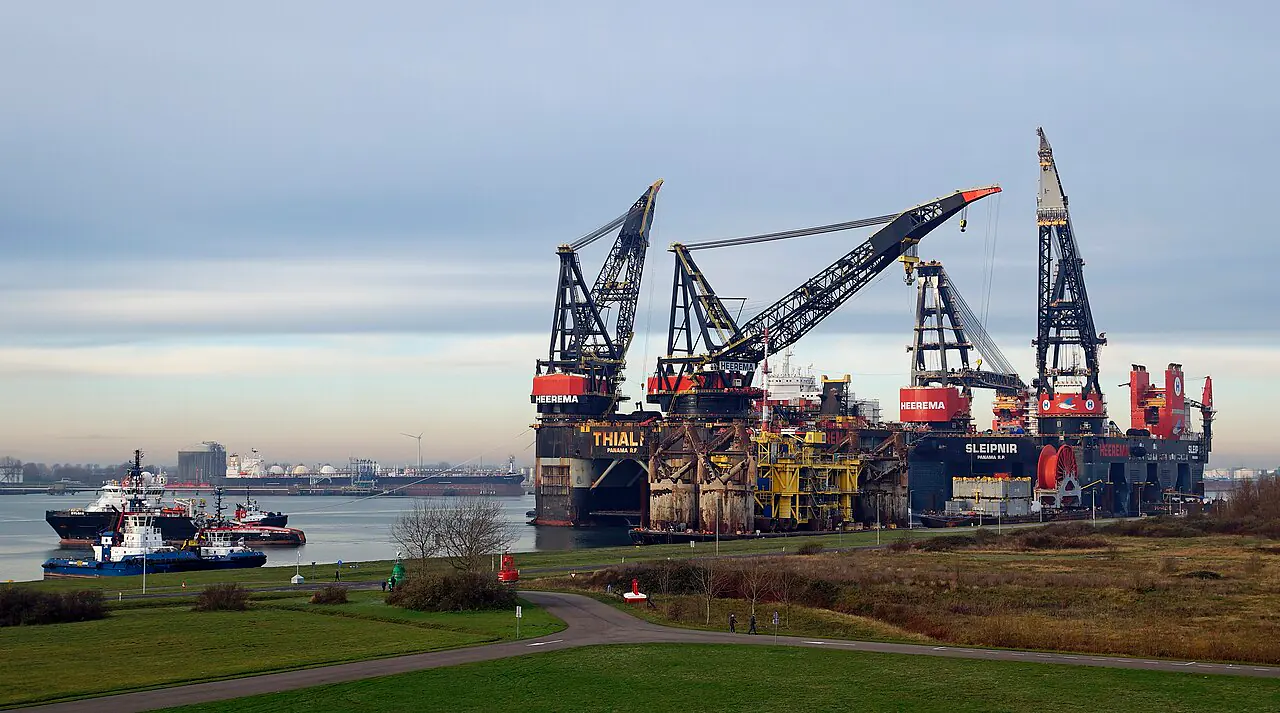
The term “offshore construction vessel” (CSV) is a broad category that encompasses several specialized sub-types. At one end of the spectrum are Construction Support Vessels (CSVs), which are highly versatile ships equipped with cranes, ROVs, and dynamic positioning (DP) systems to support various subsea and topside tasks. At the other end are Heavy-Lift Vessels (HLVs) or dedicated Crane Vessels, which possess immense lifting capacities—often exceeding several thousand tonnes—to install massive modules or entire platform jackets.
Crucially, these vessels are distinguished from standard Offshore Support Vessels (OSVs) by their specialized mission equipment. While an OSV might focus on transporting supplies or anchoring, a construction vessel is defined by its ability to manipulate the environment through massive mechanical force and precision positioning. As the global energy transition progresses, these vessels are increasingly pivoting from traditional oil and gas support to become the backbone of the offshore wind industry, handling the installation of massive wind turbine foundations and nacelles.
2. Mission and Operations
The operational life of an offshore construction vessel is defined by high-stakes, mission-critical tasks that require extreme precision. These missions can be broadly categorized into several key domains:
Heavy-Lift and Installation
This is the primary mission for dedicated crane vessels. It involves the lifting and placement of massive prefabricated modules (topside modules), platform jackets, and subsea templates. These operations require the vessel to maintain a stable position (station-keeping) while managing the dynamic loads of a heavy suspended object, often in varying sea states.
Subsea Infrastructure Construction
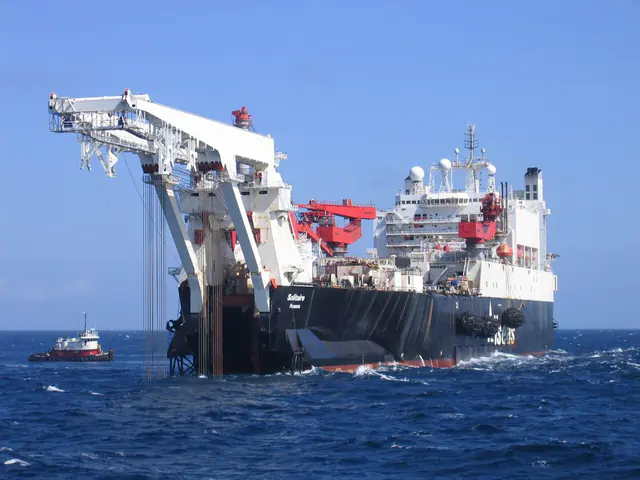
Construction vessels are essential for building the “nervous system” of offshore fields. This includes the installation of subsea pipelines, flowlines, and umbilicals. Specialized vessels may be equipped with Vertical Lay Systems (VLS) or J-Lay systems to deploy these products from the vessel to the seabed. They also install subsea manifolds, trees, and wellheads.
Inspection, Maintenance, and Repair (IMR)
Once an offshore asset is installed, it requires constant monitoring and maintenance. Construction vessels act as IMR platforms, utilizing Remotely Operated Vehicles (ROVs) and subsea cranes to inspect pipelines for corrosion, clear debris, repair subsea valves, or perform repairs on seabed structures.
Offshore Wind Support
The burgeoning offshore wind sector relies heavily on these vessels for the installation of monopiles, jackets, and suction buckets, as well as the lifting of wind turbine towers and nacelles onto their foundations. Modern Service Operation Vessels (SOVs), a subset of construction vessels, are also used to provide accommodation and “walk-to-work” access for wind farm technicians.
Decommissioning
As mature offshore fields reach the end of their life cycles, construction vessels are tasked with the safe removal of structures. This involves “reverse installation”—cutting, lifting, and transporting massive steel structures back to shore for recycling or disposal.
3. Hull, Size, and Design
The design of an offshore construction vessel is dictated by the physics of lifting heavy loads and maintaining stability in open seas. There is no “standard” size, as dimensions vary wildly depending on the intended mission, but several design principles remain constant.
Hull Configurations
- Monohulls: The most common design for mid-sized CSVs and MPSVs. They offer good speed and versatility but may have limitations in extreme heavy-lift stability compared to other types.
- Catamarans: Often used for specialized heavy-lift or gangway vessels. The dual-hull design provides a wider, more stable working platform and can “straddle” certain structures or loads.
- Semi-Submersibles: These vessels feature large underwater pontoons that can be flooded to submerge the hull partially. This significantly increases stability and reduces the impact of wave motion, making them ideal for the most massive heavy-lift operations.
Key Design Characteristics
- Deck Area and Load Capacity: A massive, unobstructed cargo deck is essential for storing modules, pipes, and subsea equipment. The “deck load” (the amount of weight the deck can support per square meter) is a critical specification.
- Stability and Ballasting: Because cranes create large “heeling moments” (tilting the ship) when lifting, these vessels require sophisticated ballasting systems and large internal tanks to quickly redistribute weight and maintain an upright position.
- Draught and Clearance: Many construction vessels require a relatively shallow draught for coastal work but must be capable of deeper operations. Conversely, heavy-lift vessels often have very deep operational draughts to increase stability.
- Seakeeping Improvements: Modern designs often incorporate advanced hull forms like the X-BOW® or TWIN X-STERN® to reduce slamming and improve comfort and stability in rough seas.
4. Propulsion and Engines
To perform construction tasks, a vessel must be able to move precisely and stay exactly where it is commanded. This necessitates a highly sophisticated propulsion and power arrangement.
Diesel-Electric Propulsion
Most modern construction vessels utilize a diesel-electric configuration. Instead of diesel engines driving propellers through traditional shafts, the engines drive large alternators to create electricity. This electricity is then distributed to a central bus and used to power electric motors that drive the propulsion units. This system offers:
- Flexibility: Power can be diverted from propulsion to heavy cranes or ROV systems as needed.
- Efficiency: Engines can be optimized to run at their most efficient load.
- Redundancy: Multiple generators ensure that if one fails, the vessel does not lose power.
Thruster Types
- Azimuth Thrusters: These are propeller units that can rotate 360 degrees, providing exceptional maneuverability. They are the cornerstone of modern Dynamic Positioning.
- Tunnel Thrusters: Mounted in transverse tunnels through the hull, these provide lateral (side-to-side) thrust, useful for fine positioning in tight spaces.
- Retractable Thrusters: These can be pulled up into the hull to reduce drag during transit, improving fuel efficiency.
5. Electrical System and Power
The electrical system is the “brain and muscle” of an offshore construction vessel. It must provide massive amounts of power while maintaining extreme levels of reliability.
Dynamic Positioning (DP) Systems
The most critical electrical and control component is the Dynamic Positioning (DP) system. DP uses a combination of sensors (GNSS, laser, sonar) and computer algorithms to automatically control the vessel’s thrusters to maintain a precise position and heading, countering wind, waves, and currents.
DP systems are classified by their level of redundancy:
| DP Class | Redundancy Level | Single Fault Tolerance | Typical Use |
|---|---|---|---|
| DP1 | None | No tolerance for component failure | Low-risk, shallow water support |
| DP2 | Active components redundant | No loss of position from a single active component failure | Drilling, diving, general construction |
| DP3 | Full physical/electrical separation | No loss of position even after a fire or flood in a single compartment | High-risk, heavy lift, deepwater installation |
Power Management and Hybridization
Advanced Power Management Systems (PMS) optimize the use of generators. A major trend is hybridization, where large battery energy storage systems (BESS) are integrated into the grid. Batteries can provide “peak shaving” (handling sudden power spikes from a crane) and allow engines to run more efficiently, significantly reducing fuel consumption and emissions.
6. Equipment and How It Is Used
The specialized equipment defines the vessel’s capability. These tools are often the most expensive components of the ship.
Crane Systems
Cranes are the primary tools for construction. They fall into several categories:
- Active Heave Compensated (AHC) Cranes: These use hydraulic or electric compensators to counteract the vessel’s motion caused by waves. This allows the crane tip to remain steady even while the ship is pitching, enabling safe subsea lifts.
- Heavy-Lift Cranes: Massive cranes capable of lifting thousands of tonnes. They may be mounted on the deck or as part of a specialized superstructure.
- Knuckle Boom Cranes: These resemble a human finger, with joints that allow for great dexterity and the ability to reach into tight spaces or over the side of the vessel.
- Subsea Cranes: Smaller, ruggedized cranes designed for deployment and operation in deep water.
Subsea Tools and ROVs
- Remotely Operated Vehicles (ROVs): Unmanned underwater robots equipped with cameras, lights, and manipulators. Work-class ROVs are the standard for construction, capable of performing complex tasks like turning valves or cutting structures.
- Moonpools: An opening in the hull that allows equipment (like ROVs or drill strings) to be deployed directly into the water, protected from the surface waves.
- LARS (Launch and Recovery Systems): The specialized winches and frames used to deploy ROVs or subsea tools from the vessel.
Installation Equipment
- Vertical Lay Systems (VLS): Specialized machinery used to feed pipes, umbilicals, or cables vertically into the water.
- Gangways (Walk-to-Work): Motion-compensated bridges that allow personnel to transfer safely from the vessel to an offshore platform or wind turbine tower, even in significant wave heights.
| Equipment Category | Common Types | Primary Function |
|---|---|---|
| Lifting | AHC Crane, Heavy-Lift Crane, Knuckle Boom | Moving modules and subsea structures |
| Subsea | Work-Class ROV, Observation ROV, Moonpool | Inspection, maintenance, and seabed work |
| Installation | VLS, Pipelay System, Tensioners | Deploying cables, pipes, and umbilicals |
| Personnel | Motion-Compensated Gangway, Helideck | Safe transfer of crew and technicians |
7. Navigation, Communications, and Safety
Precision is everything in offshore construction. The vessel must know exactly where it is and exactly where its load is.
- Positioning Sensors: A combination of Multi-constellation GNSS (GPS, GLONASS, Galileo), Acoustic Positioning (USBL/LBL) for subsea tracking, and Laser/Radar-based systems for measuring distance to nearby structures.
- Communication: High-bandwidth satellite communications (VSAT) are essential for real-time data transfer with onshore control centers and for crew welfare. GMDSS (Global Maritime Distress and Safety System) is the standard for emergency communication.
- Safety Systems: This includes advanced fire detection, life-saving appliances (lifeboats/liferafts), and specialized safety equipment for hazardous environments (e.g., H2S detection).
8. Crew and Organization
Operating a construction vessel requires a highly skilled and diverse team. The crew is generally divided into three main groups:
- Marine Crew: Officers (Captain, Chief Mate, etc.) and engineers responsible for the vessel’s navigation, propulsion, and overall safety.
- Technical/Specialist Crew: This includes highly specialized roles such as DP Operators (DPO), Crane Operators, ROV Pilots, and subsea engineers. These personnel are the “operators” of the construction tools.
- Support Crew: Includes catering, housekeeping, and general deckhands.
Because of the high-stakes nature of the work, the organization emphasizes strict adherence to HSE (Health, Safety, and Environment) protocols.
9. Certificates and Training Requirements
The complexity of the equipment and the danger of the environment necessitate rigorous training and certification.
Maritime Standards (STCW)
All marine crew must hold certifications under the STCW (Standards of Training, Certification and Watchkeeping) convention, covering basic safety, firefighting, and survival at sea.
Specialized Offshore Certifications
- DP Certification: DPOs must undergo extensive training and regular assessments to maintain their certification.
- OPITO Certifications: For personnel traveling by helicopter, BOSIET (Basic Offshore Safety Induction and Emergency Training) and HUET (Helicopter Underwater Escape Training) are mandatory.
- Technical Licenses: Crane operators and ROV pilots often require specialized industrial certifications specific to their equipment.
10. Regulations, Class, and Inspections
Offshore construction vessels operate under a complex web of international and national regulations.
- IMO (International Maritime Organization): Sets global standards for safety (SOLAS), pollution prevention (MARPOL), and the transport of industrial personnel (IP Code).
- Classification Societies (Class): Organizations like DNV, ABS, and Lloyd’s Register (LR) develop and verify the technical rules for ship design, construction, and maintenance. A vessel must be “in class” to be commercially viable and insured.
- Flag State: The country where the vessel is registered is responsible for ensuring it complies with all international and national laws.
11. Notable Shipyards, Operators, and Example Vessels
The offshore construction market is dominated by a few global leaders.
Leading Operators
- Allseas Group S.A.: Known for pioneering massive-scale vessels like the Pioneering Spirit.
- Saipem: A major player in complex subsea and heavy-lift projects.
- Boskalis: A leader in dredging and offshore construction services.
- Subsea7: Highly specialized in subsea engineering and construction.
- Heerema Marine Contractors: Renowned for heavy-lift and offshore installation.
Leading Shipyards
- Vard (Norway/International): A premier designer and builder of high-specification offshore vessels.
- Damen Shipyards (Netherlands): A global leader in modular and versatile offshore vessel designs.
- Keppel (Singapore): A major hub for high-complexity offshore engineering.
Example Vessels
| Vessel Name | Operator | Key Feature | Notable Capability |
|---|---|---|---|
| Pioneering Spirit | Allseas | Largest construction vessel in the world | 60,000t topside lift |
| Les Alizés | Jan De Nul | High-capacity CSV | 5,000t Huisman crane |
| Normand Maximus | Vard/Various | Multi-purpose installation | 550t Vertical Lay System |
| Pulse | Allseas | Hybrid-ready design | Battery-integrated DP2 system |
12. Environment and Future Outlook
The offshore construction sector is undergoing a massive transformation driven by two forces: Decarbonization and the Energy Transition.
- Hybrid and Green Propulsion: There is an urgent push to reduce the carbon footprint of these vessels. This includes the adoption of hybrid-battery systems, methanol-ready engines, and even exploring hydrogen and ammonia as future fuels.
- Wind Farm Growth: As offshore wind expands into deeper waters, the demand for specialized wind installation vessels (WIVs) and high-capacity CSVs will continue to climb.
- Automation and Digitalization: Increased use of autonomous subsea vehicles, remote-operated cranes, and digital twins for predictive maintenance is expected to enhance safety and efficiency.
13. Facts, Records, and Common Misconceptions
- Fact: Not all “offshore vessels” are construction vessels. Many are simply supply ships (PSVs) that carry food and fuel.
- Misconception: People often think “heavy lift” only refers to weight. In reality, it refers to the ability to manage both massive weight and the extreme dynamic forces involved in lifting.
- Fact: A vessel can be DP3 but still not be allowed to work in certain areas if it lacks specific subsea equipment or specialized class notations.
14. Glossary
- AHC (Active Heave Compensation): Technology used to neutralize the motion of waves during a lift.
- Azimuth Thruster: A propeller unit that can rotate 360 degrees.
- BOSIET: Basic Offshore Safety Induction and Emergency Training.
- CSV (Construction Support Vessel): A multipurpose vessel for offshore construction.
- DP (Dynamic Positioning): An automated system for maintaining a vessel’s position.
- HLV (Heavy-Lift Vessel): A vessel designed for extremely large lifts.
- IMR (Inspection, Maintenance, and Repair): The phase of an asset’s life after installation.
- Moonpool: An opening in the hull for deploying subsea equipment.
- ROV (Remotely Operated Vehicle): An unmanned underwater robot.
- STCW: Standards of Training, Certification and Watchkeeping for Seafarers.
- VLS (Vertical Lay System): Machinery for vertical deployment of subsea products.
- Walk-to-Work: A method of transferring personnel via a motion-compensated gangway.
15. Sources
- Allseas Vessel Specifications: https://www.allseas.com/en/who-we-are/our-fleet/offshore-construction-vessels
- DNV Rules for Classification: https://www.dnv.com/maritime/Offshore/
- Vard Ship Designs: https://www.vard.com/ship-design/vard-3-series/vard-3-19
- Jan De Nul Technical Specs: https://www.jandenul.com/sites/default/files/public/Les%20Aliz%C3%A9s%20(EN)_2026_0.pdf
- Shipfinex Offshore Vessel Guide: https://www.shipfinex.com/blog/what-are-offshore-vessels-types-companies-guide
- Maersk Training - Dynamic Positioning: https://www.maersktraining.com/news-and-insights/industry-insights-blog/how-dynamic-positioning-works
- Wikipedia - Crane Vessel: https://en.wikipedia.org/wiki/Crane_vessel
- Wikipedia - Offshore Construction: https://en.wikipedia.org/wiki/Offshore_construction