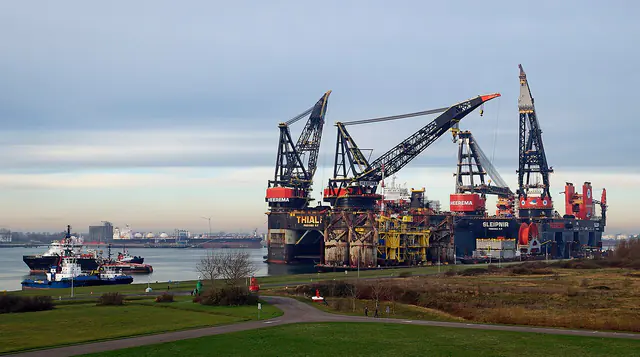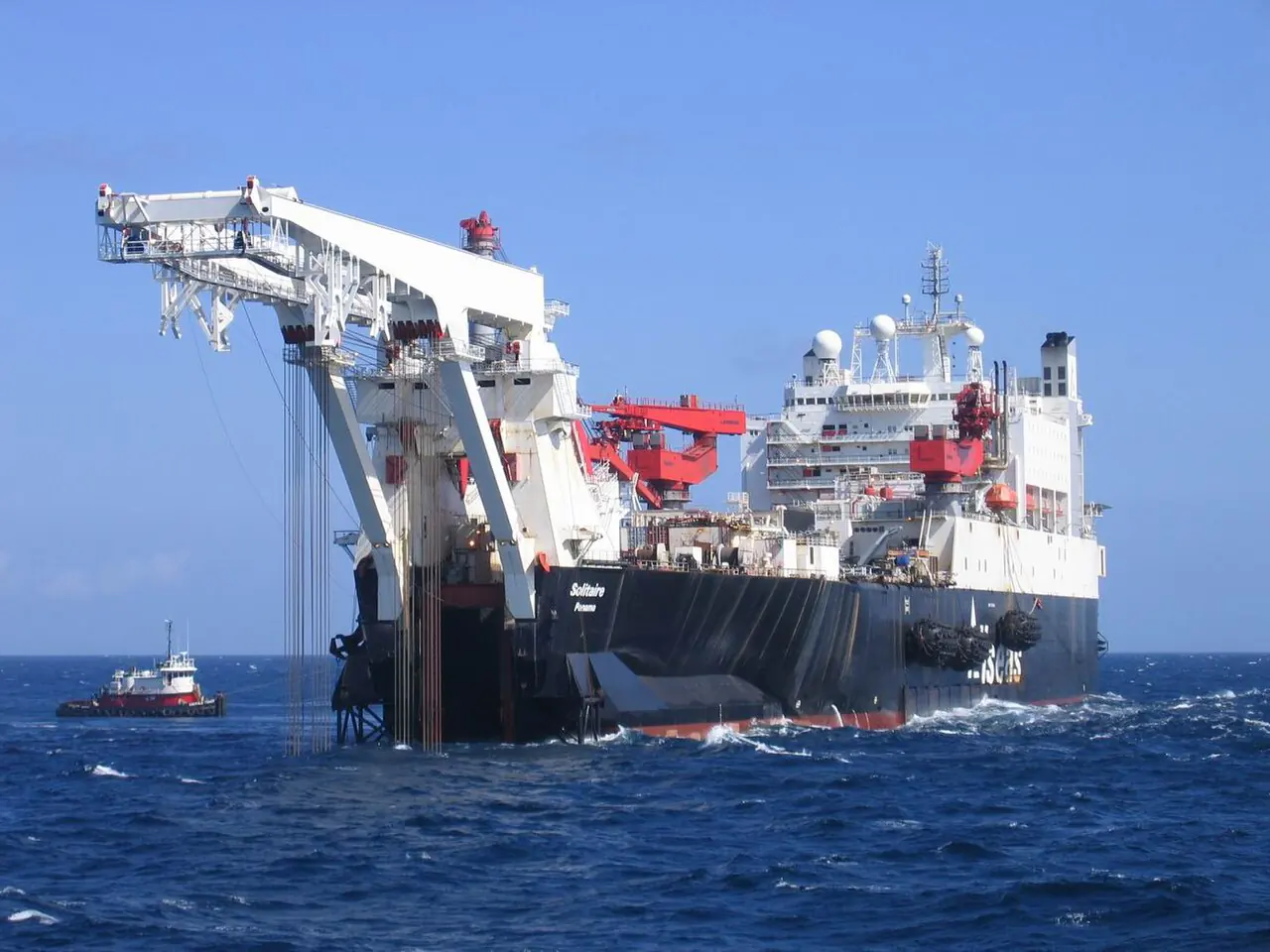
1. What Is This Ship?
A pipelay vessel is a highly specialized subclass of Offshore Construction Vessels (OCVs) or Construction Service Vessels (CSVs) designed for the installation, maintenance, and decommissioning of subsea pipelines and cables. Unlike standard cargo or supply ships, these vessels function as massive, floating, mobile factories. They are equipped with sophisticated machinery to handle, weld, inspect, coat, and deploy heavy steel or flexible pipes from the deck to the seabed.
The primary objective of a pipelay vessel is to ensure the structural integrity of the pipeline throughout the installation process, managing the extreme stresses caused by the pipe’s weight and the vessel’s movement in dynamic ocean environments. These vessels operate in a range of environments, from shallow coastal waters to ultra-deepwater environments exceeding 3,000 meters.
Depending on the diameter of the pipe, the water depth, and the required installation speed, pipelay vessels are categorized by their primary installation methodology:
- S-lay vessels: Utilize a stinger to create an “S” shaped curve as the pipe descends.
- J-lay vessels: Use a vertical tower to install pipe in a “J” shape, ideal for deepwater.
- Reel-lay vessels: Deploy pipe that has been wound onto a large onboard reel, suitable for smaller diameter or flexible pipes.
2. Mission and Operations
The mission of a pipelay vessel is to facilitate the “EPCI” (Engineering, Procurement, Construction, and Installation) lifecycle of subsea infrastructure. This includes connecting offshore oil and gas fields to onshore terminals, linking offshore wind farms to the power grid, or constructing pipelines for Carbon Capture and Storage (CCS) projects.
Installation Methodologies
S-Lay Operations
S-lay is the most common method for shallow to intermediate water depths and for larger diameter rigid pipes. The pipeline is assembled on the vessel’s deck through a series of stations (conveyance, welding, NDT, and coating). As the vessel moves forward, the pipe is eased off the stern over a structure called a stinger. The stinger supports the pipe and controls its bend radius, creating an “S” shape as the pipe reaches the seabed. The “touchdown point” is the critical location where the pipe makes contact with the seafloor.
J-Lay Operations
In ultra-deepwater, the weight of the suspended pipe in an S-lay configuration would create excessive tension, potentially buckling the pipe or exceeding the vessel’s capacity. J-lay vessels solve this by using a tall, vertical J-lay tower. The pipe is held almost vertically, meaning it only experiences one major bend (the “J” shape) at the touchdown point. This significantly reduces the bending stress on the pipeline, making it the preferred method for extremely deep-sea installations.
Reel-Lay Operations
Reel-lay is a highly efficient, high-speed method used for smaller diameter (typically <20 inches) or flexible pipelines. The pipe is manufactured onshore, coated, and then wound onto a massive horizontal or vertical reel (or carousel) on the vessel. During installation, the pipe is unwound, straightened using a specialized ramp or straightener, and then deployed. This method allows for much faster installation rates than S-lay or J-lay because the welding and coating are completed onshore.
Operational Cycle
A typical pipelay operation follows a repetitive cycle:
- Pipe Handling: Bringing pipe joints from storage onto the main production line.
- Assembly: Moving the pipe through welding, non-destructive testing (NDT), and coating stations.
- Tensioning: Using heavy-duty tensioners to hold the weight of the suspended pipe string.
- Deployment: Easing the pipe over the stinger or through the J-lay tower.
- Abandonment and Recovery (A&R): In case of extreme weather or emergency, the pipe string is safely lowered to the seabed (abandoned) and later retrieved (recovered) using specialized winches.
3. Hull, Size, and Design
The hull of a pipelay vessel is designed to provide extreme stability and a massive amount of deck space. Unlike a tanker, which prioritizes cargo volume, a pipelay vessel prioritizes deck load capacity and station-keeping ability.
Dimensions and Capacity
- Length: These are large vessels, often ranging from 150m to over 250m.
- Breadth (Beam): Often wider than standard ships to accommodate large stingers or wide pipe-handling equipment. Typical breadths range from 25m to 50m.
- Deck Area: A significant portion of the vessel is dedicated to the “pipe factory” (welding/coating) and pipe storage (carousels/reels).
- Draught: Generally deeper than standard vessels to accommodate heavy machinery and provide stability, often between 10m and 15m during operations.
Design Configurations
- Vessel-type: Most modern, high-specification pipelay vessels are self-propelled ships. However, some older or smaller operations utilize pipelay barges, which may require tug assistance for transit and specialized mooring systems for station-keeping.
- DP Integration: The hull is designed to integrate heavily with the vessel’s Dynamic Positioning (DP) system. This requires specialized thruster configurations (azimuthing and tunnel thrusters) that are distributed around the hull to provide optimal control.
- Stinger Design: For S-lay vessels, the stern is often designed with a removable or retractable stinger to allow for easier transit between job sites.
| Feature | Typical Range (Large Vessel) |
|---|---|
| Length Overall (LOA) | 180 – 250 m |
| Breadth (Molded) | 30 – 50 m |
| Deck Load Capacity | 5,000 – 20,000+ tonnes |
| Water Depth Capability | 500 – 3,500+ m |
| Pipe Diameter Range | 4 – 48 inches |
4. Propulsion and Engines
Propulsion on a pipelay vessel is not just about transit speed; it is about the precise, high-power capability required for station-keeping. To maintain a fixed position over a subsea pipeline path, even in heavy seas, the vessel must have massive amounts of thrust available on demand.
Thruster Configuration
Most high-end pipelay vessels utilize Dynamic Positioning Class 3 (DP3) systems. To achieve this, they employ:
- Azimuthing Propellers: Large propellers that can rotate 360 degrees, providing thrust in any direction. These are typically located at the stern.
- Retractable Azimuthing Thrusters: Located in the bow or side tunnels, these can be lowered into the water for operation and retracted during transit to reduce drag.
- Tunnel Thrusters: Fixed propellers in transverse tunnels, used for fine-tuned lateral movement.
Engine and Power Requirements
The engines must provide two types of power:
- Propulsion Power: For moving the vessel between sites (typically 10–20 knots).
- Station-Keeping/Work Power: A massive amount of electrical power is required to run the DP thrusters, the pipe tensioners, the welding stations, the cranes, and the A&R winches.
A large pipelay vessel might have an installed power of 15,000 kW to 30,000+ kW, provided by multiple large diesel generators. Many modern vessels are moving toward hybrid power systems (using battery storage) to manage peak loads and reduce fuel consumption during station-keeping.
5. Electrical System and Power
The electrical system of a pipelay vessel is one of its most critical and complex components. The vessel acts as a floating power plant, distributing massive amounts of electricity to highly specialized equipment.
Power Management Systems (PMS)
Because the vessel’s stability depends on the DP system, the electrical grid must be exceptionally redundant. The PMS automatically manages the load across multiple generators to ensure that a single engine or generator failure does not result in a loss of DP capability (a “blackout”).
High Voltage (HV) Distribution
Due to the enormous power demands of thrusters and heavy-duty tensioners, most of the vessel’s distribution occurs at high voltage (typically 6.6 kV or 11 kV). This reduces energy losses and allows for smaller, more manageable cable sizes. Transformers and switchgear are used to step this power down to lower voltages (440V or 230V) for standard ship services and accommodation.
Critical Loads
The electrical system prioritizes “critical loads” that must never lose power:
- DP Control Systems: The “brain” of the station-keeping.
- Thrusters: The “muscles” providing thrust.
- Tensioners: Essential for preventing the pipe from falling or buckling.
- Communication and Navigation: For safety and positioning.
6. Equipment and How It Is Used
A pipellay vessel is essentially a collection of highly synchronized subsea construction tools.
Primary Pipelay Equipment
| Equipment | Function | Description |
|---|---|---|
| Tensioners | Pipe Support | Uses heavy-duty rollers to grip the pipe and provide the necessary vertical tension to counteract gravity and seabed curvature. |
| Stinger | S-Lay Support | A long, sloping structure at the stern that guides the pipe from the deck into the water, controlling the bend radius. |
| J-Lay Tower | J-Lay Support | A vertical structure used to hold the pipe in a near-vertical position for deepwater installation. |
| Carousel / Reel | Pipe Storage | Large rotating drums that store pre-welded/coated pipe for reel-lay operations. |
| A/R Winches | Abandon & Recovery | Heavy-duty winches used to safely lower the pipe to the seabed or pull it back up in an emergency. |
| HOM Clamp | Hang-off | A specialized clamp that holds the pipe securely against the vessel’s hull during installation or in case of a DP emergency. |
Secondary & Supporting Equipment
- Welding Stations: Automated or semi-automated units that join individual pipe joints.
- Non-Destructive Testing (NDT): X-ray or ultrasonic units that inspect every weld for defects before the pipe proceeds.
- Coating Stations: Apply protective layers (e.g., concrete or epoxy) to the pipe to protect it from corrosion and physical damage.
- Pipe Handling/Transfer Cranes: Used to move pipe joints from supply vessels to the main deck.
- ROVs (Remotely Operated Vehicles): Subsea robots used to inspect the pipeline, clear obstructions, or assist in burial/trenching.
- Subsea Tools: Such as trenchers, plows, or jetting tools used to bury the pipeline in the seabed for protection.
7. Navigation, Communications, and Safety
Safety and positioning are the absolute priorities. A loss of position (a “drift-off” or “drive-off”) during pipelay can cause catastrophic damage to the pipeline, the vessel, and the environment.
Positioning and Navigation
To maintain a precise path (often within centimeters), pipelay vessels use a multi-sensor approach:
- GNSS/GPS: Global satellite positioning.
- Inertial Navigation Systems (INS): High-precision accelerometers and gyroscopes that track vessel motion even if satellite signals are lost.
- Hydroacoustic Positioning: Acoustic transponders on the seabed communicate with sensors on the vessel to provide highly accurate local positioning.
- Laser/Radar Scanning: Used for local distance measurements and collision avoidance.
Communication Systems
- Satellite Communication (SATCOM): For long-range data and crew communication.
- VHF/UHF Radio: For local ship-to-ship and ship-to-shore communication.
- Acoustic Modems: For communicating with subsea ROVs and sensors.
Safety Systems
- DP Emergency Shutdown (ESD): Automated systems that can trigger an emergency procedure if the vessel’s position deviates from the safe zone.
- Life-Saving Appliances (LSA): Fast-response lifeboats and rescue craft.
- Firefighting Systems: High-capacity water mist or foam systems, critical due to the high presence of fuel and welding operations.
8. Crew and Organization
A pipelay vessel requires a highly specialized, multidisciplinary crew. The crew is typically divided into two main departments: Marine and Subsea/Pipelay.
Marine Department
Responsible for the safe navigation and operation of the ship.
- Master (Captain): Overall command of the vessel.
- Chief Officer: Oversees deck operations and stability.
- Dynamic Positioning Officers (DPO/SDPO): Specialists who operate the DP system to maintain station.
- Engineers (Chief, 2nd, 3rd): Responsible for propulsion, power, and mechanical systems.
- Electro-Technical Officers (ETO): Manage the complex electrical and automation systems.
Subsea and Pipelay Department
Responsible for the actual pipeline installation.
- Pipelay Superintendent/Engineer: Oversees the entire installation technical process.
- Carousel/Tensioner Operators: Control the specialized pipe-handling machinery.
- Welding Supervisors & Welders: Execute and manage the pipe assembly.
- NDT Technicians: Inspect all welds.
- ROV Pilots & Technicians: Operate subsea robotic systems.
- Crane Operators & Riggers: Handle all deck lifting operations.
9. Certificates and Training Requirements
Due to the extreme risks involved, all crew members must hold rigorous, industry-standard certifications.
Mandatory Maritime Certifications
- STCW (Standards of Training, Certification, and Watch-keeping): The global baseline for all seafarers.
- BOSIET (Basic Offshore Safety Induction and Emergency Training): Includes helicopter underwater escape training (HUET), sea survival, and firefighting.
Specialized Offshore Certifications
- DP Certification (Nautical Institute): Essential for DPOs. Includes induction, simulator training, and sea time requirements.
- IMCA Guidelines: Compliance with the International Marine Contractors Association standards for offshore operations.
- GWO (Global Wind Organisation): Increasingly required for vessels working in the offshore wind sector.
- COMPEX: For electricians working in potentially explosive atmospheres.
10. Regulations, Class, and Inspections
Pipelay vessels are subject to intense scrutiny from international bodies and classification societies to ensure they meet strict safety and operational standards.
Classification Societies
Most pipelay vessels are “classed” by societies such as DNV (Det Norske Veritas), ABS (American Bureau of Shipping), Lloyd’s Register (LR), or Bureau Veritas (BV). Classification ensures the vessel’s hull, machinery, and electrical systems are built and maintained to high standards.
- DP Class Notations: A critical notation (e.g., DP2, DP3) indicating the level of redundancy in the vessel’s station-keeping systems.
Regulatory Frameworks
- IMO (International Maritime Organization): Sets the global standards for safety (SOLAS), pollution prevention (MARPOL), and navigation (COLREG).
- Coastal State Regulations: National authorities (e.g., US Coast Guard, Norwegian Maritime Authority) impose additional rules for vessels operating within their waters.
Inspections
- Annual/Intermediate Surveys: Conducted by class societies to verify vessel condition.
- CMID/OVID Inspections: (Common Marine Inspection Document / Offshore Vessel Inspection Database) Standardized inspections used by offshore operators to vet contractors’ vessels before hiring.
11. Notable Shipyards, Operators, and Example Vessels
The pipelay market is dominated by a few large-scale global contractors and highly specialized shipyards.
Leading Operators (EPCI Contractors)
- Allseas: A leader in large-scale pipelay and heavy lift (e.g., Solitaire, Pioneering Spirit).
- Saipem: Major Italian contractor with a massive fleet (e.g., JSD 6000).
- Subsea 7: Specialized in deepwater and complex subsea projects (e.g., Seven Oceans, Seven Vega).
- TechnipFMC: Global leader in subsea technology and installation (e.g., Deep Blue).
- Heerema Marine Contractors: Specialists in heavy lift and pipelay.
Notable Shipyards
- ZPMC (China): Known for large-scale offshore and derrick vessels.
- Royal IHC (Netherlands): Renowned for high-end offshore construction vessels.
- Wuchang Shipbuilding (China): Significant producer of offshore construction vessels.
- Ulstein/Astican: Key players in offshore design and specialized construction.
Example Vessels
| Vessel Name | Operator | Type | Key Feature |
|---|---|---|---|
| Solitaire | Allseas | S-Lay / Heavy Lift | Extensive DP and upgraded double joint factory. |
| Lorelay | Allseas | S-Lay / Reel-Lay | Massive power (17,760 kW) and 2-41 inch diameter range. |
| JSD 6000 | Saipem | J-Lay / S-Lay | Dual-mode capability with 1,500t J-lay capacity. |
| Seven Oceans | Subsea 7 | Reel-Lay | High-capacity 3,800t reel for deepwater. |
| Seven Vega | Subsea 7 | Reel-Lay | Built by Royal IHC, high-spec DP3 reel-lay. |
12. Environment and Future Outlook
The pipelay industry is undergoing a significant transformation driven by the global energy transition and technological advancements.
Decarbonization and Sustainability
- Hybrid Power: Integration of battery energy storage systems (BESS) to reduce fuel consumption during station-keeping.
- Alternative Fuels: Research into LNG, Ammonia, and Methanol as cleaner propulsion fuels.
- Operational Efficiency: Reducing “waiting-on-weather” through better forecasting and automation, thereby lowering the overall carbon footprint per kilometer of pipe laid.
The Energy Transition
- Carbon Capture and Storage (CCS): A massive new market for pipelay vessels to install CO2 transport pipelines.
- Offshore Wind: Increasing demand for vessels capable of laying electrical interconnector cables and subsea power grids.
- Hydrogen Economy: Potential future demand for specialized hydrogen-ready pipelines.
Digitalization and Automation
- Digital Twins: Using real-time data to create virtual models of the vessel and the pipeline, allowing for predictive maintenance and optimized operations.
- Automated Pipe Handling: Reducing manual intervention in welding, inspection, and coating to increase safety and efficiency.
- Remote Operations: The use of remote-control centers to monitor and manage subsea operations, reducing the number of personnel required offshore.
13. Facts, Records, and Common Misconceptions
Common Misconceptions
- “All pipelay vessels are the same”: In reality, the difference between an S-lay, J-lay, and Reel-lay vessel is vast in terms of equipment, capability, and water depth limits.
- “They just drop pipes into the ocean”: The process is an incredibly precise, tension-controlled assembly line that must account for every millimeter of movement.
- “They only work in oil and gas”: The industry is rapidly expanding into offshore wind, CCS, and subsea telecommunications.
Key Facts
- Precision: Modern DP3 systems can maintain a vessel’s position within a radius of less than one meter.
- Scale: A single pipelay campaign can involve installing hundreds of kilometers of pipe, often costing billions of dollars in project value.
- Depth: Specialized J-lay vessels can operate in depths that would be impossible for almost any other type of construction vessel.
14. Glossary
- A&R (Abandon and Recovery): The process of safely leaving a pipe string on the seabed and retrieving it later.
- BOSIET: Basic Offshore Safety Induction and Emergency Training.
- Catenary: The curve that a pipe or cable forms as it hangs from a vessel into the water.
- CCS (Carbon Capture and Storage): Technology for capturing CO2 and storing it in subsea geological formations.
- DPO (Dynamic Positioning Officer): The specialist responsible for maintaining the vessel’s position.
- DP3 (Dynamic Positioning Class 3): The highest level of redundancy in a vessel’s station-keeping system.
- EPCI: Engineering, Procurement, Construction, and Installation.
- HOM (Hang-Off) Clamp: A device used to secure a pipeline to the vessel during installation.
- J-Lay: A method of installing pipe vertically to minimize bending stress in deep water.
- NDT (Non-Destructive Testing): Inspection methods (like X-ray) that check for defects without damaging the pipe.
- ROV (Remotely Operated Vehicle): An underwater robot used for subsea tasks.
- S-Lay: A method of installing pipe that creates an “S” shape using a stinger.
- STCW: International convention for standards of training and certification for seafarers.
- Stinger: A structural extension at the stern of an S-lay vessel that supports the pipe.
- Tensioner: A machine that uses rollers to apply vertical force to the pipe to keep it stable.
- Touchdown Point: The location where the pipeline makes its first contact with the seabed.
- Reel-Lay: A method of installing pipe that is unwound from a large onboard drum.