1. What Is This Ship?
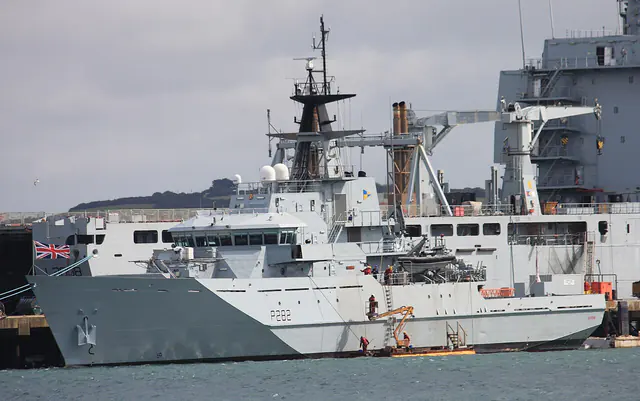
A Firefighting vessel, commonly referred to by the industry notation FiFi, is a specialized class of maritime vessel or a designated capability within a vessel’s configuration designed to provide rapid and high-capacity fire suppression services. Unlike standard commercial vessels, a FiFi-capable ship is engineered to combat intense maritime fires—ranging from small vessel fires in a harbor to massive oil rig fires in the open ocean—using high-pressure water cannons (monitors), specialized foam-extinguishing systems, and advanced stability controls.
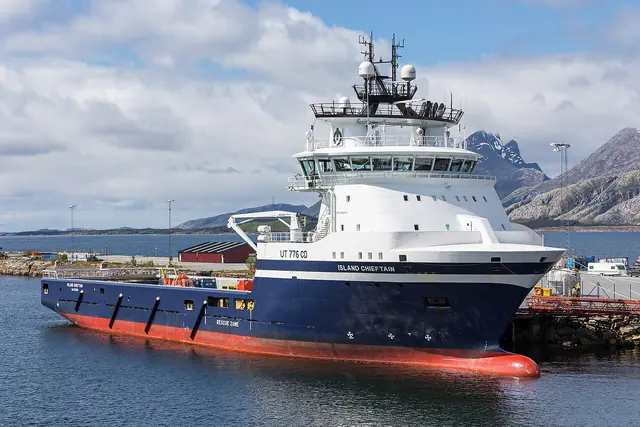
The term “FiFi” is not a single vessel type but rather a set of technical capabilities and class notations (e.g., FiFi 1, FiFi 2, FiFi 3) assigned by major classification societies like DNV, ABS, and Lloyd’s Register. A vessel may be an Anchor Handling Tug Supply (AHTS) vessel, an Offshore Support Vessel (OSV), or a dedicated tugboat that has been outfitted and certified with FiFi capabilities.
In the maritime hierarchy, FiFi vessels serve as the primary “first responders” for offshore energy infrastructure. When an oil platform or a large container ship experiences a fire, standard onboard firefighting equipment is often insufficient to contain the blaze. The FiFi vessel provides the necessary “reach” and “punch”—the ability to project vast quantities of water and foam over long distances and at high pressures to cool structures and smother flames.
2. Mission and Operations
The primary mission of a FiFi vessel is to protect life, property, and the marine environment by suppressing fires in challenging maritime environments. Their operations can be categorized into several key domains:
Port and Harbor Emergency Response
In busy commercial ports, FiFi vessels act as essential emergency assets. They respond to fires on berthed vessels, oil tankers, or port infrastructure. Their ability to maneuver in tight spaces and deliver high-volume water streams makes them critical for preventing a localized fire from spreading to adjacent cargo or fuel storage areas.
Offshore Support and Emergency Response
One of the most critical roles for FiFi vessels is supporting offshore oil and gas installations. Offshore platforms, FPSOs (Floating Production Storage and Offloading units), and drilling rigs are high-risk environments. FiFi-equipped OSVs or AHTS vessels are often stationed near these installations to provide immediate response to wellhead fires, engine room fires, or deck fires. In these scenarios, the vessel must often maintain a precise position near a burning structure while battling high seas and heavy wind.
Coastal and Search and Rescue (SAR) Support
Some FiFi vessels are designed for coastal patrol and search and rescue. While their primary design is firefighting, their high-speed capabilities and robust construction allow them to assist in maritime emergencies, including medical evacuations and responding to distressed vessels.
Firefighting Techniques
FiFi operations utilize several distinct tactical approaches:
- Cooling: Using high-pressure water streams to cool the hull or superstructure of a burning vessel to prevent structural failure or the spread of heat.
- Suppression: Directing water or foam into the seat of the fire to extinguish it.
- Smothering: Applying Aqueous Film Forming Foam (AFFF) to the surface of a liquid fuel fire to create a blanket that cuts off the oxygen supply.
- Boundary Cooling: Spraying water on surrounding surfaces to prevent the heat from igniting nearby flammable materials.
3. Hull, Size, and Design
The design of a FiFi vessel is heavily dictated by the extreme physical forces it must withstand during operations.
Stability and the “Recoil” Problem
Perhaps the most critical design consideration for a FiFi vessel is stability. When a high-capacity water monitor (fire cannon) is activated, it exerts a massive reactionary force—essentially a “recoil”—on the vessel. If a monitor is projecting 5,000 gallons per minute at high pressure, the vessel will experience a significant moment that can cause it to heel (lean) sharply.
Engineers must ensure that the vessel has an exceptionally high metacentric height (GM) and robust transverse stability. Failure to account for these forces can lead to a catastrophic loss of stability, potentially capsizing the vessel during a fire suppression operation.
Common Vessel Types
- Tugboats (ASD Tugs): Azimuth Stern Drive (ASD) tugs are popular FiFi platforms because of their extreme maneuverability. They can use their propulsion to assist in positioning the vessel precisely during firefighting.
- Offshore Support Vessels (OSVs) and AHTS: These are much larger vessels designed for deep-sea operations. They combine FiFi capabilities with heavy lifting, anchoring, and supply functions.
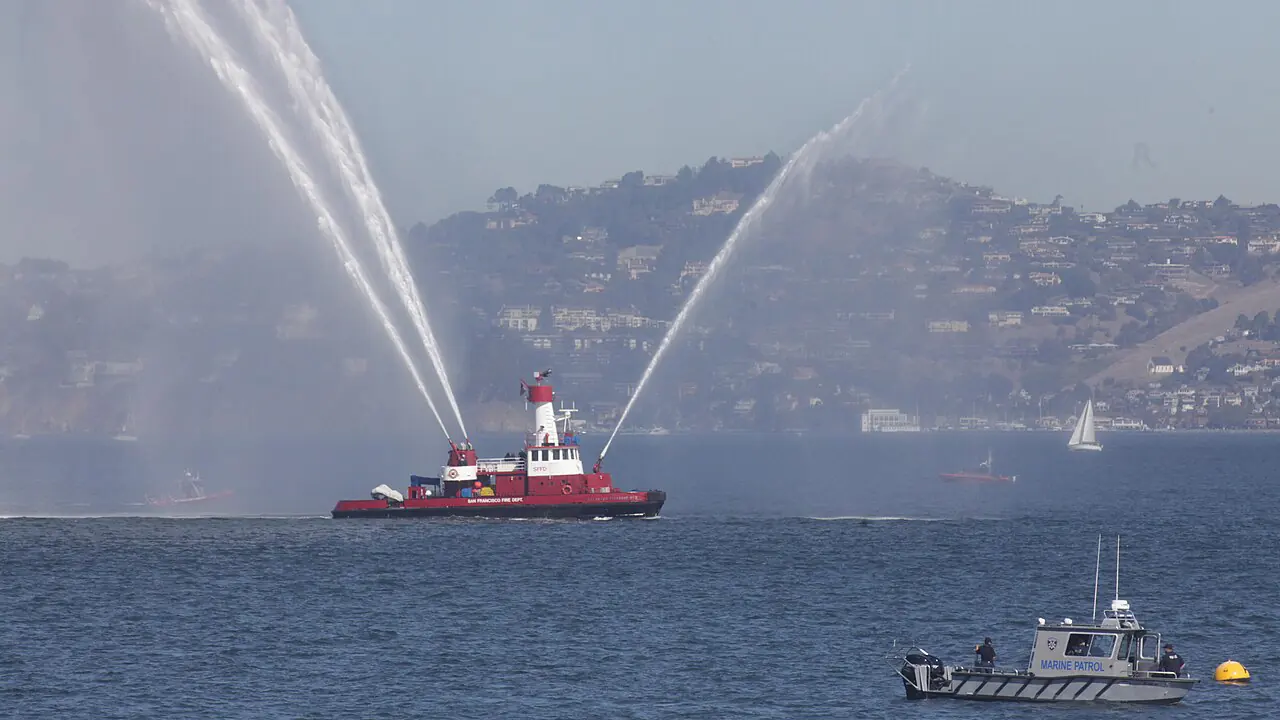
- Dedicated Fireboats: Smaller, highly specialized vessels designed almost exclusively for harbor and coastal firefighting.
Hull Form and Sea-Keeping
Many modern FiFi vessels utilize advanced hull forms, such as the Sea Axe design, to maintain stability and speed in high sea states. These hulls are designed to pierce through waves rather than ride over them, reducing vertical motion (heave) and ensuring the fire monitors can be operated effectively even in rough weather.
4. Propulsion and Engines
FiFi vessels require immense power for two distinct purposes: propulsion/maneuverability and the operation of the high-capacity firefighting pumps.
High-Power Requirements
The engines must provide enough power to maintain station-keeping (often using Dynamic Positioning) while simultaneously driving the large centrifugal pumps required for the monitors. This often results in a high degree of redundancy, with multiple main engines and auxiliary generators.
Maneuverability
To operate effectively near a burning vessel, FiFi ships must be able to move in any direction instantly. This is achieved through:
- Azimuth Thrusters: Propellers that can rotate 360 degrees, providing full thrust in any direction.
- Bow and Stern Thrusters: Horizontal propellers located at the ends of the vessel to assist in lateral movement and docking.
5. Electrical System and Power
The electrical architecture of a FiFi vessel is designed for high reliability and massive peak loads.
Powering the Pumps
The firefighting pumps are often driven by dedicated high-output diesel engines or by massive electric motors powered by the ship’s main generators. In modern hybrid-electric FiFi vessels (such as the Damen 3508 series), battery systems and plug-in capabilities allow for emissions-free operations and rapid power availability.
Redundancy and Emergency Power
Given the critical nature of their mission, FiFi vessels must adhere to strict electrical redundancy standards. If one generator fails, the vessel must have enough remaining capacity to continue firefighting operations and maintain essential navigation and communication systems. Emergency power supplies are required to ensure that even in a total blackout, the fire monitors and essential safety equipment remain operational.
6. Equipment and How It Is Used
A FiFi vessel is defined by its specialized equipment. The following table outlines the core components found on a typical high-spec FiFi vessel.
| Equipment | Primary Function | Key Specifications |
|---|---|---|
| Fire Monitor (Cannon) | Projects high-pressure water/foam streams | 360° rotation, remote control, throw range 80–150m |
| Fire Pump | Provides high-pressure water to monitors | High-capacity centrifugal pumps, redundant drives |
| Foam System | Extinguishes liquid fuel fires | AFFF induction, foam proportioners, storage tanks |
| Water Spray System | Cools the vessel’s own hull and superstructure | Fixed nozzles around the deck and superstructure |
| Thermal Imaging Camera | Detects heat signatures through smoke | High-resolution, long-range infrared detection |
| Dynamic Positioning (DP) | Maintains vessel position automatically | Sensors (GPS, Wind, Motion), computer-controlled thrusters |
Fire Monitors (Water Cannons)
Monitors are the “business end” of the vessel. They can be fixed in position or mounted on rotating pedestals. High-spec monitors are often remote-controlled from the bridge, allowing the operator to direct the stream without being exposed to heat or smoke. They are designed to handle extreme pressures (often 16 bar or higher) and can project water and foam over significant distances.
Foam Systems
For fires involving hydrocarbons (oil, fuel, chemicals), water alone is often ineffective and can even spread the fire. FiFi vessels use Aqueous Film Forming Foam (AFFF) or newer, environmentally friendly foam concentrates. These systems work by mixing foam concentrate with water at a specific ratio (e.s., 3%) and projecting the mixture onto the fire to create a blanket that cuts off oxygen.
Thermal Imaging
In the heavy smoke typical of maritime fires, visual sight is often zero. Thermal Imaging Cameras (TICs) allow the crew to “see” through smoke by detecting infrared radiation, helping them locate the seat of the fire, identify hot spots, and locate victims or structural weaknesses.
7. Navigation, Communications, and Safety
Safety and precision are paramount. A FiFi vessel must be able to navigate through smoke-filled environments and maintain a steady position in heavy seas.
Dynamic Positioning (DP)
Dynamic Positioning (DP) is a computer-controlled system that automatically maintains a vessel’s position and heading by using its thrusters. For FiFi vessels, DP is essential. It allows the ship to stay at a precise distance from a burning rig or vessel, compensating for wind, waves, and the massive recoil forces from the fire monitors.
Navigation and Communication
- Radar and AIS: High-resolution radar is used to detect obstacles and other vessels in low visibility. Automatic Identification System (AIS) is used for collision avoidance and tracking.
- GMDSS: The Global Maritime Distress and Safety System ensures the vessel can communicate with shore stations and other ships during emergencies.
- Internal Communications: Robust, explosion-proof communication systems are required for coordination between the bridge and the firefighting teams on deck.
Life-Saving Appliances
FiFi vessels carry enhanced life-saving equipment, including fast rescue boats, inflatable life rafts, and advanced personal protective equipment (PPE) for the crew, such as fire-resistant suits and breathing apparatus (SCBA).
8. Crew and Organization
Operating a FiFi vessel requires a blend of traditional maritime skills and specialized firefighting expertise.
The Marine Crew
The core crew consists of professional mariners—Captains, Officers, Engineers, and Deckhands—responsible for the safe navigation and mechanical operation of the vessel.
Specialized Firefighting Teams
In addition to the marine crew, FiFi vessels often carry or work closely with specialized firefighting teams. These individuals are trained in:
- Advanced Firefighting: Techniques for fighting fires in enclosed spaces and on decks.
- Hazmat Response: Handling chemical or oil spills during fire operations.
- Search and Rescue: Procedures for retrieving persons from the water or burning structures.
Training and Certification
Crew members must hold valid STCW (Standards of Training, Certification, and Watchkeeping) certifications. Specialized FiFi training is often required to ensure the crew is proficient in operating the monitors, foam systems, and DP equipment under extreme stress.
9. Certificates and Training Requirements
To operate commercially and legally, FiFi vessels must hold specific certifications.
Class Notations
As mentioned, the vessel must be classed by a recognized society (e.g., DNV, ABS). The notation (e.g., FiFi Class 2) serves as a certificate of the vessel’s specific capabilities, including pump capacity and monitor range.
Regulatory Compliance
- IMO Regulations: International Maritime Organization (IMO) standards govern the design and equipment of firefighting systems.
- SOLAS: The International Convention for the Safety of Life at Sea (SOLAS) provides the overarching framework for maritime safety, including fire protection.
- National Authorities: Coastal states (e.g., US Coast Guard) may have additional requirements for vessels operating in their waters.
Crew Certifications
- Advanced Firefighting (STCW): Mandatory for officers and specialized crew.
- DP Certification: Required for officers operating DP-equipped vessels.
- Specialized Equipment Training: Manufacturer-specific training for high-end monitors or foam induction systems.
10. Regulations, Class, and Inspections
The technical integrity of a FiFi vessel is maintained through rigorous regulation and regular inspection.
Classification Societies
Organizations like DNV, ABS, Lloyd’s Register, and Bureau Veritas develop the rules for FiFi notations. They verify that the vessel’s design, construction, and equipment meet the required standards. A vessel cannot claim “FiFi 2” capability without being audited and certified by one of these societies.
Inspections and Surveys
- Annual Surveys: To ensure the vessel remains in compliance with its class notation.
- Special Surveys: Conducted every few years, involving deep inspections of the hull, engines, and firefighting systems.
- Equipment Testing: Fire pumps, monitors, and foam systems are periodically tested under load to ensure they function correctly during an actual emergency.
11. Notable Shipyards, Operators, and Example Vessels
The production and operation of FiFi vessels are dominated by specialized shipyards and maritime service companies.
Notable Shipyards
- Damen Shipyards Group (Netherlands): A global leader in producing a wide range of FiFi-capable tugs, OSVs, and hybrid vessels.
- Vard (Norway): Known for high-end, technologically advanced offshore support vessels.
- Iskra Shipyard (Croatia): Specializes in high-speed, specialized response vessels.
- Metal Shark (USA): A prominent builder of aluminum fireboats for municipal and government use.
- Aluma Marine (USA): Known for fast-response aluminum firefighting vessels.
Example Vessels
| Vessel Name | Type | Shipyard/Builder | Notable Feature |
|---|---|---|---|
| Capt. Edward A. Awuviri | ASD Tug | Damen | High bollard pull and FiFi capability |
| Prag | Hybrid FiFi Vessel | Damen | Fully electric/hybrid operation |
| Port Chicago | Fast Response Fireboat | Aluma Marine | 75ft all-aluminum high-speed design |
| M2-36 Catamaran | Harbor Fireboat | Moose Boats | 1,500 GPM capacity, catamaran stability |
| Signet Arcturus | OSV/Tug | Signet Maritime | Specialized for port emergency response |
12. Environment and Future Outlook
The maritime industry is undergoing a significant transformation, and FiFi vessels are at the forefront of these changes.
Green Firefighting: Decarbonization
The push for “Green Shipping” is leading to the development of hybrid and fully electric FiFi vessels. These ships reduce carbon emissions and can operate silently in sensitive harbor environments. The Damen 3508 series is a prime example, utilizing battery technology for emissions-free operations.
Biodegradable Foams
Traditional AFFF (Aqueous Film Forming Foam) contains PFAS (“forever chemicals”), which are harmful to the environment and human health. The industry is rapidly transitioning to Fluorine-Free Foams (F3). Developing effective F3 systems that can match the performance of AFFF is a major area of current research and development.
Autonomous and Unmanned Systems
The future may see the rise of autonomous FiFi vessels—unmanned or minimally manned drones capable of responding to fires in high-risk environments without endangering human life. These systems will utilize advanced AI and sensor suites to detect and suppress fires with unprecedented precision.
13. Facts, Records, and Common Misconceptions
Facts
- FiFi is a capability, not just a ship type: A standard tug can be upgraded to FiFi class.
- Stability is the #1 priority: The recoil from water monitors can be more dangerous to the vessel than the fire itself if not managed.
- Foam is essential: Water alone cannot fight most modern hydrocarbon-based maritime fires.
Common Misconceptions
- “All fireboats are FiFi vessels”: While many are, “FiFi” specifically refers to the technical class notations (I, II, III) used in industrial and offshore settings.
- “More water means better firefighting”: While capacity is important, the reach (pressure/range) and the type of extinguishing agent (foam vs. water) are often more critical.
- “FiFi vessels only fight fires”: Most FiFi vessels are multi-role, providing towing, supply, or rescue services in addition to firefighting.
14. Glossary
- AFFF (Aqueous Film Forming Foam): A type of foam used to extinguish liquid fuel fires.
- ASD (Azimuth Stern Drive): A propulsion system where the propellers can rotate 360 degrees.
- Bollard Pull: A measure of a tugboat’s pulling power.
- DP (Dynamic Positioning): A computer-controlled system for maintaining a vessel’s position.
- FiFi: Industry abbreviation for Firefighting capability/class.
- GPM (Gallons Per Minute): A measure of water or foam flow rate.
- IMO (International Maritime Organization): The UN agency responsible for maritime safety.
- Monitor: A high-pressure water or foam cannon.
- OSV (Offshore Support Vessel): A vessel designed to support offshore oil and gas operations.
- Recoil: The reactionary force exerted on a vessel when a monitor is used.
- STCW: International standards for maritime training and certification.