1. Incident Overview and Key Facts
| Fact | Details |
|---|---|
| Date and Time | 8 November 2018, 04:01:15 local time |
| Vessel 1 (Casualty) | HNoMS Helge Ingstad (F272) |
| Vessel 1 Type/Flag | Frigate (Fredrikstad V’s class) / Norway |
| Vessel 2 (Other) | Sola TS |
| Vessel 2 Type/Flag | Oil Tanker / Malta (Tsakos Columbia) |
| Location | Hjeltefjorden, near Sture Terminal, Norway |
| Casualties | 0 fatalities, 7 minor injuries |
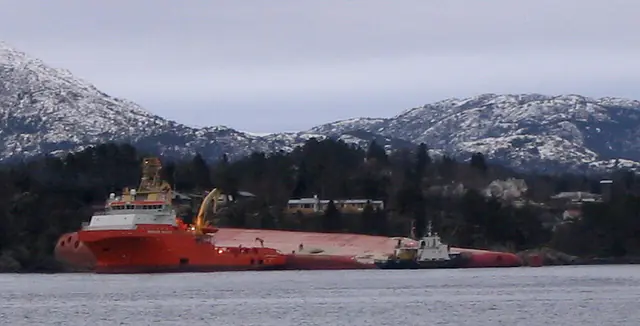
| Outcome | HNoMS Helge Ingstad grounded and subsequently sank |
| Investigating Authority | Norwegian Safety Investigation Authority (NSIA) / AIBN |
2. The Vessel and Crew Context
2.1 HNoMS Helge Ingstad (F272)
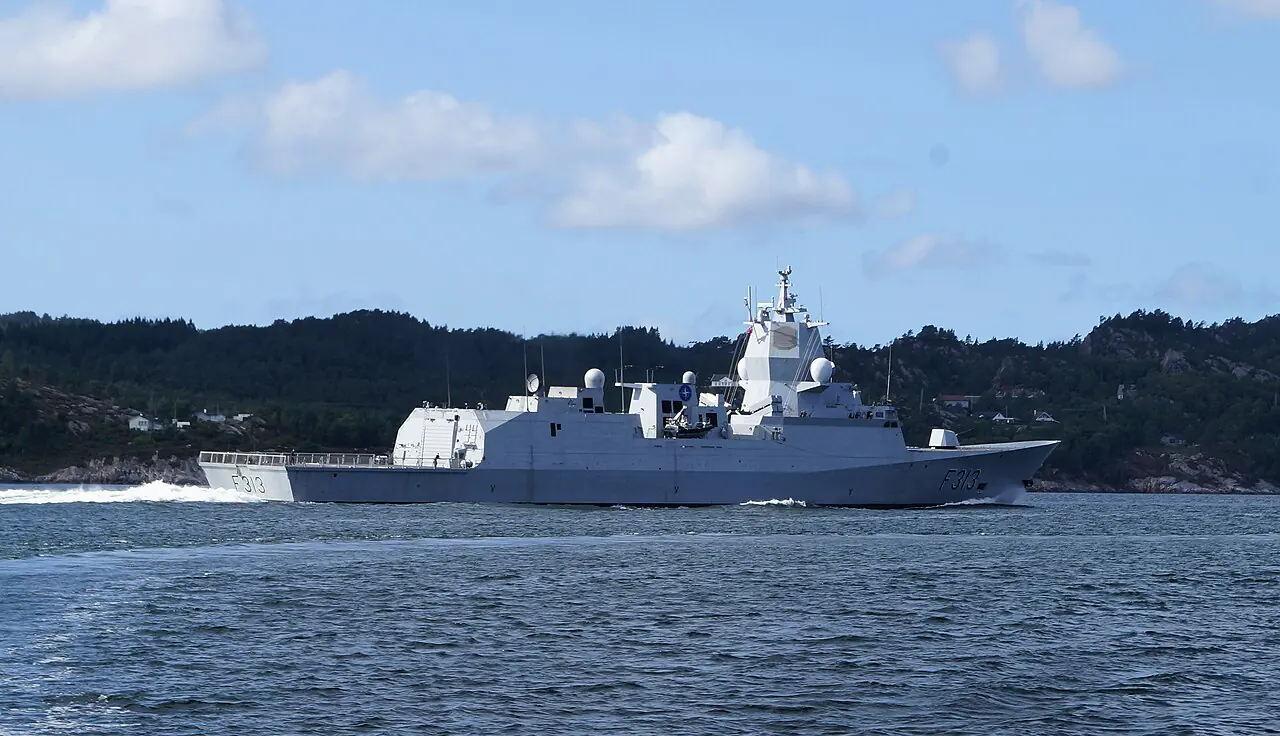
The Helge Ingstad was a Fredrikstad V’s class frigate of the Royal Norwegian Navy. These vessels are multi-role combatants designed for anti-submarine warfare, anti-surface warfare, and air defense. As a sophisticated warship, the vessel was equipped with advanced sensor suites, including radar and sonar, but operated under specific military protocols regarding its Automatic Identification System (AIS) and electronic emissions.
At the time of the incident, the vessel was operating with its AIS in passive mode, meaning it was not broadcasting its position, speed, or heading to other vessels or Vessel Traffic Services (VTS) via the AIS transponder. This is a common practice for military vessels operating in sensitive areas or during specific missions to maintain stealth or reduce their electronic footprint, though it significantly complicates situational awareness for civilian mariners in high-traffic lanes.
The crew consisted of 137 personnel, including a mix of permanent naval officers and conscripts. The bridge team during the night watch was composed of seven individuals, including two trainees and relatively inexperienced officers of the watch (OOW).
2.2 Sola TS
The Sola TS is a Maltese-flagged oil tanker operated by Tsakos Columbia Shipmanagement (TCM). At the time of the collision, the tanker had recently completed loading operations at the Sture Terminal and was beginning its passage through the Hjeltefjorden. The vessel was manned by a professional crew of 24, including a highly experienced pilot. The tanker was displaying standard navigation lights and had additional deck lights active to facilitate crew operations during the transit.
[CROSS-LINK: ../subsystems/frigate-propulsion-systems.md] [CROSS-LINK: ../fundamentals/maritime-watchkeeping-protocols.md]
3. Chronological Timeline of Events
The collision was not a sudden event but the culmination of a series of failures in situational awareness and communication. The following timeline reconstructs the critical minutes leading up to the impact and the subsequent loss of the vessel.
| Time (Local) | Event Description |
|---|---|
| ~03:45 | HNoMS Helge Ingstad is proceeding south through the Hjeltefjorden at approximately 17–18 knots. The vessel’s AIS is in passive mode. |
| 03:50 - 04:00 | The bridge team on Helge Ingstad is engaged in watchkeeping duties. There is a lack of effective monitoring of the radar and AIS data (which is not being received from the tanker). The crew observes bright lights in the distance, which they misidentify as stationary lights from the Sture Terminal or other shore-based infrastructure. |
| 03:55 | The Sola TS, following its departure from the Sture Terminal, observes the frigate’s approach on its radar. The pilot and crew of the Sola TS recognize a potential collision course and begin attempting to communicate and signal the frigate. |
| 04:00 | Fedje Vessel Traffic Service (VTS) observes the situation but fails to intervene effectively. The lack of AIS data from the frigate means the VTS operator has an incomplete picture of the traffic in the channel. |
| 04:01:00 | The Sola TS attempts to warn the Helge Ingstad via VHF radio and potentially other signaling methods. The bridge team on the frigate does not recognize the urgency or the nature of the warning. |
| 04:01:15 | IMPACT. The Sola TS’s starboard anchor strikes the Helge Ingstad’s starboard side, specifically in the area just forward of the starboard torpedo magazine. The collision is high-energy due to the speed of the frigate. |
| 04:01:20 - 04:10 | The frigate experiences immediate loss of steering and propulsion control. The bridge crew attempts various damage control and maneuver commands, but the vessel’s integrity is severely compromised. |
| 04:11 | HNoMS Helge Ingstad issues a DSC (Digital Selective Calling) distress call via VHF. |
| 04:11 - 04:15 | The vessel’s situation deteriorates rapidly as water begins to ingress into multiple compartments. The crew attempts to manage the flooding, but the rate of ingress is catastrophic. |
| 04:12 | The frigate runs aground on the seabed/shore near the terminal due to the loss of propulsion and uncontrolled drift. |
| ~04:20 | The frigate is deemed unsalvageable due to the extent of the flooding and the stability of the vessel. The order to evacuate the crew is given. |
| Post-04:20 | The frigate subsequently sinks in relatively shallow water. |
4. Technical & Hydrodynamic Failure Analysis
The loss of HNoMS Helge Ingstad was primarily driven by the catastrophic failure of its watertight integrity and the subsequent loss of stability caused by unconventional flooding paths.
4.1 Compartment Flooding and Hull Breach
The initial impact with the Sola TS’s anchor caused significant structural damage to the starboard hull. The breach was located near the torpedo magazine, a highly sensitive area. The energy of the collision tore open at least two major watertight sections:
- A bath/sanitary area.
- The generator compartment.
The breach of these compartments immediately compromised the vessel’s buoyancy. However, the structural damage alone might have been manageable if the watertight integrity of the remaining sections had been maintained.
4.2 The Hollow Propeller Shaft Mechanism
The most critical technical failure identified in the investigation was the ingress of water through the vessel’s hollow propeller shafts.
In many modern naval vessels, propeller shafts are designed with a hollow core to save weight and allow for the passage of internal components or sensors. In the case of the Helge Ingstad, the following sequence occurred:
- The initial collision punctured the generator compartment.
- The propeller shafts, which pass through this punctured compartment, were exposed to the incoming floodwater.
- Because the shafts were hollow, they acted as conduits (pipes) for the water.
- Water traveled through the interior of the shafts directly into the reduction gear room, which was located between the forward turbine room and the aft engine room.
This “piping effect” bypassed the primary watertight bulkheads that were intended to isolate the engine rooms from the rest of the ship. By flooding the reduction gear room, the water effectively “short-circuited” the ship’s longitudinal watertight divisions.
4.3 Stability and Buoyancy Loss
The ingress of water into the reduction gear room, combined with the flooding of the generator and bath compartments, led to the loss of approximately five to six watertight sections. This massive redistribution of weight and the loss of reserve buoyancy caused a rapid decline in stability.
Furthermore, the investigation noted that during the chaotic evacuation process, several doors, hatches, and other openings that should have been sealed to maintain stability and buoyancy were left open by the crew. This further accelerated the flooding and contributed to the vessel’s eventual sinking.
[CROSS-LINK: ../subsystems/propulsion-reduction-gear.md] [CROSS-LINK: ../fundamentals/buoyancy-and-stability.md]
5. Human Factors, Bridge/Engine Management, and Organizational Issues
The investigation concluded that the collision was not merely a result of a single mistake, but a systemic failure involving human factors, organizational culture, and resource management.
5.1 Bridge Resource Management (BRM) and Situational Awareness
The bridge team on HNoMS Helge Ingstad failed to effectively utilize the available technical and human resources to identify the approaching threat. Several specific issues were identified:
- Misidentification of Obstacles: The team misidentified the Sola TS’s navigation and deck lights as stationary shore-based lights (e.g., from the Sture Terminal). This error prevented them from recognizing a moving vessel on a collision course.
- Inadequate Radar/AIS Monitoring: Despite having radar, the team did not correctly interpret the target data. The fact that the frigate’s AIS was in passive mode meant that they were operating with a significant “blind spot” regarding their own visibility to others, and they were not receiving the tanker’s AIS data to aid their own situational awareness.
- Communication Failures: The bridge team did not effectively process or act upon the warnings sent by the Sola TS crew and the Fedje VTS.
5.2 Organizational Factors and the “Clearance” System
A major contributing factor was the systemic issue within the Royal Norwegian Navy regarding the training and qualification of officers. Due to a shortage of qualified navigators and a specific “clearance process,” officers of the watch (OOW) with significantly less experience than required were being granted the authority to command the bridge.
- Inexperience: The OOW on duty had not completed the standard amount of time in the position, leading to a lack of intuitive situational awareness.
- Training Deficits: The pressure to provide training to junior officers meant that the OOW was often performing dual roles—acting as a navigator while simultaneously trying to train subordinates—which diluted their focus during a critical transit.
- Culture of Trust: The investigation noted a culture where conscripts and junior officers placed absolute trust in their superiors, which may have discouraged them from questioning unusual readings or sounding alarms during the early stages of the incident.
6. Emergency Response, Evacuation, and Search & Rescue
The period between the collision and the grounding was characterized by extreme stress and rapid environmental changes.
6.1 The 10-Minute Window
Following the impact at 04:01, the crew had approximately 10 minutes before the vessel ran aground. During this time, the bridge team was struggling with:
- Loss of Control: The inability to steer or propel the vessel from the bridge.
- Alarm Fatigue: A massive influx of concurrent alarms from various compromised systems.
- Environmental Stress: The darkness of the night and the sudden, violent angle of heel caused by the flooding.
6.2 Evacuation and Survivability
The decision to evacuate was made when the extent of the flooding became clear. While the evacuation was successful in terms of personnel safety (no fatalities), several issues were noted:
- Watertight Integrity during Evacuation: In the haste to leave the vessel, several watertight doors and hatches were left open. This compromised the ship’s remaining stability and contributed to its rapid sinking after grounding.
- Bilge System Limitations: The crew attempted to use the bilge system to combat the flooding, but the volume of water entering through the damaged hull and the hollow propeller shafts far exceeded the system’s capacity.
7. Salvage, Wreck Removal, or Environmental Impact
7.1 Environmental Impact
The collision resulted in a release of Marine Gas Oil (MGO) into the Hjeltefjorden. While the spill was contained and managed by local authorities, it posed a temporary risk to the local marine ecosystem around the Sture Terminal.
7.2 Wreck Status
Following the grounding and subsequent sinking, the wreck of HNoMS Helge Ingstad was located in relatively shallow water. The vessel’s remains were subject to recovery operations and subsequent salvage efforts to mitigate environmental risks and recover sensitive military technology.
[CROSS-LINK: ../salvage-and-incidents/sture-terminal-spill.md]
8. Official Investigation Findings and Root Causes
The joint investigation by the NSIA and AIBN identified a complex web of interacting factors. The primary root causes can be categorized into three domains:
- Operational/Human Factors: The failure of the bridge team to correctly identify the Sola TS as a moving vessel and the failure to respond to warnings from the tanker and VTS. This was compounded by the lack of situational awareness caused by the AIS being in passive mode.
- Technical/Design Factors: The design of the hollow propeller shafts allowed for an unexpected and rapid path of water ingress, bypassing critical watertight bulkheads and leading to the loss of the vessel’s stability.
- Organizational/Systemic Factors: The Royal Norwegian Navy’s shortage of qualified officers led to a systemic reliance on inexperienced personnel and a clearance process that prioritized operational availability over strict safety and training standards.
9. Regulatory and Industry Reforms Triggered
The Helge Ingstad accident has had significant implications for both naval and commercial maritime safety:
- Naval Training and Clearance: The Royal Norwegian Navy has undergone a rigorous review of its officer clearance and training protocols to ensure that bridge watchstanding competence is never compromised by personnel shortages.
- Propulsion System Design: The accident brought international attention to the risks associated with hollow propeller shafts. There is an ongoing debate within classification societies (including DNV) regarding the requirement for redundant sealing or improved design standards to prevent “piping” flooding in combatant vessels.
- VTS and Military Coordination: The incident highlighted the need for better coordination and situational awareness between civilian Vessel Traffic Services and military vessels, particularly regarding AIS usage and monitoring in high-density traffic lanes.
10. Key Takeaways for Modern Mariners
- Never Assume a Light is Stationary: In night transits, always verify the movement of any light source via radar or AIS. Misidentifying a vessel as shore infrastructure can be fatal.
- The Danger of Passive AIS: While military necessity may dictate passive AIS, the resulting loss of situational awareness for both the vessel and VTS must be actively compensated for by increased radar vigilance and VHF monitoring.
- Watertight Integrity is Paramount: In an emergency, the integrity of watertight doors and hatches is the most critical factor in maintaining stability. Speed of evacuation must not come at the cost of fundamental damage control.
- Understand Your Vessel’s Vulnerabilities: Knowing the potential “hidden” paths for water (such as hollow shafts or ventilation trunks) allows for more effective damage control and emergency response.