1. Incident Overview and Key Facts
The sinking of the MS Estonia represents a fundamental case study in maritime forensic engineering, specifically regarding the extreme vulnerability of Roll-on/Roll-off (Ro-Ro) vessels to progressive flooding and the catastrophic implications of bow-opening design failures.
| Category | Details |
|---|---|
| Date of Incident | September 28, 1994 |
| Vessel Name | MS Estonia |
| IMO Number | 8383320 |
| Vessel Type | Ro-Pax Ferry |
| Flag State | Estonia |
| Location | Northern Baltic Sea (approx. 22 nm SE of Utö Island, Finland) |
| Casualties | 852 fatalities |
| Outcome | Total loss of vessel; Capsize and foundering |
| Investigating Authority | Joint Accident Investigation Commission (JAIC) |
2. The Vessel and Crew Context
2.1 Vessel Specifications and Design Philosophy
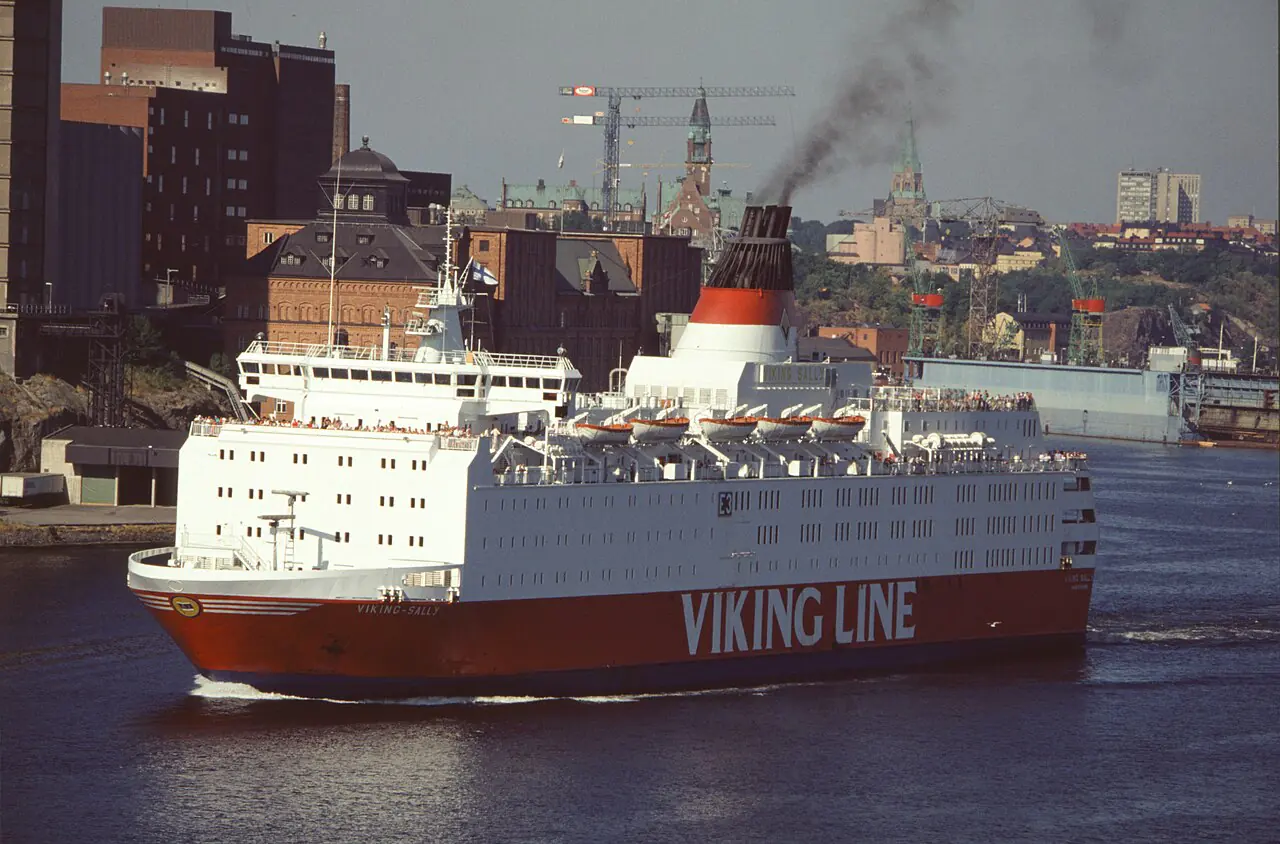
The MS Estonia was a large Ro-Pax ferry, custom-built in 1980 by Meyer Werft, Papenburg, Germany. The vessel was designed during a period of rapid expansion in the Baltic ferry industry, where the economic imperative for high-speed, high-capacity transport drove engineering decisions toward maximizing open deck space for vehicles.
- Gross Tonnage: Approximately 15,598 GT.
- Length Overall (LOA): ~168 meters.
- Beam: ~24 meters.
- Propulsion: Twin-engine diesel propulsion.
- Design Feature: A large, single-piece bow visor that provided a watertight seal for the vehicle loading ramp. This design allowed for rapid turnaround times at ports but introduced a single, critical point of failure for the vessel’s watertight integrity.
2.2 Operational Profile
At the time of the accident, the MS Estonia was operating under the Estonian flag for the Estline service on the Tallinn–Stockholm route. This route is notoriously challenging, often characterized by extreme weather conditions, high sea states, and significant wave heights in the northern Baltic Sea, which necessitates high standards of seaworthiness and structural integrity.
3. Chronological Timeline of Events
The following timeline is reconstructed from survivor accounts, Voyage Data Recorder (VDR) analysis, and the Joint Accident Investigation Commission (JAIC) final report.
| Time (EET) | Event Description |
|---|---|
| 20:00 (Sept 27) | MS Estonia departs Tallinn, Estonia, for Stockholm, Sweden, under heavy weather warnings. |
| 23:00 | The vessel enters increasingly heavy weather. Sea states rise significantly; wind speeds exceed 25 m/s (Beaufort scale 10+). |
| 00:00 (Sept 28) | Severe pitching and rolling are reported. The vessel is experiencing significant slamming and wave impact on the bow. |
| 01:00 | Critical Failure: The “Atlantic Lock” mechanism (the primary locking system for the bow visor) suffers a catastrophic structural failure due to fatigue and extreme hydrodynamic loading. |
| 01:05 | The bow visor separates from the hull and is lost to the sea. The internal bow ramp, no longer supported by the visor, is exposed to direct wave impact and begins to open/shift. |
| 01:10 | The bow ramp is forced open by the hydrostatic pressure of the incoming sea. Massive volumes of water begin to surge onto the main car deck. |
| 01:15 | Rapid Ingress: Water enters the car deck at an estimated rate of 300 to 600 tons per minute. The vessel’s list begins to increase. |
| 01:20 | The “Free Surface Effect” (FSE) on the car deck becomes the dominant stability threat. As the water moved to the low side during a roll, it created a massive, uncontrolled heeling moment. |
| 01:30 | The list exceeds 30 degrees. Panic and chaos on the passenger decks impede evacuation efforts. |
| 01:45 | MS Estonia capsizes completely and founders in deep water. |
4. Technical & Hydrodynamic Failure Analysis
The disaster was a result of a cascade of failures, moving from mechanical structural failure to hydrodynamic instability.
4.1 The Atlantic Lock and Visor Failure
The bow visor was secured to the hull via a series of heavy-duty locking pins (cam-locks) and hydraulic actuators, often referred to in forensic analyses as the Atlantic Lock mechanism. Under normal operating conditions, these locks provided a watertight seal.
However, the forensic reconstruction shows that the visor was subjected to intense impact loads—waves slamming against the visor’s surface. Unlike static loads, these impact loads are impulsive and can be many times higher than the weight of the water itself. Over years of service, these repeated high-energy impacts caused metal fatigue in the locking pins and the surrounding hull structure. On the night of the accident, a final, extreme wave impact caused the fatigued metal to fracture, leading to the sudden and total separation of the visor assembly.
4.2 The Ramp and Water Ingress
With the visor gone, the bow ramp—the structure intended to allow vehicles to drive on and off—became a massive aperture. The hydrostatic pressure of the Baltic Sea pushed against the ramp, forcing it to move from its closed position. This allowed the sea to flood the car deck directly.
4.3 Hydrodynamic Instability: The Free Surface Effect (FSE)
The most lethal technical aspect of the sinking was the rapid loss of transverse stability caused by the Free Surface Effect (FSE).
In a stable vessel, the center of gravity () and the center of buoyancy () are positioned to create a righting moment. However, when a large volume of water enters an open deck (like the MS Estonia’s car deck), that water is not “fixed”; it moves in response to the vessel’s motion.
As the ship rolled to starboard, the water on the car deck rushed to the starboard side. This movement caused:
- Shift in Center of Gravity (): The mass of the water created a new, shifting center of gravity.
- Reduction in Effective Metacentric Height (GM): The FSE acts as a virtual rise in the center of gravity. The effective GM can be expressed as: where is the second moment of area of the free surface. On a wide, open car deck, is enormous, causing to drop toward zero or become negative, resulting in an immediate capsize.
5. Human Factors and Organizational Issues
5.1 Bridge Management and Decision-Making
The management of the vessel during the onset of the storm has been a subject of significant debate. While the weather was extreme, investigators have questioned whether the bridge team should have adjusted the vessel’s course or speed to reduce the severity of the bow slamming. There were also reports of delays in recognizing the severity of the visor’s situation and a lack of immediate, clear communication with the crew and passengers.
5.2 Crew Training and Emergency Preparedness
The rapid transition from heavy weather to an active sinking created a “compressed time” environment. The crew, while trained for standard emergencies, faced an unprecedented scenario where the primary watertight integrity (the bow) was lost. The confusion on the car deck—where many passengers were located—prevented an organized evacuation, leading to high mortality rates as people were trapped by the increasing list.
6. Emergency Response, Evacuation, and Search & Rescue
6.1 The Scale of the SAR Operation
The search and rescue (SAR) operation was one of the largest in the history of the Baltic Sea, involving assets from Sweden, Finland, and Estonia. Despite the scale, the combination of extreme sea states, darkness, and the rapid speed of the sinking limited the number of lives that could be saved.
6.2 Survival Challenges
The MS Estonia’s lifeboats and Marine Evacuation Systems (MES) were hindered by the rapid list of the vessel. In many cases, lifeboats could not be launched because the angle of heel prevented them from clearing the hull or made the deployment mechanisms inoperable. Most of the 852 fatalities occurred in the water or within the sinking hull, rather than during a controlled lifeboat evacuation.
7. Salvage, Wreck, and the Stockholm Agreement
7.1 The Wreck and Legal Status
The MS Estonia lies in approximately 80 meters of water. Due to the high number of fatalities, the wreck site has been designated as a maritime grave.
7.2 The Stockholm Agreement
To manage the sensitive nature of the wreck, the Stockholm Agreement was established between the involved nations. This legal framework provides for the protection of the wreck and regulates any access to the site. It ensures that the wreck is treated with respect as a maritime cemetery, restricting salvage operations that might disturb the remains of the victims.
8. Official Investigation Findings and Root Causes
8.1 The JAIC Conclusion (1997)
The Joint Accident Investigation Commission (JAIC) concluded that the primary cause of the accident was the failure of the bow visor’s locking mechanism due to wave-induced stress, which led to the opening of the bow ramp and subsequent rapid flooding of the car deck.
8.2 The 2023 Reassessment and Controversies
For decades, the JAIC report was criticized by survivors and some experts who argued that the sinking was “too fast” for the car deck flooding alone to explain. They suggested that water must have entered the lower decks through other means.
In 2023, a new preliminary assessment by the Swedish Accident Investigation Authority used advanced ROV technology and computational modeling to re-examine the failure. The new findings largely support the original JAIC theory (visor failure ramp opening) but place much greater emphasis on the structural deficiencies in the visor’s design and the critical role played by the flooding of lower compartments in accelerating the capsize.
9. Regulatory and Industry Reforms Triggered
The MS Estonia disaster was a catalyst for significant changes in maritime safety, particularly for Ro-Ro vessels.
- SOLAS (Safety of Life at Sea) Amendments: Significant changes were made to Chapter II-1, specifically regarding the design and testing of bow openings. Requirements now include much higher safety margins for wave impact and more robust, redundant locking mechanisms.
- Ro-Ro Stability Standards: New standards were implemented for Ro-Ro vessels to ensure they can maintain stability even with significant water ingress on the car deck (addressing the Free Surface Effect).
- Watertight Integrity: Enhanced requirements for the structural strength of bulkheads and the sealing of openings (like ventilation and stairwells) that could allow water to move between decks.
10. Key Takeaways for Modern Mariners
- Design Redundancy is Mandatory: No single point of failure (like a visor lock) should be capable of compromising the entire vessel’s watertight integrity.
- The Danger of the Free Surface Effect: In large, open-deck vessels, the management of water ingress is the most critical factor in preventing a capsize.
- Designing for Extreme Loads: Structural design must account for impulsive impact loads (slamming), not just static or steady-state hydrodynamic forces.
- The Importance of Rapid Response Training: Crew training must move beyond “standard” scenarios to include high-stress, rapid-onset failures that challenge traditional evacuation procedures.
11. Sources and Official Reports
- JAIC Final Report (1997): Official Summary
- Swedish Accident Investigation Authority (2023): Preliminary Assessment
- Wikipedia: MS Estonia Overview
- ShipCalculators: Technical Vessel Data
- Stockholm Agreement: Protocol and Legal Framework
- IMO: Safety of Ro-Ro Ferries
- MDPI: Academic Analysis of the Estonia Debate