1. Incident Overview and Key Facts
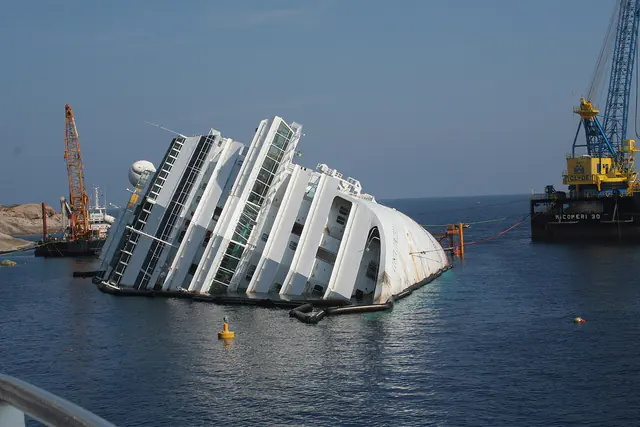
The capsize of the MS Herald of Free Enterprise remains one of the most significant maritime disasters of the late 20th century, serving as a definitive turning point in the evolution of maritime safety management. On the morning of March 6, 1987, the vessel departed from the Port of Zeebrugge, Belgium, shortly after which it capsized and sank in shallow waters.
| Detail | Information |
|---|---|
| Incident Date | 1987-03-06 |
| Vessel Name | MS Herald of Free Enterprise |
| Vessel Type | Ro-Ro Passenger Ferry (Spirit class) |
| Flag State | United Kingdom |
| Location | Port of Zeebrugge, Belgium |
| Fatalities | 193 |
| Outcome | Capsize and sinking; vessel salvaged |
| Investigating Authority | UK Department of Transport (The Sheen Inquiry) |
2. The Vessel and Crew Context
2.1 Vessel Specifications and Design
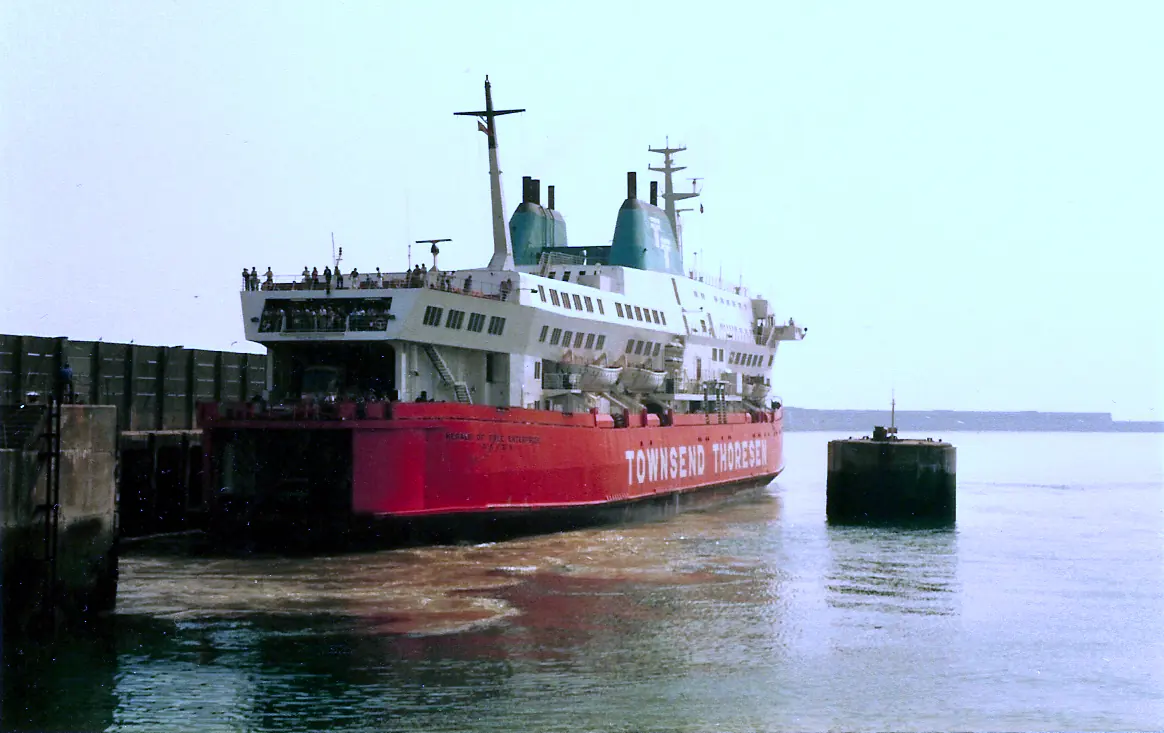
The MS Herald of Free Enterprise was a “Spirit class” roll-on/roll-off (Ro-Ro) passenger ferry, specifically designed for high-frequency, short-sea crossings. These vessels were optimized for rapid turnaround times at ports, a requirement driven by the commercial demands of the Zeebrugge–Dover route.
A defining characteristic of the Spirit class, and indeed most Ro-Ro vessels of the era, was the large, unobstructed vehicle deck. To facilitate rapid loading and unloading, the vessel utilized large bow doors and an internal ramp system. The efficiency of the Ro-Ro concept relied heavily on the integrity of these bow openings; once the doors were closed and secured, the vehicle deck was intended to function as a watertight compartment.
The vessel’s design, while commercially successful, presented a significant vulnerability: a large, open deck area. In the event of water ingress, this area would be subject to massive “free surface effects,” which can rapidly compromise the vessel’s transverse stability. For detailed technical information on such designs, see ../subsystems/roro-ramps-hatch-covers-and-cargo-gear.md.
2.2 Operational Profile and Crewing
The Herald operated on a highly structured, high-pressure schedule. The Zeebrugge run required precision in timing to ensure the profitability of the ferry service. This environment placed immense emphasis on speed and efficiency, often at the expense of rigorous procedural compliance.
The crewing structure was standard for a vessel of its size, comprising a Master, Officers (Chief Officer, Second Officer, etc.), and a ratings’ complement including Bosuns and Assistant Bosuns responsible for deck operations and the securing of cargo and vessel openings. The duties of the deck department were critical during the transition from “port mode” to “sea mode,” particularly regarding the verification that all watertight integrity was established before departure.
3. Chronological Timeline of Events
The following timeline reconstructs the events of March 6, 1987, based on the findings of the Sheen Inquiry. The window from departure to capsize was exceptionally brief, leaving little time for emergency response.
| Time (Approx.) | Event Description |
|---|---|
| 07:00 | Loading of vehicles and passengers commences at Zeebrugge. |
| 07:30 | Loading concludes; crew begins preparation for departure. |
| 07:35 | Critical Failure: The bow doors are not fully closed and secured. The outer doors are open, and the inner doors are also not properly engaged. |
| 07:40 | Vessel begins to move away from the berth. The Master and Bridge team are unaware that the bow doors are open. |
| 07:42 | Vessel gains speed. The movement of the ship through the water creates significant hydrodynamic pressure against the open bow section. |
| 07:43 | Water Ingress: Water begins to rush into the vehicle deck through the open bow doors. The ingress is massive and rapid. |
| 07:44 | The ship experiences a significant trim by the bow. This longitudinal tilt further accelerates the rate of water entry, as the opening is presented more directly to the oncoming sea. |
| 07:45 | Stability Failure: The water on the vehicle deck creates a massive free surface effect. The center of gravity shifts violently, and the vessel’s transverse stability (GM) is rapidly destroyed. |
| 07:46 | Capsize: The vessel rolls heavily to one side and capsizes completely. The capsize occurs in a matter of seconds, catching passengers and crew completely by surprise. |
| 07:47 | The vessel sinks in relatively shallow water (approx. 12-15 meters). |
4. Technical & Hydrodynamic Failure Analysis
The disaster was a direct consequence of a failure in the vessel’s watertight integrity, which triggered a catastrophic loss of stability.
4.1 The Bow Door Mechanism and Failure
The MS Herald of Free Enterprise utilized a system of outer and inner bow doors to protect the vehicle deck. For the vessel to be considered seaworthy for transit, both sets of doors had to be closed, hydraulically locked, and verified.
On the morning of the accident, the outer doors were left wide open. The inner doors were also not properly secured. This oversight meant that as the vessel gained speed, the vehicle deck was effectively exposed to the sea. The design of the Spirit class, while efficient, meant that once the bow was breached, there were no secondary barriers to prevent the entire deck from flooding.
4.2 Hydrodynamics and Ingress Dynamics
As the vessel increased speed, the relative velocity of the water against the bow increased. This created a high-pressure zone at the entrance of the open bow doors.
A critical factor in the speed of the flooding was the vessel’s trim by the bow. As the ship’s forward momentum and the weight of the incoming water shifted its longitudinal balance, the bow dipped lower into the water. This increased the “head” of water being forced into the vessel, creating a feedback loop: more water entered the bow trimmed deeper even more water entered.
4.3 Stability and the Free Surface Effect
The most lethal technical aspect of the accident was the destruction of the vessel’s transverse stability. In naval architecture, stability is largely governed by the relationship between the Center of Gravity (G) and the Metacenter (M). The distance between them, known as the Metacentric Height (GM), determines how strongly a ship will right itself when heeled.
When the water entered the wide, flat expanse of the vehicle deck, it created a phenomenon known as the Free Surface Effect. Unlike a solid weight, liquid moves as the ship heels. As the Herald began to roll slightly, the massive volume of water on the deck rushed to the low side. This movement caused a rapid, virtual rise in the vessel’s Center of Gravity and a simultaneous reduction in the effective Metacentric Height.
Once the GM became negative, the vessel lost its “righting lever.” Instead of resisting the roll, the ship’s own weight and the shifting water worked together to pull the vessel further over. This resulted in the sudden, violent capsize. For a deep dive into the physics of this phenomenon, see ../fundamentals/ship-stability-gm-and-free-surface-effect.md.
5. Human Factors, Bridge Management, and Organizational Issues
While the physical cause of the sinking was water ingress, the reason the water entered was a systemic failure of human oversight and organizational culture.
5.1 Individual Negligence and Watchkeeping
The Sheen Inquiry identified several individuals whose failure to perform their duties contributed to the disaster:
- The Assistant Bosun (Mark Victor Stanley): He was the individual directly responsible for ensuring the bow doors were closed. On the morning of the accident, he was found to be asleep in his cabin during his watch. His failure to perform this simple, critical task was the immediate trigger for the catastrophe.
- The Bosun (Terence Ayling): The inquiry criticized the Bosun for leaving his station on G deck knowing that the bow doors were open and the assistant bosun was not present to close them. This lack of vigilance allowed the error to propagate.
- The Bridge Team (Master David Lewry & Chief Officer Leslie Sabel): The Master and Chief Officer failed to verify the status of the bow doors before authorizing departure. In a high-stakes maritime environment, the final responsibility for the vessel’s watertight integrity rests with the command team. Their failure to implement a “check and double-check” protocol for critical systems was a primary contributing factor.
5.2 Organizational Culture and Management Failure
Perhaps the most damning aspect of the Sheen Report was its indictment of the management at Townsend Car Ferries Ltd. (a subsidiary of P&O).
The inquiry found that the disaster was not merely the result of a few individuals’ mistakes, but rather the product of a “systemic failure” within the company. The culture was characterized by:
- Prioritizing Speed over Safety: There was an overwhelming commercial pressure to maintain tight schedules. This pressure trickled down to the crew, creating an environment where skipping steps or “cutting corners” in safety procedures became normalized.
- Poor Communication: There was a fundamental breakdown in the communication of duties and responsibilities. The crew members on the Zeebrugge run often lacked clear instructions regarding who was specifically responsible for certain safety-critical tasks.
- Lack of Safety Management Systems (SMS): At the time, the company lacked a robust, verifiable system for managing safety. There were no formalized checklists or independent verification processes to ensure that critical operations, such as closing the bow doors, were completed before departure.
The Sheen Report famously concluded that the management’s failure to foster a culture of safety was “unacceptable” and directly contributed to the loss of life.
6. Emergency Response, Evacuation, and Search & Rescue
The speed of the capsize made any organized evacuation impossible. For most passengers and crew, the transition from a normal sailing state to being submerged in water occurred in less than a minute.
6.1 Survival Challenges
The Herald capsized so rapidly that lifejackets, even if worn, were often ineffective due to the sudden orientation of the vessel and the overwhelming turbulence of the water. Most of the fatalities occurred as people were trapped within the vehicle deck or the passenger accommodation areas as they flooded. The lack of an early warning system or a clear alarm meant that the crew and passengers had no time to reach muster stations or launch lifeboats.
6.2 Rescue Operations
The vessel’s location in shallow waters near Zeebrugge was a stroke of luck that prevented the total loss of all souls on board. Belgian authorities and local rescue teams responded quickly, conducting harrowing operations to pull survivors from the water and the partially submerged vessel. Despite these heroic efforts, 193 lives could not be saved.
7. Salvage and Recovery
Following the incident, the vessel remained on its side in the shallow waters of the Zeebrugge approach. Salvage operations were undertaken to stabilize the wreck and eventually refloat it. The vessel was eventually raised and towed to a scrapyard, but it was never returned to service. The recovery process also focused on identifying the cause of the sinking to assist the formal inquiry.
8. Official Investigation Findings and Root Causes
The formal inquiry, presided over by Mr. Justice Sheen, provided a definitive account of the disaster. The findings categorized the causes into direct human error and deeper organizational failures.
8.1 Direct Causes
The inquiry concluded that the physical cause of the capsize was the ship sailing with its bow doors open. This was attributed to:
- Negligence of the Assistant Bosun: Failure to close the doors as required.
- Failure of Supervision: The Bosun and the Bridge team’s failure to verify the status of the critical bow door mechanism before departure.
8.2 Root Causes: The “Culture of Negligence”
More importantly, the Sheen Report identified the root cause as a systemic failure within Townsend Car Ferries Ltd. The inquiry noted that the company’s management had created an environment where safety procedures were secondary to operational efficiency. This “culture of negligence” meant that the technical error (open doors) was permitted by a systemic failure of oversight and accountability.
9. Regulatory and Industry Reforms Triggered
The MS Herald of Free Enterprise disaster is perhaps most significant for the legacy it left behind in maritime law and safety management.
9.1 The IMO ISM Code
The most profound outcome was the development and implementation of the International Safety Management (ISM) Code by the International Maritime Organization (IMO). Before this disaster, safety was often viewed as a matter of individual compliance or mechanical reliability. The ISM Code shifted the focus to Safety Management Systems (SMS), requiring companies to:
- Develop documented procedures for all critical operations.
- Implement rigorous training and competency standards.
- Establish clear lines of responsibility and accountability.
- Create a formal process for reporting and investigating near-misses and accidents.
The ISM Code turned safety from a “best practice” into a mandatory, auditable regulatory requirement for all commercial shipping.
9.2 The Formation of the MAIB
In the United Kingdom, the disaster also highlighted the need for an independent marine accident investigation body. This led to the formation of the Marine Accident Investigation Branch (MAIB) in 1989, ensuring that future maritime investigations would be conducted by an agency separate from the regulators (like the MCA), thereby avoiding conflicts of interest and ensuring more objective findings.
10. Key Takeaways for Modern Mariners
The lessons of the Herald remain relevant for every mariner and ship manager today:
- Checklists are Not Optional: Critical operations (like securing watertight integrity) must be verified through formal, documented checklists.
- The “Human Element” is Central: Technical perfection is useless if the human element—watchkeeping, communication, and fatigue management—is neglected.
- Safety Culture Starts at the Top: An organization’s safety culture is a reflection of its management. If efficiency is prioritized over safety, accidents are inevitable.
- Verify, Don’t Assume: Never assume a system is in its correct state (e.g., a door is closed) simply because it was intended to be. Verification is the only safeguard against catastrophe.
11. Sources and Official Reports
- The Sheen Report (1987): Formal Investigation into the Capsizing of the MS Herald of Free Enterprise. https://www.gov.uk/maib-reports/flooding-and-subsequent-capsize-of-ro-ro-passenger-ferry-herald-of-free-enterprise-off-the-port-of-zeebrugge-belgium-with-loss-of-193-lives
- Hansard Parliamentary Record (1987): Statement on the Herald of Free Enterprise report. https://api.parliament.uk/historic-hansard/commons/1987/jul/24/herald-of-free-enterprise
- Maritime Cyprus: Historical analysis of the Herald of Free Enterprise disaster. https://maritimecyprus.com/2025/03/01/flashback-in-maritime-history-herald-of-free-enterprise-disaster-capsized-and-sank-on-6-mar-1987-193-lives-lost-6/
- IMO Documentation: Background on the development of the ISM Code post-1987.