1. What Are Port Terminals?
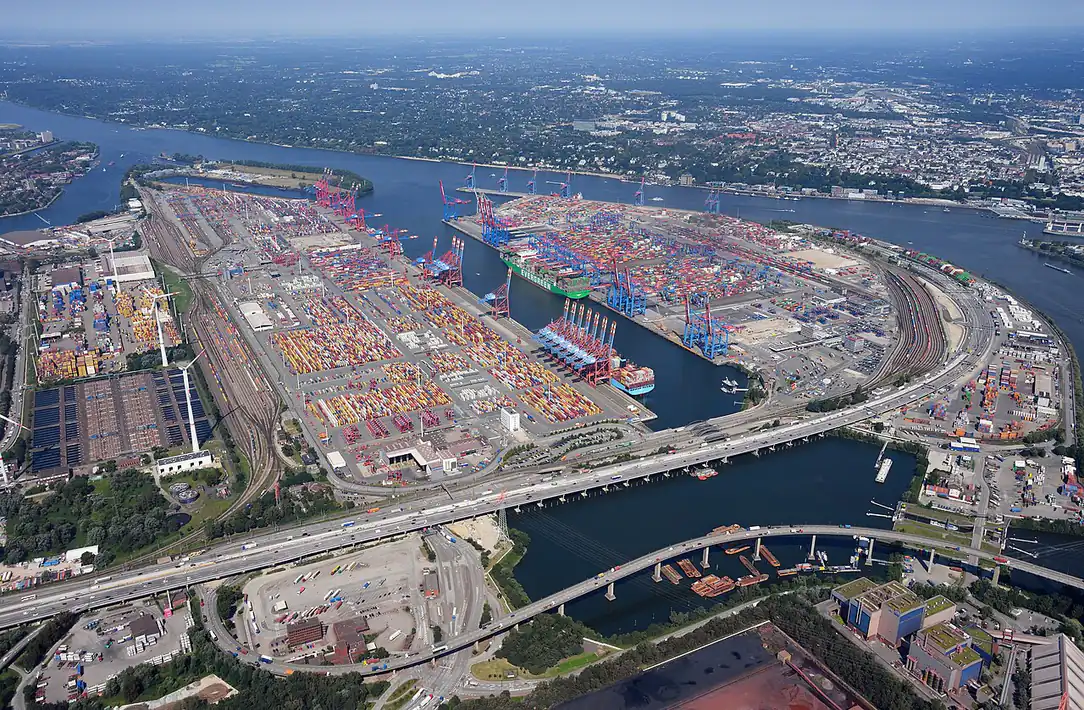
A port terminal is a specialized facility located within a port that serves as the interface between sea-going vessels and inland transportation networks. While a “port” is often used as a general term for a coastal area with maritime facilities, a “terminal” is a specific, operational unit dedicated to handling a particular type of cargo or service.
Terminals are the operational heart of global trade. They provide the necessary infrastructure for the transfer of goods—ranging from standardized containers and bulk commodities to liquid fuels and wheeled vehicles—between ships and land-based modes such as trucks, trains, and barges. The efficiency, capacity, and technological sophistication of these terminals directly dictate the throughput of the entire maritime supply chain.
Modern terminals are increasingly complex, evolving from simple loading docks into highly integrated, automated hubs that utilize advanced data analytics, robotics, and digital twins to manage the massive volumes of global commerce.
2. The Role of Ports in Global Trade and the Hub-and-Spoke Model
Ports and their terminals function as critical nodes in the global supply chain. As maritime trade continues to expand, the strategic importance of efficient port operations has never been greater.
The Hub-and-Spoke Model
To optimize vessel utilization and network efficiency, the maritime industry primarily employs a “hub-and-spoke” model.
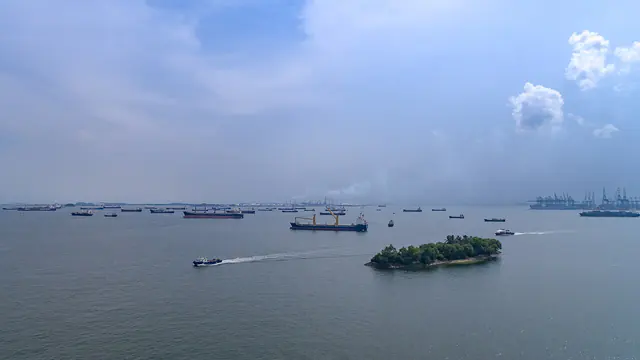
- Hub Ports: These are massive, high-capacity terminals (often located in strategic geographic locations like Singapore or Shanghai) that serve as central points for global shipping lines. They handle the largest vessels (Ultra Large Container Vessels - ULCVs) and facilitate the transshipment of goods between different routes.
- Spoke Ports: These are smaller, secondary ports that connect to the hubs. They receive cargo from the hub via smaller feeder vessels or barges and distribute it to local hinterlands or regional markets.
By concentrating large volumes of cargo at major hubs, shipping companies can achieve significant economies of scale. However, this concentration also makes the global trade network sensitive to disruptions at these key nodes.
Hinterland Connectivity
A terminal’s effectiveness is not measured solely by its quay length or crane capacity, but by its “hinterland connectivity”—the ability to move cargo efficiently from the pier to its final destination inland. A terminal with excellent maritime access but poor rail or road connections will inevitably face congestion and reduced throughput.
3. Port Layout and Infrastructure Design
The design of a port terminal is governed by several critical constraints and requirements that shape its physical footprint and operational capabilities.
Key Design Constraints
- Available Land Footprint: The amount of land available for stacking, storage, and maneuvering. As coastal land is increasingly scarce and expensive, efficient land use (e.g., high-density stacking) is paramount.
- Nautical Profile: The depth of the water (draft), the length of the quay, and the ability to accommodate specific vessel sizes, including their turning circles and berthing requirements.
- Infrastructure and Superstructure: The capital investment required for quays, warehouses, gates, and specialized handling equipment (superstructure).
- Intermodal Connectivity: The integration of rail sidings, truck gates, and barge berths into the terminal layout.
Core Infrastructure Components
- The Quay (Berth): The interface where the vessel meets the land. It must be engineered to withstand the immense static and dynamic loads of massive cranes and heavy cargo.
- The Yard: The primary storage area for cargo. In container terminals, this includes stacking areas for TEUs, reefers (refrigerated containers), and chassis.
- The Gate: The landside entry and exit point, where trucks are checked, cargo is documented, and security is enforced.
- On-Dock Rail/Barge Facilities: Dedicated areas for the direct transfer of cargo to or from railcars and inland waterway vessels.
4. Power and Energy Systems in Modern Ports
As the industry moves toward decarbonization and automation, the energy requirements of ports are undergoing a radical transformation.
Electrification and Decarbonization
Traditionally, many port operations—particularly those involving heavy machinery like straddle carriers or yard tractors—relied on diesel-powered internal combustion engines. However, there is a massive industry-wide shift toward electrification.
- Shore Power (Cold Ironing): Providing electrical power to berthed vessels so they can shut down their auxiliary diesel engines, significantly reducing local air pollution and CO2 emissions.
- Electric Terminal Equipment: Transitioning to battery-electric or hybrid versions of cranes, AGVs, and yard vehicles.
- Renewable Energy Integration: The adoption of solar arrays on warehouse roofs, wind turbines, and potentially hydrogen-based energy systems to power terminal operations.
Energy Management Systems
Modern “Smart Ports” utilize sophisticated energy management systems to optimize consumption. This includes smart charging for electric vehicle fleets, peak-shaving techniques to reduce grid strain, and the use of IoT sensors to monitor energy usage in real-time across the entire terminal footprint.
5. Automation and Digital Infrastructure
Automation is the defining trend of 21st-century port operations, aimed at increasing safety, predictability, and throughput while reducing operational costs.
Levels of Port Automation
The industry typically categorizes automation into several levels, ranging from manual to fully autonomous:
| Level | Description | Human Role |
|---|---|---|
| Level 1-2 | Manual or Semi-Automated | Operators control machinery directly or assist in specific tasks. |
| Level 3 | Remote-Controlled | Operators control equipment from a remote office using cameras and sensors. |
| Level 4 | Semi-Autonomous | Machines execute tasks with human intervention required only for exceptions. |
| Level 5 | Full Automation | End-to-end autonomous operations; humans are limited to oversight and emergency control. |
Key Enabling Technologies
- Terminal Operating Systems (TOS): The “brain” of the terminal. Software that manages vessel planning, container inventory, job scheduling, and gate operations.
- Automated Guided Vehicles (AGVs): Unmanned vehicles that transport containers between the quay and the yard.
- Automated Stacking Cranes (ASCs): High-density cranes used in the yard to stack and retrieve containers automatically.
- 5G and Private Networks: High-speed, low-latency wireless connectivity is essential for real-time communication between autonomous machines and the TOS.
- IoT (Internet of Things): A network of sensors and devices providing real-time data on equipment health, cargo status, and environmental conditions.
6. Cargo Handling Equipment and Terminal Operations
Terminals are specialized based on the physical nature of the cargo they handle. Each type requires unique infrastructure and equipment.
Container Terminals
Container terminals handle standardized units (TEUs). They are characterized by high density and high speed.
| Equipment Type | Primary Function | Key Features |
|---|---|---|
| Ship-to-Shore (STS) Gantry Cranes | Loading/Unloading vessels | Massive reach, high lift capacity, specialized for ULCVs. |
| Automated Stacking Cranes (ASC) | Yard storage and retrieval | High stacking density, often rail-mounted. |
| Automated Guided Vehicles (AGV) | Horizontal transport | Unmanned, precise navigation, electrified. |
| Straddle Carriers | Yard/Quay transport | Highly mobile, used for both transport and stacking. |
| Reach Stackers | Flexible yard handling | Highly maneuverable, used in smaller or multipurpose terminals. |
Bulk Terminals (Dry and Liquid)
Bulk terminals handle commodities in large, non-unitized quantities.
Dry Bulk (Coal, Grain, Iron Ore)
- Equipment: Conveyor systems, massive silos, ship loaders, and unloaders (clamshell or continuous bucket).
- Infrastructure: Large stockpiles, dust suppression systems, and specialized rail/road loading facilities.
Liquid Bulk (Crude Oil, LNG, Chemicals)
- Equipment: Loading arms (articulated pipes for connection to ship manifolds), high-capacity pumps, and pipelines.
- Infrastructure: Specialized jetties, tank farms (storage tanks), and vapor recovery systems.
Ro/Ro Terminals (Roll-on/Roll-off)
Designed for wheeled cargo such as automobiles, trucks, and trailers.
- Equipment: Specialized ramps (adjustable for different vessel heights), heavy-duty forklifts, and terminal tractors.
- Infrastructure: Large, open, paved yards optimized for maneuvering vehicles and specialized parking/storage lanes.
7. Communication, IoT, and Port Safety
The transition to “Smart Ports” relies on an integrated digital ecosystem.
Digital Twins
A Digital Twin is a virtual, real-time model of the physical port. By aggregating data from IoT sensors, the digital twin allows operators to:
- Simulate Operations: Test new workflows or equipment layouts in a risk-free virtual environment.
- Predictive Maintenance: Identify potential equipment failures before they occur by monitoring vibration, temperature, and usage patterns.
- Optimize Workflows: Real-time simulation of traffic and container movement to prevent bottlenecks.
Cybersecurity
As ports become increasingly connected and automated, they become prime targets for cyberattacks. A breach in a Terminal Operating System (TOS) could paralyze global trade. Modern ports must implement:
- Layered Defenses: Firewalls, encryption, and network segmentation.
- Continuous Monitoring: AI-driven detection of anomalous network behavior.
- Resilience Planning: Robust backup systems and incident response protocols to ensure rapid recovery.
8. Workforce, Labor, and Port Management
Automation is fundamentally reshaping the port workforce. While it reduces the need for manual labor in hazardous environments, it increases the demand for highly skilled technical roles.
Changing Roles
- Traditional Roles: Manual crane operators, truck drivers, and stevedores. These are increasingly being transitioned to remote-control or supervisory roles.
- New Technical Roles: TOS administrators, automation engineers, data analysts, cybersecurity specialists, and IoT maintenance technicians.
Human-Machine Collaboration
The future of port labor is not purely robotic; it is a model of human-machine collaboration. Humans provide the high-level cognitive reasoning, exception handling, and strategic decision-making, while machines handle the repetitive, high-volume, and dangerous tasks.
9. Training and Technical Competency
The rapid evolution of port technology necessitates a massive upskilling of the maritime workforce.
Key Training Areas
- Digital Literacy: Proficiency with complex TOS interfaces and data-driven decision-making tools.
- Automation Management: Understanding the logic and troubleshooting procedures for autonomous systems.
- Remote Operation Skills: Specialized training for operators using high-fidelity remote control systems.
- Cybersecurity Awareness: Ensuring all staff understand the risks and protocols of a networked environment.
10. International Maritime Regulations and Port Oversight
Ports operate within a complex framework of national and international regulations.
Key Regulatory Bodies and Frameworks
- International Maritime Organization (IMO): Sets global standards for safety (SOLAS), security (ISPS Code), and environmental protection (MARPOL).
- National Port Authorities: Manage local operations, land use, and safety within their jurisdiction.
- Classification Societies (e.g., DNV, LR, ABS): Provide technical standards and inspections for port infrastructure and equipment.
- Environmental Agencies: Enforce regulations regarding emissions, water quality, and waste management.
11. Major Global Hubs and Key Terminal Operators
The global landscape is dominated by several massive hubs and a handful of highly efficient terminal operators.
Key Global Hubs
| Port Hub | Strategic Importance | Key Feature |
|---|---|---|
| Singapore | Primary gateway for Asia-Europe and intra-Asia trade. | World-leading efficiency and connectivity. |
| Shanghai (Yangshan) | Center of the world’s largest manufacturing region. | Highly advanced, AI-driven automated terminals. |
| Rotterdam | The “Gateway to Europe.” | Massive scale and advanced intermodal connectivity. |
| Qingdao | Major hub for North China trade. | Pioneer in fully automated container terminal technology. |
Major Terminal Operators
The industry is increasingly consolidated, with a few large entities managing terminals worldwide:
- DP World
- Hutchison Ports
- PSA International
- Maersk (APM Terminals)
12. Decarbonization and the Smart Port Transition
The most significant challenge facing modern ports is the dual pressure of increasing throughput while drastically reducing environmental impact.
The Smart Port Transition
A “Smart Port” is not just an automated port; it is a port that uses data to become more sustainable. This includes:
- Optimized Vessel Arrival: Reducing “wait and drift” time through better scheduling.
- Energy-Efficient Logistics: Using AI to minimize the distance traveled by AGVs and trucks.
- Zero-Emission Ambitions: Ports like Tianjin, China, are pioneering the path toward zero-emission smart ports through solar-powered automation and electrified infrastructure.
Challenges to Sustainability
- High Capital Costs: The transition to electrification and automation requires massive upfront investment.
- Grid Capacity: The surge in electrical demand from shore power and electric equipment requires significant upgrades to local power grids.
- Interoperability: Ensuring that new green technologies and digital systems from different vendors can work together seamlessly.
13. Facts and Common Misconceptions
- Misconception: “Automation will completely eliminate the need for human workers.” Fact: While automation changes the nature of work, it creates a demand for higher-skilled technical and supervisory roles.
- Fact: Ports are critical to almost everything we consume; over 80% of world merchandise trade is moved by sea.
- Fact: Congestion in one major hub (like the Red Sea or Panama Canal) can have immediate, cascading effects on global shipping costs and delivery times.
14. Glossary
- AGV (Automated Guided Vehicle): An unmanned vehicle used for horizontal transport in terminals.
- ASC (Automated Stacking Crane): A crane used for automated storage and retrieval in the yard.
- Hinterland: The inland area served by a port.
- IoT (Internet of Things): A network of connected devices that collect and exchange data.
- Ro/Ro (Roll-on/Roll-off): A type of vessel or terminal designed for wheeled cargo.
- STS (Ship-to-Shore): Cranes used for loading and unloading vessels at the quay.
- TOS (Terminal Operating System): The software that manages all terminal logistics.
- TEU (Twenty-foot Equivalent Unit): The standard unit of measurement for container capacity.
- Transshipment: The transfer of cargo from one vessel to another at an intermediate port.
15. Sources
- UNCTAD (2024). Review of Maritime Transport 2024 - Chapter IV: Port performance and maritime trade. https://unctad.org/system/files/official-document/rmt2024ch4_en.pdf
- PEMA (2016). Container Terminal Automation Information Paper. https://www.pema.org/wp-content/uploads/2022/09/PEMA-IP12-Container-Terminal-Automation.pdf
- Rodrigue, J-P, et al. Container Terminal Design and Equipment. https://porteconomicsmanagement.org/pemp/contents/part6/container-terminal-design-equipment/
- DNV (2025). New global benchmark ranks top container ports worldwide. https://www.dnv.com/news/2025/new-global-benchmark-ranks-top-container-ports-worldwide/
- Springer Nature. Port automation equipment: current developments, challenges, and future directions. https://link.springer.com/article/10.1186/s12544-026-00816-2
- Maritime Gateway. When ports think: AI, Data, and the new age of maritime logistics. https://www.maritimegateway.com/when-ports-think-ai-data-and-the-new-age-of-maritime-logistics/
- Ericsson. Smart ports: connected harbors of the future. https://www.ericsson.com/en/industries/ports
- Dataintelo. Port Automation Solutions Market Report. https://dataintelo.com/report/port-automation-solutions-market
- Nautilus Shipping. Port Terminal Operations Overview. https://nautilusshipping.com/news-and-insights/port-terminal-operations-how-container-bulk-and-tanker-terminals-keep-global-trade-moving
- Liebherr. Technical Description: STS Ship to Shore Gantry Cranes. https://www-assets.liebherr.com/media/bu-media/lhbu-mcc/downloads-and-brochures/brochures/lcc/liebherr-sts-cranes-technical-description.pdf
- IAPH & World Bank. Close the Gaps: An Action Plan. https://sustainableworldports.org/wp-content/uploads/IAPH-World-Bank-CloseTheGaps-Report.pdf
- EDB Singapore. Singapore named top container port under new global benchmark. https://www.edb.gov.sg/en/news-and-insights/singapore-named-top-container-port-under-new-global-benchmark