1. What Are These Ships?
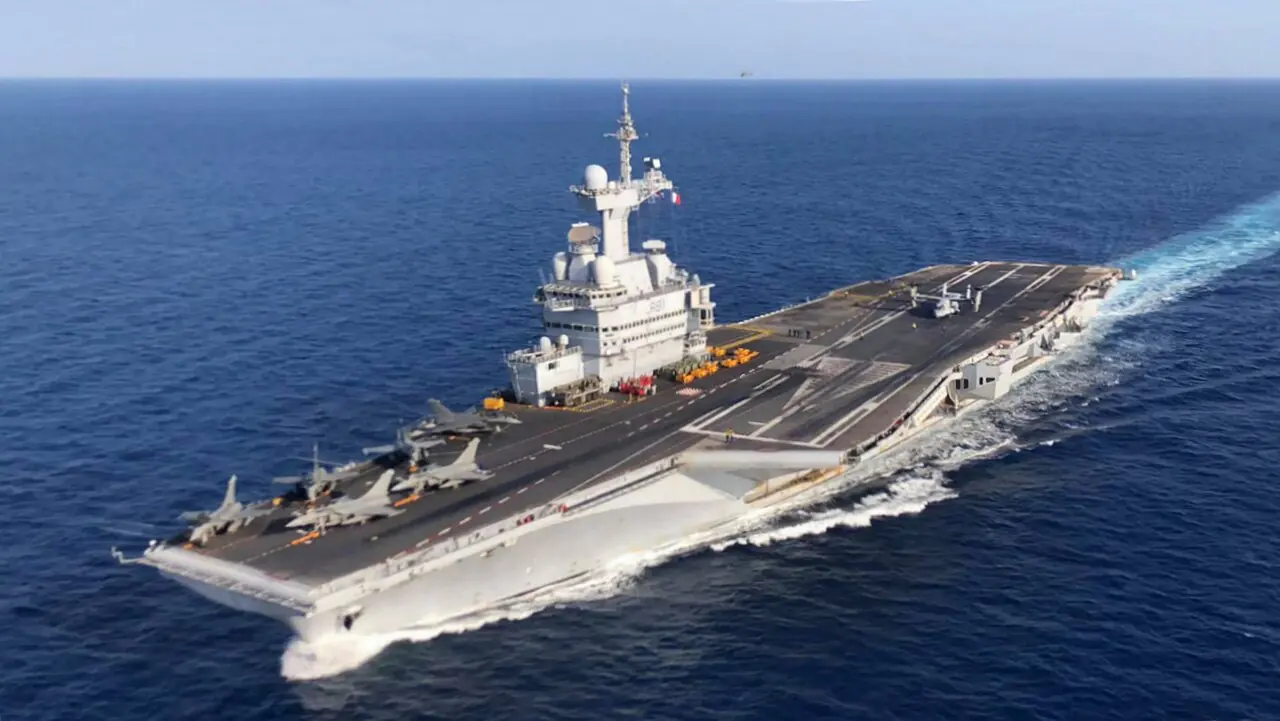
Aircraft carriers and amphibious assault ships represent the pinnacle of naval power projection. While they share certain architectural similarities—such as large, flat flight decks and significant hangar spaces—their missions, technical configurations, and operational roles are distinct.
Aircraft Carriers serve as mobile, seagoing airbases. They allow a nation to project air power far from its shores, providing air superiority, strike capabilities, and reconnaissance without the need for land-based airfields. They are typically the centerpiece of a Carrier Strike Group (CSG).
Amphibious Assault Ships (including Landing Helicopter Docks (LHD), Landing Platform Docks (LPD), and Landing Helicopter Assault (LHA) ships) are designed to transport and land a marine expeditionary force. They facilitate the transition of troops, vehicles, and equipment from sea to land via helicopters, tiltrotors (like the MV-22 Osprey), and landing craft launched from internal well decks.
2. Mission and Operations
Aircraft Carrier Missions
- Power Projection: Launching long-range strike aircraft to hit targets deep within enemy territory.
- Sea Control: Providing air cover for a fleet to ensure safe passage through contested waters.
- Deterrence: The mere presence of a carrier in a region serves as a powerful diplomatic and military signal.
- Search and Rescue (SAR) & Humanitarian Aid: Serving as a command center and platform for rescue operations during global crises.
Amphibious Assault Ship Missions
- Amphibious Landing: Executing the ship-to-shore movement of Marines and their heavy equipment.
- Expeditionary Advanced Base Operations (EABO): Supporting distributed operations from small, mobile positions.
- Sea Base Support: Acting as a floating logistics and command hub for littoral operations.
- Special Operations Support: Providing a launch platform for specialized maritime and air units.
3. Hull, Size, and Design
The design of these vessels is dictated by the weight of the aircraft they carry and the method of launch and recovery.
Aircraft Carrier Configurations
The method of launching aircraft defines the carrier’s primary design:
| Configuration | Full Name | Launch Method | Recovery Method | Common Aircraft |
|---|---|---|---|---|
| CATOBAR | Catapult Assisted Take-Off But Arrested Recovery | Steam or Electromagnetic Catapults | Arresting Wires | F/A-18, Rafale, E-2 Hawkeye |
| STOBAR | Short Take-Off But Arrested Recovery | Aircraft Engines + Ski-Jump | Arresting Wires | Su-33, MiG-29K |
| STOVL | Short Take-Off and Vertical Landing | Aircraft Engines + Ski-Jump | Vertical Landing / Short Roll | F-35B, Harrier |
Comparison of Notable Classes
| Specification | Gerald R. Ford Class (CATOBAR) | Queen Elizabeth Class (STOVL) | Wasp Class (LHD) | America Class (LHA/LHD) |
|---|---|---|---|---|
| Displacement (Full Load) | ~100,000 long tons | ~80,600 tonnes | ~40,500 long tons | ~44,000-45,000 long tons |
| Length | 1,092 ft (333 m) | 932 ft (284 m) | 843 ft (257 m) | 844 ft (257 m) |
| Beam (Flight Deck) | 256 ft (78 m) | 240 ft (73 m) | ~104 ft (32 m) | ~106 ft (32 m) |
| Primary Role | Fleet Strike / Sea Control | STOVL Strike / Sea Control | Amphibious Assault | Aviation-centric Assault |
4. Propulsion and Engines
Nuclear vs. Conventional Propulsion
- Nuclear Power (CVN): Used primarily by large fleet carriers (e.g., Gerald R. Ford). It provides virtually unlimited range and high sustained speeds, which are critical for maintaining the “wind over deck” required for flight operations.
- Gas Turbines & Steam: Most amphibious assault ships and smaller carriers use marine gas turbines or boilers with steam turbines. These are more cost-effective and easier to maintain but require frequent refueling.
Integrated Electric Propulsion (IEP)
Modern carriers like the Gerald R. Ford class utilize advanced electrical plants to support high-energy systems like EMALS. This shift from steam-driven auxiliaries to electric-driven systems reduces maintenance and improves reliability.
5. Electrical System and Power
The electrical demands of a modern aircraft carrier are immense.
- EMALS Requirement: The Electromagnetic Aircraft Launch System (EMALS) requires massive, instantaneous bursts of electrical energy to catapult aircraft.
- Power Generation: The Gerald R. Ford class generates approximately 104 megawatts of electrical power to support the launch system, advanced radars, and future weapons like lasers or railguns.
- Redundancy: Both carrier and amphibious ship designs incorporate significant electrical redundancy to ensure that a single point of failure does not compromise flight operations or propulsion.
6. Equipment and How It Is Used
Flight Deck Equipment
- Catapults:
- Steam Catapults: Use high-pressure steam to accelerate aircraft. They are reliable but require complex steam piping and maintenance.
- EMALS (Electromagnetic Aircraft Launch System): Uses electromagnetic force to launch aircraft. It offers smoother acceleration, more precise control, and reduced stress on aircraft airframes.
- Arresting Gear:
- Arresting Wires: Heavy steel cables that catch the aircraft’s tailhook to bring it to a stop.
- Advanced Arresting Gear (AAG): Modern electronic versions that provide more consistent deceleration and are compatible with lighter aircraft.
- Ski-Jumps: An upward-curved section of the flight deck used in STOBAR and STOVL configurations to assist aircraft in gaining altitude during take-off.
- Aircraft Elevators: Large platforms used to move aircraft between the hangar deck and the flight deck.
Well Deck and Amphibious Operations
The well deck is a critical feature of LHD and LPD ships.
- Ballasting Process: To operate the well deck, the ship must “ballast down.” This involves flooding internal compartments to lower the stern of the ship, allowing water to flow into the well deck.
- Landing Craft: Once flooded, craft such as the LCAC (Landing Craft Air Cushion) or LCU (Landing Craft Utility) can enter the well deck. The LCAC, being an air-cushion vehicle, can operate in the shallow water within the well deck and then speed out onto the beach.
Aviation Support
- Fueling (JP-5): Carriers carry massive quantities of specialized aviation fuel (JP-5). Safety systems include dedicated piping, fire suppression, and separation from living and combat areas.
- Ordnance Management: Magazines are highly secured, armored compartments used to store bombs, missiles, and ammunition. Automated elevators move ordnance from magazines to the flight deck.
7. Navigation, Communications, and Safety
Sensors and Combat Systems
- Radar: Advanced AESA (Active Electronically Scanned Array) radars (like the AN/SPY-6) provide long-range surveillance and tracking.
- Electronic Warfare (EW): Systems like the AN/SLQ-32 provide defense against incoming missiles and electronic interference.
- Communication: Satellite links and high-bandwidth radio systems allow these ships to act as command hubs for entire carrier strike groups or expeditionary task forces.
Safety Protocols
- Flight Deck Safety: Strict “fouled deck” protocols and the use of visual landing aids (like the Optical Landing System) are essential for preventing accidents.
- Fire Suppression: Given the presence of aviation fuel and ordnance, ships are equipped with advanced automated fire suppression systems (AFFF - Aqueous Film Forming Foam).
8. Crew and Organization
The crew of these vessels is highly specialized and divided into several distinct groups:
- Ship’s Company: Responsible for the operation and maintenance of the ship itself (navigation, engineering, damage control).
- Air Wing/Air Element: Pilots, maintainers, and flight deck crews responsible for aircraft operations.
- Marine Detachment/Expeditionary Force: In amphibious assault ships, the Marines who are transported for ground operations.
- Command Staff: The officers and specialists who manage the ship’s mission, intelligence, and combat operations.
9. Certificates and Training Requirements
Operation of these ships requires rigorous certification:
- Naval Aviator/Flight Officer Certification: For all personnel involved in flight operations.
- Amphibious Warfare Training: For Marines and sailors involved in well deck and landing operations.
- Damage Control Certification: Every crew member must be trained in firefighting and flood control.
- Shipboard Qualification: Ensuring personnel are competent in their specific roles within the complex shipboard environment.
10. Regulations, Class, and Inspections
While military ships are not subject to the same civilian IMO regulations as merchant vessels, they follow strict internal naval standards (e.g., US Navy NAVSEA standards) regarding:
- Structural Integrity: Regular hull inspections and dry-docking.
- Material Readiness: Ensuring all mechanical and electrical systems are operational.
- Combat Readiness: Regular exercises and inspections to ensure the ship can perform its mission under combat conditions.
11. Notable Shipyards, Operators, and Example Vessels
Key Shipyards
- Huntington Ingalls Industries (HII) - Newport News Shipbuilding: The primary builder of US nuclear aircraft carriers.
- BAE Systems / Aircraft Carrier Alliance: The primary consortium for UK carrier construction.
Key Operators
- United States Navy (USN)
- Royal Navy (UK)
- French Navy (Marine Nationale)
Example Vessels
- Gerald R. Ford (CVN 78): The lead ship of the US Navy’s most advanced carrier class.
- Queen Elizabeth (R08): The lead ship of the UK’s modern supercarrier class.
- Mistral Class: A prominent French class of amphibious transport docks.
- USS Wasp (LHD-1): A cornerstone of US amphibious capability.
12. Environment and Future Outlook
The future of carrier and amphibious warfare is being shaped by:
- Unmanned Systems: The integration of UAVs (Unmanned Aerial Vehicles) and USVs (Unmanned Surface Vehicles) into the strike and assault mission.
- Next-Generation Reactors: Developing smaller, more efficient nuclear reactors for future ship designs.
- Directed Energy Weapons: Implementing lasers and railguns for enhanced missile defense.
- Distributed Maritime Operations (DMO): Using smaller, more numerous vessels to complement the massive power of carriers.
13. Facts, Records, and Common Misconceptions
- The “Supercarrier” Term: While widely used by the media, “supercarrier” is not an official naval designation. It is a descriptive term for carriers with displacement exceeding 80,000 tons.
- Carrier Size vs. Power: While size is a factor, the power of a carrier comes from its air wing and its ability to integrate with the rest of the strike group.
- Well Decks are Not Just “Big Garages”: They are complex engineering feats that require precise ballasting and environmental control to operate safely.
14. Glossary
- AAG (Advanced Arresting Gear): An electronic system used to bring aircraft to a stop on a flight deck.
- CATOBAR: Catapult Assisted Take-Off But Arrested Recovery.
- EMALS: Electromagnetic Aircraft Launch System.
- LHD (Landing Helicopter Dock): An amphibious assault ship with a flight deck and well deck.
- LPD (Landing Platform Dock): An amphibious ship focused on landing craft and troops.
- LCAC (Landing Craft Air Cushion): A high-speed hovercraft used for amphibious landings.
- STOBAR: Short Take-Off But Arrested Recovery.
- STOVL (Short Take-Off and Vertical Landing): Aircraft capability allowing short take-offs and vertical landings.
- Well Deck: An internal flooded compartment used to launch and recover landing craft.