1. What Is This Ship?
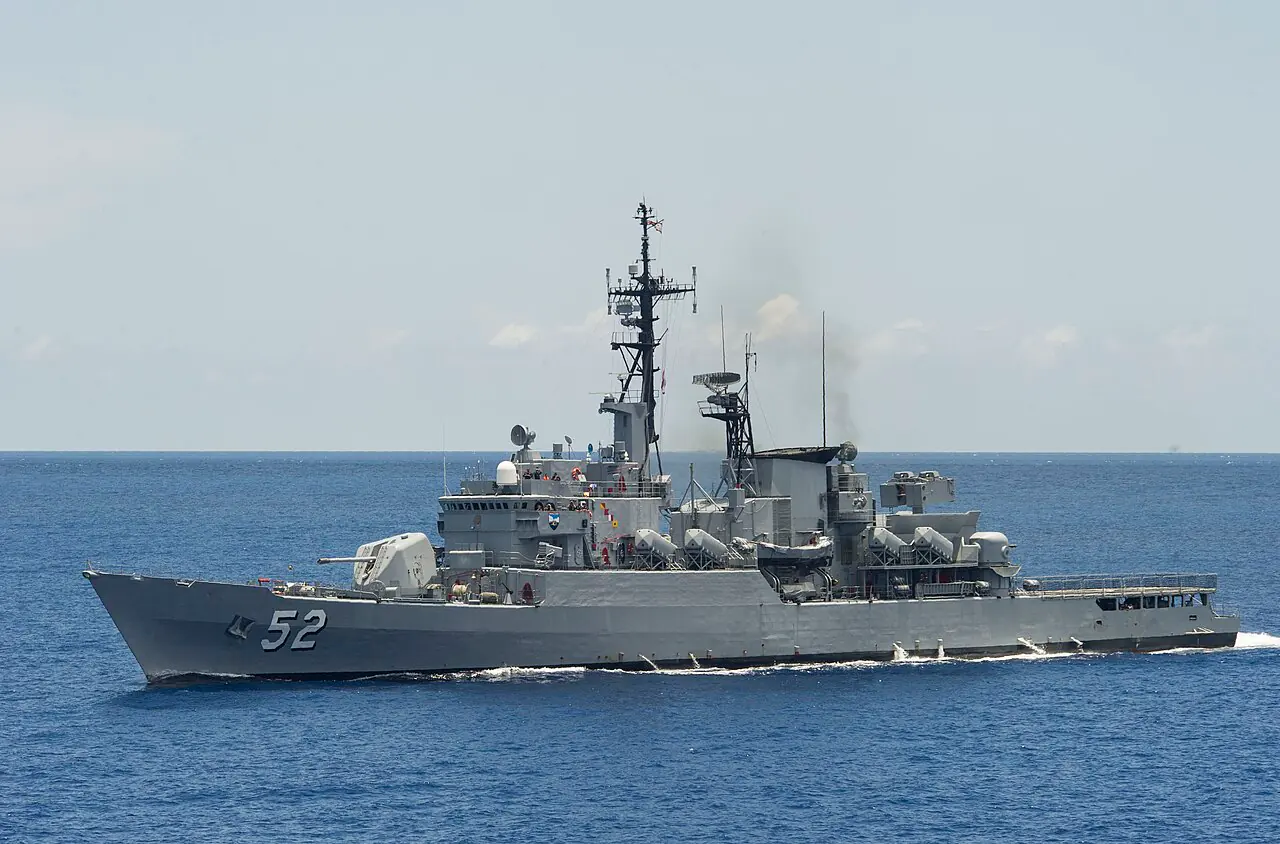
A frigate is a versatile, multi-role warship that occupies a critical niche in naval hierarchy, typically sitting between smaller, coastal corvettes and larger, more heavily armed destroyers or cruisers. Historically, the term “frigate” denoted a specific class of fast, lightly armed sailing vessels used for scouting and commerce raiding. In the modern era, however, the definition has undergone radical transformation, evolving into a highly sophisticated combatant capable of complex anti-submarine warfare (ASW), anti-air warfare (AAW), and anti-surface warfare (ASuW).
The identity of the frigate has been fluid throughout maritime history. During the Age of Sail, frigates were the “eyes of the fleet,” valued for their speed and ability to operate independently of the main battle line. Following the World Wars, the term was reclaimed to describe specialized escort vessels tasked with protecting convoys from submarine threats. Today, the distinction between a frigate and a destroyer is often more a matter of naval tradition and specific mission requirements than a hard technical boundary, as modern frigates increasingly incorporate the advanced sensor and missile capabilities once reserved for larger vessels.
2. Mission and Operations
The primary mission of a modern frigate is to provide protection for high-value assets, such as aircraft carriers, amphibious assault ships, or merchant convoys. Unlike destroyers, which are often designed for high-intensity fleet combat and area air defense, frigates are typically optimized for multi-mission flexibility and endurance.
Core Operational Roles:
- Anti-Submarine Warfare (ASW): This is often the defining role of the modern frigate. Equipped with advanced sonar suites (both hull-mounted and towed), torpedoes, and organic helicopters, frigates are designed to detect, track, and neutralize enemy submarines before they can threaten the task group.
- Anti-Air Warfare (AAW): Many modern frigates are equipped with Vertical Launch Systems (VLS) and medium-range surface-to-air missiles to defend against aircraft, missiles, and UAVs.
- Anti-Surface Warfare (ASuW): Frigates utilize anti-ship missiles (SSM) and deck guns to engage enemy surface vessels, ranging from small fast-attack craft to larger combatants.
- Protection of Shipping (POS): In maritime security operations, frigates serve as the primary deterrent against piracy, smuggling, and state-sponsored maritime interference.
- Amphibious Support and Escort: Frigates provide a protective screen for amphibious landing forces, ensuring that the transport ships and landing craft can operate safely near contested shorelines.
3. Hull, Size, and Design
The design of a frigate is a study in compromise: it must be large enough to carry complex combat systems and sufficient fuel for long-range operations, yet agile and cost-effective enough to be produced in numbers.
Typical Dimensions and Displacement
While specifications vary significantly by nation and era, modern frigates generally fall within the following ranges:
| Metric | Typical Range |
|---|---|
| Displacement (Full Load) | 2,000 – 7,000 tonnes |
| Length Overall (LOA) | 90 – 150 meters |
| Beam (Width) | 13 – 18 meters |
| Draught | 5 – 9 meters |
Design Characteristics
- Stealth and Low Observability: Modern hull forms are heavily influenced by “stealth” requirements. Designers utilize sloping surfaces, integrated superstructures, and radar-absorbent materials to reduce the ship’s Radar Cross Section (RCS). This makes the vessel harder to detect and track on enemy radar.
- Sea-Keeping and Stability: As vessels intended for long-duration escort duties, frigates must possess excellent sea-keeping qualities to operate effectively in heavy weather. This involves careful management of the center of gravity and hull shaping to minimize rolling and pitching.
- Modular Design: Many contemporary designs (such as the SIGMA class) emphasize modularity, allowing the hull to be configured with different mission modules (e.g., mine countermeasures or specialized ASW gear) depending on the specific requirements of the operating navy.
4. Propulsion and Engines
The propulsion systems of modern frigates have evolved from simple steam turbines to highly efficient, sophisticated hybrid arrangements designed to balance speed, range, and acoustic stealth.
Propulsion Configurations
The choice of propulsion is dictated by the ship’s primary mission. For ASW-focused vessels, quietness is paramount; for multi-role vessels, efficiency and burst speed are the priorities.
- CODAG (Combined Diesel and Gas): Uses diesel engines for efficient cruising and a gas turbine for high-speed sprints.
- CODLOG (Combined Diesel-Electric or Gas): A variation where the ship can use electric motors (driven by diesels) for low-speed/silent running, switching to a gas turbine for high speeds.
- CODLAG (Combined Diesel-Electric and Gas): Similar to CODLOG, but often implies a more integrated approach where the electric motors and gas turbine can be managed more seamlessly to optimize fuel efficiency and acoustic signature.
Core Components
- Gas Turbines: Highly powerful engines (e.g., the General Electric LM2500) that provide the high thrust necessary for combat maneuvers and intercepting threats.
- Diesel Engines: Highly efficient engines used for long-endurance cruising and economic operations.
- Electric Motors: Used in hybrid configurations to provide extremely quiet propulsion, which is critical when hunting submarines.
5. Electrical System and Power
Modern naval warfare is increasingly “electric.” The shift toward more sophisticated sensors, directed energy weapons, and high-speed propulsion has led to a revolution in how frigates manage power.
Integrated Electric Propulsion (IEP)
The trend toward Integrated Electric Propulsion (IEP) or Integrated Full Electric Propulsion (IFEP) allows a ship to use its main generators to power both the propulsion motors and the ship’s combat systems. This provides several advantages:
- Power Management: Electricity can be diverted from propulsion to combat systems (like high-power radars or lasers) almost instantaneously.
- Efficiency: By using electric motors for cruising, the ship can operate much more efficiently than with direct mechanical drives.
- Redundancy: Electrical distribution can be designed with multiple paths, ensuring that a single failure does not disable critical combat systems.
The “More Electric” Paradigm
As combatants begin to experiment with laser weapons (Directed Energy Weapons) and railguns, the electrical demand will continue to rise. Modern frigates are being designed with “power-rich” architectures, anticipating that much of their future combat capability will rely on the ability to generate and manage massive amounts of electrical energy on demand.
6. Equipment and How It Is Used
A frigate’s effectiveness is defined by its “combat suite”—the combination of sensors to see the enemy and weapons to strike them.
Sensors and Detection Systems
| System Type | Primary Function | Typical Technology |
|---|---|---|
| Search Radar | Long-range detection of air and surface targets | AESA (Active Electronically Scanned Array) |
| Fire Control Radar | Precision tracking for weapon engagement | X-band, high-frequency pulsed radar |
| Hull-Mounted Sonar | Detection of submarines near the ship | Active/Passive transducer arrays |
| Towed Array Sonar | Long-range submarine detection via acoustic sensing | Large, deployable cable arrays |
| Electronic Warfare (EW) | Detection and jamming of enemy radar/comms | ESM (Electronic Support Measures) / ECM |
Armament and Weapon Systems
| Weapon Category | Typical Examples | Primary Use Case |
|---|---|---|
| Vertical Launch System (VLS) | Mk 41, Aster launchers | Anti-air (SAM) and Anti-submarine (ASW) missiles |
| Main Gun | 76mm or 127mm naval guns | Surface targets, shore bombardment, UAVs |
| Anti-Ship Missiles (SSM) | Exocet, Harpoon, NSM | Engagement of enemy surface vessels |
| Torpedoes | MU90, Mk 54 | Anti-submarine strikes |
| Close-In Weapon System (CIWS) | Phalanx, Goalkeeper | Terminal defense against incoming missiles |
Aviation Facilities
Most modern frigates feature a flight deck and a hangar to support organic aviation. The ability to deploy a maritime helicopter (such as the MH-60 Seahawk or NH90) significantly extends the ship’s reach, particularly in its ASW and search-and-rescue (SAR) capabilities.
7. Navigation, Communications, and Safety
To operate effectively in global maritime environments, frigates utilize a sophisticated array of navigation and communication tools.
- Navigation: Modern vessels rely on integrated bridge systems combining GPS/GNSS with high-precision Inertial Navigation Systems (INS) and electronic charting (ECDIS).
- Communications: Secure, multi-band satellite communications (SATCOM) allow frigates to remain in constant contact with national command structures, even in remote ocean regions. They also utilize tactical data links (like Link 16) to share a “common operating picture” with other ships, aircraft, and land-based units.
- Safety and Survival: Frigates are built with redundant systems to ensure survivability. This includes damage control equipment, fire suppression systems, and automated stability controls to manage the effects of combat damage or extreme weather.
8. Crew and Organization
The crew of a frigate is a highly trained, specialized group of personnel. While automation has reduced the total number of sailors required compared to the Age of Sail, the complexity of modern systems demands high levels of technical expertise.
- Typical Crew Size: Varies widely from 100 to 300 personnel, depending on the ship’s displacement and mission profile.
- Organization: The crew is typically divided into departments:
- Operations: Navigation, combat systems, and sensors.
- Engineering: Propulsion, electrical, and damage control.
- Weapons/Gunnery: Maintenance and operation of armaments.
- Logistics/Supply: Food, fuel, and spare parts.
- Specialization: Sailors undergo rigorous training in specific disciplines such as sonar operation, missile maintenance, or aviation support.
9. Certificates and Training Requirements
Because frigates are military assets, they do not follow the same certification paths as civilian merchant ships (such as IMO/SOLAS standards). Instead, they operate under national naval regulations.
- Naval Qualification: Personnel must meet strict service-specific standards for sea service and technical competency.
- Operational Certifications: Before deployment, vessels and crews undergo intensive “work-up” cycles, including combat drills, damage control exercises, and multi-national interoperability training.
- Technical Certifications: Engineers and technicians must hold specific certifications for the maintenance of sensitive systems like gas turbines, nuclear-powered auxiliary components (if applicable), and advanced electronics.
10. Regulations, Class, and Inspections
While primarily governed by military doctrine, the technical construction of frigates often intersects with civilian maritime standards.
- Naval Standards: Design and construction are governed by national naval authorities (e.g., US Naval Sea Systems Command) to ensure combat survivability and performance.
- Classification Societies: For hybrid or commercial-derivative designs, classification societies like DNV, Lloyd’s Register, or ABS may be involved in verifying hull integrity, electrical safety, and environmental compliance.
- Inspections: Regular, rigorous inspections of both the hull and the internal systems are mandatory to ensure readiness and prevent mechanical failure during critical missions.
11. Notable Shipyards, Operators, and Example Vessels
The production of frigates is a high-stakes industry dominated by a few key global players.
Leading Shipyards and Manufacturers
- Damen Shipyards (Netherlands): Renowned for the SIGMA class, offering highly modular and customizable designs.
- Navantia (Spain): A major provider of large-scale frigate designs used by several international navies.
- Fincantieri (Italy): A leading producer of high-tech multi-role combatants like the FREMM class.
- Thales/Naval Group (France): Key providers of integrated combat systems and naval architectures.
Example Vessels
| Vessel Class | Operator | Key Characteristic | | :— | :| :— | | Type 26 (City Class) | United Kingdom / Australia / Canada | Highly advanced ASW capability and quiet propulsion. | | FREMM Class | France / Italy | Versatile multi-role design with high mission flexibility. | | SIGMA Class | Various (e.g., Indonesia, Mexico) | Highly modular and customizable for different navies. | | F125 Class | Germany | Optimized for long-duration, low-intensity missions. | | Constellation Class | United States (Upcoming) | The next generation of US Navy surface combatants. |
12. Environment and Future Outlook
The future of the frigate is being shaped by three major technological drivers: automation, unmanned systems, and electrification.
- Automation and Reducing Crew Requirements: Advances in artificial intelligence and automated combat systems are allowing for smaller, more efficient crews, potentially increasing the ship’s endurance and lowering operational costs.
- Unmanned/Autonomous Integration: The next generation of frigates will act as “motherships” for unmanned underwater vehicles (UUVs) and unmanned aerial vehicles (UAVs), extending their sensor and strike reach without risking human life.
- Directed Energy and Electrification: As mentioned, the transition to “more electric” ships is essential to support future weapons like lasers and railguns, which will redefine naval combat.
- Sustainability: There is a growing emphasis on reducing the environmental footprint of naval operations through more efficient propulsion and hybrid-electric technologies.
13. Facts, Records, and Common Misconceptions
- Misconception: “Frigates are just small destroyers.” While they share similarities, their design philosophies differ. A destroyer is often built for high-end, offensive combat, whereas a frigate is built for multi-role flexibility, endurance, and specialized escort duties.
- The “Cruiser” Confusion: In the US Navy, the term “frigate” (FF/FFG) was used for a long time for ships that other navies called “destroyers.” This was corrected during the 1975 reclassification.
- Fact: The term “frigate” is one of the oldest continuous designations in naval history, surviving the transition from wood and sail to steel and steam.
14. Glossary
- AAW (Anti-Air Warfare): Combat operations against airborne threats.
- ASW (Anti-Submarine Warfare): Combat operations against underwater threats.
- ASuW (Anti-Surface Warfare): Combat operations against surface vessels.
- AESA (Active Electronically Scanned Array): Advanced radar technology that uses many small transmit/receive modules.
- CODAG (Combined Diesel and Gas): Propulsion using both diesel and gas turbine engines.
- CODLOG (Combined Diesel-Electric or Gas): Propulsion using diesel-electric or gas turbine systems.
- CODLAG (Combined Diesel-Electric and Gas): A highly efficient hybrid propulsion arrangement.
- CICI (Close-In Weapon System): A defensive system for neutralizing incoming missiles.
- Displacement: The weight of the water displaced by the ship, used to measure its size.
- IEP (Integrated Electric Propulsion): A system where electricity powers both propulsion and combat systems.
- SSM (Surface-to-Surface Missile): A missile designed to strike other ships.
- VLS (Vertical Launch System): A system for launching missiles vertically from within the ship’s hull.
15. Sources
- Britannica: https://www.britannica.com/technology/frigate
- Damen Shipyards: https://www.damen.com/vessels/defence-and-security/sigma-frigates
- Rolls-Royce: https://www.mylearning.rolls-royce.com/media/our-stories/discover/2018/electric-naval-ships.aspx
- USNI: https://www.usni.org/magazines/naval-history-magazine/2023/april/evolution-frigates-age-sail
- Rheinmetall: https://www.rheinmetall.com/en/products/naval-vessels/frigates
- French Ministry of Defense: https://www.defense.gouv.fr/en/defense-and-intervention-frigate