1. What Are Autonomous and Uncrewed Vessels?
The maritime industry is undergoing a fundamental paradigm shift, transitioning from traditional crewed operations to a spectrum of autonomy. This evolution is characterized by two primary categories of vessels: Maritime Autonomous Surface Ships (MASS) and Uncrewed Surface Vessels (USVs). While often used interchangeably in casual conversation, they represent distinct operational profiles and technological focuses.
Maritime Autonomous Surface Ships (MASS) typically refer to larger, ocean-going vessels—such as cargo ships, tankers, or bulk carriers—that are designed to operate with varying degrees of autonomy. The goal is often to increase efficiency, reduce fuel consumption, and minimize human error in long-haul shipping. The International Maritime Organization (IMO) has been instrumental in defining this space through its Regulatory Scoping Exercise, which categorized autonomy into four distinct degrees.
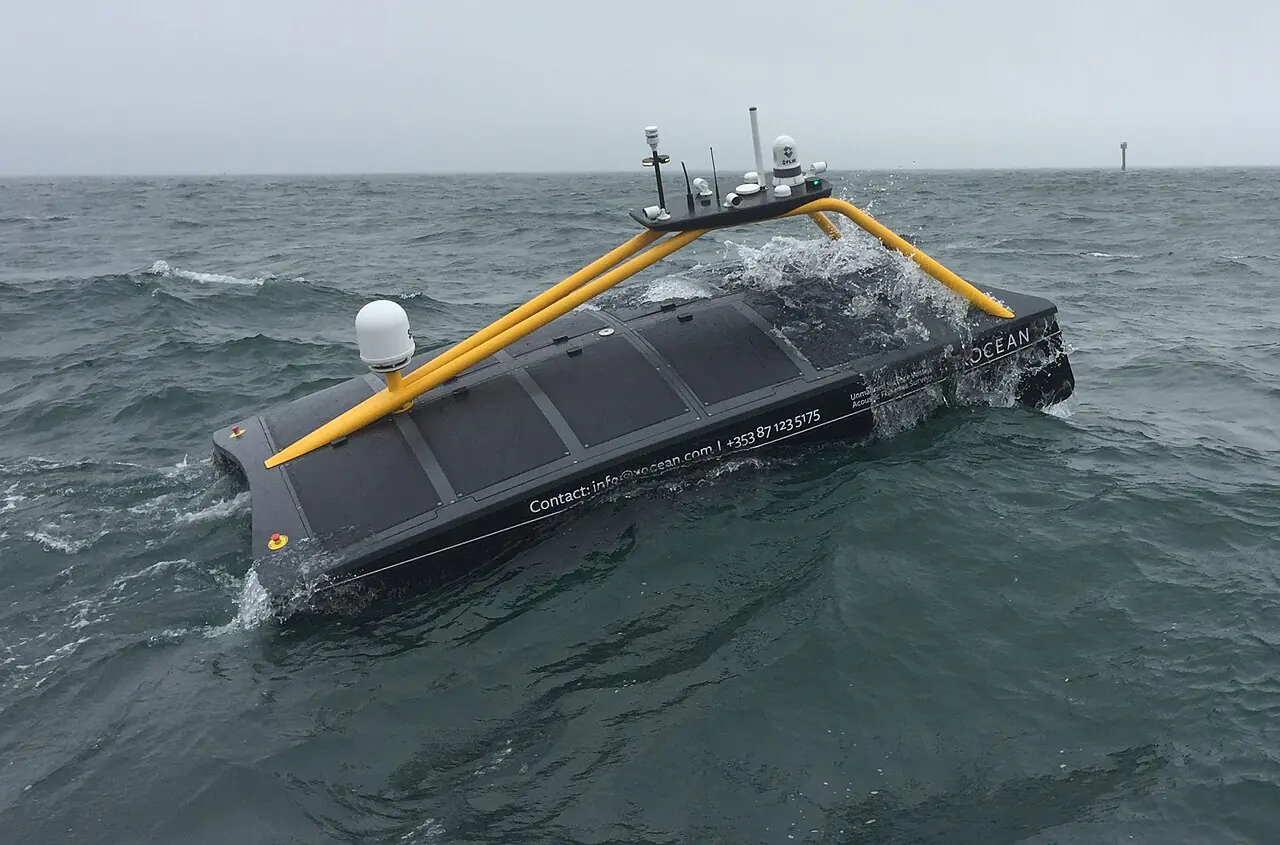
Uncrewed Surface Vessels (USVs), by contrast, are often smaller, highly specialized platforms designed for specific mission profiles such as hydrographic surveying, offshore infrastructure inspection, mine countermeasure (MCM) operations, and coastal security. USVs are frequently “mission-centric,” meaning they are built around a specific payload—such as a multibeam echosounder or a Remotely Operated Vehicle (ROV)—rather than being general-purpose cargo carriers.
It is essential to distinguish between “uncrewed” and “autonomous.” A vessel can be uncrewed (having no humans on board) but still be remotely controlled by a human in a shore-based center. Conversely, an autonomous vessel is one where the onboard system is capable of making decisions and determining actions independently, though it may still be monitored by humans.
2. Mission and Operations
The operational utility of autonomous and uncrewed vessels is broad, spanning from deep-sea logistics to shallow-water environmental monitoring.
Autonomous Cargo Transport
The most high-profile application of MASS is the autonomous transport of goods. By optimizing routes and engine performance through AI-driven decision support, autonomous cargo ships can significantly reduce CO2 emissions and operational costs. The Yara Birkeland, for instance, serves as a prototype for zero-emission, autonomous feeder services, replacing hundreds of truck trips with a single, electric maritime route.
Hydrographic and Geophysical Surveying
USVs have revolutionized the field of hydrography. Traditionally, survey vessels required large crews to manage complex sonar systems and navigate safely. Modern USVs, such as Fugro’s Blue Essence or Seafloor Systems’ EchoBoat, can execute high-resolution bathymetric surveys in environments that are too shallow, dangerous, or environmentally sensitive for crewed ships. They can carry modular “skids” containing multibeam echosounders (MBES), side-scan sonars, or sub-bottom profilers, providing high-fidelity data with minimal human intervention.
Offshore Inspection, Maintenance, and Repair (IMR)
In the offshore energy sector (oil, gas, and increasingly offshore wind), USVs act as “force multipliers.” They are used to inspect subsea pipelines, cables, and structural foundations. Many advanced USVs are designed to launch and recover Work-Class or Inspection-Class ROVs, allowing for continuous subsea monitoring without the need for a heavy, expensive mother ship.
Security and Mine Countermeasures (MCM)
The ability to operate in high-risk environments makes uncrewed platforms ideal for maritime security and mine clearance. Small, stealthy USVs can patrol coastal waters or enter minefields to identify and neutralize threats using sonar and computer vision, keeping human personnel out of harm’s way.
3. Hull, Size, and Design
The design of autonomous vessels is dictated by their intended autonomy degree and mission profile.
Large-Scale MASS Design
Autonomous cargo ships often resemble conventional vessels but with significant internal modifications. Because the requirement for human life-support systems (fresh water, HVAC, galley, accommodation, sewage) is reduced or eliminated, designers can reallocate this space to cargo capacity or larger battery banks. For example, the Yara Birkeland features an open-hatch container design optimized for its specific short-sea route. The absence of a bridge (or the presence of a much smaller, sensor-focused “command center”) also alters the ship’s silhouette and center of gravity.
Specialized USV Form Factors
USVs exhibit a wider range of hull forms:
- Monohulls: Common in smaller survey vessels like the Seafloor Systems EchoBoat (approx. 1.8m). They offer stability in calm waters and are cost-effective for coastal operations.
- Catamarans: Preferred for offshore missions requiring stability in rougher seas. The HydroCat-180, for example, uses a catamaran design to provide a stable platform for sensitive sonar payloads even when navigating through waves.
- Modular Platforms: Advanced USVs, such as the Subsea Fenix 01, utilize a “mission-skid” architecture. This allows the vessel to switch between hydrographic survey, geophysical survey, and ROV-towed operations by simply swapping the integrated payload module.
4. Propulsion and Engines
Propulsion systems in autonomous vessels are increasingly moving away from traditional diesel engines toward more controllable and environmentally friendly solutions.
Battery-Electric Propulsion
For short-sea routes and coastal USVs, battery-electric propulsion is the gold standard. It provides near-instantaneous torque, which is critical for precision maneuvering during docking or survey tasks. The Yara Birkeland utilizes a massive 6.8 MWh battery bank to power its twin Azipull pods, enabling completely zero-emission operations.
Hybrid Systems
Many USVs employ hybrid configurations—combining diesel generators with battery buffers. This allows the vessel to run on high-efficiency diesel for long-range transit and switch to pure electric mode for quiet, low-emission, or precision-maneuvering phases of a mission. The Subsea Fenix 01 is a notable example of a battery-hybrid REAV-60 platform.
Azimuth Thrusters and Pods
To compensate for the lack of a human helmsman capable of fine-tuned rudder adjustments, autonomous vessels rely heavily on highly maneuverable propulsion units. Azimuth thrusters (which can rotate 360 degrees) and electric pods (like the 900 kW Azipull pods on the Yara Birkeland) provide the high degree of control required for autonomous station-keeping and dynamic positioning (DP).
5. Electrical System and Power
The electrical architecture of an autonomous vessel is significantly more complex than its crewed counterpart, as it must manage not only propulsion but also a massive, redundant array of sensors and computing hardware.
Energy Storage and Management
For autonomous vessels, the “fuel tank” is replaced by sophisticated Energy Management Systems (EMS). In battery-electric vessels, the EMS must balance the load between propulsion and the high-draw “hotel loads” (sensors, communications, and computing). For long-endurance USVs, power optimization is critical; algorithms must predict energy expenditure based on sea state and mission parameters to ensure the vessel can return to its recovery point.
Redundancy and Reliability
In a crewed vessel, a human can troubleshoot a tripped breaker or a failed battery module. In a Degree 3 or 4 autonomous vessel, the electrical system must be “fault-tolerant.” This involves:
- Multi-bus Architectures: Distributing power across several independent buses so that a single short circuit does not disable the entire vessel.
- Redundant Power Paths: Ensuring that critical systems (navigation, communications, and emergency steering) have multiple ways to receive power.
- Smart Monitoring: Real-time telemetry that allows Remote Operations Centres (ROCs) to monitor battery health, cell temperatures, and discharge rates.
6. Equipment and How It Is Used
The “brain” and “eyes” of an autonomous vessel consist of an integrated suite of sensors and high-performance computing units.
Sensor Fusion: The Core of Situational Awareness
No single sensor is sufficient for safe autonomous navigation. Instead, vessels employ Sensor Fusion, a process of combining data from multiple sources to create a single, accurate model of the environment. This is typically achieved through decision-level or feature-level fusion.
| Sensor Type | Primary Function | Complementary Role |
|---|---|---|
| RADAR | Long-range detection of large targets and weather. | Provides coarse distance/bearing; lacks object classification. |
| AIS | Identifying cooperative vessels via transponder data. | Shows identity and heading, but fails with non-cooperative targets. |
| LiDAR | High-precision 3D mapping and close-range obstacle detection. | Provides centimeter-level accuracy for docking and narrow channels. |
| RGB Cameras | Visual identification and classification (e.g., buoy, debris, small craft). | Provides semantic context that RADAR/LiDAR lacks. |
| GNSS/GPS | Global positioning and time synchronization. | Critical for navigation but vulnerable to jamming/spoofing. |
| Sonar (MBES/SBES) | Subsea mapping and obstacle detection. | Essential for hydrography and depth monitoring. |
The Role of AI and Computer Vision
Modern perception frameworks use deep learning models (such as YOLO or Faster R-CNN) to process camera feeds in real-time. When a camera identifies a “buoy” and a LiDAR detects an object at the same coordinates, the sensor fusion algorithm “confirms” the object, reducing the false-alarm rate that would plague a single-sensor system.
Communication Suites
Maintaining a “digital umbilical cord” to the shore is vital. Autonomous vessels utilize a multi-layered communication stack:
- SATCOM (Satellite Communications): For deep-sea connectivity and global coverage.
- LTE/5G: For high-bandwidth, low-latency connectivity in coastal or port environments.
- HF/VHF Radio: For traditional maritime communications and emergency signaling.
7. Navigation, Communications, and Safety
Navigating an autonomous vessel requires more than just following a waypoint; it requires a system capable of interpreting complex maritime rules and reacting to dynamic environments.
Autonomous Navigation Algorithms
Navigation systems must solve several problems simultaneously:
- Path Planning: Generating a globally optimal route from A to B.
- Local Obstacle Avoidance: Modifying the path in real-time to avoid collisions.
- Station Keeping: Maintaining a fixed position against wind and current (Dynamic Positioning).
Advanced systems use Simultaneous Localization and Mapping (SLAM) to navigate in GNSS-denied environments (e.g., under bridges or in heavy interference) by using LiDAR or sonar to map the surroundings and determine position relative to those features.
COLREGs Compliance
The most significant challenge for autonomous navigation is complying with the International Regulations for Preventing Collisions at Sea (COLREGs). Unlike a human who uses intuition and “seamanlike” judgment, an AI must translate ambiguous rules into mathematical constraints.
Key rules integrated into collision avoidance algorithms include:
- Rule 8 (Action to avoid collision): Ensuring that any maneuver is “early and substantial” to make its intention clear to other vessels.
- Rule 13 (Overtaking): Identifying the overtaking vessel and ensuring it keeps clear.
- Rule 14 (Head-on situation): Commanding both vessels to alter course to starboard.
- Rule 15 (Crossing situation): Determining which vessel is the “give-way” vessel based on the relative bearing of the other.
Current research into Control Barrier Functions (CBFs) and Velocity Obstacle (VO) frameworks allows autonomous systems to treat these rules as hard safety boundaries, ensuring the vessel’s trajectory is always mathematically compliant with the regulations.
Safety Systems and Fail-Safes
A “fail-safe” state is mandatory for autonomous operation. If a critical sensor (like GNSS) fails or a communication link is lost, the vessel must enter a pre-defined safe mode. This might involve:
- Dropping anchor (if in shallow water).
- Transitioning to a “drift-safe” mode.
- Activating emergency beacons (EPIRBs).
- Executing an immediate emergency stop (if propulsion permits).
8. Crew and Organization
The rise of autonomy is fundamentally redefining the maritime workforce. The traditional model of a large, onboard crew is being replaced by a leaner, shore-based organizational structure.
Remote Operations Centres (ROCs)
The ROC is the nerve center of autonomous shipping. Located on land, these centers house highly trained professionals who monitor fleets of vessels via high-bandwidth data links. An ROC provides:
- Supervisory Control: Monitoring the vessel’s progress and system health.
- Decision Support: Assisting the autonomous system during complex maneuvers (e.g., entering a congested port).
- Human Intervention: Taking direct remote control of the vessel in the event of a system failure or an ambiguous COLREGs situation.
The New Maritime Workforce
The transition to autonomy shifts the demand from traditional “manual” seafaring skills to “digital” maritime expertise.
| Role | Traditional Responsibility | Autonomous/Remote Responsibility |
|---|---|---|
| Master (Captain) | Onboard command, navigation, and crew safety. | High-level fleet management and emergency oversight from an ROC. |
| Deck Officer | Watchkeeping, lookout, and manual steering. | Monitoring sensor fusion outputs and validating AI-generated paths. |
| Engineer | Physical maintenance and repair of engines. | Remote diagnostics and managing automated energy systems. |
| Remote Operator | N/A | Primary interface for teleoperation and vessel monitoring. |
9. Certificates and Training Requirements
As new roles emerge, new regulatory and certification frameworks are being developed to ensure competence and safety.
Remote Operator Certification
In jurisdictions like the United Kingdom, the Maritime and Coastguard Agency (MCA) has begun outlining frameworks for Remote Operators. These professionals are not just “drivers”; they must possess a deep understanding of maritime law, meteorology, and the specific nuances of the autonomy systems they supervise.
Training typically follows a phased approach:
- Foundational Training: Maritime principles, navigation basics, and safety protocols.
- System-Specific Training: Familiarization with the vessel’s sensor suite, software, and ROC interface.
- In-Service Experience: Logged hours of supervised monitoring in a ROC environment.
STCW and Beyond
The International Convention on Standards of Training, Certification and Watchkeeping for Seafarers (STCW) remains the bedrock of maritime competence. However, experts argue that STCW must be amended to include “MASS endorsements.” A remote operator should ideally hold traditional certifications (e.g., Deck Officer CoC) supplemented by specialized training in:
- Maritime Cyber Security: Protecting the vessel from hacking and spoofing.
- Autonomous System Management: Understanding the limitations and failure modes of AI.
- Remote Communication Protocols: Proficiency in managing SATCOM and high-latency links.
Commercial Certifications
Private organizations like AUVSI offer specialized programs, such as the Trusted UMS Operator™ certification, which focuses on the practicalities of operating uncrewed systems in both visual line-of-sight (VLOS) and beyond-visual-line-of-sight (BVLOS) environments.
10. Regulations, Class, and Inspections
The legal landscape for autonomous vessels is currently in a state of rapid development, moving from experimental “sandboxes” to formal international codes.
The IMO MASS Code Roadmap
The International Maritime Organization (IMO) is leading the global effort to create a mandatory regulatory framework. The current roadmap includes:
- Phase 1 (By May 2026): Finalization and adoption of a non-mandatory MASS Code. This will serve as a voluntary standard for early adopters.
- Phase 2 (2026–2028): An “Experience-building phase” (EBP) where real-world data from non-mandatory operations is collected and reviewed.
- Phase 3 (By 2030/2032): Development and adoption of a mandatory MASS Code, likely requiring amendments to existing conventions like SOLAS (Safety of Life at Sea).
Classification Societies
Organizations such as DNV, Lloyd’s Register (LR), and the American Bureau of Shipping (ABS) play a critical role in verifying the safety of autonomous systems. They provide “Class Approval” by auditing the software, hardware, and decision-making logic of the vessel. For a vessel to be insured and commercially viable, it must typically meet the stringent standards set by these societies regarding system redundancy and cybersecurity.
Inspections and Maintenance
Traditional inspections involve a surveyor walking the decks and checking physical machinery. For autonomous vessels, inspections will increasingly become “digital.” Surveyors will review:
- Software Version Logs: Ensuring the AI is running approved, tested code.
- Sensor Calibration Records: Verifying that LiDAR and RADAR systems are performing within tolerance.
- Cybersecurity Audits: Testing the robustness of the vessel’s communication links and onboard firewalls.
11. Notable Shipyards, Operators, and Example Vessels
Several key players are currently defining the cutting edge of maritime autonomy.
Key Shipyards and Designers
- Vard (Fincantieri Group): A leader in autonomous vessel construction, responsible for the Yara Birkeland.
- Marin Teknik: A specialist in high-tech maritime design and integration.
- Teledyne Marine: A dominant provider of the sensor suites (sonar, echosounders) that enable USV operations.
Example Vessels: Case Studies
The Yara Birkeland (Autonomous Cargo Feeder)
The Yara Birkeland represents the pinnacle of current MASS technology. It is a zero-emission, autonomous container feeder designed to operate on a short route in Norway.
- Key Specs: 80m LOA, 120 TEU capacity, 6.8 MWh battery.
- Impact: Demonstrates the feasibility of replacing heavy-duty trucking with electric, uncrewed maritime transport.
Fugro’s Blue Essence (Autonomous Survey USV)
A highly capable USV used for large-scale hydrographic and geophysical surveys. It acts as a “force multiplier,” capable of operating in shallow waters or alongside crewed vessels to provide high-resolution bathymetry.
Seafloor Systems’ EchoBoat (Small-Scale Survey USV)
A versatile 1.8m monohull used for rapid deployment in remote or shallow areas. It is a workhorse for hydrographic surveying, capable of carrying a wide variety of single-beam and multibeam payloads.
12. Environment and Future Outlook
The adoption of autonomous and uncrewed vessels is driven by three primary global trends: decarbonization, digitalization, and risk reduction.
Environmental Impact
Autonomous vessels are uniquely positioned to lead the maritime industry’s transition to “Green Shipping.” By optimizing propulsion and integrating large-scale battery/hybrid systems, they can drastically reduce the carbon footprint of maritime logistics. Furthermore, the use of USVs for environmental monitoring (e.g., tracking ocean acidification or monitoring subsea ecosystems) provides high-resolution data essential for climate science.
Economic and Operational Scalability
As the technology matures, we can expect the rise of “autonomous fleets”—swarms of small, low-cost USVs or highly efficient, large-scale autonomous cargo ships. This scalability will enable more flexible, “on-demand” logistics, where vessels are dispatched based on real-time data rather than rigid, pre-set schedules.
Challenges to Overcome
Despite the promise, several significant hurdles remain:
- Cybersecurity: The increased reliance on digital links makes vessels more vulnerable to sophisticated cyberattacks.
- Legal Complexity: Determining liability in a collision involving a Degree 4 autonomous vessel remains a complex legal question.
- Public Perception: Gaining societal trust in “driverless” ships requires proven safety records and transparent regulatory oversight.
13. Facts, Records, and Common Misconceptions
Degrees of Autonomy vs. “Uncrewed”
A common misconception is that “uncrewed” means “fully autonomous.” As discussed, a vessel can be uncrewed but still entirely dependent on a remote human pilot. True autonomy (Degree 4) is a much higher technological bar.
The “Human-in-the-Loop” Necessity
While the goal is full autonomy, the current reality is “human-on-the-loop” or “human-in-the-loop.” Most current deployments still rely on human oversight via an ROC to handle edge cases and emergencies.
Complexity of COLREGs
It is often assumed that COLREGs are easy for an AI to follow. In reality, the ambiguity of “reasonable” action and “seamanlike” behavior makes the mathematical modeling of these rules one of the most difficult challenges in maritime robotics.
14. Glossary
- AIS (Automatic Identification System): A tracking system used for identifying and locating vessels by electronically exchanging data with other vessels and AIS base stations.
- AUV (Autonomous Underwater Vehicle): An unmanned, untethered vehicle that operates underwater without real-time human control.
- BVLOS (Beyond Visual Line of Sight): Operations where the operator cannot see the vehicle with their own eyes.
- COLREGs (International Regulations for Preventing Collisions at Sea): The set of rules designed to prevent collisions between vessels at sea.
- GMDSS (Global Maritime Distress and Safety System): An internationally agreed-upon system used to facilitate communication in emergencies.
- MBES (Multibeam Echosounder): A type of sonar that uses a wide fan of sound beams to map a large swath of the seafloor.
- MASS (Maritime Autonomous Surface Ships): A term used by the IMO to describe ships that operate with varying degrees of autonomy.
- ROC (Remote Operations Centre): A shore-based facility used to monitor and control autonomous or uncrewed vessels.
- SLAM (Simultaneous Localization and Mapping): A technique used by robots to build a map of an unknown environment while simultaneously keeping track of their location within it.
- USV (Uncrewed Surface Vessel): A vessel that operates on the surface of the water without a crew on board.
15. Sources
- International Maritime Organization (IMO) - Autonomous Shipping
- Vard - Yara Birkeland Specifications
- Fugro - Autonomous Technology for Surveys
- UK Maritime and Coastguard Agency (MCA) - Remote Operator Guidance
- Teledyne Marine - Uncrewed Survey Solutions
- Seafloor Systems - USV Product Overview
- AUVSI - Trusted UMS Operator Certification
- ScienceDirect - Sensor Fusion in Autonomous Vessels
- ArXiv - COLREGs-Compliant Collision Avoidance Algorithms
- DNV - Maritime Autonomy Standards
- Lloyd’s Register - Autonomous Ship Regulations
- Yara International - Yara Birkeland Press Kit