1. What Is This Ship?
A Coast Guard vessel is a specialized maritime platform designed to fulfill the multifaceted roles of a national coast guard service. Unlike traditional naval combatants, which are primarily optimized for high-intensity warfare and sea control, coast guard vessels are multi-mission assets engineered for versatility, endurance, and specialized service in diverse maritime environments. They serve as the primary tool for maintaining maritime law, ensuring the safety of life and property at sea, and protecting the marine environment.
In many nations, these vessels are organized into a tiered hierarchy based on size, endurance, and mission capability. This hierarchy typically ranges from small, high-speed interceptors and patrol boats used for near-shore or riverine operations to large, high-endurance “cutters” capable of sustained operations in the open ocean or even the most extreme polar conditions.
While their roles are primarily civilian or law enforcement-oriented, many coast guard vessels possess the capability to transition to military roles during times of national conflict, supporting national defense through maritime security, port protection, and coastal defense.
2. Mission and Operations
The mission profiles of coast guard vessels are exceptionally broad, often requiring a single vessel to switch between vastly different operational modes within a single deployment. These missions can be categorized into several primary domains:
Maritime Law Enforcement (MLE)
Coast guard vessels are the primary enforcers of maritime law. This includes:
- Drug and Contraband Interdiction: Detecting and intercepting vessels involved in the illegal trafficking of narcotics, weapons, or other contraband.
- Fisheries Enforcement: Monitoring maritime zones to prevent illegal, unreported, and unregulated (IUU) fishing and ensuring compliance with national and international fishing regulations.
- Migrant Interdiction: Conducting patrols to prevent illegal maritime migration and managing the safety of migrant vessels.
- Customs and Border Security: Monitoring maritime approaches to prevent smuggling and ensuring the integrity of national borders.
Search and Rescue (SAR)
One of the most critical and visible roles of the coast guard is the execution of Search and Rescue operations. Vessels are equipped with specialized equipment and trained crews to:
- Locate and Recover Persons in Distress: Utilizing radar, thermal imaging, and radio direction finding to find vessels or individuals in the water.
- Provide Medical Assistance: Delivering emergency medical care to mariners in distress.
- Towing and Salvage: Assisting disabled vessels to prevent them from becoming hazards to navigation or sinking.
Aids to Navigation (ATON)
Maintaining safe passage for commercial and recreational shipping is a core mission. This involves:
- Buoy Maintenance: Deploying specialized buoy tenders to place, repair, and maintain navigational aids such as buoys, beacons, and lights.
- Lighthouse and Fixed Aid Support: Providing logistics and maintenance support for stationary navigational structures.
Environmental Protection
Coast guard vessels act as the first line of defense against maritime environmental disasters.
- Oil Spill Response: Deploying containment booms, skimmers, and other specialized equipment to mitigate the impact of oil spills.
- Hazardous Materials Monitoring: Detecting and responding to the discharge of illegal pollutants or accidental spills of hazardous substances.
- Marine Life Protection: Monitoring and enforcing regulations intended to protect endangered marine species and habitats.
National Defense and Port Security
In times of conflict or heightened security, these vessels perform critical military-adjacent roles:
- Port and Waterway Security: Protecting vital maritime infrastructure, such as ports, bridges, and shipping channels, from terrorist threats or sabotage.
- Coastal Defense: Serving as an auxiliary force for the navy in coastal defense and maritime domain awareness.
- Maritime Security Operations: Conducting patrols to ensure the security of sea lines of communication (SLOCs).
Icebreaking and Polar Operations
In high-latitude regions, specialized heavy icebreakers are required to:
- Maintain Sea Lanes: Ensuring that commercial shipping routes through Arctic or Antarctic waters remain open and safe.
- Sovereignty Patrols: Maintaining a presence in remote polar regions to assert national sovereignty.
- Scientific Support: Providing logistics and research platforms for polar scientific expeditions.
3. Hull, Size, and Design
The design and construction of coast guard vessels are dictated by their specific mission requirements, which vary from high-speed littoral interception to heavy-duty icebreaking.
Hull Design and Materials
- Hull Forms:
- Deep-Vee Hulls: Commonly used for smaller patrol boats and interceptors to provide stability and high speeds in choppy near-shore waters.
- Planing Hulls: Designed to rise above the water at higher speeds, reducing drag and increasing efficiency for rapid response missions.
- Displacement Hulls: Typically used for larger cutters and icebreakers, these hulls move through the water rather than on top of it, providing high stability and heavy-load capacity.
- Icebreaking Hulls: Featuring reinforced, rounded, or specialized bow designs that allow the vessel to ride up on ice and crush it with its weight.
- Catamaran/Multihull: Occasionally used for specialized survey or high-stability roles in shallow waters.
- Materials:
- Aluminum: Highly favored for smaller patrol boats and fast response craft due to its lightweight properties, which enhance speed and fuel efficiency.
- Steel: The standard material for larger cutters, icebreakers, and heavy-duty vessels due to its immense strength, durability, and ability to withstand the stresses of heavy seas and ice.
- Composites (FRP/GRP): Used in certain specialized or smaller craft for low maintenance and complex hull shapes.
Size and Classification (Typical Ranges)
| Class / Type | Typical Length (m) | Typical Length (ft) | Primary Mission |
|---|---|---|---|
| Small Response Boats | 4–12 m | 13–40 ft | Near-shore patrol, SAR, ATON |
| Interceptor / RHIB | 7–15 m | 23–50 ft | High-speed interdiction, Law Enforcement |
| Patrol Boats | 15–40 m | 50–130 ft | Coastal patrol, Law Enforcement, SAR |
| Medium Endurance Cutters | 60–80 m | 200–260 ft | Offshore patrol, SAR, Law Enforcement |
| High Endurance Cutters | 100–130 m | 330–430 ft | Long-range patrol, National Defense, SAR |
| Icebreakers | 100–130+ m | 330–430+ ft | Icebreaking, Polar research, Sovereignty |
| Buoy Tenders | 30–60 m | 100–200 ft | Aids to Navigation (ATON) maintenance |
4. Propulsion and Engines
Propulsion systems for coast guard vessels must balance the need for high speed (for interception and SAR) with long-range endurance and fuel efficiency.
Primary Propulsion Types
- Diesel Engines: The workhorse of the coast guard fleet. Diesel engines offer excellent reliability, high torque for heavy-duty work, and superior fuel efficiency for long-range cruising.
- Gas Turbines: Often used in conjunction with diesel engines (in CODAG configurations) to provide massive bursts of power for high-speed intercepts or rapid response.
- Combined Diesel and Gas (CODAG): A hybrid system where diesel engines are used for economical cruising and gas turbines are engaged for high-speed operations.
- Water Jet Propulsion: Commonly used in smaller, high-speed patrol boats and Rigid-Hull Inflatable Boats (RHIBs). Water jets allow for extreme maneuverability and the ability to operate in very shallow waters.
- Electric and Hybrid Propulsion: An emerging trend driven by the need for fuel efficiency, reduced emissions, and “silent” operating modes. This includes diesel-electric systems where diesel generators power electric motors.
Propulsion Components
- Controllable Pitch Propellers (CPP): Allow for efficient maneuvering and speed control by adjusting the angle of the propeller blades without changing engine RPM.
- Azimuth Thrusters / Z-Drives: Provide 360-degree thrust, offering unparalleled maneuverability for docking and station-keeping, especially in tight harbors or during SAR operations.
- Bow Thrusters: Small auxiliary propellers at the bow to assist in lateral movement during docking and maneuvering in confined waters.
5. Electrical System and Power
Modern coast guard vessels are increasingly complex “floating microgrids,” requiring sophisticated electrical management to support advanced sensors, communications, and mission equipment.
Power Generation and Distribution
- Main Generators: Typically large, redundant diesel generators that provide the primary electrical load for the ship’s propulsion, lighting, and essential systems.
- Auxiliary Generators: Smaller units used to provide power during low-load conditions or to serve as emergency backups.
- Integrated Power Systems (IPS): Advanced systems that manage the distribution of power between propulsion and service loads, optimizing efficiency and reliability.
Energy Storage and Trends
- Battery Arrays / Energy Storage Systems (ESS): Increasingly used to buffer power loads, support hybrid propulsion, and provide emergency power.
- Fuel Cells: Being explored for niche applications requiring extremely low emissions and silent operation.
- Redundancy and Reliability: Electrical systems are designed with multiple layers of redundancy (e.g., dual bus bars, independent distribution paths) to ensure that critical systems (navigation, communication, propulsion) remain operational even during component failure.
6. Equipment and How It Is Used
The effectiveness of a coast guard vessel is largely defined by its specialized mission equipment.
Sensors and Surveillance
- Radar Systems:
- X-band Radar: High-resolution radar used for close-range detection and fine-grained tracking of small targets.
- S-band Radar: Longer-range radar used for detecting large targets and operating effectively in heavy rain or fog.
- Electro-Optical/Infrared (EO/IR) Systems: High-definition cameras (including thermal imaging) that allow crews to visually identify targets and people in total darkness or low-visibility conditions (fog, glare).
- AIS (Automatic Identification System): A transponder-based system that allows vessels to broadcast their identity, position, speed, and heading to other ships and shore stations, significantly enhancing situational awareness.
- Sonar: Used by larger cutters and specialized vessels to detect underwater threats, mine hazards, or biological entities.
Law Enforcement and Tactical Equipment
- Rigid-Hull Inflatable Boats (RHIBs): High-speed, highly maneuverable boats used for boarding operations, rapid interception, and SAR.
- Long-Range Interceptors (LRI): Specialized fast craft used to pursue and intercept high-speed smuggler vessels.
- Non-Lethal and Lethal Weaponry: Includes everything from water cannons and acoustic devices to mounted machine guns and small-caliber cannons for enforcing maritime law and providing defense.
Search and Rescue (SAR) Gear
- Recovery Systems: Davits, stern ramps, and specialized cranes for deploying and retrieving small boats and life rafts.
- Medical Equipment: Automated External Defibrillators (AEDs), advanced life support kits, and specialized stretchers for treating casualties at sea.
- Communication Gear: Handheld VHF radios, satellite phones, and signal flares.
7. Navigation, Communications, and Safety
Safe and effective operation in the maritime environment relies on a robust suite of navigation, communication, and safety systems.
Navigation Systems
- Electronic Chart Display and Information Systems (ECDIS): Digital charting systems that integrate GPS, radar, and AIS data to provide a real-time overview of the vessel’s position and surrounding hazards.
- Global Navigation Satellite Systems (GNSS): Including GPS, GLONASS, and Galileo, providing precise positioning data.
- Gyrocompass and Magnetic Compass: Providing reliable heading information, often used in redundancy with electronic systems.
Communication Systems
- Maritime VHF/UHF Radio: The primary means of ship-to-ship and ship-to-shore voice communication.
- Satellite Communications (SATCOM): Provides long-range voice and data connectivity, essential for offshore cutters.
- Secure Messaging: Advanced, encrypted systems (e.g., AIS-based secure messaging) for sharing tactical intelligence and tasking between law enforcement agencies.
Safety and Survival Equipment
- Life Rafts and Life Jackets: Mandatory survival gear for all crew members and passengers.
- EPIRBs (Emergency Position Indicating Radio Beacons): Devices that, when activated, transmit a distress signal via satellite to alert global rescue services of a vessel’s location.
- Fire Suppression Systems: Including fixed CO2 or water-mist systems for engine rooms and portable extinguishers for various decks.
- Emergency Station Bills: Documented procedures that assign specific duties to every crew member during emergencies (e.g., fire, man overboard, flooding).
8. Crew and Organization
A coast guard vessel is a highly organized military-style environment, with strict hierarchies and standardized procedures.
Command Structure
- Commanding Officer (CO): The individual ultimately responsible for the vessel, its crew, and the success of its missions.
- Officers: Responsible for the technical, tactical, and administrative management of the ship (e.g., Navigator, Engineering Officer, Operations Officer).
- Chief Petty Officers (CPOs): Senior enlisted members who act as technical experts and mentors to junior crew.
- Enlisted Personnel (Ratings): The specialized workforce that executes the daily operations of the ship, categorized by their technical roles (e.g., Boatswain’s Mate, Machinery Technician, Intelligence Specialist).
Watchstanding and Routine
- Watch Organization: To ensure 24/7 operational readiness, the crew is divided into “watches.” A vessel typically operates on a rotation (e.g., four hours on, eight hours off).
- Watchstanders: Personnel assigned to specific stations (e.g., Bridge, Engine Room, Combat Information Center) to monitor systems and execute duties.
- Drills and Training: Constant practice of emergency procedures (fire, flooding, man overboard) is mandatory to ensure the crew can respond effectively under pressure.
9. Certificates and Training Requirements
Operating a coast guard vessel requires specialized training and internationally recognized certifications.
Professional Qualifications
- Merchant Mariner Credentials (MMC): Many personnel must hold official licenses that certify their competence in maritime operations.
- STCW (Standards of Training, Certification, and Watchkeeping): An international convention that sets the minimum standards for training, certification, and watchkeeping for seafarers on all commercial and many government vessels.
Service-Specific Training
- Boat Crew Qualification: A rigorous process for personnel assigned to small boats, involving theoretical knowledge and practical proficiency in maneuvering, rescue, and law enforcement.
- Specialized Ratings Training: Intensive training for specific roles, such as engineering (machinery technicians), medical (corpsmen), or tactical (boarding teams).
- Certification and Proficiency Maintenance: Regular testing and practical drills to ensure that all crew members maintain their qualifications and are prepared for real-world emergencies.
10. Regulations, Class, and Inspections
Coast guard vessels operate within a complex framework of national and international regulations to ensure safety, security, and environmental compliance.
Regulatory Bodies and Standards
- International Maritime Organization (IMO): The UN agency responsible for setting global standards for maritime safety, security, and environmental performance.
- Key International Conventions:
- SOLAS (Safety of Life at Sea): The most important international treaty concerning the safety of merchant ships (and often applied to coast guard vessels).
- MARPOL (Prevention of Pollution from Ships): The primary convention for preventing marine pollution from ships.
- ISM Code (International Safety Management): Sets standards for the safe management and operation of ships.
- National Regulations: For example, in the United States, the 46 CFR (Code of Federal Regulations) provides the legal framework for vessel construction, operation, and crew requirements.
Classification Societies
While many coast guard vessels are government-owned and built to sovereign standards, they are often classed by professional organizations to ensure design and construction integrity.
- Major Societies: DNV, Lloyd’s Register (LR), American Bureau of Shipping (ABS), Bureau Veritas (BV), and ClassNK.
- Role of Class: Classification societies conduct surveys and audits to certify that a vessel meets specific technical standards for hull strength, machinery reliability, and safety equipment.
Inspections and Compliance
- Port State Control (PSC): The process by which national authorities inspect foreign-flagged vessels to ensure compliance with international maritime laws.
- Vessel Surveys: Periodic, rigorous inspections conducted by the coast guard or classification societies to verify the vessel’s continued fitness for service.
11. Notable Shipyards, Operators, and Example Vessels
Notable Shipyards
- Fincantieri Bay Shipbuilding: A key USCG contractor for conversion and construction.
- Austal USA: Specializes in high-speed and specialized government vessels.
- Bollinger Shipyards: A major builder of various USCG vessel classes.
- Ingalls Shipbuilding: Builds class-leading cutters and combatants.
- USCG Yard (Baltimore, MD): The service’s own dedicated facility for repair and renovation.
Operators
- United States Coast Guard (USCG)
- Canadian Coast Guard (CCG)
- European Maritime Safety Agency (EMSA) / Various EU Coast Guards
- Australian Border Force (ABF)
Example Vessels
- National Security Cutter (NSC) - USCG: The largest and most advanced class of USCG cutters, designed for long-range, high-endurance missions.
- Polar-class Icebreaker (e.g., USCGC Healy) - USCG: Massive, highly specialized vessels capable of sustained operations in the Arctic and Antarctic.
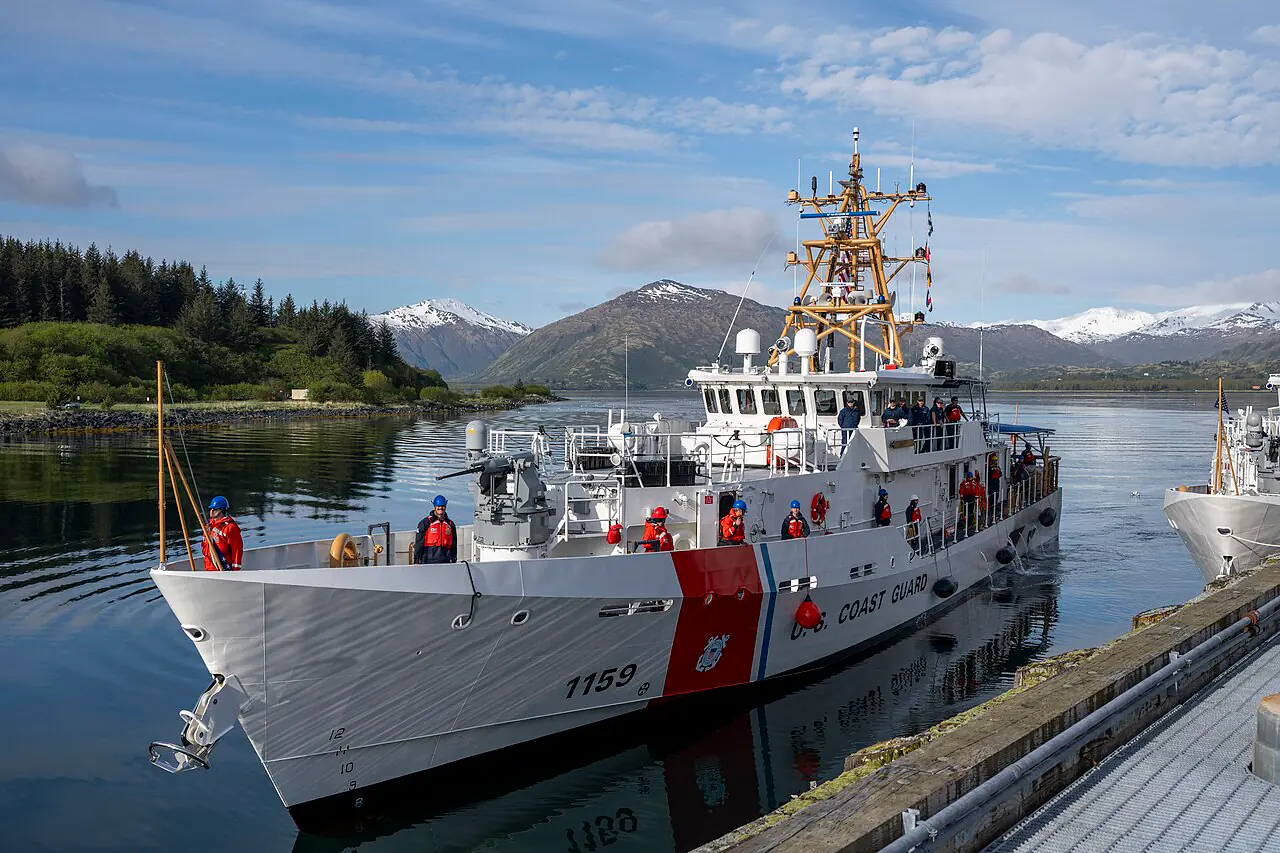
- Sentinel-class Fast Response Cutter (FRC) - USCG: The mainstay of USCG coastal patrol and medium-range law enforcement.
- Island-class Patrol Boat - USCG: A highly successful class of medium-sized patrol vessels used for coastal security and SAR.
- Marine Protector-class Patrol Boat - USCG: Versatile, smaller vessels optimized for near-shore and riverine missions.
- Juniper-class Buoy Tender - USCG: Dedicated to the critical mission of maintaining navigational aids.
12. Environment and Future Outlook
The future of coast guard operations is being shaped by rapid technological advancements and the changing global maritime landscape.
Key Technological Trends
- Autonomous and Unmanned Systems: The deployment of Unmanned Surface Vessels (USVs) like Saildrone and Unmanned Aircraft Systems (UAS) like the V-BAT is revolutioning maritime domain awareness. These systems can perform routine or risky missions (like long-range patrolling or environmental monitoring) more cost-effectively and safely than crewed vessels.
- Hybrid and Electric Propulsion: Driven by decarbonization goals, the integration of electric motors and battery storage is becoming more prevalent, offering improved efficiency and reduced environmental impact.
- Artificial Intelligence (AI) and Data Fusion: AI is being used to process the massive amounts of data from sensors (radar, sonar, EO/IR) to provide faster, more accurate identification of maritime threats and optimize search patterns in SAR operations.
- Human-Machine Teaming: The shift from purely human-operated systems to integrated environments where crews work alongside autonomous systems to enhance situational awareness and operational capacity.
Environmental and Strategic Challenges
- Climate Change: Rising sea levels and melting polar ice are fundamentally changing the maritime environment, requiring more icebreaking capability and new approaches to coastal protection.
- Cybersecurity: As vessels become more digitally integrated and reliant on automated systems, they become increasingly vulnerable to cyber threats, necessitating robust cybersecurity protocols.
- Increased Maritime Complexity: The growing number of vessels and the complexity of global trade routes demand more sophisticated surveillance and management capabilities.
13. Facts, Records, and Common Misconceptions
- Fact: “Cutter” is a specific designation. In the the United States Coast Guard, the term “cutter” is not a generic term for any ship; it specifically refers to a vessel that is 65 feet or longer and has accommodations for a crew to live aboard.
- Fact: Multi-mission nature. While often associated with “military” activities, the vast majority of coast guard operations are civilian in nature, focusing on law enforcement, safety, and environmental protection.
- Misconception: All coast guard ships are combatants. Most coast guard vessels are designed for law enforcement and rescue, not for high-intensity naval combat. While they carry weapons, their primary mission is to enforce laws and save lives.
- Misconception: They are a branch of the Navy. While they share many similarities, coast guards are often distinct organizations (in the US, the USCG is part of the Department of Homeland Security, not the Department of Defense).
14. Glossary
- AIS (Automatic Identification System): An automated tracking system used on ships and by vessel traffic services for identifying and locating vessels by electronically transmitting their information.
- ATON (Aids to Navigation): Any device or structure used to assist mariners in navigating safely (e.g., buoys, lights, beacons).
- C4ISR: Command, Control, Communications, Computers, Intelligence, Surveillance, and Reconnaissance.
- CODAG (Combined Diesel and Gas): A propulsion system using both diesel engines and gas turbines.
- Cutters: A USCG designation for vessels 65+ feet with crew accommodations.
- EPIRB (Emergency Position Indicating Radio Beacon): A device that transmits a distress signal via satellite.
- FRC (Fast Response Cutter): A class of high-speed, multi-mission patrol vessels.
- IMO (International Maritime Organization): The United Nations agency responsible for the safety and security of shipping.
- LRA (Long-Range Interceptor): A high-speed vessel used for pursuit.
- MASS (Maritime Autonomous Surface Ships): Autonomous or remotely controlled vessels.
- MMC (Merchant Mariner Credential): An official license for maritime professionals.
- NSC (National Security Cutter): The largest and most advanced class of USCG cutters.
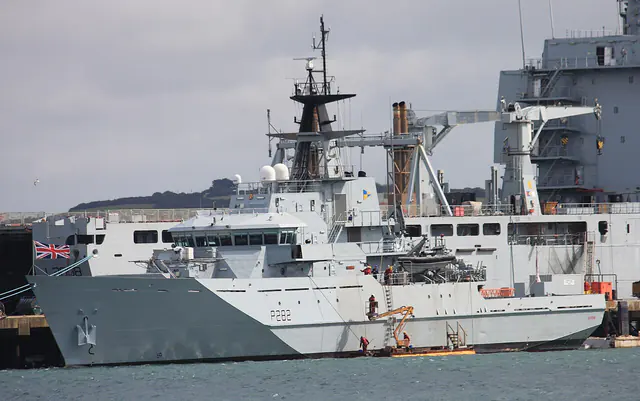
- OPV (Offshore Patrol Vessel): A type of vessel designed for patrol duties in offshore waters.
- RHIB (Rigid-Hull Inflatable Boat): A high-speed boat with a rigid hull and inflatable collar.
- SAR (Search and Rescue): The mission of finding and assisting people in distress at sea.
- SOLAS (Safety of Life at Sea): The primary international treaty for maritime safety.
- STCW (Standards of Training, Certification, and Watchkeeping): International standards for maritime training.
- USV (Unmanned Surface Vessel): An autonomous or remotely controlled surface craft.
15. Sources
- U.S. Coast Guard - Boats of the Coast Guard (2024)
- Canadian Coast Guard - Vessel Classes
- U.S. Coast Guard - Assets
- U.S. Coast Guard - Cutters, Boats, and Aircraft
- U.S. Coast Guard Historian’s Office - Dauntless, 1968
- L3Harris - Rio Socorro System
- Raymarine - Case Study: Dorset Police Boats
- U.S. Coast Guard - Boat Crew Training Manual
- ClassNK - USCG Authorized Supplements
- CR Classification Society - Rules for Coast Guard Ships
- ABB - Patrol Vessel Technology