1. What Is This Ship?
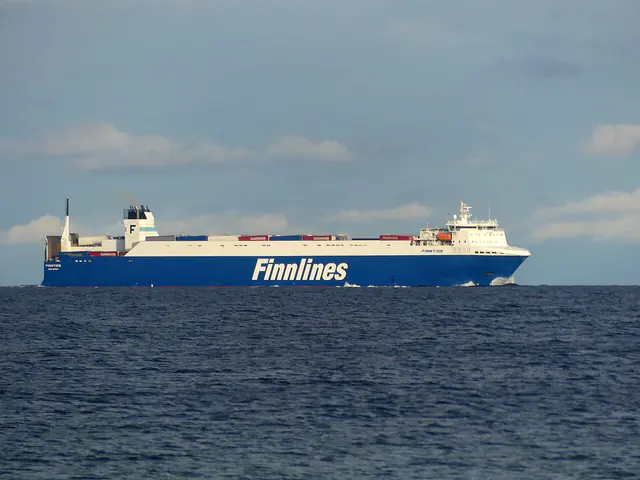
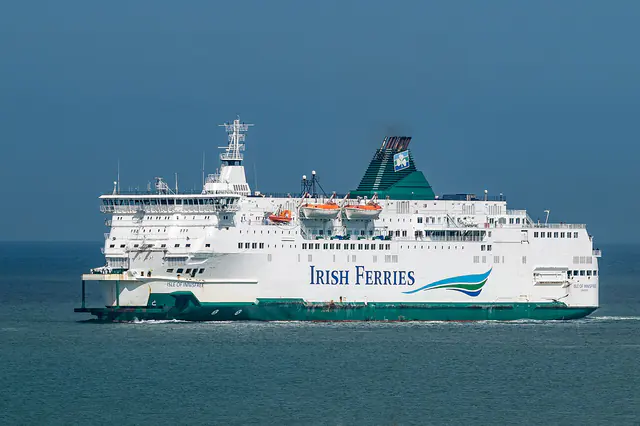
The Coastal Express Passenger-Cargo Ship (often categorized under the broader umbrella of Multipurpose Vessels (MPVs) or Ro-Pax vessels) is a specialized maritime asset designed to fulfill two primary, often simultaneous, roles: the transport of passengers and the delivery of essential goods and services to coastal regions.
Unlike dedicated cruise ships, which focus almost exclusively on leisure and hospitality, or pure bulk carriers, which focus solely on freight, the Coastal Express vessel is a “working ship.” It serves as a vital maritime bridge, often acting as a lifeline for remote or island communities where traditional land-based infrastructure is absent or insufficient. These ships are characterized by their ability to handle diverse cargo types—ranging from perishable food supplies and mail to vehicles and heavy machinery—while providing comfortable accommodation for both local commuters and tourists.
In many parts of the world, such as the Norwegian coastline, the Mediterranean islands, or the archipelagos of Southeast Asia, these vessels are part of a scheduled, highly reliable transport network. They are the maritime equivalent of a regional bus and delivery truck combined, operating on fixed routes with predictable schedules that are integrated into the local socio-economic fabric.
2. Mission and Operations
The mission of a Coastal Express vessel is defined by its versatility and its role in “Short Sea Shipping” (SSS). Its operations are generally characterized by:
- Lifeline Services: Providing essential supplies (food, medical, mail) to remote settlements.
- Scheduled Connectivity: Operating on fixed, frequent routes that connect major hubs to smaller, often more isolated, coastal ports.
- Multimodal Transport: Facilitating the movement of diverse cargo, including:
- Ro-Ro (Roll-on/Roll-off): Cars, trucks, trailers, and construction equipment.
- General Cargo: Palletized goods, containers, and break-bulk items.
- Perishables: Often requiring temperature-controlled holds or refrigerated containers (reefers).
- Postal Services: Carrying mail as part of a national or regional logistics chain.
- Passenger Transit: Serving two distinct passenger demographics:
- Local Commuters: Residents using the vessel for daily travel, business, or essential services.
- Tourists: Visitors attracted to the coastal scenery, often utilizing the vessel’s amenities for leisure.
Operational patterns often involve short port stays—ranging from mere minutes for small settlements to several hours for larger hubs—to ensure the tight scheduling required for such high-frequency services.
3. Hull, Size, and Design
The design of a Coastal Express vessel is a complex optimization problem, balancing the conflicting requirements of high passenger comfort, cargo capacity, speed, and coastal maneuverability.
Hull Form and Material
- Monohulls: The most common design, providing high cargo capacity and traditional sea-keeping characteristics. For larger vessels (over 50m), steel is the standard construction material due to its strength and durability.
- Multihulls (Catamarans): Frequently used for smaller, higher-speed variants. Catamarans offer a wider beam relative to their length, providing a larger deck area for passengers and cargo, increased stability (lower roll amplitudes), and often better speed-to-power efficiency in coastal waters. Aluminium is the preferred material for these vessels to minimize weight and maximize speed.
- Hull Coefficients: For cargo-oriented designs, a block coefficient () in the range of 0.65 to 0.75 is typical, balancing displacement with hydrodynamic efficiency.
Dimensions and Scale
Coastal Express vessels span a wide range of scales depending on their specific niche:
- Small Coastal Ferries: 15–30 meters in length, primarily serving very small islands or local estuaries.
- Medium Multipurpose Vessels: 40–80 meters, often used in the Mediterranean or Southeast Asian archipelagos.
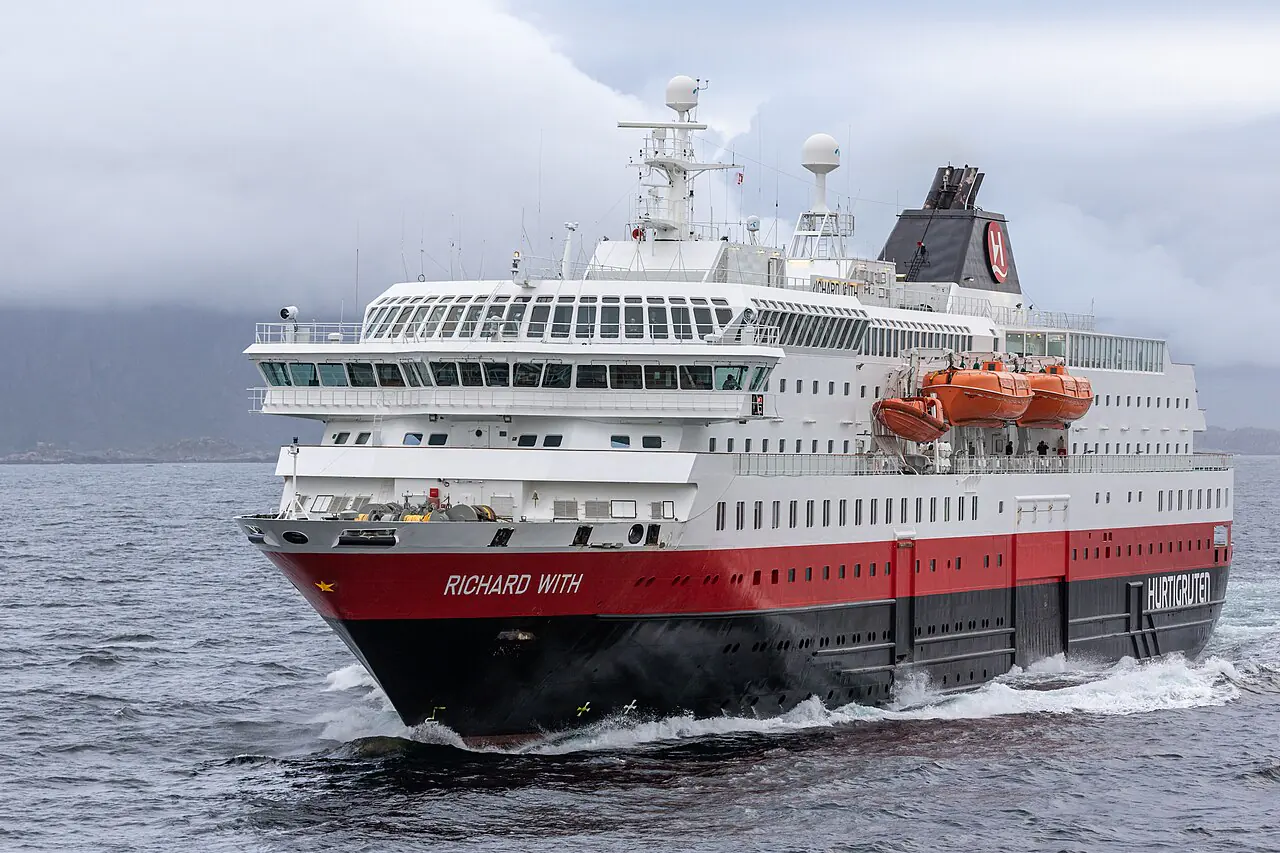
- Large Coastal Express Ships: 80–130+ meters, exemplified by the Norwegian “Coastal Express” (Hurtigruten) class, capable of handling significant passenger volumes and heavy cargo.
Key Design Features
- Ro-Ro Capability: Integrated ramps (bow, stern, or side-loading) are essential for the rapid loading and unloading of vehicles and wheeled cargo.
- Deck Arrangement: Typically features a clear separation between passenger areas (upper decks) and cargo/vehicle decks (lower decks) to maintain safety and comfort.
- Shallow Draft: Designed with a relatively shallow draft to allow access to smaller, less-developed coastal ports and estuaries.
4. Propulsion and Engines
Propulsion systems for these vessels must provide high reliability, efficiency for scheduled runs, and the ability to maneuver in confined coastal waters.
Engine Types
- Diesel Engines: The mainstay of the industry. Medium-speed diesel engines are common for larger vessels, providing a balance of power and fuel economy.
- Diesel-Electric Propulsion: Increasingly common in modern, larger vessels. This system offers superior efficiency, reduced vibration (improving passenger comfort), and greater flexibility in power distribution between propulsion and hotel loads.
- Hybrid Systems: A major current trend. These systems combine traditional diesel engines with large battery banks. This allows for “zero-emission” operations in environmentally sensitive areas (like fjords) and significant fuel savings through peak-shaving and optimized engine loading.
- Outboard Motors: Utilized in the smallest coastal ferry variants, offering simplicity and ease of maintenance.
Performance Characteristics
| Feature | Typical Range |
|---|---|
| Service Speed | 12 – 18 knots |
| Propulsion Configuration | Twin screw, Azimuth thrusters (for high maneuverability), or Waterjets (for high-speed catamarans) |
| Fuel Types | Marine Gas Oil (MGO), Low-Sulfur Fuel Oil (LSFO), increasingly LNG and biofuels |
5. Electrical System and Power
The electrical system of a Coastal Express vessel is uniquely tasked with managing two high-demand, often conflicting, load profiles:
- Propulsion Loads: The power required to move the vessel, which can fluctuate significantly based on sea state and speed requirements.
- Hotel Loads: The demand from passenger amenities, including:
- HVAC (Heating, Ventilation, and Air Conditioning) systems.
- Galley/Kitchen equipment for large-scale catering.
- Lighting and entertainment systems.
- Desalination and water treatment plants.
Modern Integration: Advanced Power Management Systems (PMS) are used to balance these loads. In hybrid vessels, the electrical system is integrated with battery storage to provide “spinning reserve” and to allow the main engines to run at their most efficient load points.
6. Equipment and How It Is Used
The equipment on a Coastal Express vessel is chosen for its versatility and durability in demanding maritime environments.
| Equipment Category | Typical Items | Primary Use |
|---|---|---|
| Cargo Handling | Deck Cranes, Shipboard Davits | Loading/unloading break-bulk or heavy cargo in ports without shore cranes. |
| Vehicle Handling | Ro-Ro Ramps (Hydraulic), Stern/Bow Doors | Rapid boarding and disembarking of cars, trucks, and trailers. |
| Cargo Storage | Holds, Container Guides, Reefer Plugs | Securing diverse cargo; maintaining temperature for perishables. |
| Passenger Amenities | Lounges, Cabins, Dining Saloons, Saunas | Ensuring comfort for long-duration voyages and tourism. |
| Mooring/Berthing | Windlasses, Capstans, Fenders | Securely attaching the vessel to various coastal pier types. |
7. Navigation, Communications, and Safety
Navigation in coastal waters requires high precision due to proximity to land, hazards (reefs, rocks), and high traffic density.
Navigation and Communication
- Electronic Chart Display and Information System (ECDIS): The primary tool for digital navigation.
- Radar/ARPA: Essential for collision avoidance and detecting small objects/vessels.
- Automatic Identification System (AIS): Facilitates vessel tracking and communication with other ships and shore stations.
- GMDSS (Global Maritime Distress and Safety System): A suite of communication tools (VHF, MF/HF, Satellite) for distress signaling and safety information.
Safety Systems
Because these vessels carry large numbers of passengers, they are subject to stringent safety regulations:
- Life-Saving Appliances (LSA): Lifeboats, liferafts, lifejackets, and immersion suits, sized according to total passenger and crew capacity.
- Fire Protection: Fire detection systems, fixed extinguishing systems (e.g., CO2 or water mist), and portable extinguishers.
- Stability Management: Sophisticated bilge and ballast systems, and in some cases, active fin stabilizers to improve comfort and safety in rough seas.
8. Crew and Organization
The crew is typically organized into three specialized departments to manage the ship’s diverse functions:
- Deck Department: Responsible for navigation, vessel maneuvering, cargo operations, and overall safety.
- Roles: Master (Captain), Officers (Mates), Able Seamen (ABs), Bosun.
- Engine Department: Responsible for the maintenance and operation of the propulsion, electrical, and mechanical systems.
- Roles: Chief Engineer, Engineers, Oilers, Electricians.
- Catering/Hotel Department: Responsible for passenger services, food preparation, and accommodation cleanliness.
- Roles: Chief Steward, Cooks, Waiters, Housekeeping staff.
9. Certificates and Training Requirements
Operating a Coastal Express vessel requires adherence to international and national standards.
Key Certificates
- STCW (Standards of Training, Certification and Watchkeeping): The international standard for crew competence.
- SOLAS (Safety of Life at Sea): Ensures minimum safety standards in the construction, equipment, and operation of ships.
- Passenger Ship Safety Certificate: A mandatory document verifying the vessel meets all passenger-specific safety requirements.
- Specialized Endorsements: Crew may require specific training for Ro-Ro operations, hybrid/high-voltage systems, or advanced passenger safety management.
10. Regulations, Class, and Inspections
Regulatory Framework
- IMO (International Maritime Organization): Sets the global standards through conventions like SOLAS, MARPOL (pollution prevention), and STCW.
- National Maritime Authorities: Enforce regulations within territorial waters and oversee vessel registration.
Classification Societies
Vessels are typically “classed” by organizations such as DNV, Lloyd’s Register (LR), or the American Bureau of Shipping (ABS). Classification involves:
- Structural Verification: Ensuring the hull and machinery meet design standards.
- Regular Surveys: Periodic inspections (annual, intermediate, and special surveys) to ensure the vessel remains in compliance with its class rules.
Inspections
- Port State Control (PSC): Inspections by local authorities to ensure foreign-flagged vessels meet international safety and environmental standards.
11. Notable Shipyards, Operators, and Example Vessels
The industry features a mix of specialized builders and long-standing operators.
Notable Shipyards
- Damen Shipyards (Netherlands): A global leader in multipurpose and coastal vessel design.
- Watanabe Shipbuilding (Japan): Known for high-quality coastal passenger-cargo vessels.
- Vard (Norway): Specializes in advanced offshore and coastal vessels.
Notable Operators
- Hurtigruten (Norway): The most famous operator of the “Coastal Express” route, providing vital services and tourism along the Norwegian coast.
- Local Ferry Operators: Numerous companies in the Mediterranean and Southeast Asia operating similar multipurpose services.
Example Vessels
| Vessel Name | Operator | Type/Description |
|---|---|---|
| MS Trollfjord | Hurtigruten | Modern coastal vessel; passenger and cargo; refurbished 2023. |
| MS Richard With | Hurtigruten | Hybrid-powered coastal vessel; significant CO2/NOx reduction. |
| 68.12m Ropax | Various (e.g., Greece) | Medium-sized Ro-Ro passenger vessel for coastal transit. |
| 83.6m Cargo/Pax Vessel | Watanabe (Japan) | Dedicated coastal passenger and cargo vessel. |
12. Environment and Future Outlook
The maritime industry is undergoing a massive transition driven by decarbonization goals. For Coastal Express vessels, this presents both challenges and opportunities.
- Decarbonization: The move away from heavy fuel oils toward LNG, Hydrogen, Ammonia, and Battery-Hybrid systems is paramount. Because these ships often operate on predictable coastal routes, they are ideal candidates for electrification and hydrogen bunkering infrastructure.
- Automation and Digitalization: Enhanced autonomous navigation and automated cargo handling are being explored to improve efficiency and reduce human error in busy coastal corridors.
- Zero-Emission Zones: Increasing pressure from regulators to operate “zero-emission” in sensitive areas (like Norwegian fjords or protected Mediterranean archipelagos) is accelerating the adoption of electric and hybrid technologies.
13. Facts, Records, and Common Misconceptions
- Working Ship vs. Cruise Ship: A common misconception is that these vessels are “mini-cruise ships.” While they offer high-quality amenities, their primary operational driver is the scheduled delivery of cargo and people, not just leisure.
- The “Postal Ship” Heritage: Many of the most famous coastal express routes (like Norway’s) began as dedicated mail-carrying steamers, a heritage that still informs their multi-purpose nature today.
- Reliability: These vessels are often the only reliable link for remote communities; their schedules are frequently more critical than those of international shipping lines.
14. Glossary
- AIS (Automatic Identification System): An automated tracking system used for identifying and locating vessels.
- Bunker: The fuel used by a ship.
- DWT (Deadweight Tonnage): The total weight a ship can safely carry, including cargo, fuel, and crew.
- ECDIS: Electronic Chart Display and Information System.
- GMDSS: Global Maritime Distress and Safety System.
- IMO: International Maritime Organization.
- MPV (Multipurpose Vessel): A vessel capable of carrying various types of cargo.
- Ro-Ro (Roll-on/Roll-off): Vessels designed to carry wheeled cargo that can be driven on and off.
- Ro-Pax: A hybrid vessel combining Ro-Ro cargo capabilities with passenger accommodations.
- SOLAS: International Convention for the Safety of Life at Sea.
- STCW: International Convention on Standards of Training, Certification and Watchkeeping for Seafarers.