1. What Is This Ship?
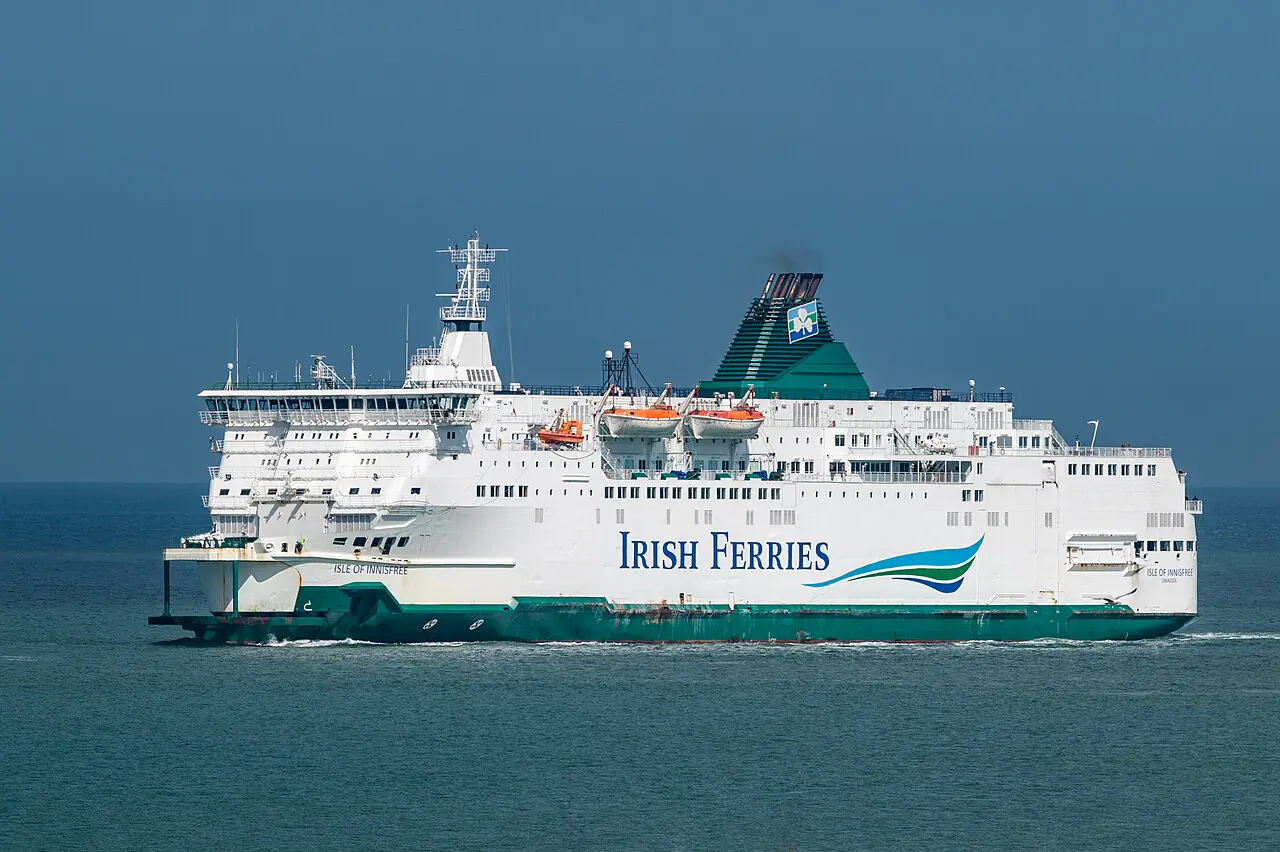
A RoPax ferry (an abbreviation of Roll-on/Roll-off Passenger) is a hybrid maritime vessel engineered for the dual purpose of transporting wheeled cargo and passengers. It occupies a specialized niche between pure RoRo (Roll-on/Roll-off) vessels, which are dedicated almost exclusively to freight, and passenger ships (such as cruise ships), which focus on human comfort and lack significant vehicle transport capabilities.
The defining characteristic of a RoPax vessel is its ability to accommodate a diverse range of “rollable” units—ranging from small passenger cars and motorcycles to heavy semi-trailers and shipping containers—alongside a sophisticated passenger accommodation block. This dual-purpose design allows operators to maximize revenue by catering to both the logistics industry and the tourism/commuter markets simultaneously.
Unlike pure RoRo ships, which often prioritize cargo volume and density above all else, RoPax vessels must balance the technical requirements of cargo stability and loading efficiency with the high standards of comfort, safety, and service required for maritime passengers.
2. Mission and Operations
The primary mission of a RoPax ferry is to provide reliable, scheduled transport services on fixed maritime routes, typically connecting coastal regions or islands to mainland hubs.
Typical Operational Profiles
- Short-Sea/Commuter Services: Many RoPax vessels operate on high-frequency, short-duration routes (e.g., crossing a river estuary or a narrow strait). These vessels often feature “double-ended” designs to eliminate the need for turning in port, allowing for rapid turnaround times.
- Medium-Range/Inter-Island Services: These vessels connect islands to the mainland (e.g., the Mediterranean, the Baltic Sea, or the Aegean). They often provide overnight accommodations, including private cabins, to support longer transit times.
- Logistics Links: RoPax ferries serve as critical links in the global supply chain, acting as “floating bridges” for heavy goods vehicles (HGVs) that would otherwise face much longer overland transit times.
Cargo and Passenger Mix
RoPax vessels are designed for flexibility. A single voyage might include:
- Freight: Semi-trailers, unaccompanied containers (carried on trailers), and heavy machinery.
- Private Vehicles: Passenger cars, SUVs, and motorcycles.
- Passengers: Commuters (often without overnight stays) and tourists (often requiring cabins and dining services).
3. Hull, Size, and Design
Designing a RoPax vessel presents unique engineering challenges, primarily due to the conflict between the large, open spaces required for cargo and the stability requirements of a passenger ship.
Hull Form and Hydrodynamics
RoPax hulls are typically characterized by a certain degree of slenderness. Research indicates that the slenderness coefficient (the ratio of length to displacement volume) is often in the range of approximately 6.5.
- Block Coefficient (): To maintain efficiency while providing enough volume for cargo, RoPax vessels often feature relatively low block coefficients, typically between 0.52 and 0.62.
- Beam and Draft: To ensure sufficient stability for the large, high-center-of-gravity cargo, these ships tend to have a significant beam (width) relative to their draft. The ratio of Beam to Draft () is often around 4, which is significantly higher than many other cargo ship types.
The Continuous Car Deck and Stability
One of the most critical design features—and risks—is the main cargo deck. To facilitate efficient loading, this deck is often continuous and spans a large portion of the vessel’s length.
- Free Surface Effect (FSE): The large, unobstructed area of the vehicle deck creates a massive risk for the “free surface effect.” If water enters the vehicle deck (due to heavy seas or a failed ramp), it can move freely across the deck, creating a massive heeling moment that can lead to rapid capsize.
- Stability Management: To mitigate this, RoPax vessels are equipped with sophisticated anti-heeling systems that automatically distribute ballast water between opposing tanks to maintain an upright position.
- Watertight Subdivision: Under SOLAS regulations, the vessel must be designed with strict watertight subdivision to ensure it can survive the flooding of a single compartment.
Deck Arrangements
- Main Garage Deck: The largest deck, designed for heavy trailers and trucks.
- Hoistable Decks: To maximize capacity, many RoPax vessels utilize “hoistable” or “movable” decks. These can be raised or lowered to accommodate different vehicle heights, allowing more cars to be stacked above the heavy freight.
- Passenger Decks: Located above the vehicle decks, these contain the saloons, restaurants, cabins, and public areas.
4. Propulsion and Engines
Propulsion systems for RoPax ferries must balance high speed (for passenger satisfaction and schedule adherence) with high torque (for maneuvering heavy loads) and fuel efficiency.
Engine Configurations
- Diesel Propulsion: The traditional standard, utilizing one or two large medium-speed diesel engines driving fixed-pitch propellers.
- Diesel-Electric: Increasingly common in larger or more sophisticated vessels. Diesel generators produce electricity, which then powers electric propulsion motors. This offers superior flexibility, reduced vibration for passengers, and better fuel efficiency at varying speeds.
- Dual-Fuel and LNG: To meet strict environmental regulations (like those in the Baltic Sea), many new RoPax vessels are being built with dual-fuel engines capable of running on Liquefied Natural Gas (LNG).
Maneuverability and Thrusters
Because RoPax ferries often operate in confined ports with tight schedules, maneuverability is paramount.
- Azimuth Thrusters: These can rotate 360 degrees, allowing the ship to direct thrust in any direction, providing exceptional control.
- Tunnel Thrusters: Bow and stern thrusters (mounted in tunnels through the hull) are standard for lateral movement during berthing.
- Double-Ended Design: Some ferries are designed to be symmetric, with propulsion and steering capability at both ends, allowing them to operate in either direction without turning.
5. Electrical System and Power
The electrical system of a RoPax vessel is a complex network that must manage two very different types of loads:
- Marine Propulsion & Services: High-power requirements for propulsion motors, bow thrusters, and heavy-duty pumps.
- Passenger Amenities: Significant and variable loads from air conditioning, lighting, kitchen equipment (galley), elevators, and onboard entertainment systems.
Modern Trends: Hybridization and Shore Power
- Hybrid Systems: Many modern RoPax ferries incorporate large battery banks. These batteries can handle peak loads, allow for “zero-emission” maneuvering in port, and improve overall fuel efficiency through peak-shaving.
- Shore Power (Cold Ironing): To reduce emissions while at berth, many vessels are equipped to connect to the local electrical grid, allowing them to shut down their diesel generators while in port.
6. Equipment and How It Is Used
Loading Equipment
The most critical equipment for a RoPax vessel is its loading ramps.
- Stern Ramps: The most common type, allowing vehicles to drive directly into the vessel from the pier.
- Bow Ramps/Visors: Some vessels feature a bow ramp or a large “visor” (a hinged section of the bow) that opens to allow vehicle access.
- Side Ramps: Used primarily in certain ports or for specific vessel designs.
- Hydraulic Operation: These ramps are heavy-duty, hydraulically operated structures that must be able to withstand significant sea loads when closed.
Cargo Handling
While most RoPax cargo is “self-propelled” (drives itself on/off), some vessels may be equipped with small cranes for handling lighter palletized cargo or specialized equipment.
Safety & Life-Saving Appliances (LSA)
- Lifeboats and Liferafts: Required by SOLAS to accommodate all passengers and crew.
- Firefighting Systems: Extensive use of water mist, CO2, or foam systems, particularly in the vehicle decks where fuel-carrying vehicles pose a high fire risk.
7. Navigation, Communications, and Safety
Navigation Suite
Modern RoPax ferries rely on a standard suite of high-tech tools:
- ECDIS (Electronic Chart Display and Information System): For digital navigation.
- Radar/ARPA: For collision avoidance and detecting other vessels/obstacles.
- AIS (Automatic Identification System): To broadcast the ship’s position and identity.
Safety Systems
- GMDSS (Global Maritime Distress and Safety System): Ensures the vessel can communicate distress signals globally.
- Stability Monitoring: Real-time sensors that monitor the ship’s heel, trim, and ballast levels to provide early warning of stability issues.
8. Crew and Organization
A RoPax vessel requires a diverse crew to manage its dual nature. The crew is typically divided into three main departments:
- Deck Department: Led by the Master (Captain), including Officers and Able Seamen. They are responsible for navigation, ship handling, and cargo securing.
- Engine Department: Led by the Chief Engineer, including Engineers and Motormen. They maintain the propulsion, electrical, and mechanical systems.
- Hotel/Catering Department: Managed by a Hotel Manager, this department includes chefs, stewards, and cleaning staff responsible for passenger accommodation, food service, and general cleanliness.
9. Certificates and Training Requirements
All crew members must meet international standards set by the IMO and STCW (Standards of Training, Certification, and Watchkeeping).
Key Certificates
- SOLAS Certificate: Verifies the ship meets international safety standards.
- MARPOL Certificate: Confirms compliance with pollution prevention regulations.
- Passenger Ship Safety Certificate: Specific to the carriage of passengers.
- Safety Management Certificate (SMC): Confirms the company follows the ISM Code.
Training
Crew undergo specialized training in:
- Advanced Firefighting: Critical for vehicle deck safety.
- Crowd Management: Essential for handling large numbers of passengers during emergencies.
- Medical First Aid: For handling passenger health issues.
10. Regulations, Class, and Inspections
Regulatory Framework
- IMO (International Maritime Organization): Provides the global baseline through SOLAS, MARPOL, and STCW.
- Flag State: The country where the ship is registered (e.g., Panama, Marshall Islands, Norway) is responsible for enforcing these rules.
- EU Ferry Directive: In European waters, RoPax vessels undergo rigorous inspections every six months to ensure technical and operational safety.
Classification Societies
Organizations like DNV, Lloyd’s Register (LR), and Bureau Veritas (BV) conduct regular surveys to ensure the vessel’s structure and machinery meet the required technical standards (Class rules).
11. Notable Shipyards, Operators, and Example Vessels
Major Shipyards
| Shipyard | Region | Notable Specialization |
|---|---|---|
| Damen Shipyards | Netherlands | Versatile RoPax designs and Fast RoPax series. |
| Fincantieri | Italy | Large, complex passenger/cargo vessels. |
| Meyer Werft | Germany | High-end ferry and cruise vessel construction. |
| CMI Jinling | China | Rapidly growing producer of modern RoPax designs. |
Major Operators
- Stena Line (Europe)
- DFDS (Europe)
- Brittany Ferries (Europe)
- Grimaldi Group (Mediterranean/Global)
- Baleària (Mediterranean)
Example Vessels
| Vessel Name | Operator | Type/Note |
|---|---|---|
| Mercedes Pinto | Baleària | Modern dual-fuel fast ferry. |
| The Baltic Whale | Scandlines | Hybrid electric/diesel ferry. |
| Norrona | Smyril Lines | Large North Atlantic RoPax. |
| Mother Immaculate Stars | Roble Shipping | Purpose-built Philippine RoPax. |
| Ald 8 | ALD Sea Transport | Small-scale regional RoPax. |
12. Environment and Future Outlook
The maritime industry is undergoing a massive transition toward decarbonization, and RoPax ferries are at the forefront due to their frequent port calls and high energy demand.
Key Trends
- Alternative Fuels: The shift from heavy fuel oil (HFO) to LNG, Methanol, and eventually Hydrogen or Ammonia.
- Electrification: The use of battery-hybrid systems to reduce emissions in Emission Control Areas (ECAs).
- Wind Assistance: Experimental use of wind-assisted propulsion (like rotor sails) to reduce engine load.
- Operational Efficiency: Using AI and Big Data to optimize routes and speed, minimizing fuel consumption.
13. Facts, Records, and Common Misconceptions
- Misconception: RoPax and RoRo are the same. While they both carry vehicles, a RoPax must meet much more stringent passenger safety and accommodation standards.
- Fact: Stability is the “Achilles Heel.” The greatest risk to a RoPax vessel is not sinking from a hole in the hull, but capsizing due to the Free Surface Effect or cargo shifting on the large, open vehicle decks.
- Fact: The “Water-on-Deck” Problem. Even a small amount of water on the vehicle deck can lead to catastrophic loss of stability if the vessel’s subdivision is not perfectly watertight.
14. Glossary
- Azimuth Thruster: A propulsion unit that can rotate 360 degrees.
- Block Coefficient (): A measure of a ship’s fullness or “blockiness.”
- Free Surface Effect (FSE): The reduction in stability caused by liquid moving freely on a deck.
- IMO: International Maritime Organization.
- Lane Metres: A unit of measure for vehicle capacity (the length of the lane multiplied by its width).
- MARPOL: International Convention for the Prevention of Pollution from Ships.
- RoPax: Roll-on/Roll-off Passenger vessel.
- RoRo: Roll-on/Roll-off vessel.
- SOLAS: Safety of Life at Sea.
- STCW: Standards of Training, Certification, and Watchkeeping.