1. What Is This Ship?
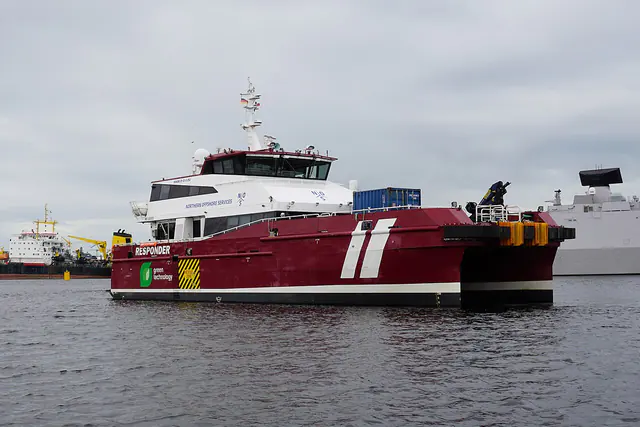
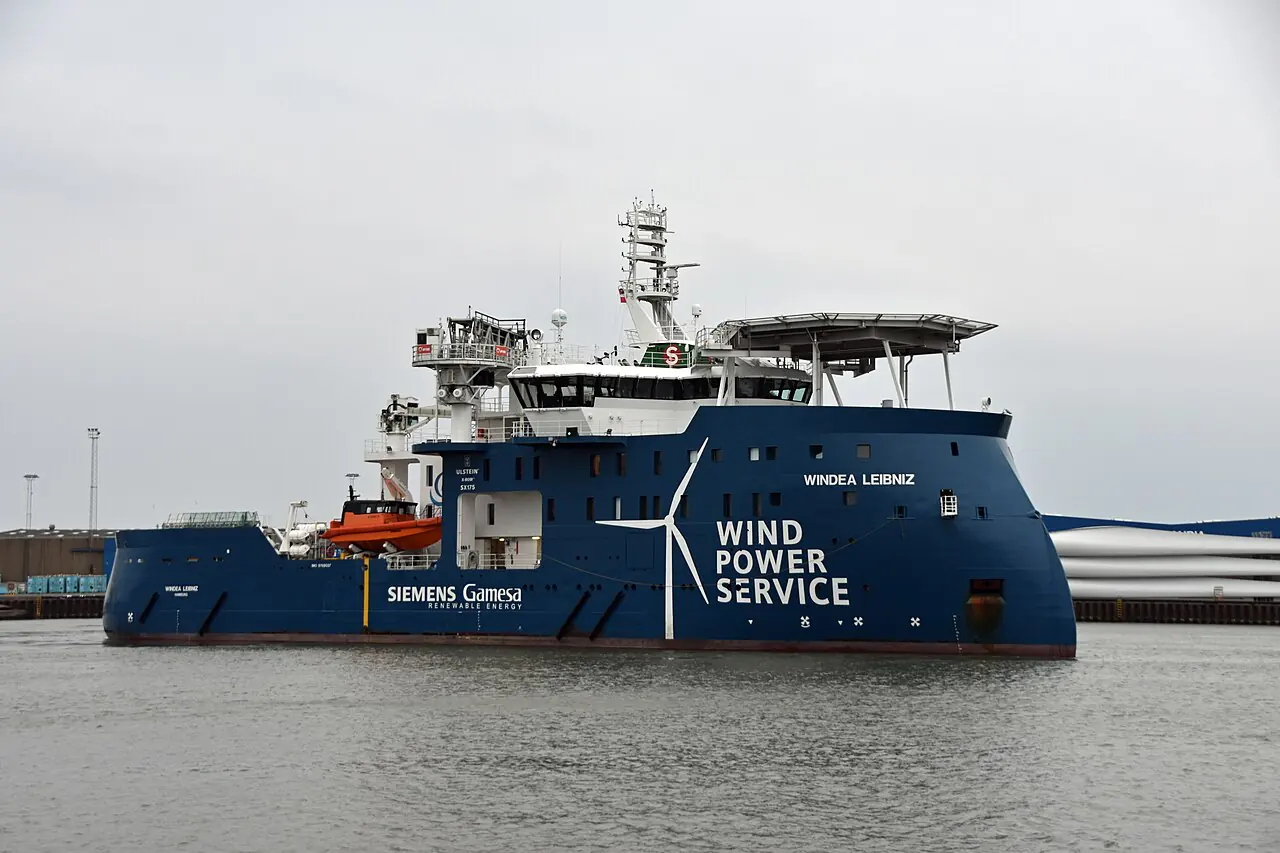
The Commissioning/Service Operation Vessel (CSOV/SOV) is a highly specialized class of offshore support vessel (OSV) engineered specifically for the lifecycle of offshore wind farms. As wind farms move further offshore into deeper waters and utilize increasingly massive turbines, the industry has transitioned from using smaller, faster Crew Transfer Vessels (CTVs) to these large, sophisticated, and stable platforms.
CSOV vs. SOV: Understanding the Distinction
While the terms are often used interchangeably in industry parlance, there is a technical nuance between them:
- CSOV (Commissioning Service Operation Vessel): These vessels are primarily deployed during the initial construction and commissioning phases of a wind farm. They are often equipped with more intensive heavy-lift capabilities, specialized tools for electrical commissioning, and greater logistics capacity to support the massive influx of contractors and components during the build phase.
- SOV (Service Operation Vessel): These are the “workhorses” of the long-term Operations and Maintenance (O&M) phase. Their mission is to provide a steady, long-term presence at the wind farm, housing technicians and providing the tools and access required for routine inspections, minor repairs, and component replacements over the 25–30 year lifespan of the farm.
In modern shipyard offerings, most vessels are designed as C(S)OVs, meaning they possess the versatility to handle both high-intensity construction and long-duration maintenance operations.
2. Mission and Operations
The primary mission of a CSOV/SOV is to act as a floating hub for offshore wind farm activities. Unlike traditional cargo or supply ships, an SOV does not merely deliver goods; it provides a continuous, integrated service environment that includes housing, workshop space, logistics management, and safe personnel transfer.
Key Operational Modes
- Personnel Transfer (Walk-to-Work): The most critical mission component. Using motion-compensated gangways, the vessel provides a safe, “stepless” bridge between the ship’s deck and the turbine’s transition piece, even in significant wave heights.
- Maintenance Support: Providing technicians with a stable workspace, high-speed internet for remote diagnostics, and immediate access to specialized tools and spare parts stored in large onboard warehouses.
- Logistics and Supply: Acting as a mid-shore storage point for heavy components (e.g., blades, gearboxes, transformers) delivered by larger heavy-lift vessels.
- Inspection and Monitoring: Deploying Remotely Operated Vehicles (ROVs) or Unmanned Surface Vehicles (USVs) to inspect subsea cables and foundations, or using drones for turbine blade inspections.
- Daughtercraft Operations: Launching and recovering smaller, high-speed vessels (daughtercrafts) to ferry crew or perform light tasks in areas where the main SOV cannot safely maneuver.
3. Hull, Size, and Design
Designing an SOV requires balancing high stability, significant cargo/storage capacity, and the ability to maintain a precise position in challenging sea states.
Typical Dimensions and Specifications
While designs vary significantly by manufacturer, a modern SOV typically falls within the following ranges:
| Parameter | Typical Range |
|---|---|
| Length (LOA) | 70 m – 100 m |
| Beam (Width) | 17 m – 20 m |
| Deadweight (DWT) | 1,700 t – 3,500 t |
| Draft (Max) | 5.5 m – 7.0 m |
| Speed (Max) | 12 – 15 knots |
| Accommodation (POB) | 50 – 135 persons |
| Deck Area | 200 – 500 m² |
Advanced Hull Forms
To improve efficiency and comfort, designers are increasingly adopting advanced hull geometries:
- X-BOW® and X-STERN® (Ulstein): These specialized bow and stern designs reduce slamming and pitching in heavy seas. By absorbing wave energy rather than riding over it, these hulls provide a smoother ride, which is vital for both crew comfort and the operational uptime of motion-compensated gangways.
- Stability and Motion Control: High-capacity SOVs often incorporate active fin stabilizers or anti-roll tanks to minimize vessel motion. This is essential because the “workability” of the vessel—the ability to perform transfers and crane operations—is directly limited by the ship’s motion.
4. Propulsion and Engines
The propulsion requirements for an SOV are unique: they must provide efficient long-range transit to the wind farm and, more importantly, extremely precise, high-authority station-keeping capability once on-site.
Primary Propulsion Systems
Most modern SOVs utilize Diesel-Electric or Hybrid-Electric propulsion. This allows for better integration of power between the propulsion motors and the vessel’s auxiliary systems.
- Azimuth Thrusters: The most common configuration. These are 360-degree rotatable propellers (often in the form of Azipods or similar azimuth units) that provide incredible maneuverability, essential for maintaining position in complex wind farm layouts.
- Voith Schneider Propellers (VSP): Some specialized vessels use VSP technology, which uses vertical blades to provide rapid thrust and steering response with minimal noise and vibration. This is particularly beneficial for reducing the impact of vessel motion on the gangway operation.
Energy Transition and Future Fuels
As the offshore wind industry is a pillar of the green energy transition, SOVs are leading the way in maritime decarbonization:
- Battery Hybrid Systems: Most new builds (e.g., Ulstein SX226, SX222) come standard with hybrid battery technology. These systems allow the vessel to operate on battery power alone during low-load periods (like hotel load or slow transit) or to provide “peak shaving” during high-demand DP operations.
- Dual-Fuel Readiness: Many engines are now “Methanol-Ready” or designed to run on alternative fuels like Ammonia or Hydrogen. This ensures the vessel’s longevity as global carbon regulations tighten.
- Full Electric Operation: Some next-generation designs (e.g., Ulstein SX222) are targeting significant periods of full-electric operation, potentially up to 18 hours a day, drastically reducing operational emissions.
5. Electrical System and Power
The electrical architecture of an SOV is as critical as its hull. It must manage massive, fluctuating loads—ranging from the “hotel load” required for 100+ people to the enormous power surges required by DP thrusters during a storm.
Power Management Systems (PMS)
A sophisticated PMS is required to balance:
- Propulsion Power: High-torque demand for station-keeping.
- Hotel Power: Constant demand for HVAC, lighting, galley, and accommodation.
- Mission Power: Variable demand for cranes, W2W gangways, and deck equipment.
Battery Integration and Microgrids
Modern SOVs act as mobile microgrids. Large Battery Energy Storage Systems (BESS) are integrated into the electrical bus to:
- Smooth out transients: Prevent engine wear and fuel spikes during sudden thruster demands.
- Enable “Silent Mode”: Allowing the vessel to stay on station using only battery power, reducing noise and emissions—a key requirement for sensitive offshore environments.
- Peak Shaving: Using batteries to handle the “peaks” of power demand, allowing the diesel generators to run at their most efficient, steady-state levels.
6. Equipment and How It Is Used
The value of an SOV is defined by its mission-specific equipment.
Walk-to-Work (W2W) Gangways
The motion-compensated gangway is the heart of the SOV. These systems use sophisticated sensors and hydraulic or electric actuators to counteract the vessel’s six degrees of freedom (roll, pitch, heave, sway, surge, yaw).
- Operation: The gangway end (the “bridge”) remains stationary relative to the wind turbine, while the ship moves beneath it.
- Safety: Modern systems include “active heave compensation” and “emergency disconnect” features to ensure technician safety during sudden rogue waves or vessel engine failures.
Lifting and Deck Equipment
- Deck Cranes: High-capacity, motion-compensated cranes are used for transferring heavy components and supplies from the deck to the turbine or to smaller daughtercrafts.
- Large Unobstructed Deck Areas: Essential for storing “project cargo,” such as spare turbine blades, nacelle components, or subsea cables.
- Daughtercraft/Workboat Launch & Recovery (LARS): Sophachisticated cranes or specialized ramps are used to deploy smaller, fast vessels used for rapid crew movement or light inspection.
Subsea and Specialized Tools
- ROV Deployment Systems: For inspecting foundations and cables.
- Helideck: Many large SOVs include a hydraulic height-compensating helicopter deck to facilitate fast personnel changes or emergency medical evacuations.
7. Navigation, Communications, and Safety
An SOV operates in a high-stakes environment where precision and connectivity are non-negotiable.
Dynamic Positioning (DP)
The most vital navigation capability is Dynamic Positioning (DP).
- DP2 and DP3: Most SOVs are required to be DP2 or DP3 rated.
- DP2 provides redundancy in active components (thrusters, sensors, controllers) so that a single failure does not lead to loss of position.
- DP3 adds redundancy in the physical structure (e.g., separate engine rooms and electrical switchboards) to protect against fire or flooding.
- Station-Keeping: DP allows the vessel to “lock” onto a coordinate with centimeter-level precision, which is a prerequisite for safe W2W operations.
Connectivity and Remote Monitoring
- High-Bandwidth Satellite Communications (VSAT/Starlink): Essential for the “floating hotel” concept, allowing technicians to remain connected to home and for engineers to perform remote diagnostics via high-speed data links.
- Remote Vessel Monitoring: Systems like Damen Triton allow operators to monitor fuel consumption, engine health, and position in real-time from onshore control centers.
- Safety Systems: Including advanced radar for obstacle detection, AIS for vessel tracking, and specialized emergency shutdown (ESD) systems for the W2W gangway and deck cranes.
8. Crew and Organization
Operating an SOV is a complex management task involving two distinct “worlds”: the maritime crew and the technical/hotel staff.
The Marine Crew
The marine crew is responsible for the safe navigation, station-keeping, and overall management of the vessel. Their profile is similar to that of an Offshore Support Vessel (OSV) or Construction Support Vessel (CSV):
- Master (Captain): Overall responsibility for the vessel and crew.
- DP Officers: Highly specialized navigators trained in complex station-keeping.
- Engineers: Experts in diesel-electric and hybrid power plants.
- Electro-Technical Officer (ETO): Manages the complex electrical and automated systems.
- Deck Ratings: Responsible for crane operations, gangway deployment, and deck maintenance.
The Hotel Department
Because the SOV acts as a long-term residence, the “hotel” side is elevated to high-end hospitality standards:
- Cooks and Stewards: Required to provide high-quality meals and maintain cleanliness for dozens of rotating technicians.
- Purpose: A comfortable, stable, and well-provisioned vessel is a key factor in technician retention and productivity.
The Technical Crew (Technicians)
The “cargo” of the SOV is often a large group of Wind Turbine Technicians. While they are not part of the ship’s permanent crew, their presence dictates the ship’s design (accommodation, internet, workshop space).
9. Certificates and Training Requirements
Safety in the offshore wind sector is governed by a blend of traditional maritime standards and industry-specific safety protocols.
Maritime Certificates (STCW)
All marine crew must hold certificates compliant with the International Convention on Standards of Training, Certification and Watchkeeping for Seafarers (STCW). This includes basic safety, firefighting, and medical training.
GWO (Global Wind Organisation) Training
This is the “gold standard” for anyone working on or around wind turbines. Even though technicians may be “contractors,” they must often hold GWO Basic Safety Training (BST) modules, which include:
- Working at Heights: Essential for turbine climbing.
- Sea Survival: For emergency evacuation.
- Manual Handling: To prevent injury during heavy component work.
- First Aid and Fire Awareness.
Specialized Certifications
- DP Certification: Mandatory for officers operating the vessel’s station-keeping systems.
- Client-Specific Inductions: Major wind farm operators (e.g., Ørsted, Vattenfall) often require their own specific safety and operational inductions before any personnel can board a vessel.
10. Regulations, Class, and Inspections
SOVs must comply with international maritime law and satisfy the rigorous standards of classification societies.
International Maritime Organization (IMO)
Compliance with IMO regulations is mandatory for all international voyages, covering:
- SOLAS (Safety of Life at Sea): Life-saving appliances, fire protection, and construction.
- MARPOL (Marine Pollution): Emissions, sewage, and oil discharge prevention.
- COLREG (Collision Regulations): Navigation and lights/signals.
Classification Societies
Vessels are typically “classed” by organizations like DNV, Lloyd’s Register (LR), or the American Bureau of Shipping (ABS). Classification involves:
- Structural Integrity: Ensuring the hull can withstand North Sea-type conditions.
- System Redundancy: Verifying DP2/DP3 requirements and electrical redundancies.
- Regular Inspections: Periodic surveys to ensure the vessel remains in compliance with its class rules.
11. Notable Shipyards, Operators, and Example Vessels
The SOV market is dominated by highly specialized European shipyards and global energy giants.
Leading Shipyards
- Ulstein (Norway): A leader in advanced hull designs (X-BOW, X-STERN) and hybrid propulsion.
- Damen Shipyards (Netherlands): Known for the “Windcat” series and highly standardized, efficient CSOV designs.
- Vard (Norway): A major builder of complex offshore support vessels.
Notable Example Vessels
| Vessel Name | Operator/Owner | Key Features |
|---|---|---|
| ECO Edison | Ørsted | First US-built SOV; Diesel-electric; ABS classed. |
| SX226 | Various | Ulstein design; Hybrid battery; Methanol-ready. |
| Windcat Rotterdam | Windcat | Damen design; KNVTS Ship of the Year winner. |
| SX222 | Various | High-capacity CSOV; TWIN X-STERN; 126 POB. |
12. Environment and Future Outlook
The future of the SOV is defined by the “Green Transition.” As wind farms move further offshore, the carbon footprint of the vessels supporting them must decrease.
Decarbonization Pathways
- Alternative Fuels: Transitioning from Marine Gas Oil (MGO) to Methanol, Ammonia, or Hydrogen.
- Full Electrification: Development of “Zero Emission” vessels that can operate primarily or entirely on battery power during their mission.
- Wind-Assisted Propulsion: Exploring the use of rotor sails or rigid sails to reduce fuel consumption during transit.
Autonomy and Digitalization
The next generation of SOVs will be more “connected” than ever.
- Autonomous Operations: While full autonomy is far off, “assisted” operations (e.g., autonomous docking, automated DP) are already being tested.
- Digital Twins: Using real-time sensor data to create a digital replica of the vessel for predictive maintenance and optimized fuel usage.
13. Facts, Records, and Common Misconceptions
Common Misconceptions
- “SOVs are just big tugboats”: While they share some propulsion similarities, the level of automation, accommodation, and motion compensation makes an SOV closer to a mobile research platform or a luxury hotel than a traditional tug.
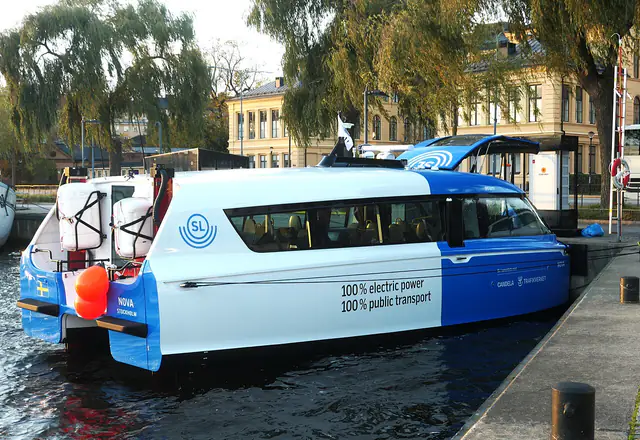
- “All SOVs are the same”: The difference between a CTV (Crew Transfer Vessel) and an SOV is massive. A CTV is a “taxi”; an SOV is a “base.”
Fast Facts
- The industry is seeing a shift toward larger vessels to match the scale of 15MW+ turbines.
- Hybridization is no longer an “option” but a standard requirement for new builds.
14. Glossary
- CSOV: Commissioning Service Operation Vessel.
- DP (Dynamic Positioning): Automated system for station-keeping.
- POB (Persons on Board): Total capacity for passengers/crew.
- SOV: Service Operation Vessel.
- W2W (Walk-to-Work): Motion-compensated personnel transfer system.
- X-BOW: A specialized bow design to reduce wave impact.
- CTV (Crew Transfer Vessel): A smaller, faster boat for personnel transfer.