1. What Is This Ship?
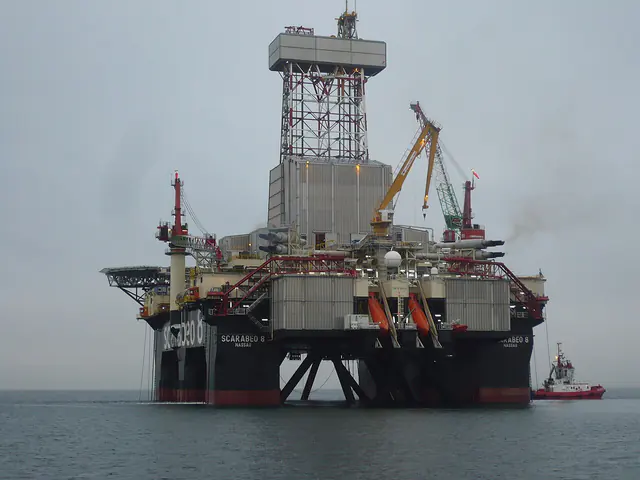
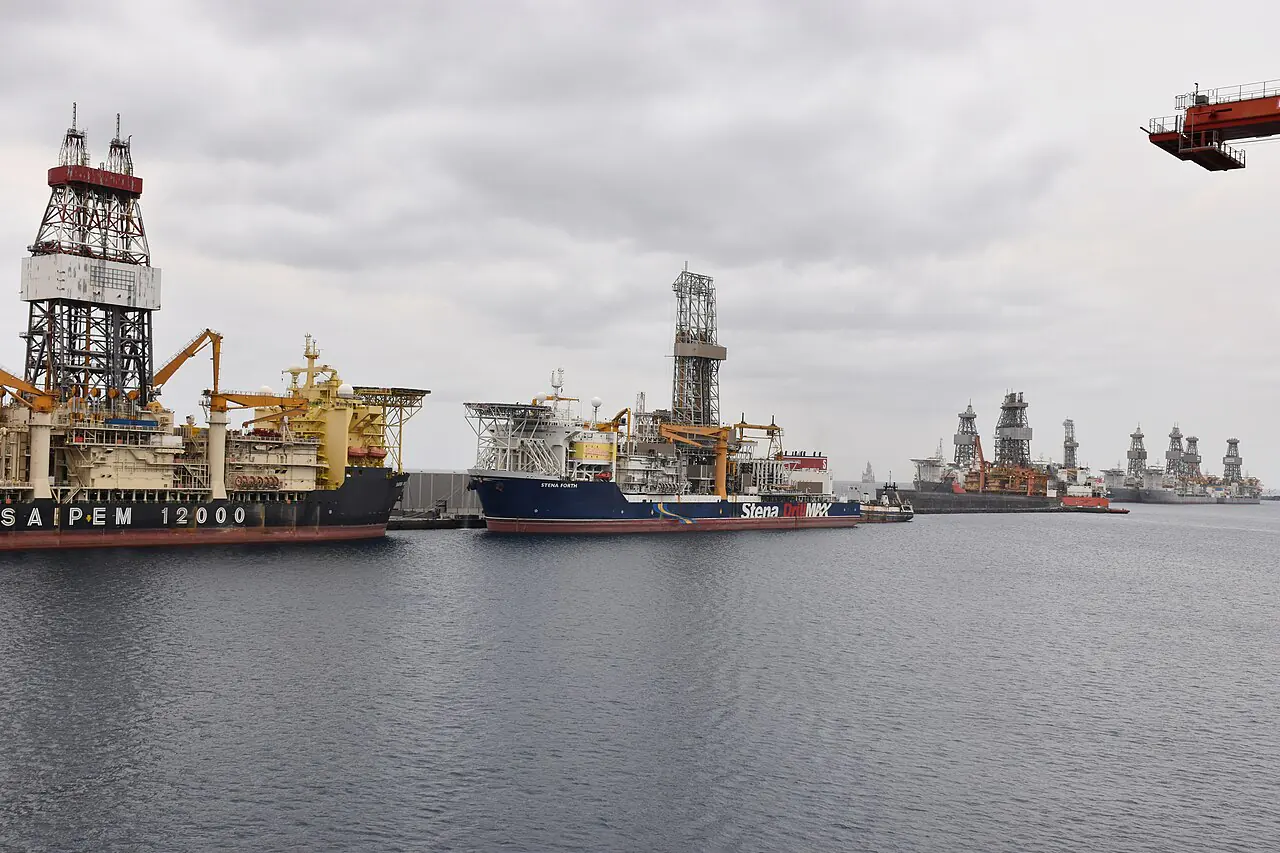
A drillship is a highly specialized type of Mobile Offshore Drilling Unit (MODU) designed primarily for deepwater and ultra-deepwater petroleum exploration and development. Unlike fixed platforms, which are anchored to the seabed, a drillship is a self-propelled vessel capable of navigating large distances between drilling sites.
The defining characteristic of a modern drillship is its ability to maintain a precise position over a wellhead in extreme water depths—often exceeding 3,000 meters (10,000 feet)—using sophisticated Dynamic Positioning (DP) systems. While similar in purpose to semi-submersible drilling rigs, drillships offer significant advantages in transit speed and variable deck load (VDL), making them more efficient for operations where multiple distant locations must be serviced.
In the hierarchy of offshore vessels, drillships represent the “high-performance” tier, typically categorized into generations (e.g., 6th and 7th generation) based on their technological sophistication, drilling depth capacity, and automation levels.
2. Mission and Operations
The primary mission of a drillship is the construction and maintenance of wells in deep and ultra-deepwater environments. Their operational lifecycle typically follows three main stages:
- Exploration Drilling: Locating new hydrocarbon reservoirs in frontier basins. This requires high mobility and the ability to deploy diverse drilling technologies.
- Development Drilling: Once a field is discovered, drillships are used to drill multiple wells to establish production infrastructure.
- Well Intervention/Workovers: Maintaining existing wells, performing repairs, or enhancing production.
Dual-Activity Drilling
A major operational advancement in recent years is dual-activity drilling. Traditional drilling rigs focus on a single operation (the drill string). Modern 7th-generation drillships are often designed with dual-activity capability, meaning they possess two independent drilling or handling systems (such as two top drives or an auxiliary derrick). This allows the vessel to perform two tasks simultaneously—for example, drilling the next section of a well while running casing or performing pipe handling on a secondary string—drastically reducing “non-productive time” (NPT) and increasing overall efficiency.
3. Hull, Size, and Design
The hull of a drillship is engineered to balance stability, storage capacity, and hydrodynamic efficiency.
Dimensions and Capacity
Modern ultra-deepwater drillships typically exceed 250 meters (820 feet) in length. A critical design metric is the Variable Deck Load (VDL), which refers to the total weight of equipment, fuel, water, mud, consumables, and supplies the ship can carry. High-specification drillships can have a VDL exceeding 20,000 metric tons, essential for sustaining long-duration operations far from shore.
The Moonpool
A central feature of the drillship design is the moonpool. This is a large vertical opening through the hull, located near the centerline. The moonpool provides a protected conduit through which the drill string, riser, and other subsea equipment can pass from the deck to the seabed. The design of the moonpool is critical; it must be large enough to accommodate the equipment but structured to minimize “moonpool slapping” (hydrodynamic disturbances caused by wave action inside the opening), which can affect drilling stability.
Draft and Stability
Drillships operate with two distinct draft profiles:
- Transit Draft: A shallower draft used when moving between locations to minimize fuel consumption and allow access to shallower waters.
- Operating Draft: A deeper draft used during drilling operations to lower the center of gravity and improve stability against heave and roll.
4. Propulsion and Engines
To maintain position in deep water, drillships rely on Diesel-Electric Propulsion. Instead of a direct mechanical connection between the engines and the propellers, large diesel generators produce electricity, which is then distributed through a power grid to drive electric motors.
Azimuth Thrusters
Most modern drillships use Azimuth Thrusters (also known as podded propulsion). These are propulsion units that can rotate 360 degrees, allowing the vessel to direct thrust in any direction. This omnidirectional capability is essential for the Dynamic Positioning (DP) system to counteract wind, wave, and current forces with extreme precision.
Propulsion Systems
| Component | Description |
|---|---|
| Main Engines | High-output diesel generators (often 3–6 units). |
| Thrusters | 3–6 Azimuth thrusters (typically 4,000–6,000 hp each). |
| Power Grid | High-voltage AC or DC distribution system. |
| Tunnels | Bow and stern thrusters for improved maneuverability in port. |
5. Electrical System and Power
The electrical system of a drillship is one of the most complex components on board, serving as the “nervous system” for both drilling and station-keeping.
Dynamic Positioning (DP) Integration
The power system must be highly resilient to support Dynamic Positioning (DP). The DP system continuously monitors the vessel’s position using GPS, acoustic transponders, and motion sensors, then automatically commands the thrusters to maintain a fixed coordinate. To prevent a “blackout” (total loss of power) which could lead to a loss of position and a catastrophic well control event, the electrical system is designed with massive redundancy.
Power Management and Hybridization
Modern drillships utilize advanced Power Management Systems (PMS) to balance the load between drilling operations (which can cause sudden spikes in demand, such as when tripping pipe) and station-keeping.
Increasingly, the industry is moving toward Hybrid Power Systems. These incorporate large-scale battery storage (ESS - Energy Storage Systems) to:
- Smooth out power peaks.
- Allow engines to run at more efficient, constant loads.
- Reduce overall fuel consumption and CO2 emissions.
6. Equipment and How It Is Used
The ability of a drillship to operate in ultra-deepwater is entirely dependent on its specialized drilling and subsea equipment. These systems must be capable of operating under immense pressure and in highly corrosive environments.
The Derrick and Hoisting System
The derrick is the massive steel structure located above the drill floor. It provides the height and strength required to manage thousands of meters of drill pipe and casing. Modern derricks are often integrated with automated pipe-handling systems to increase safety and speed. The primary hoisting component is the top drive, a heavy motorized unit that travels up and down the derrick, providing the torque required to rotate the drill string and the ability to circulate drilling fluid.
Blowout Preventer (BOP) Stack
The BOP stack is the most critical safety component on a drillship. Located on the seabed, it is a massive assembly of valves designed to prevent uncontrolled releases of hydrocarbons (blowouts). A typical deepwater BOP stack includes:
- Annular Preventers: Large rubber-faced valves that can seal around any shape in the wellbore.
- Ram Preventers: Heavy-duty steel rams that can close around drill pipe (Pipe Rams), cut through pipe (Shear Rams), or seal the entire wellbore (Blind Rams).
- High-Pressure Rating: Modern 7th-generation rigs utilize stacks rated for 15,000 psi or 20,000 psi to handle high-pressure, high-temperature (HPHT) reservoirs.
Technical Detail: BOP Mechanics The Blowout Preventer (BOP) is far more than a simple valve. In ultra-deepwater operations, the stack can stand over 40 feet tall and weigh hundreds of tons. The Annular Preventer is the first line of defense; it uses a large, reinforced rubber packing element that can conform to the shape of the drill pipe, a heavy-walled tool joint, or even a completely open hole (in extreme emergency scenarios).
Beneated the annulars are the Ram Preventers. Pipe Rams are precision-machined to provide a high-pressure seal around a specific size of drill pipe. However, the most critical component for well control is the Blind Shear Ram. This massive steel component is designed to physically cut through the high-strength drill pipe and then seal the wellbore completely. Modern 7th-generation rigs often feature dual shear rams to provide redundancy in case the first attempt fails or if the pipe is too thick for a single shear.
Riser Tensioning Systems
The marine riser is the conduit that connects the subsea BOP to the drillship. Because the drillship is constantly moving due to waves and currents, the riser must be kept under constant tension to prevent it from buckling or being pulled out of the wellhead. Riser tensioners (often hydraulic cylinders or wireline systems) compensate for the vessel’s motion, ensuring the riser remains stable and supported.
Mud Systems and Managed Pressure Drilling (MPD)
Drilling fluid, or “mud,” is essential for cooling the bit, transporting cuttings to the surface, and providing hydrostatic pressure to prevent well blowouts.
- Mud Pumps: High-pressure triplex pumps (e.g., NOV 14-P-220) are used to circulate the fluid.
- Mud Tanks: Large storage volumes allow for the simultaneous handling of different fluids (WBM, NAF, Brine).
- Managed Pressure Drilling (MPD): Advanced systems that allow for precise control of the annular pressure profile, enabling drilling in narrow pressure windows.
Technical Detail: Mud System Circulation The drilling mud system is a complex loop of processing and storage. After the mud is pumped down the drill string and returns up the annulus, it passes through Shale Shakers. These are high-frequency vibrating screens that perform the initial separation of rock cuttings from the liquid mud. From there, the mud may pass through Degassers (to remove entrained gas) and Desanders/Desilters (to remove finer particles). The conditioned mud is then stored in the large Mud Tanks (or pits), where its density and chemical composition are precisely adjusted using additives like barite (to increase weight) or bentonite (to increase viscosity).
| Equipment Type | Common Specification | Purpose |
|---|---|---|
| BOP Stack | 15,000 - 20,000 psi | Wellbore containment and blowout prevention. |
| Top Drive | 500 - 1,000 tons capacity | Rotating drill string and managing tubulars. |
| Riser Tensioner | 1.5M - 3.6M lbs total capacity | Compensating for vessel heave on the riser. |
| Mud Pumps | 7,500 psi working pressure | Circulating drilling fluids at high pressure. |
7. Navigation, Communications, and Safety
Drillships require extreme precision in both navigation and emergency response.
Dynamic Positioning (DP) Class 3
Most modern deepwater drillships are required to meet DP Class 3 (DP3) standards. This implies a level of redundancy where the vessel can maintain its position even after a single failure in any critical system (e.g., loss of a generator, a thruster, or a control computer). DP3 systems are designed to handle “worst-case” scenarios to ensure the drillstring is not left unmanaged during a power or control failure.
Subsea Positioning and Communication
To ensure the drillship is directly above the wellhead, it uses:
- Acoustic Positioning: Transponders on the seabed communicate with acoustic sensors on the ship (USBL - Ultra-Short Baseline).
- LBL (Long Baseline): A network of seabed transponders for even higher precision.
Emergency Disconnect System (EDS)
In the event of a catastrophic loss of position (a “drift-off” or “drive-off”), the Emergency Disconnect System (EDS) is activated. This sequence automatically shears the drill pipe, seals the well with the BOP, and disconnects the marine riser from the subsea stack, allowing the ship to move away from the wellhead safely.
8. Crew and Organization
Operating a drillship requires two distinct but highly integrated crews: the Marine Crew and the Drilling Crew.
Marine Crew
Responsible for the vessel’s navigation, stability, and overall safety.
- Captain (Master): Overall command of the vessel.
- Chief Engineer: Responsible for the engines, power, and mechanical systems.
- Deck Officers: Navigate the vessel and manage DP operations.
Drilling Crew
Responsible for the actual well construction.
- Toolpusher: The highest-ranking drilling authority on board.
- Driller: Operates the drilling machinery (top drive, drawworks) from the drill floor.
- Derrickman: Man-ages the mud system and works high in the derrick.
- Floorhands (Roughnecks): Perform physical labor on the drill floor.
9. Certificates and Training Requirements
Personnel on drillships must hold specialized certifications to comply with international maritime and drilling standards.
Marine Certifications (STCW)
All maritime personnel must comply with the STCW (Standards of Training, Certification, and Watchkeeping for Seafarers), covering basic safety, fire fighting, and survival at sea.
Drilling Certifications (IWCF/IADC)
Drilling personnel, particularly drillers and toolpushers, must hold well-control certifications from bodies like the International Well Control Forum (IWCF) or the International Association of Drilling Contractors (IADC). These certify their ability to manage pressure and prevent blowouts.
10. Regulations, Class, and Inspections
Drillships are subject to rigorous international and national oversight.
International Maritime Organization (IMO)
The IMO sets global standards through the MODU Code (Code for the Construction and Equipment of Mobile Offshore Drilling Units), which dictates requirements for stability, fire safety, and lifesaving equipment.
Classification Societies
To operate, drillships must be “in class” with organizations like DNV (Det Norske Veritas), ABS (American Bureau of Shipping), or Lloyd’s Register (LR). These societies perform regular inspections and audits of the vessel’s hull, machinery, and safety systems to ensure they meet technical standards.
11. Notable Shipyards, Operators, and Example Vessels
The drillship market is dominated by a few major offshore drilling contractors and highly specialized shipyards.
Leading Operators
- Transocean: A global leader in ultra-deepwater drilling, operating many of the world’s most advanced 7th-generation drillships.
- Noble Corporation: Known for its high-specification fleet and presence in major offshore basins like Guyana.
- Valaris: Operates a massive global fleet including various 6th and 7th-generation assets.
- Saipem: A major European player with a focus on complex subsea and offshore engineering.
Major Shipyards
- Hyundai Heavy Industries (HHI): One of the primary builders of high-spec drillships for global contractors.
- Keppel Offshore & Marine: A major Asian hub for complex offshore construction.
- DSME (Daewoo Shipbuilding & Marine Engineering): Another key player in the ultra-deepwater vessel market.
Example Drillships
The following table provides specifications for several industry-leading vessels.
| Vessel Name | Operator | Generation | Water Depth | Drilling Depth | Key Feature |
|---|---|---|---|---|---|
| Noble Bob Douglas | Noble Corp | 7th Gen | 12,000 ft | 40,000 ft | Dual-activity, DP3, Gusto P10000 |
| Santorini | Saipem | 7th Gen | 12,000 ft | 40,000 ft | 5x 2,200 HP Mud Pumps |
| Dhirubhai Deepwater | Transocean | 7th Gen | 12,000 ft | 40,000 ft | Advanced station-keeping |
| West Auriga | Seadrill | 7th Gen | 12,000 ft | 37,500 ft | Dual-activity, DP3 |
| Valaris DS-10 | Valaris | 6th/7th Gen | ~10,000 ft | 40,000 ft | High-spec 15,000 psi BOP |
Detailed Vessel Profiles:
Noble Bob Douglas The Noble Bob Douglas is a premier example of a 7th-generation drillship. Engineered with the Gusto P10000 design, it is purpose-built for the ultra-deepwater challenges of the Guyana-Suriname Basin. Its dual-activity capability allows it to optimize well construction, while its DP3 system provides the stability required for the intense currents of the Atlantic. With a hook load capacity of 2.5 million pounds, it can handle the heaviest casing strings required for deepwater wells.
Santorini The Santorini, operated by Saipem, represents the pinnacle of European offshore engineering. It is specifically outfitted with two complete 7-cavity BOP stacks, a configuration that allows for seamless maintenance and high reliability. Its mud system is particularly robust, featuring five massive 2,200 HP NOV pumps, allowing for high-speed circulation and efficient hole cleaning in complex geological formations.
West Auriga The West Auriga is a 7th-generation powerhouse that has demonstrated its capabilities in the U.S. Gulf of Mexico. It features a highly automated drilling package and is equipped with Managed Pressure Drilling (MPD) capabilities, making it one of the most versatile vessels for drilling in narrow pressure windows.
12. Environment and Future Outlook
As the offshore industry faces increasing pressure to decarbonize, the design and operation of drillships are undergoing significant transformations.
Decarbonization and Energy Transition
- Hybrid Power: The integration of large battery energy storage systems (ESS) to optimize engine loads and reduce fuel consumption.
- Alternative Fuels: Research into LNG (Liquefied Natural Gas) and even ammonia-ready designs to lower the carbon footprint of offshore operations.
- Carbon Capture and Storage (CCS): Drillships are being increasingly considered for the installation and monitoring of subsea CCS infrastructure.
Digitalization and Automation
The “Digital Drillship” concept involves the use of:
- Digital Twins: Virtual replicas of the vessel and its subsea equipment used for predictive maintenance and operational optimization.
- Robotics: Automated pipe handling, robotic mud mixing, and subsea inspection drones (ROVs) to reduce human exposure to high-risk environments.
- Autonomous Operations: Increased reliance on AI and machine learning to optimize drilling parameters and enhance DP precision.
13. Facts, Records, and Common Misconceptions
Drillship vs. Semi-submersible
A common misconception is that drillships and semi-submersibles are interchangeable. While both are MODUs, they have different strengths:
- Drillships are faster and carry more supplies, making them ideal for distant exploration.
- Semi-submersibles are generally more stable in rough seas due to their buoyancy and hull design, making them preferred for certain harsh-environment applications.
“Dual-Activity” Does Not Mean Two Wells
A common misunderance is that “dual-activity” means the ship can drill two separate wells at once. In reality, it means the ship can perform two tasks at once on the same wellbore (or preparing for the next one), such as drilling while simultaneously handling casing or performing maintenance.
14. Glossary
- Annular Preventer: A valve that uses a rubber element to seal around any tool in the wellbore.
- Azimuth Thruster: A 360-degree rotatable propeller for precise ship positioning.
- BOP (Blowout Preventer): A critical subsea safety assembly for well control.
- Casing: Steel pipe used to line a wellbore and provide structural integrity.
- DP3 (Dynamic Positioning Class 3): The highest standard of automated station-keeping with full redundancy.
- Dual-Activity: The ability to perform two independent drilling/handling tasks simultaneously.
- Hydrostatic Pressure: The pressure exerted by a column of fluid (like drilling mud).
- LMRP (Lower Marine Riser Package): The component that connects the riser to the BOP stack.
- Moonpool: An opening in the hull through which drilling equipment is deployed.
- Mud System: The machinery used to prepare, store, and circulate drilling fluids.
- NPT (Non-Productive Time): Time lost during drilling due to equipment failure or other delays.
- Riser: The conduit connecting the subsea BOP to the drilling vessel.
- Top Drive: The motorized unit that provides torque to the drill string.
- VDL (Variable Deck Load): The maximum payload capacity of the vessel.
15. Sources
- Noble Corporation: https://noblecorp.com/
- Transocean: [https://www.deepwater.com/](https https://www.deepwater.com/)
- Saipem: https://www.saipem.com/
- Valaris: https://www.valaris.com/
- Seadrill: https://www.seadrill.com/
- International Maritime Organization (IMO): https://www.imo.org/
- American Bureau of Shipping (ABS): https://www.abs.com/