1. What Is This Ship?
In the complex landscape of offshore energy extraction, Mobile Offshore Drilling Units (MODUs) serve as the primary tools for exploring and developing subsea hydrocarbon reservoirs. Unlike fixed platforms, which are permanently attached to the seabed, MODUs are designed to be relocated between well sites, providing the flexibility required for exploratory drilling and field development.
The two most prominent categories of MODUs are jack-up rigs and semi-submersible drilling units. While both share the fundamental mission of providing a stable platform for a drilling derrick and well control equipment, they achieve stability through radically different mechanical principles. Jack-up rigs are primarily used in relatively shallow waters (typically up to 150 meters), where they can deploy long, retractable legs to rest on the seabed, elevating the hull above the wave action. In contrast, semi-submersibles are designed for deeper waters, utilizing a system of large, water-filled pontoons and vertical columns to achieve a stable, floating equilibrium that is minimally affected by surface wave motion.
The distinction between these units is not merely a matter of depth; it encompasses differences in mobility, station-keeping capability, structural design, and the regulatory requirements set forth by the International Maritime Organization (IMO).
2. Mission and Operations
The primary mission of both jack-up and semi-submersible rigs is to facilitate the drilling of wells in offshore environments. This process involves several critical operational phases:
- Mobilization: Moving the unit from a shipyard or storage location to the drilling site. This is achieved via towing (common for most jack-ups and many semi-submersibles) or self-propulsion (common for advanced semi-submersibles and certain high-spec units).
- Positioning and Installation:
- Jack-ups: Once on station, the legs are lowered through the hull until the “spuds” (the feet of the legs) penetrate the seabed. The hull is then “jacked up” using a mechanical system to provide clearance above the water.
- Semi-submersibles: The unit is positioned using either a mooring system (anchors) or a Dynamic Positioning (DP) system. Stability is maintained by controlling the buoyancy and draft of the pontoons.
- Drilling Operations: The rig provides the necessary power, space, and stability to operate the drilling derrick, mud pumps, and the Blowout Preventer (BOP) stack.
- Well Control: A critical aspect of the mission is maintaining hydrostatic and mechanical control over the wellbore to prevent uncontrolled releases of hydrocarbons. This involves the constant management of drilling fluid (mud) density and the readiness of the BOP.
- Demobilization: Once the well is completed or abandoned, the process is reversed to move the unit to its next location.
3. Hull, Size, and Design
The structural design of these units is dictated by the environmental loads they must withstand and the water depths they are intended to serve.
Jack-Up Rig Design
A jack-up rig consists of three primary components: the hull, the legs, and the jacking system.
- Hull: The main floating body that provides buoyancy during transit. It houses the drilling equipment, accommodation, and machinery.
- Legs and Spuds: The legs are long, lattice-structured steel members. At the base of each leg is a “spud,” a large steel foot designed to grip the seabed. The number of legs can vary (typically 3 or 4).
- Jacking System: This is the mechanical mechanism (often rack-and-pinion) that allows the legs to be raised and lowered.
Jack-ups are designed for “shallow” water, though modern high-spec units can operate in depths exceeding 140 meters. The critical design limit is the length of the legs and the load-bearing capacity of the seabed.
Semi-Submersible Design
Semi-submersibles are characterized by a “column-stabilized” design. They consist of:
- Pontoons: Large, watertight, ballasted structures located at the bottom of the unit.
- Columns: Vertical structural members that connect the pontoons to the upper deck.
- Main Deck: The large horizontal platform that houses the drilling derrick and crew accommodations.
The core principle of the semi-submersible is the reduction of the waterplane area. By concentrating much of the buoyancy in the submerged pontoons and minimizing the surface area of the columns at the water’s surface, the unit becomes highly resistant to the vertical motions (heave) caused by waves.
| Feature | Jack-Up Rig | Semi-Submersible |
|---|---|---|
| Primary Support | Seabed (via legs) | Buoyancy (via pontoons) |
| Typical Water Depth | 0 – 150 m | 50 – 3,000+ m |
| Stability Principle | Rigidly fixed to seabed | Column-stabilized buoyancy |
| Mobility | Primarily towed | Towed or Self-Propelled |
| Station-Keeping | Leg penetration | Mooring or Dynamic Positioning |
| Response to Waves | Minimal (once jacked up) | Low (due to deep draft/low waterplane) |
4. Propulsion and Engines
Propulsion requirements differ significantly between jack-up and semi-submersible units, largely due to their intended operational environments and mobility needs.
Jack-Up Propulsion
Most jack-up rigs are not self-propelled. They are designed as “towed” units, meaning they rely on ocean-going tugboats to move them from one location to another. During transit, the jack-up hull is kept at a certain draft to ensure stability and prevent excessive slamming against waves. While some high-specification, modern jack-ups are equipped with small propulsion systems (often called “impulse thrusters”) to assist with station-keeping or minor maneuvering, they are rarely capable of independent long-distance transit.
Semi-Submersible Propulsion
Semi-submersibles exhibit a much wider range of propulsion capabilities:
- Towed Units: Many semi-submersibles are designed to be towed to a site, where they are then held in place by a complex mooring system.
- Self-Propelled Units: High-specification, modern semi-submersibles are fully self-propelled. They are equipped with powerful diesel-electric engines that drive multiple azimuth thrusters. These thrusters can rotate 360 degrees, allowing the vessel to maintain its position even in heavy seas or strong currents. These systems are critical for Dynamic Positioning (DP) systems and for navigating through challenging offshore environments. The use of azimuth thrusters provides the high degree of maneuverability required for precision positioning over a subsea wellhead.
5. Electrical System and Power
The electrical systems on a MODU are among the most complex and robust in the maritime industry, as they must support two distinct and demanding loads: the drilling plant and the marine/positioning systems.
The Drilling Power Load
The drilling process requires massive amounts of power for:
- Drawworks: The heavy-duty winch system that raises and lowers the drill string.
- Mud Pumps: High-pressure pumps used to circulate drilling fluid.
- Top Drive: The motor that rotates the drill string.
- BOP Control: The hydraulic and electrical systems used to actuate the Blowout Preventer.
This load is often characterized by sudden, massive spikes in demand (e.g., when starting the drawworks or mud pumps).
The Marine and DP Power Load
For semi-submersibles, especially those utilizing DP, the electrical system must also provide a continuous, highly reliable power supply to the thrusters. Unlike the drilling load, which can be intermittent, the DP power requirement is constant and mission-critical. Any loss of power (a “blackout”) could result in a loss of position, leading to catastrophic damage to the wellhead and the vessel.
To mitigate this risk, high-spec MODUs utilize redundant power configurations (e.g., DP-2 or DP-3 ratings). This involves having multiple independent engine-generator sets, separated by firewalls and physical distance, ensuring that the failure of a single engine or generator does not compromise the vessel’s ability to maintain position.
6. Equipment and How It Is Used
The specialized equipment on a MODU is what differentiates it from a standard commercial vessel.
Leg Jacking Systems (Jack-Ups)
The defining equipment of a jack-up is its jacking system. This system must be capable of lifting the entire weight of the rig (thousands of tons) and moving it vertically with high precision.
- Rack-and-Pinion: The most common type, where geared wheels (pinions) move along a toothed track (the rack) integrated into the legs.
- Hydraulic Jacking: Some units use high-pressure hydraulic cylinders to push the legs or the hull.
Mooring and Station-Keeping
- Mooring Systems: Used primarily by towed semi-submersibles and some jack-ups (though less common for jack-ups once they are on-station). They consist of heavy chains, wire ropes, and suction anchors or drag anchors.
- Dynamic Positioning (DP): As mentioned, DP systems use computer-controlled thrusters to maintain position. This is essential for ultra-deepwater operations where mooring is technically unfeasible.
Drilling and Well Control Equipment
- Drilling Derrick: The tall tower that supports the drill string.
- Top Drive: A motor suspended from the derrick that provides rotation and weight to the drill string.
- Blowout Preventer (BOP): A massive assembly of high-pressure valves located at the seabed (for semi-submersibles) or on the rig floor (for jack-ups in very shallow water). The BOP is the final line of defense against uncontrolled well pressure.
- Moonpool: A central opening in the hull of a semi-submersible that allows the drill string and other equipment to pass through the hull to the seabed. This is a critical component for deepwater drilling operations (Moonpool and ROV launch).
- Offshore Cranes: Essential for moving equipment and supplies between the vessel and supply boats (Offshore Cranes and AHC).
7. Navigation, Communications, and Safety
Safe operation in the offshore environment requires sophisticated navigation, communication, and safety systems to manage the risks of drilling in remote and potentially hostile locations.
Navigation and Positioning
For semi-submersibles, navigation is inextricably linked to position-keeping. Beyond standard GPS/GNSS, these units utilize:
- Acoustic Positioning (USBL/LUSBL): Used to locate subsea assets and ROVs relative to the rig.
- Inertial Navigation Systems (INS): Provide high-accuracy positioning data during periods of poor satellite visibility.
- Radar and AIS: Essential for collision avoidance and monitoring nearby vessels.
Communications
Reliable communication is a life-line for MODUs. They utilize:
- Satellite Communications (SATCOM): Providing high-bandwidth internet and voice for crew welfare and operational data transfer to shore.
- GMDSS (Global Maritime Distress and Safety System): The international standard for maritime safety communications.
- VHF/UHF Radio: For short-range communication with nearby vessels and helicopters.
Safety Systems
- Life-Saving Appliances (LSA): Including lifeboats, liferafts, and immersion suits, compliant with SOLAS (Safety of Life at Sea) regulations.
- Firefighting Systems: Including fixed foam/water systems, CO2 suppression, and advanced detection sensors.
- Emergency Shutdown (ESD): Systems designed to instantly halt drilling or fuel flow in the event of a detected anomaly.
8. Crew and Organization
The operation of an offshore drilling rig requires a highly specialized and multidisciplinary crew, divided into two main functional groups: the drilling crew and the marine crew.
The Drilling Crew
Responsible for the actual process of making and maintaining the wellbore, this crew is typically managed by the Driller.
- Driller: The person in direct control of the drilling machinery and the immediate operation of the well.
- Assistant Driller: Supports the driller and assists in managing the drilling equipment.
- Derrickman: Works high up in the derrick, managing the drill pipe and maintaining the drilling fluid (mud) system.
- Floorhands (Roughnecks): Responsible for the physical handling of pipe, tools, and equipment on the drill floor.
The Marine Crew
Responsible for the overall safety, navigation, and maintenance of the vessel, the marine crew is led by the Master (Captain).
- Master (Captain): Holds ultimate authority and responsibility for the vessel, its crew, and its safe operation.
- Mate: Assists the Master in navigation, deck operations, and crew management.
- Able Seaman (AB) / Ordinary Seaman (OS): Responsible for deck maintenance, lookout duties, and mooring operations.
- Motorman / Engineer: Responsible for the maintenance and operation of the vessel’s engines and auxiliary systems.
The Offshore Installation Manager (OIM)
In many offshore operations, especially on larger units or multi-platform installations, an Offshore Installation Manager (OIM) is appointed. The OIM holds overall command of the facility, bridging the gap between the marine and drilling departments. They have the authority to make critical decisions regarding safety, environmental protection, and the overall conduct of operations on the rig.
9. Certificates and Training Requirements
Working offshore requires rigorous certification to ensure all personnel are prepared for the unique hazards of the environment.
Vessel and Operational Certificates
- MODU Certificate: Issued by classification societies to verify the vessel meets the IMO MODU Code requirements.
- Certificate of Inspection: Issued by national maritime authorities (e.g., US Coast Guard) certifying compliance with national regulations.
Personnel Training and Certification
- STCW (Standards of Training, Certification, and Watchkeeping): The international standard for maritime personnel, covering basic safety, firefighting, and survival.
- BOSIET (Basic Offshore Safety Induction and Emergency Training): A mandatory training course for anyone working offshore, covering helicopter survival, sea survival, and first aid.
- Well Control Certification: Essential for drillers and key drilling personnel, typically issued by organizations like the IWCF (International Well Control Forum) or IADC (International Association of Drilling Contractors).
- DP Certification: Specialized training for officers and engineers operating DP-enabled vessels.
10. Regulations, Class, and Inspections
The operation of MODUs is governed by a stringent regulatory framework to ensure environmental protection and the safety of personnel and assets.
The IMO MODU Code
The primary international standard for the design and construction of mobile offshore drilling units is the IMO MODU Code (Code for the Construction and Equipment of Mobile Offshore Drilling Units). This code provides minimum requirements for:
- Structural Integrity: Ensuring the hull and legs can withstand environmental loads.
- Stability: Defining criteria for intact and damage stability.
- Safety Equipment: Specifying requirements for fire protection, life-saving appliances, and emergency systems.
- Electrical Systems: Ensuring reliable power for critical operations.
Classification Societies
While the MODU Code provides the baseline, most operators require their vessels to be “classed” by leading maritime authorities. These classification societies perform regular audits and inspections to verify compliance. Leading societies include:
- ABS (American Bureau of Shipping)
- DNV (Det Norske Veritas)
- Lloyd’s Register (LR)
- Bureau Veritas (BV)
Classification involves continuous oversight, including regular hull inspections, machinery surveys, and certification of specialized equipment like the BOP.
11. Notable Shipyards, Operators, and Example Vessels
The offshore drilling market is dominated by several major players with global fleets of high-specification units.
Major Operators
- Transocean: One of the world’s largest offshore drilling contractors, known for ultra-deepwater semi-submersibles.
- Saipem: A major Italian company specializing in engineering and drilling, with a significant fleet of semi-submersibles.
- Shelf Drilling: A leading provider of jack-up rigs, particularly in shallow-water markets.
- Valaris: A major global drilling contractor with a diverse fleet.
Example Vessels
| Vessel Name | Type | Notable Feature |
|---|---|---|
| Deepwater Horizon | Semi-submersible | Fifth-generation, ultra-deepwater (Historical) |
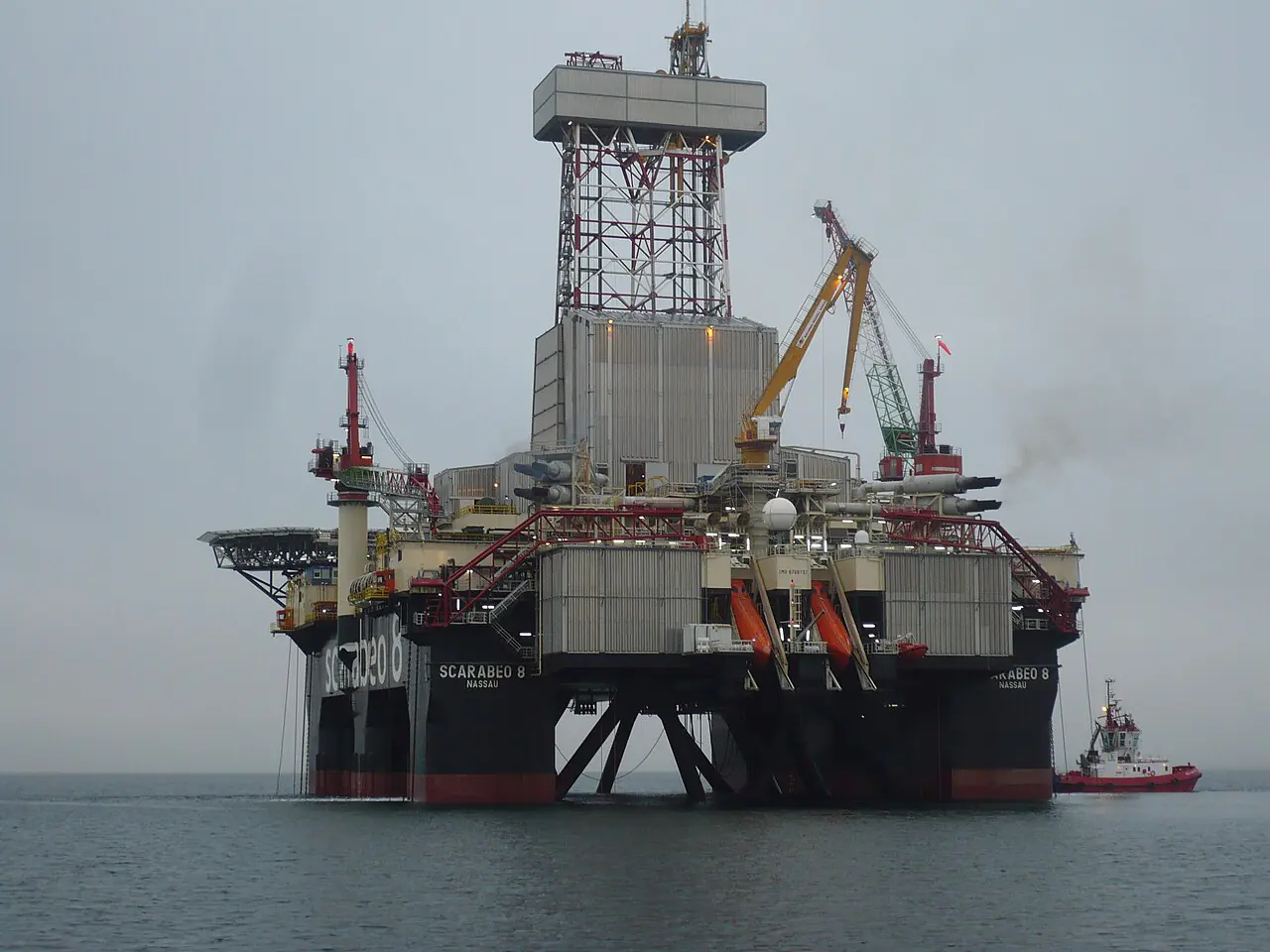
| Scarabeo 8 | Semi-submersible | Sixth-generation, ultra-deepwater, self-propelled |
| Songa Mercur | Semi-submersible | Older, specialized drilling platform |
| Various Jack-ups | Jack-up | Typically operated by Shelf Drilling or Valaris |
Notable Shipyards
Major construction of these units takes place in specialized yards in South Korea (e.g., Hyundai Heavy Industries), China, and Singapore.
12. Environment and Future Outlook
As the offshore energy industry evolves, both jack-up and semi-submersible units are facing new challenges and opportunities.
Deepwater and Ultra-Deepwater
The industry is moving increasingly into deeper waters, which favors the expansion of high-specification, DP-enabled semi-submersibles. The technical requirements for managing extreme pressures and temperatures at these depths are driving innovation in well control and subsea technology.
Automation and Digitalization
Automation is becoming a key driver of efficiency and safety. This includes:
- Automated Drilling Systems: Reducing human intervention in repetitive or high-risk drilling tasks.
- Digital Twins: Using real-time sensor data to create digital models for predictive maintenance and structural monitoring.
- Remote Operations: Allowing onshore engineers to monitor and support drilling operations in real-time.
Environmental Sustainability
There is increasing pressure on the industry to reduce the carbon footprint of offshore operations. This is leading to:
- Hybrid Power Systems: Using batteries to optimize engine loads and reduce fuel consumption.
- Alternative Fuels: Exploring the use of LNG or other low-carbon fuels for vessel propulsion.
- Enhanced Environmental Monitoring: Improved detection and prevention of spills and other environmental impacts.
13. Facts, Records, and Common Misconceptions
Common Misconceptions
- Submersible vs. Semi-submersible: A common error is to use the terms interchangeably. As noted in this report, a submersible rests on the seabed, while a semi-submersible stays afloat using buoyancy.
- Jack-up Stability: Some believe jack-ups are “unstable” compared to floating vessels. In reality, once the legs are on the seabed, a jack-up is arguably the most stable platform available because it is rigidly connected to the earth.
- All Rigs are Self-Propelled: Many people assume modern offshore rigs can sail to their next location. While true for many high-spec semi-submersibles, the majority of jack-up rigs must be towed.
Historical Milestones
- 1961: The conversion of Blue Water Rig No.1 into the first semi-submersible drilling unit.
- 1963: The launch of Ocean Driller, the first purpose-built semi-submersible.
14. Glossary
- Azimuth Thruster: A propulsion unit that can rotate 360 degrees, providing high maneuverability.
- BOP (Blowout Preventer): A critical safety device used to prevent uncontrolled releases of oil or gas from a well.
- DP (Dynamic Positioning): A computer-controlled system that uses thrusters to maintain a vessel’s position without anchors.
- Heave: The vertical motion of a floating vessel caused by wave action.
- Jack-up: A type of MODU that uses retractable legs to rest on the seabed.
- MODU (Mobile Offshore Drilling Unit): A broad term for any offshore drilling rig that can be moved between locations.
- Moonpool: An opening in the hull used to pass drilling equipment to the seabed.
- Spud: The heavy “foot” at the base of a jack-up leg.
- Semi-submersible: A floating MODU that achieves stability through submerged pontoons and columns.
- Waterplane Area: The area of the hull that is at or above the water surface; minimizing this improves stability in waves.