1. What Is This Ship?
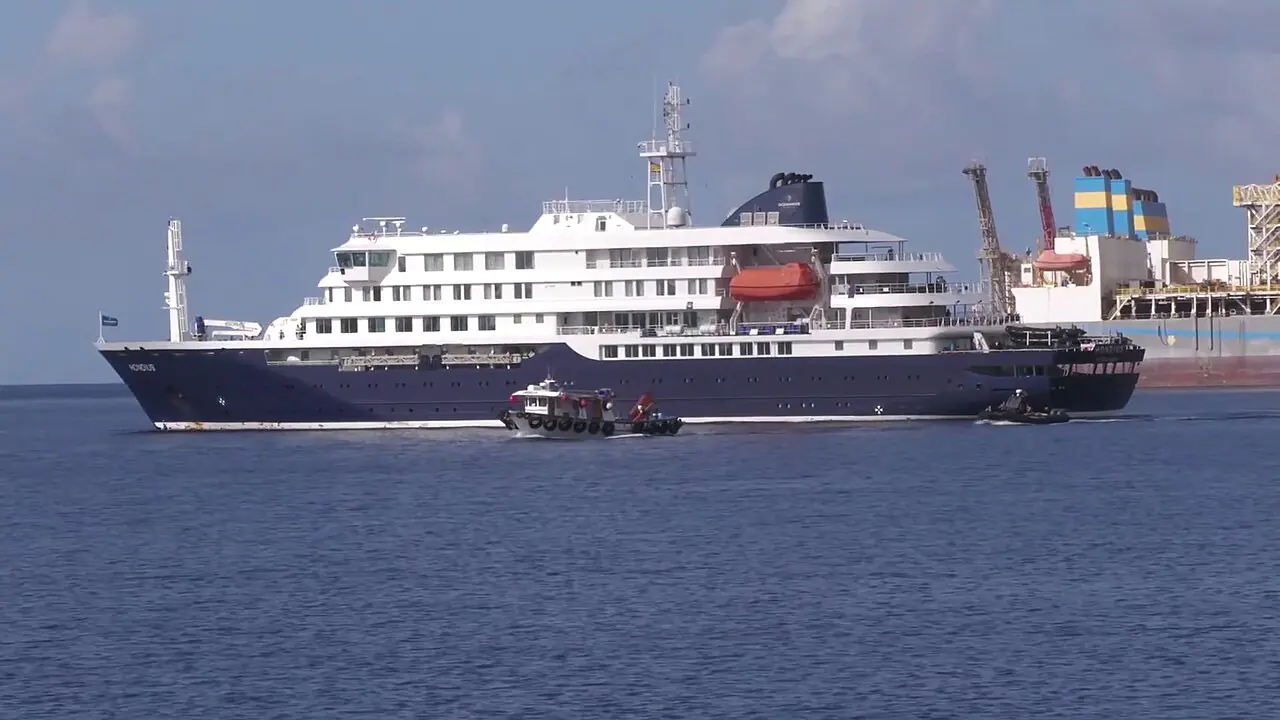
An Expedition Cruise Ship is a specialized vessel engineered to facilitate travel in remote, environmentally sensitive, and often ice-prone regions where traditional cruise ships cannot safely operate. Unlike standard cruise ships, which are designed for high-capacity passenger throughput and frequent port calls in developed infrastructure, expedition ships are built around the principles of exploration, durability, and access.
The primary distinction lies in the mission: while a standard cruise focuses on onboard entertainment and established destinations, an expedition ship focuses on the destination itself. These vessels serve as mobile basecamps for passengers seeking to witness rare wildlife, navigate glacial fjords, or traverse the Arctic and Antarctic circles. To achieve this, they integrate heavy-duty maritime engineering (ice-strengthening) with high-end luxury amenities, creating a hybrid experience of “rugged adventure and refined comfort.”
2. Mission and Operations
The operational profile of an expedition cruise ship is defined by unpredictability and environmental extremity.
Primary Destinations
- The Polar Regions: Antarctica and the Arctic (Svalbard, Greenland, Canadian Arctic Archipelago) are the primary theaters of operation.
- Remote Archipelagos: The Galápagos Islands, Raja Ampat, and the South Pacific islands.
- Deep Fjords and Coastal Wilderness: Northern Norway, Alaska, and the Chilean fjords.
Operational Challenges
- Ice Navigation: Encountering pack ice, bergy bits, and sea ice requires constant vigilance and specialized hull/propulsion capabilities.
- Isolation: Operating far from Search and Rescue (SAR) facilities and commercial ports necessitates high levels of onboard autonomy, including medical facilities and redundant systems.
- Environmental Sensitivity: Operating in “Zero Discharge” zones or highly protected marine reserves requires strict adherence to environmental regulations and low-impact operational protocols.
- Weather Extremes: High winds, heavy seas, and extreme cold require robust structural integrity and advanced stability systems to ensure passenger comfort and safety.
3. Hull, Size, and Design
The design of an expedition cruise ship is a compromise between hydrodynamic efficiency for open-water transit and structural resilience for ice interaction.
Ice Class and Structural Integrity
The most critical technical specification is the Ice Class, assigned by classification societies based on the IACS (International Association of Classification Societies) Polar Class rules. These classes define the ship’s ability to navigate in varying thicknesses of ice.
| Polar Class | Ice Condition Description | Typical Operating Area |
|---|---|---|
| PC 1 | Year-round operation in all polar waters. | Deep Arctic/Antarctic interior. |
| PC 2–3 | Year-round in moderate/second-year ice. | Heavy ice-covered regions. |
| PC 4–5 | Year-round in thick/medium first-year ice. | High-latitude seasonal cruises. |
| PC 6–7 | Summer/Autumn in medium/thin first-year ice. | Marginal ice zones/Coastal Arctic. |
Key Design Features:
- Scantlings and Steel Grades: To withstand ice pressure, hulls utilize thicker steel plating (scantlings) and specialized high-strength, low-temperature steel grades that resist brittle fracture in sub-zero temperatures.
- Double Hull Construction: Provides essential redundancy; if the outer shell is damaged by ice, the inner hull maintains watertight integrity.
- Specialized Bow Designs:
- Ulstein X-BOW®: A wave-piercing design that reduces slamming, pitching, and vibration, significantly increasing passenger comfort in rough seas and improving fuel efficiency.
- Ice-Breaking Bows: Optimized for vertical or oblique ice penetration, often incorporating a reinforced bulb or specialized shaping to “ride up” on ice.
- Typical Dimensions: Most modern expedition vessels are “small-to-mid” sized, typically ranging from 80 to 150 meters in length, with gross tonnages between 3,000 and 20,000 GT.
4. Propulsion and Engines
Propulsion for expedition ships must provide high torque at low speeds and exceptional maneuverability for navigating tight, ice-cluttered channels.
Diesel-Electric Configuration
Most modern expedition ships utilize a diesel-electric propulsion system. Instead of a direct mechanical link from the engine to the propeller, diesel generators produce electricity, which powers electric motors. This offers several advantages:
- Redundancy: Multiple generators allow the ship to maintain propulsion even if one engine fails.
- Maneuverability: Electric motors provide instant torque and can be controlled precisely.
- Efficiency: Engines can run at optimal loads, and power can be diverted to other systems (like heating or stabilizers) as needed.
Azimuthing Podded Propulsion (Azipods®)
A hallmark of modern expedition vessels is the use of Azipod® units (or similar azimuth thrusters). These are electric-drive pods mounted outside the hull that can rotate 360 degrees.
- Maneuverability: They eliminate the need for traditional rudders, allowing for “twisting” turns and precise station-keeping.
- Ice Performance: The “pulling” propeller configuration can be more effective at clearing ice from the stern.
- Noise Reduction: The absence of long shaftlines and reduction gears significantly reduces underwater noise, which is critical for both passenger comfort and protecting marine life (e.g., whales).
Double-Acting Ship (DAS) Principle
Some advanced vessels utilize the Double-Acting Ship concept. The hull is optimized for efficient open-water transit at the bow, while the stern is reinforced for icebreaking. In heavy ice, the ship can operate stern-first, using its powerful azimuth propellers to “break” and “pull” through the ice.
5. Electrical System and Power
The electrical architecture of an expedition ship is designed for autonomy and resilience.
Power Management and Redundancy
- Safe Return to Port (SRtP): In compliance with modern safety standards, electrical systems are designed so that a single failure (e.g., an engine room fire or flood) does not result in a total loss of propulsion or essential services.
- Integrated Power Systems: Sophisticated management software balances loads between propulsion, hotel loads (lighting, HVAC), and expedition equipment.
Hybrid and Green Technologies
As environmental regulations tighten, the industry is moving toward:
- Battery Storage: Large-scale battery banks allow for “silent cruising” in sensitive areas, reducing both emissions and noise pollution.
- Dual-Fuel Engines: Engines capable of running on LNG (Liquefied Natural Gas) or biofuels to reduce the carbon footprint.
- Energy Recovery: Systems that capture waste heat from engines to provide heating for the vessel and passenger cabins.
6. Equipment and How It Is Used
Expedition ships carry a specialized suite of equipment to facilitate “shore excursions” in remote areas.
| Equipment | Primary Use | Technical Detail |
|---|---|---|
| Zodiacs / RIBs | Passenger landings | Rigid Inflatable Boats used for navigating shallow waters and landing passengers on rocky/icy shores. |
| Ice Radar | Navigation | High-resolution radar capable of detecting small ice floes and “growlers” in low visibility. |
| Sonar / Echo Sounder | Depth/Ice detection | Used to map the seabed and detect underwater ice features or obstructions. |
| Stabilizers | Comfort | Active fin stabilizers to reduce roll and pitching in rough open waters. |
| Expedition Gear | Science/Observation | Specialized equipment like submersibles, helicopters, or high-end photography gear. |
7. Navigation, Communications, and Safety
Operating in polar or remote waters requires equipment that exceeds standard maritime requirements.
Navigation and Communication
- Satellite Connectivity: In high latitudes, traditional geostationary satellites can be unreliable. Expedition ships rely on Low Earth Orbit (LEO) constellations (like Iridium or Starlink) to maintain high-bandwidth internet for both operations and passenger use.
- Ice-Strengthened Navigation: Advanced ECDIS (Electronic Chart Display and Information System) integrated with real-time ice charts and satellite imagery.
Safety and Life-Saving Appliances (LSA)
- Polar Code Compliance: Mandatory requirements for life-saving equipment, including thermal protection.
- Immersion Suits & TPA: Every person on board must have access to an immersion suit or a Thermal Protective Aid (TPA) to prevent hypothermia in the event of an emergency.
- Search and Rescue (SAR) Preparedness: Enhanced protocols for operating in “remote” areas where assistance may be hours or days away.
8. Crew and Organization
The crew of an expedition ship is a hybrid of traditional maritime professionals and scientific experts.
- Deck and Engine Department: Highly trained officers with specific Polar Code training and ice-navigation experience.
- Expedition Team: Led by an Expedition Leader, this team includes naturalists, biologists, historians, and photographers who conduct lectures and lead landings.
- Medical Staff: Because of the remote nature of voyages, expedition ships often carry a dedicated doctor and advanced medical facilities capable of stabilizing patients for long-distance evacuation.
9. Certificates and Training Requirements
Compliance is governed by both international law and specialized training standards.
- Polar Ship Certificate: Issued under the IMO Polar Code, confirming the vessel’s suitability for its intended polar environment.
- STCW (Standards of Training, Certification, and Watchkeeping): All crew must meet international standards, with additional modules for Polar Water Operations.
- Polar Water Operational Manual (PWOM): A mandatory document on board that outlines the ship’s specific operational limitations and procedures in ice.
10. Regulations, Class, and Inspections
Regulatory Bodies
- IMO (International Maritime Organization): Sets the global standards via the Polar Code, SOLAS (Safety of Life at Sea), and MARPOL (Prevention of Pollution).
- Classification Societies: Organizations like DNV, Lloyd’s Register (LR), ABS, and Bureau Veritas (BV) conduct the actual inspections and assign the Ice Class notations.
Inspections
Regular inspections focus on:
- Hull Integrity: Checking for deformation or cracks in the ice belt.
- Machinery Readiness: Ensuring redundant systems are functional.
- Safety Equipment: Testing lifeboats, immersion suits, and emergency power.
11. Notable Shipyards, Operators, and Example Vessels
Leading Operators
- Lindblad Expeditions (Partnership with National Geographic)
- Hurtigruten (Leader in hybrid/electric polar cruising)
- Ponant (Luxury expedition specialist)
- Silversea Expeditions (Ultra-luxury segment)
- Oceanwide Expeditions
Example Vessels
| Vessel Name | Operator | Ice Class | Notable Feature |
|---|---|---|---|
| m/v Hondius | Oceanwide | PC 6 | First registered PC6 vessel. |
| National Geographic Endurance | Lindblad | PC 5 | Ulstein X-BOW design; high maneuverability. |
| Magellan Explorer | Amazon | PC 6 | Purpose-built for polar luxury. |
| Le Champlain | Ponant | PC 6 | High-end luxury in a rugged package. |
12. Environment and Future Outlook
The future of expedition cruising is defined by the tension between increasing demand and the need for absolute environmental preservation.
- Decarbonization: The transition from heavy fuel oil to LNG, hydrogen, and battery-hybrid systems is the primary technical trend.
- Noise Mitigation: Reducing “acoustic footprints” to prevent disruption to marine mammals.
- Zero-Discharge Operations: Developing advanced wastewater treatment and waste management systems to operate in “leave no trace” environments.
- Smart Navigation: Using AI and satellite data to optimize routes, avoiding both heavy ice and sensitive wildlife habitats.
13. Facts, Records, and Common Misconceptions
- Misconception: Expedition ships are “Icebreakers.”
- Reality: While they are ice-strengthened and can navigate through moderate ice, they are not “icebreakers” in the sense of heavy commercial vessels designed to plow through massive multi-year ice sheets. They are “ice-capable” explorers.
- Fact: The “Luxury” element is integrated, not an afterthought. Modern expedition ships often feature higher-than-average stability and vibration-dampening technologies to ensure that “adventure” doesn’t mean “seasickness.”
14. Glossary
- Azipod: A steerable, electric-drive podded propulsion unit.
- Azimuth: The angle of a rotating object, used here to describe 360-degree steering.
- Double Hull: A construction method providing two layers of watertight protection.
- Ice Belt: The area of the hull most heavily reinforced to withstand ice impact.
- IMO: International Maritime Organization, the UN agency for maritime safety.
- IACS: International Association of Classification Societies.
- LNG: Liquefied Natural Gas, a cleaner-burning fuel.
- PC (Polar Class): An IACS rating defining a ship’s ice-going capability.
- RIB: Rigid Inflatable Boat, used for passenger landings.
- Scantlings: The dimensions of a ship’s structural components (frames, plating).
- SOLAS: International Convention for the Safety of Life at Sea.
- Zodiac: A brand name commonly used for Rigid Inflatable Boats (RIBs) used for landings.
- X-BOW: A unique wave-piercing hull design by Ulstein.