1. What Is This Ship?
The ‘General Cargo Ship’ (also known as a freighter or general cargo vessel) is one of the most versatile and essential categories of merchant vessels. Unlike specialized ships designed for a single commodity—such as oil tankers for liquids or container ships for standardized boxes—the general cargo ship is defined by its ability to carry a heterogeneous mix of cargoes.
These vessels are designed to accommodate “breakbulk” cargo: goods that are not in containers and cannot be handled as bulk commodities. This includes everything from heavy machinery, steel coils, and timber to palletized goods, bagged grain, and oversized industrial equipment.
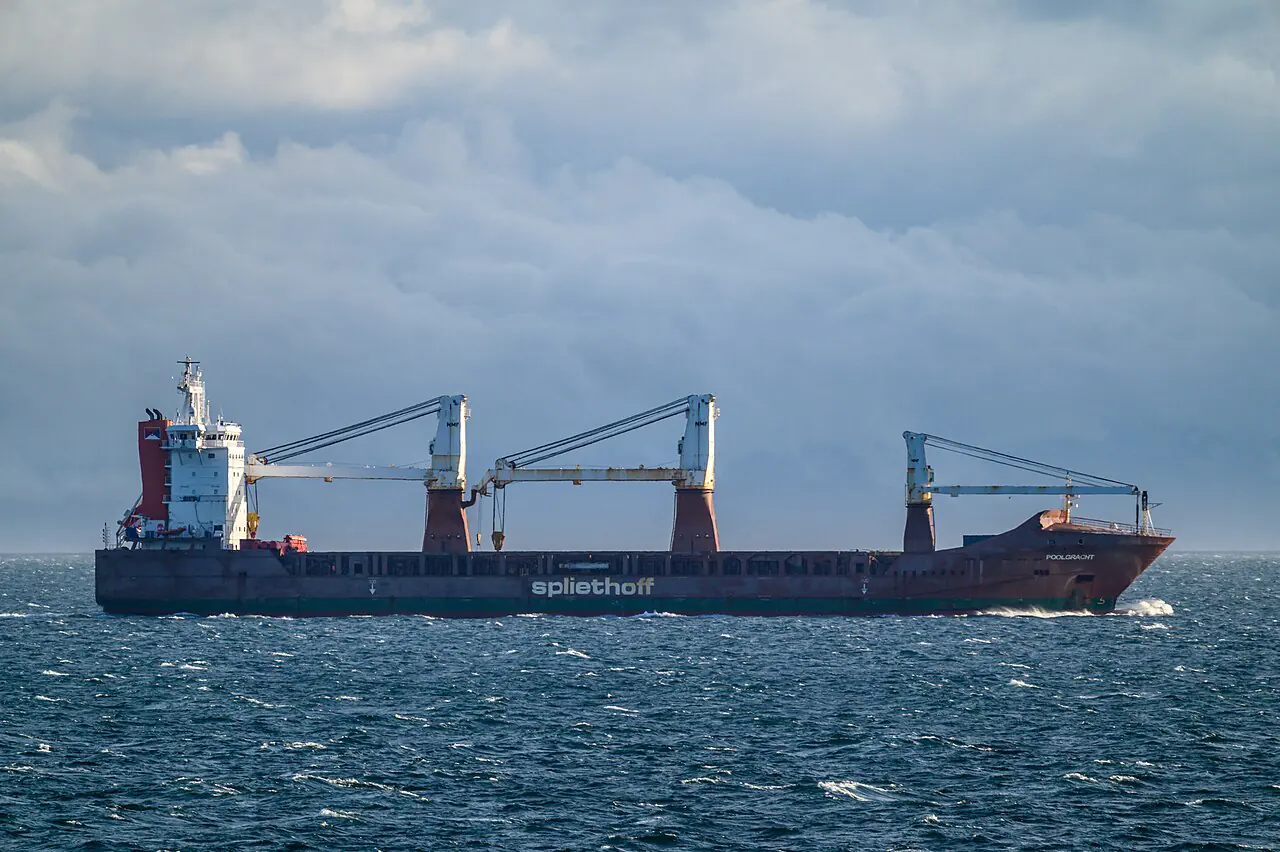
While the term ‘dry cargo ship’ is often used interchangeably, it can sometimes encompass a broader range of vessels that carry any non-liquid freight, including dry bulk carriers. However, in a technical sense, a dedicated general cargo ship is characterized by its “geared” nature (meaning it carries its own handling equipment) and its flexible hold configuration, which allows for the efficient stowage of irregularly shaped or varied items.
Key Distinctions
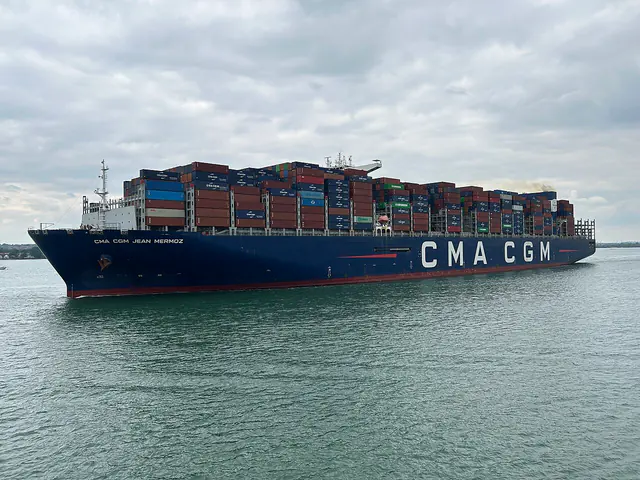
- Vs. Container Ships: While container ships are the backbone of modern consumer trade, they require massive, highly specialized port infrastructure. General cargo ships can operate in smaller, less-developed ports because they carry their own lifting gear.
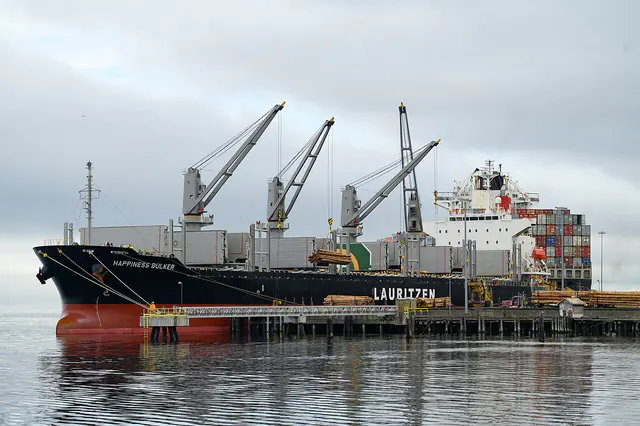
- Vs. Bulk Carriers: Bulk carriers are designed for high-volume, single-commodity trades (like iron ore or grain) and typically have large, open holds with minimal internal structure. General cargo ships have more complex hold structures, often including “tween decks” to allow for vertical segregation of different cargo types.
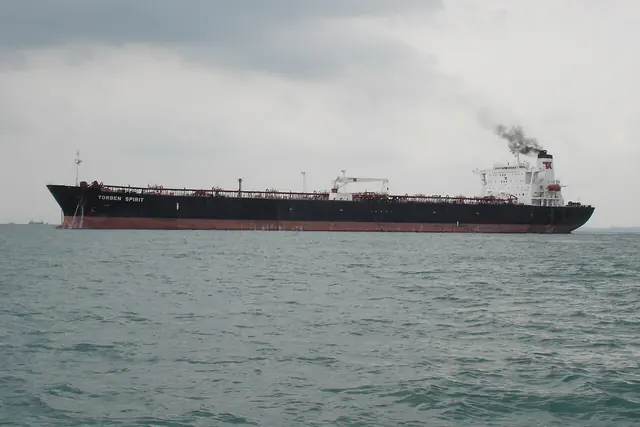
- Vs. Tankers: Tankers are designed for fluid cargo and utilize complex piping and pump systems, whereas general cargo ships focus on stowage, lashing, and mechanical lifting.
2. Mission and Operations
The primary mission of a general cargo ship is to provide flexible, reliable transportation for cargo that is too varied, too heavy, or too uniquely shaped to be efficiently carried by the two giants of modern shipping: containerization and dry bulk.
Cargo Types and Stowage
General cargo vessels handle a diverse array of cargo categories:
- Breakbulk Cargo: Individual items such as crates, drums, bags, or bundles.
- Project Cargo: Extremely large or heavy items, such as power transformers, locomotives, or industrial boilers, which require specialized lifting and securing.
- Steel Products: Coils, pipes, plates, and bars, which require specific stowage to prevent damage and ensure stability.
- Timber and Forest Products: Logs, planks, or processed wood, often requiring specialized lashing.
- Unitized Cargo: Pallets or crates that are ready for mechanical handling.
Operational Profile
The operational life of a general cargo ship is often characterized by “tramping” rather than “liner” service. While liner services follow fixed schedules and routes (like a bus), tramp ships move wherever the demand is (like a taxi), seeking out profitable cargoes and routes.
This versatility allows them to serve:
- Regional and Coastal Trade: Transporting goods between smaller ports within a continent or region.
- Niche Intercontinental Routes: Connecting industrial hubs that may not have the throughput to justify a regular container service.
- Infrastructure Support: Delivering heavy machinery and construction materials to developing regions or remote project sites.
3. Hull, Size, and Design
The design of a general cargo ship is driven by the need for versatility, structural strength, and efficient cargo access.
Key Dimensions and Capacity
The size and capacity of a general cargo ship are defined by several critical metrics:
- Length Overall (LOA): The total length from the tip of the bow to the stern.
- Length Between Perpendiculars (LBP): The length used for stability and hydrodynamic calculations.
- Beam (B): The maximum width of the vessel.
- Draft (D): The vertical distance between the waterline and the bottom of the hull. The Laden Draft is the maximum draft when the vessel is fully loaded.
- Deadweight Tonnage (DWT): The total weight the ship can carry, including cargo, fuel, water, and provisions.
General cargo ships range from small coastal vessels (under 5,000 DWT) to larger ocean-going vessels (up to 40,000 DWT and beyond).
Internal Configuration: Holds and Tween Decks
The interior is organized into multiple cargo holds separated by transverse bulkheads. A distinguishing feature is the tween deck (or intermediate deck), which allows for vertical segregation of cargo, enabling the stowage of different types of goods (e.g., heavy steel on the bottom and lighter palletized goods on top) within a single hold.
Hatch Covers
To protect cargo from the elements, holds are sealed with hatch covers. Common types include:
- Folding Hatch Covers: Hinged panels that fold together for rapid operation.
- Pontoon/Lift-Away Covers: Heavy, single-piece panels lifted by cranes.
- Roll-Stow (Elman Type): Panels that roll onto a drum at the end of the hatchway.
4. Propulsion and Engines
The propulsion system of a general cargo ship must be reliable and efficient for long voyages.
Main Engines
Two main types of engines are commonly used:
- Four-Stroke Engines (Medium-Speed): These have a higher power density and a more compact design, making them ideal for smaller vessels. They require a reduction gear to match the propeller’s optimal RPM.
- Two-Stroke Engines (Low-Speed): These are highly efficient and often used for direct-drive propulsion, meaning the engine is connected directly to the propeller shaft without a gearbox.
Propellers and Maneuverability
The engine drives a propeller to provide thrust. To assist in tight maneuvers, many ships are equipped with bow thrusters or stern thrusters, which allow for lateral movement.
Fuel and Sustainability
While traditionally reliant on Heavy Fuel Oil (HFO), the industry is rapidly shifting toward cleaner alternatives like Marine Gas Oil (MGO), Liquefied Natural Gas (LNG), and emerging biofuels to comply with IMO decarbonization standards.
5. Electrical System and Power
The electrical system of a general cargo ship is the lifeblood of its modern operations, powering everything from heavy cargo cranes and propulsion-related auxiliaries to essential navigation and communication equipment.
Power Generation and Distribution
The vessel’s electrical power is typically generated by an auxiliary power station located in the engine room. This station consists of several synchronous diesel-driven generators (auxiliary engines).
- Main Switchboard (MSB): This is the central hub of the electrical distribution system. It receives power from the generators and distributes it to various shipboard consumers. The MSB is divided into the Feeder side (the generators) and the Load side (the consumers).
- Load Categorization: To ensure the safety of the vessel, electrical loads are categorized into:
- Essential Services: Critical equipment necessary for safe navigation, communication, and propulsion (e.g., steering gear, radar, radio, emergency lighting, and main pumps).
- Non-Essential Services: Equipment that can be temporarily shut down if power is limited (e.g., air conditioning, galley equipment, or non-critical lighting).
- Emergency Switchboard and Generator: In the event of a total blackout (loss of power from the main generators), an emergency generator automatically starts. It supplies power to the emergency switchboard, which provides electricity to all essential services required to safely navigate and manage the ship.
Power Management System (PMS)
Modern ships utilize a sophisticated Power Management System (PMS) to automate and optimize the electrical network. The PMS performs several critical functions:
- Automatic Synchronizing: Ensuring multiple generators are in phase before connecting them to the main bus bar.
- Load Sharing: Distributing the electrical load equally among active generators to prevent any single unit from being overloaded.
- Automatic Load Demand Control: Starting or stopping generators based on the current electrical demand.
- Load Shedding: Automatically tripping non-essential loads if the power demand exceeds the available production, preventing a total blackout.
- Blackout Monitoring and Recovery: Detecting a loss of power and initiating the start sequence for the emergency generator and subsequent recovery of the main system.
Ship Automation
Digital control systems, driven by microprocessor-based controllers, integrate the PMS with other vital ship functions, including tank level monitoring, cargo control, bilge and ballast management, and engine monitoring, providing the crew with real-time data and remote control capabilities.
6. Equipment and How It Is Used
The operational capability of a general cargo ship depends on its ability to handle diverse cargo and maintain stability and safety through specialized mechanical systems.
Cargo Handling Gear
General cargo ships are often “geared,” meaning they possess their own onboard lifting equipment to allow operation in ports without shoreside cranes.
- Cranes and Derricks: These are the primary tools for lifting cargo. Lifting capacities vary widely; while standard cranes might handle 5–10 tonnes, “jumbo” derricks or heavy-lift cranes on specialized vessels can lift over 100–200 tonnes for project cargo like locomotives or industrial boilers.
- Winches: Used for various tasks, including operating derricks, tensioning lines, and mooring the vessel.
- Loose Gear: Includes the essential connection tools like slings, strops, shackles, and hooks used to secure cargo to the lifting gear.
Ballast System
The ballast system is critical for maintaining the ship’s stability, trim, and structural integrity, especially when the vessel is not carrying cargo or is carrying unevenly distributed loads.
- Ballast Tanks: These are dedicated compartments (e.g., forepeak, aftpeak, deep tanks, double bottom, and wing tanks) that are filled with seawater to adjust the ship’s center of gravity and draft.
- Ballast Pumps and Piping: High-capacity pumps and a network of interconnected pipes allow the crew to move seawater between tanks or discharge it overboard to manage the ship’s trim and stability.
Bilge and Drainage Systems
To prevent the accumulation of water in the hulls and cargo holds, general cargo ships are equipped with robust bilge systems.
- Bilge System: A network of suctions and pipes designed to drain water from watertight compartments (other than ballast or oil tanks) and pump it overboard.
- Emergency Bilge Suction: A critical safety feature that provides a direct suction from the machinery space bilge to the largest capacity pump, ensuring that even in a casualty, the engine room can be cleared of water to prevent flooding.
7. Navigation, Communications, and Safety
Reliable navigation and robust communication systems are the cornerstones of maritime safety, ensuring that general cargo ships can operate safely in all weather conditions and encounter any maritime situation.
Navigation Equipment
- AIS (Automatic Identification System): A vital tool for real-time identification, position tracking, and collision avoidance. It transmits the ship’s identity, status, position, speed, and course to nearby vessels and shore-based stations.
- ECDIS (Electronic Chart Display and Information System): The modern standard for digital nautical charting. It integrates GPS, radar, and AIS data into a single interface, providing highly accurate real-time situational awareness.
- RADAR (Radio Detection and Ranging): Essential for detecting other vessels, landmasses, and hazards, particularly in low visibility.
Communications and GMDSS
Under the GMDSS (Global Maritime Distress and Safety System), general cargo ships are equipped with multiple layers of communication to ensure they can call for help in any part of the ocean.
- VHF Radio: Used for short-range communication between ships and between ships and shore.
- MF/HF Radio: Provides medium and high-frequency communication for longer distances.
- Satellite Communication (Inmarsat): Provides near-global coverage for distress, safety, and routine communications.
Safety and Life-Saving Appliances (LSA)
- SART (Search and Rescue Transponder): Mandatory for cargo ships over 500 GT. Typically, two SARTs are carried (one on each side of the vessel) to aid rescuers in locating lifeboats or liferafts via radar.
- Lifeboats and Liferafts: Dedicated life-saving craft designed to carry the entire crew in an emergency.
- Life Jackets and Immersion Suits: Essential personal survival equipment for all personnel on board.
- Firefighting Equipment: Includes fixed fire suppression systems (like CO2 or water mist for engine rooms) and portable extinguishers for deck and accommodation areas.
8. Crew and Organization
The crew of a general cargo ship is organized into hierarchical departments, each governed by strict international standards to ensure operational efficiency and safety at sea.
Departmental Structure
- Deck Department: Led by the Master (Captain), who has ultimate responsibility for the ship, its crew, and its cargo. The department includes Chief Officers, Second/Third Officers, and Deck Ratings (e.g., Bosun, Able Seaman, Ordinary Seaman). They are responsible for navigation, cargo stowage, and deck maintenance.
- Engine Department: Led by the Chief Engineer, responsible for all machinery and technical operations. It includes Second/Third/Fourth Engineers and Engine Ratings (e.g., Motormen, Oilers). They manage the propulsion, electrical, and auxiliary systems.
- Catering/Steward Department: Responsible for the provision of food and living quarters, typically led by a Chief Cook.
Hierarchy and Chain of Command
A clear chain of command is vital for maintaining discipline and ensuring that orders are executed correctly during critical operations like cargo loading or heavy weather maneuvering.
9. Certificates and Training Requirements
All professional seafarers must meet the minimum standards of competence set by the STCW Convention (International Convention on Standards of Training, Certification and Watchkeeping for Seafarers).
Certificates of Competence (CoC)
These are the primary professional qualifications for deck and engine officers, proving they have the training and experience required for their specific rank.
Certificates of Proficiency (CoP)
Beyond basic rank certification, crew members often require specialized CoPs for specific tasks, including:
- GMDSS Certification: Required for officers responsible for radio communications.
- Advanced Firefighting: For designated safety officers.
- Medical Care: For officers trained to handle advanced medical emergencies at sea.
- Tanker/Specialized Cargo Training: For handling hazardous or sensitive cargoes.
10. Regulations, Class, and Inspections
Maritime operations are among the most heavily regulated industries in the world, governed by international treaties to protect life, property, and the marine environment.
International Conventions
- SOLAS (Safety of Life at Sea): Specifies minimum standards for construction, life-saving appliances, fire protection, and navigation safety.
- MARPOL (Marine Pollution): Regulates the prevention of pollution from ships, including oil, sewage, garbage, and air emissions.
- ISM Code (International Safety Management): Requires companies to establish a Safety Management System (SMS) for safe operations and emergency response.
- MLC (Maritime Labour Convention): Often referred to as the “Seafarers’ Bill of Rights,” it sets minimum standards for working and living conditions for crew.
Classification Societies (Class)
To ensure structural integrity and mechanical reliability, ships are “classed” by independent organizations. These societies (such as DNV, Lloyd’s Register, American Bureau of Shipping, Bureau Veritas, Nippon Kaiji Kyokai (NK), and RINA) set technical standards and conduct regular inspections of the vessel’s construction and equipment.
Port State Control (PSC)
Vessels are subject to periodic inspections by port authorities to ensure they are complying with international maritime regulations.
11. Notable Shipyards, Operators, and Example Vessels
The production and operation of general cargo ships involve a global network of highly specialized industrial players.
Major Shipbuilding Hubs
The majority of the world’s general cargo fleet is constructed in:
- South Korea: Home to massive yards like Hyundai Heavy Industries (HHI).
- China: Dominates the market with state-owned giants like CSSC (China State Shipbuilding Corporation), featuring yards in Dalian, Shanghai Waigaoqiao, GSI Nansha, and Jiangsu New YZJ.
- Japan: Leading in high-quality, specialized construction with yards like Mitsubishi Heavy Industries, Mitsui E&S, and Kawasaki Heavy Industries.
Notable Operators
Specialized companies manage the movement of breakbulk and general cargo globally, including:
- Spliethoff
- Wallenius Wilhelmsen
- Alianca
- Lykes Lines
- Swire Shipping
Example Vessels
Real-world examples of general cargo and multipurpose vessels include:
- Anna Lehmann (General Cargo Ship, IMO 9225562)
- MSC Haiti II (General Cargo Ship, IMO 9225251)
- Aal Bangkok (Heavy Load Carrier, IMO 9521564)
- Arklow Ace (Breakbulk/General Cargo Ship)
- Saga Frigg (Multipurpose Vessel)
12. Environment and Future Outlook
The maritime industry is facing unprecedented pressure to reduce its environmental footprint, particularly regarding greenhouse gas (GHG) emissions.
Decarbonization and Regulations
The International Maritime Organization (IMO) has set ambitious targets, leading to the implementation of:
- EEXI (Energy Efficiency Existing Ship Index): A technical measure for existing ships.
- CII (Carbon Intensity Indicator): An operational rating (A-E) for carbon efficiency.
To comply, ships are transitioning toward:
- Alternative Fuels: Methanol, Ammonia, Hydrogen, and LNG.
- Efficiency Improvements: Slow steaming, hull coatings, and wind-assisted propulsion.
Digitalization and Autonomy
- Smart Ships: Using IoT (Internet of Things) and Big Data for predictive maintenance and optimized routing.
- Autonomous Operations: The development of MASS (Maritime Autonomous Surface Ships), starting with semi-autonomous and remotely monitored systems.
13. Facts, Records, and Common Misconceptions
Common Misconceptions
- “All General Cargo Ships Are the Same”: In reality, they vary significantly in size, gear capacity, and internal configuration (like tween decks).
- “Automation Means No Crew”: Modern automation is designed to augment and support the crew, not replace them entirely.
- “They Only Carry Low-Value Goods”: General cargo ships are critical for high-value “project cargo” like massive power transformers and industrial equipment.
Key Facts
- General cargo ships are essential for ports that lack the scale for massive containerization.
- They are among the most versatile vessels in the global merchant fleet.
14. Glossary
- Beam: The maximum width of a vessel.
- Breakbulk: Goods that are loaded individually rather than in containers or as bulk.
- Deadweight Tonnage (DWT): The total weight a ship can carry, including cargo, fuel, water, and provisions.
- Draft: The vertical distance between the waterline and the bottom of the hull.
- Geared: A vessel equipped with its own cranes or handling gear.
- LBP (Length Between Perpendiculars): The length used for stability and hydrodynamic calculations.
- LOA (Length Overall): The total length from the tip of the bow to the stern.
- Tramping: A service model where vessels move according according to cargo demand rather than fixed routes.
- Tween Deck: An intermediate deck in a cargo hold used for vertical segregation.