1. What Is This Ship?
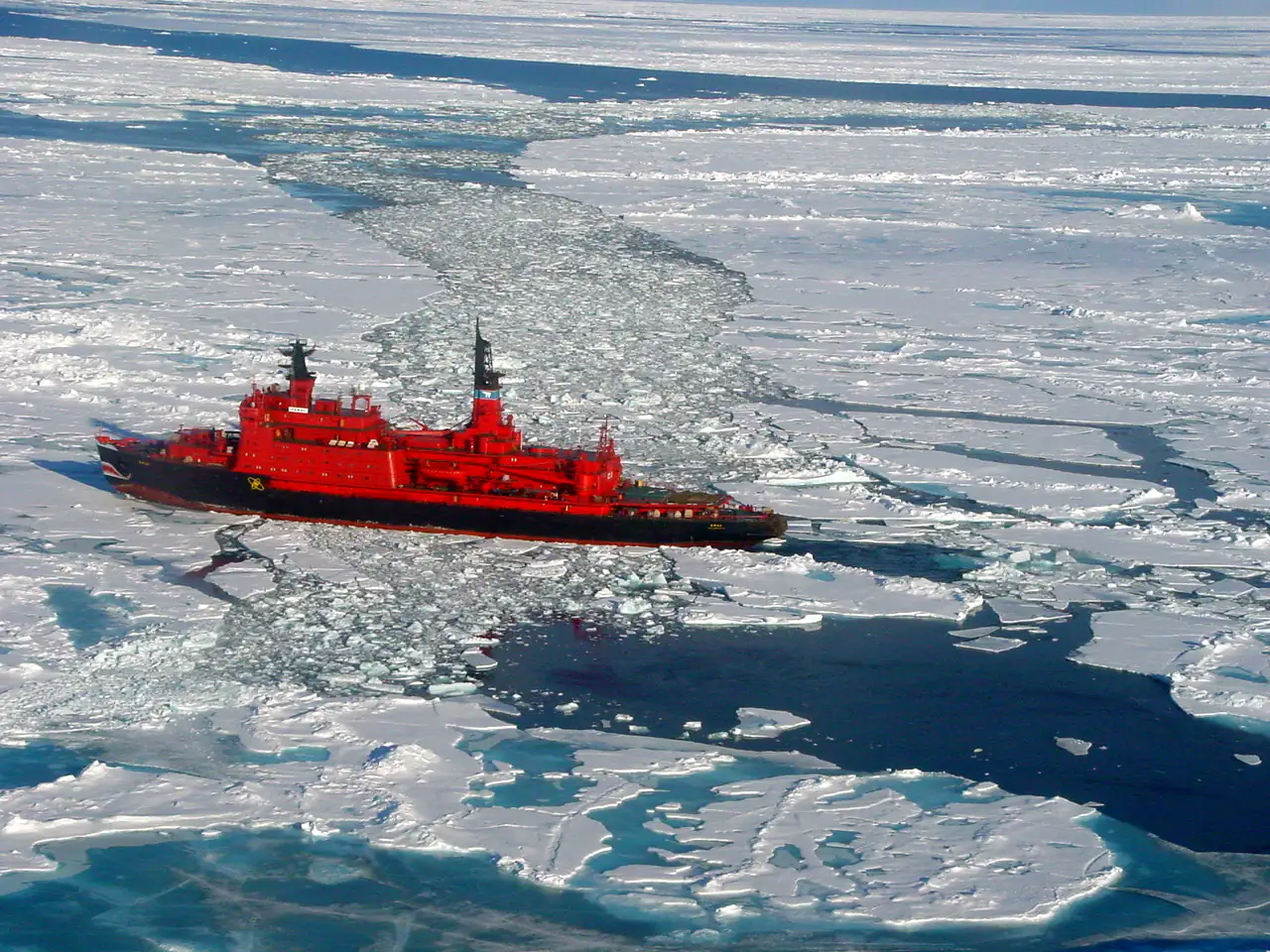
An icebreaker is a specialized class of vessel engineered specifically to navigate through sea ice, creating and maintaining navigable lanes for other ships. Unlike standard commercial or naval vessels, which are optimized for hydrodynamic efficiency in open water, icebreakers prioritize structural integrity, immense power, and specialized hull geometries designed to interact with and break ice through crushing or ramming mechanisms.
The primary distinction between an icebreaker and an “ice-strengthened” vessel (such as an ice-class tanker or container ship) is the mission profile. While ice-strengthened ships are built to withstand moderate ice loads during their transit, a true icebreaker is designed to actively manipulate and break through significant ice thicknesses, often including multi-year ice, to facilitate the passage of others.
Icebreakers are characterized by three fundamental engineering traits:
- Reinforced Hull Structure: Heavy-gauge steel and dense framing systems to resist crushing pressures.
- Specialized Hull Geometry: A shape designed to ride up onto the ice to break it from above.
- High-Power Propulsion: Massive torque and thrust to overcome the immense resistance of ice-water interaction.
2. Mission and Operations
Icebreakers serve several distinct but often overlapping roles within the maritime ecosystem. Their operational deployment is dictated by the seasonal ice conditions and the specific needs of the region (e.g., the Arctic or the Antarctic).
2.1. Escort and Channel Clearing
The most common operational role is “escort.” Icebreakers lead convoys of commercial vessels—such as LNG tankers, ore carriers, or container ships—through narrow or ice-choked passages. By breaking a path, the icebreaker reduces the friction and resistance for the following vessels, which may have much lower ice-strengthening capabilities.
2.2. Scientific Research and Polar Support
Many icebreakers function as floating laboratories. These vessels are equipped with specialized laboratories, deep-sea sampling equipment, and advanced sensor suites to support oceanographic, meteorological, and geological research in the polar regions. Examples include the German Polarstern and various Russian polar vessels.
2.3. Sovereignty and Search and Rescue (SAR)
In the Arctic, icebreakers are critical tools for asserting national sovereignty and providing essential services. They perform Search and Rescue (SAR) operations in extreme environments where standard rescue vessels cannot reach, and they provide logistical support to remote northern settlements and military outposts.
2.4. Heavy vs. Light Duty Operations
- Heavy Duty Icebreakers: Designed for multi-year ice and extreme polar conditions. They possess immense displacement and power, capable of breaking ice thicknesses exceeding 2–3 meters.
- Light Duty/Coastal Icebreakers: Designed for seasonal ice in regions like the Baltic Sea. These vessels are smaller, more maneuverable, and optimized for “escort” in fragmented or first-year ice.
3. Hull, Size, and Design
The design of an icebreaker is a study in managing extreme, non-linear forces. The interaction between a moving hull and solid ice creates enormous pressure spikes that can buckle standard ship hulls.
3.1. Hull Form and Geometry
The most recognizable feature of an icebreaker is its bow. Instead of the sharp, fine entry seen in open-water vessels, icebreakers typically feature a sloping or rounded stem.
This geometry serves a specific purpose: rather than trying to “cut” through the ice (which requires astronomical force), the vessel’s weight is used to ride up onto the ice sheet. The sloping bow converts the ship’s forward momentum into a vertical force, causing the ice to fail in tension (cracking) rather than compression (crushing). Once the ice is cracked, the vessel’s weight causes the floes to sink below the waterline, clearing the path.
Other key hull characteristics include:
- Short Parallel Midbody: To improve maneuverability in tight ice channels.
- Flared Waterline: Minimal flare at the waterline to prevent the hull from being “pinched” by lateral ice pressure.
- Stern Design: Often optimized for the propulsion configuration, such as accommodating azimuthing pods or specialized propellers.
3.2. Structural Reinforcement: The Ice Belt
The most intense physical abuse occurs at the waterline, where the ship transitions from moving through water to interacting with ice. To manage this, icebreakers feature an Ice Belt—a continuous zone of heavy-gauge, high-strength steel reinforcement that wraps around the hull at the waterline and extends both above and below it.
3.3. Framing and Materials
While long commercial ships utilize longitudinal framing to maximize strength and minimize weight, many icebreakers use transverse framing. In these designs, heavy frames are placed closely together (typically 400–1,000 mm apart) to provide high resistance to local crushing loads.
| Feature | Standard Vessel | Icebreaker |
|---|---|---|
| Framing Type | Primarily Longitudinal | Often Transverse or Hybrid |
| Frame Spacing | Wide (optimized for bending) | Tight (optimized for crushing) |
| Steel Grade | Standard Marine Grade | High-Strength Arctic Grade |
| Hull Shape | Fine/Sharp (Low resistance) | Sloping/Rounded (Ice crushing) |
3.4. Material Science
The extreme temperatures of the polar regions (often below -40°C) can cause standard steel to become brittle and prone to fracture. Icebreakers utilize specialized Arctic-grade steel, which is treated to maintain high toughness and ductility at extremely low temperatures, preventing catastrophic hull failure during ice impacts.
4. Propulsion and Engines
Propulsion is the heart of an icebreaker. The system must provide not just massive thrust, but also immense torque at low speeds to maintain momentum when the vessel is stalled by thick ice.
4.1. Diesel-Electric Propulsion (DEP)
The industry standard for modern icebreakers is diesel-electric propulsion. In this configuration, medium-speed diesel engines drive high-output electrical generators. The electricity is then distributed to large electric propulsion motors that drive the propellers.
Advantages of DEP for Icebreaking:
- Torque Management: Electric motors provide maximum torque at zero speed, which is critical when starting a movement through thick ice.
- Redundancy: The electrical grid can be segmented. If one generator or motor fails, the vessel can still maintain significant power.
- Flexibility: Power can be dynamically allocated between different propulsors (e.g., stern propellers and bow thrusters) based on the maneuvering requirements.
4.2. Propeller Technologies
The interaction between the propeller and ice is a major engineering challenge. Propellers must be strong enough to withstand direct impact with ice chunks without shattering.
- Fixed-Pitch Propellers (FPP): Common in many traditional icebreakers. They are simpler and more robust, making them less prone to mechanical failure in extreme conditions.
- Controllable-Pitch Propellers (CPP): Allow the crew to change the angle of the blades. This provides better maneuverability and thrust control but increases mechanical complexity and vulnerability to ice damage.
- Azimuthing Pods (Azipods): These are propeller units housed in steerable pods located beneath the hull. They can rotate 360 degrees, allowing the ship to direct thrust in any direction. This provides unparalleled maneuverability, allowing icebreakers to “mill” ice (spinning the pods to grind ice into smaller pieces) and turn in their own length.
4.3. Material Composition
Propeller blades in high-class icebreakers are typically made from stainless steel or nickel-aluminum bronze. These materials offer the necessary combination of hardness (to resist abrasion) and toughness (to resist impact).
5. Electrical System and Power
The electrical system of an icebreaker is significantly more complex and robust than that of a standard vessel. It is designed to support the massive, fluctuating loads of the propulsion motors while maintaining critical life-support and navigation systems.
5.1. Power Density and Redundancy
Because an icebreaker’s propulsion can demand massive amounts of power instantly, the electrical system must have high power density. Furthermore, “blackout” scenarios in polar waters are life-threatening. Consequently, icebreakers utilize highly redundant power architectures, often with multiple independent generator sets and separated switchboards.
5.2. Modern Innovations: BESS and Waste Heat
- Battery Energy Storage Systems (BESS): Modern designs are integrating large-scale battery banks. These can act as “peak shavers,” providing instant power during sudden load spikes (e.g., when a propeller hits a large ice ridge) and allowing engines to run at more efficient loads.
- Waste-Heat Recovery (WHR): Given the extreme cold, capturing the heat from diesel engine exhaust and cooling water to provide heating for the vessel’s interior and to prevent ice buildup on decks is a critical efficiency measure.
6. Equipment and How It Is Used
Beyond propulsion and hull, icebreakers are equipped with specialized hardware to assist in ice management and vessel operation.
6.1. Ice Management Tools
- Towing Notches: A recessed area in the stern that allows a vessel to secure a tow line to an escorted ship. This enables the icebreaker to pull a vessel through an ice field without the tow line fouling the propellers.
- Bow Thrusters and Azipods: These tools are used to manipulate the vessel’s heading and to clear ice from the bow area, preventing it from being pushed up against the hull.
- Ice Saws/Milling Tools: While less common on large ships, some specialized vessels use mechanical means to assist in breaking specific ice formations.
6.2. Winterisation Equipment
To operate in -50°C environments, everything must be “winterised”:
- Heated Decks and Railings: To prevent ice accretion (icing), which can compromise stability by raising the center of gravity.
- Enclosed Workspaces: Most deck machinery and even some bridge functions are enclosed to protect crew and equipment from the elements.
- Specialized Winches: High-capacity winches with specialized lubricants that do not freeze are used for towing and anchoring.
| Equipment Type | Purpose in Ice | Typical Application |
|---|---|---|
| Towing Notch | Secure escort vessel | Stern area |
| Azipod | 360° maneuverability / Ice milling | Aft or Bow |
| Ice Radar | Detecting ice floes and thickness | Bridge/Mast |
| Heated Decks | Preventing ice buildup/slipping | Forecastle/Aft decks |
7. Navigation, Communications, and Safety
Navigation in ice-covered waters is fundamentally different from open-ocean navigation. The “terrain” is constantly shifting, and traditional visual navigation is often impossible due to fog, snow, or polar night.
7.1. Ice-Specific Navigation
- Ice Radar: High-resolution radar systems designed to distinguish between thin ice, thick ice, and open water. They can often detect the presence of ice floes even in low visibility.
- Sonar/Echo Sounders: Used to map the underwater profile of ice keels (the submerged part of an iceberg or ice floe), which can extend hundreds of meters below the surface and pose a massive threat to the hull.
- Satellite Imagery: Real-time satellite data is used for long-range planning, identifying leads (openings in the ice) and large ice concentrations.
7.2. Communications and Safety
In the polar regions, satellite coverage can be inconsistent. Icebreakers are equipped with robust, multi-band communication systems (including high-latitude satellite capabilities) to maintain contact with shore stations and other vessels.
Safety is governed by the IMO Polar Code, which mandates specific requirements for ship design, equipment, and crew training to mitigate the risks of operating in the Arctic and Antarctic.
8. Crew and Organization
The crew of an icebreaker must possess a unique set of skills compared to standard merchant mariners. The environment is high-stress, physically demanding, and offers zero margin for error.
8.1. Specialized Training: Ice Navigation
Officers must undergo rigorous training in Ice Navigation. This includes understanding ice behavior, reading ice radar, and mastering the complex physics of how a ship interacts with different types of ice. Simulation training is frequently used to prepare crews for extreme scenarios, such as becoming “beset” (trapped) in moving ice.
8.2. Crew Roles and Organization
While the basic structure of the crew (Captain, Officers, Engineers, Deckhands) remains similar to other ships, the technical staff is often larger. Engineers must be highly skilled in maintaining complex diesel-electric and hydraulic systems in extreme cold. There is also a high emphasis on “winterisation” maintenance—ensuring that heating and de-icing systems are always functional.
9. Certificates and Training Requirements
Operating an icebreaker requires compliance with several international and national regulatory frameworks.
9.1. IMO Polar Code
The International Maritime Organization (IMO) Polar Code is the most critical regulation. It specifies requirements for:
- Ship Construction: Structural integrity for ice loads.
- Stability: Managing the effects of icing on the vessel’s center of gravity.
- Life-Saving Appliances (LSA): Equipment must be capable of functioning in extreme cold.
- Environmental Protection: Strict rules on discharges and emissions.
9.2. IACS Ice Class Certification
Vessels are typically certified under the rules of the International Association of Classification Societies (IACS). These certifications (e.g., Polar Class 1 through 7) dictate the level of structural reinforcement and the specific ice environments the vessel is permitted to enter.
9.3. STCW Polar Training
The Standards of Training, Certification, and Watchkeeping (STCW) include specific endorsements for polar service. This ensures that all crew members have been trained in the unique safety and operational challenges of the polar regions.
10. Regulations, Class, and Inspections
Compliance is not a one-time event but a continuous process of inspection and verification by Classification Societies.
10.1. Classification Societies
Organizations such as DNV (Det Norske Veritas), Lloyd’s Register (LR), American Bureau of Shipping (ABS), and Bureau Veritas (BV) develop the technical rules that define ice classes. They perform regular surveys to ensure the vessel’s hull, machinery, and safety systems meet these stringent standards.
10.2. Inspections and Surveys
Icebreakers undergo frequent and intensive inspections. These include:
- Hull Thickness Surveys: Using ultrasonic testing to ensure the ice belt hasn’t been excessively worn by ice friction.
- Machinery Overhauls: Focusing on the reliability of the diesel-electric plant and propulsion systems.
- Winterisation Checks: Verifying that all heating and de-icing systems are fully operational before the ice season begins.
11. Notable Shipyards, Operators, and Example Vessels
The construction and operation of icebreakers represent the pinnacle of maritime engineering.
11.1. Key Shipyards
- Finland: Renowned for designing and building high-quality, medium-class icebreakers (e.g., yards in Helsinki/Rauma).
- Russia: Specializes in the massive, heavy-duty nuclear-powered icebreakers used in the Northern Sea Route.
- Canada: Historically significant in icebreaker design, particularly for Arctic sovereignty.
11.2. Example Vessels
| Vessel Name | Type/Role | Notable Feature |
|---|---|---|
| Arktika Class | Heavy Polar (Russian) | Nuclear-powered; largest icebreakers in the world. |
| Polarstern | Research (German) | World-renowned scientific platform. |
| Voima | Escort/Coastal (Finnish) | Features unique bow propellers for improved milling. |
| Swedish Heavy Polar Vessel | Heavy Polar (Swedish) | Hybrid propulsion with centerline shaft and azipods. |
| Wind Class | US Coast Guard | Historically significant US heavy icebreakers. |
12. Environment and Future Outlook
As the polar regions face rapid climatic changes, the role and technology of icebreakers are evolving.
12.1. Environmental Impact
Icebreakers face significant scrutiny regarding their environmental footprint:
- Black Carbon: Emissions from diesel engines can deposit soot on ice, accelerating melting.
- Acoustic Pollution: Underwater noise from propulsion can disrupt marine mammal communication and migration.
- Risk of Spills: Operating in remote, ice-choked waters makes responding to oil spills extremely difficult.
12.2. Future Technologies
- Autonomous Icebreakers: Research is underway into remotely operated or fully autonomous icebreakers, which could reduce the risk to human life and lower operational costs.
- Green Propulsion: Moving away from heavy fuel oil toward Methanol, Hydrogen, or Ammonia to minimize the carbon footprint.
- Advanced AI-Driven Navigation: Using machine learning to analyze satellite and radar data to predict ice movement and optimal paths more accurately than human operators.
13. Facts, Records, and Common Misconceptions
13.1. Common Misconceptions
- “Icebreakers just smash through ice”: While ramming is a technique, many icebreakers are designed for continuous icebreaking, where the hull shape and steady thrust allow them to move through ice without stopping.
- “An icebreaker is just a regular ship with more steel”: The engineering difference is fundamental, spanning hull geometry, propulsion torque, and complete electrical architectures.
13.2. Key Facts
- Nuclear Power: Only a few nations (primarily Russia) operate nuclear-powered icebreakers, which offer virtually unlimited range and massive power for heavy icebreaking.
- Ice Thickness: Modern heavy icebreakers can break through ice exceeding 3 meters in thickness.
14. Glossary
- Azipod: A steerable, underwater propulsion unit containing an electric motor and propeller.
- Beset: To be trapped or stuck by ice.
- Ice Belt: The reinforced region of a ship’s hull at the waterline.
- Ice Class: A classification indicating a ship’s structural strength and ability to operate in specific ice conditions.
- IACS: International Association of Classification Societies.
- IMO Polar Code: International regulations for ships operating in polar waters.
- Milling: Using propellers to grind ice into smaller pieces.
- Ramming: The technique of driving the bow into ice to break it from above.