1. What Is This Ship?
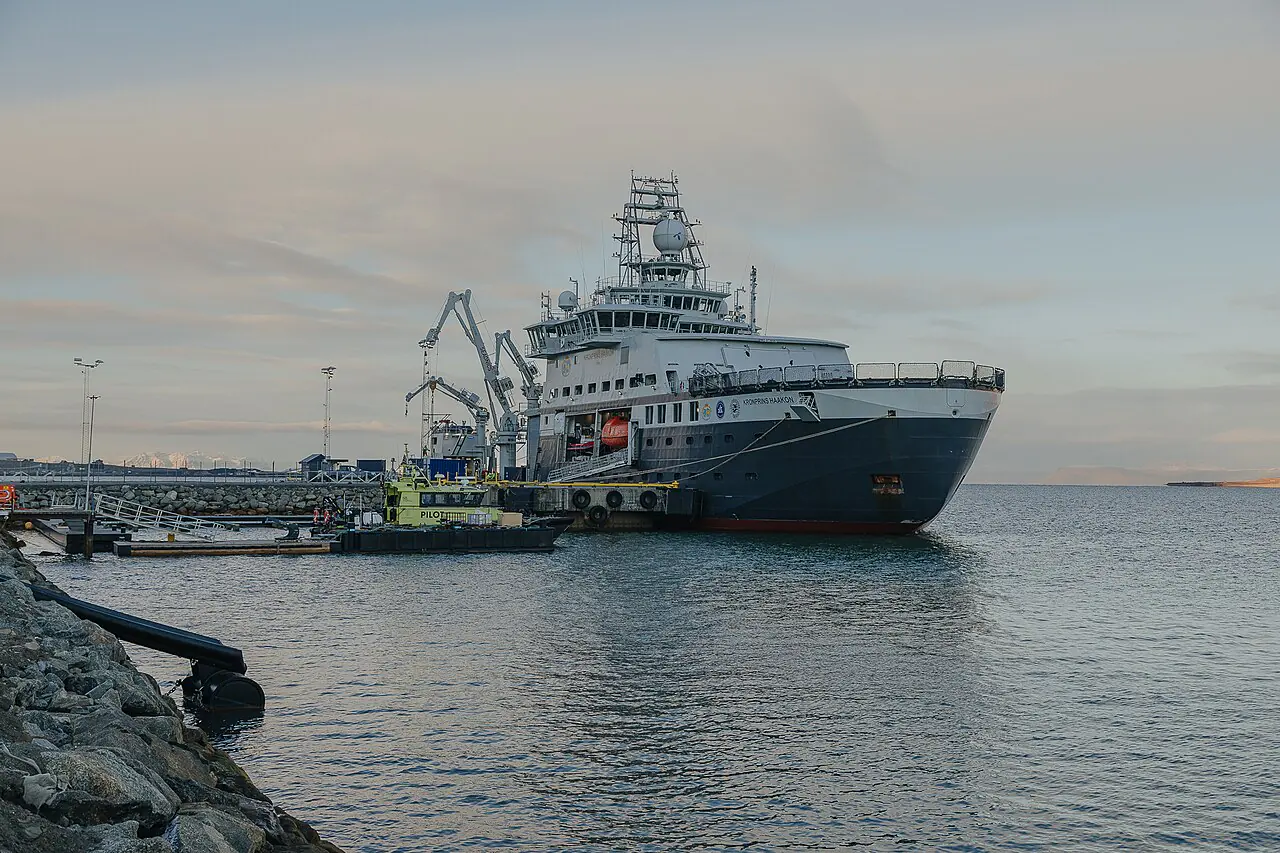
A research vessel (often abbreviated as RV or R/V) is a specialized maritime platform designed, modified, or purpose-built to facilitate scientific investigation in aquatic environments. Unlike commercial vessels, which are optimized for cargo capacity, speed, or passenger comfort, research vessels are optimized for stability, precision, and versatility. They serve as floating laboratories, providing a stable base for scientists to deploy, operate, and recover a wide array of instruments across various ocean depths and environmental conditions.
The core identity of a research vessel lies in its ability to act as a multi-disciplinary hub. While some vessels are dedicated to a single field—such as hydrographic surveying for nautical charting or fisheries research for biomass estimation—modern “oceanographic” research vessels are increasingly designed as multi-purpose platforms. They must be capable of supporting oceanographers, geologists, biologists, chemists, and physicists simultaneously, often within the same deployment.
From their historical roots in early voyages of exploration, such as those led by James Cook on the Endeavour or the voyages of the HMS Beagle, research vessels have evolved into highly complex technological ecosystems. Today, they range from small coastal boats used for local environmental monitoring to massive “Global Class” vessels capable of operating in the most extreme polar environments and the deepest ocean trenches.
2. Mission and Operations
The mission of a research vessel is defined by the scientific questions it is intended to answer. These missions generally fall into several distinct categories:
Hydrographic Surveying
The primary mission of hydrographic vessels is to map the seabed to produce accurate nautical charts. This is critical for the safety of navigation. These vessels utilize high-resolution sonar systems to detect seafloor topography, underwater hazards, and geological features. They may also conduct seismic surveys to investigate the sub-bottom structure of the earth’s crust, which is vital for both scientific understanding and resource exploration.
Oceanographic Research
Oceanographic missions focus on the physical, chemical, biological, and geological properties of the ocean.
- Physical Oceanography: Studying currents, temperature profiles, salinity, and wave dynamics.
- Chemical Oceanography: Measuring nutrient concentrations, dissolved gases, and trace metals.
- Biological Oceanography: Investigating marine life, from microscopic plankton to large marine mammals, often using acoustic tracking or sampling nets.
- Geological Oceanography: Mapping the seafloor and studying tectonic activity and sediment composition.
Fisheries Research
Fisheries vessels are specialized to assess fish stocks and ecosystem health. Their missions involve deploying various types of nets (trawl, purse seine, etc.), collecting plankton samples, and using acoustic technology to estimate fish biomass and distribution within a given area.
Polar and Extreme Environment Research
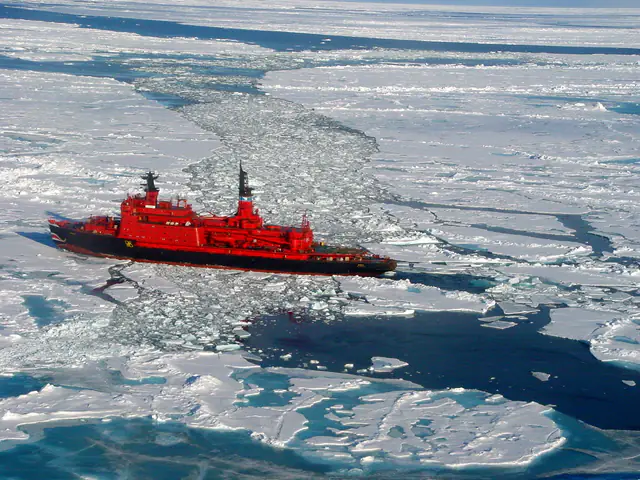
Polar research vessels are designed to operate in ice-covered waters. Their mission is often dual-purpose: conducting science in the Arctic or Antarctic while also serving as logistics and replenishment vessels for remote research stations. These vessels must withstand immense ice pressure and maintain operational capability in sub-zero temperatures.
Operational Modalities
Research operations are typically characterized by “station-keeping”—the ability to maintain a precise position and heading despite wind, waves, and currents. This is often achieved through Dynamic Positioning (DP) systems. Missions can also involve long-duration deployments, where a vessel stays at sea for weeks or even months, acting as a mother ship for autonomous underwater vehicles (AUVs) or remotely operated vehicles (ROVs).
3. Hull, Size, and Design
The design of a research vessel is a delicate balance between stability, sea-keeping, and deck space.
Classification by Size and Range
Research vessels are often categorized into classes based on their operational reach and the scale of the science they support:
| Class | Typical Length (m) | Typical Displacement (tonnes) | Primary Operating Area |
|---|---|---|---|
| Global | > 100 | > 5,000 | Worldwide, including polar regions |
| Ocean | 60 – 100 | 1,000 – 5,000 | Open ocean, deep sea |
| Regional | 35 – 60 | 500 – 1,000 | Regional seas, coastal/offshore |
| Local/Coastal | < 35 | < 500 | Near-shore, shallow waters |
Hull Form and Stability
Stability is the most critical design factor. Scientific instruments, particularly those deployed over the side or via a winch, create significant asymmetric loads. Furthermore, the vessel must provide a stable platform for sensitive laboratory work and the operation of precision sensors.
- Monohulls: The most common design, offering a balance of speed and stability. Modern designs often incorporate advanced hull shapes to minimize “bubble sweep down” (interference with sonar) and improve efficiency.
- Catamarans/Multi-hulls: Used primarily in coastal and shallow-water research (e.g., R/V IMOR). They offer high stability and a large deck area relative to their displacement but may face challenges in heavy seas.
- SWATH (Small Waterplane Area Twin Hull): Designed to provide exceptional stability by minimizing the impact of waves on the hull, though they are more complex and expensive to build.
Deck Layout
A research vessel’s deck layout is driven by its “working” requirements.
- Aft Deck (Stern): Typically the primary working area, equipped with A-frames, cranes, and winches for deploying heavy equipment.
- Side Working Areas: Used for deploying smaller sensors or sampling gear.
- Laboratory Spaces: Often located midships or forward to isolate them from engine noise and vibration. Laboratories are typically categorized into “Wet Labs” (for biological/chemical processing) and “Dry Labs” (for electronics, computers, and data analysis).
4. Propulsion and Engines
Research vessel propulsion systems are moving away from traditional direct-drive diesel engines toward more flexible and precise configurations.
Propulsion Technologies
- Diesel-Electric Propulsion: This is the standard for modern, mid-to-large research vessels. Diesel generators produce electricity, which then powers electric motors driving the propellers. This system offers excellent fuel efficiency at various speeds and, more importantly, provides the high level of control and precision required for Dynamic Positioning.
- Diesel-Hydraulic: Less common today, but used in some older or smaller vessels for specific heavy-duty winch or thruster operations.
- Hybrid Systems: Increasing adoption of battery-buffered or diesel-electric hybrid systems allows for “silent running” modes, which are essential for acoustic research where engine noise must be minimized to avoid interfering with sonar.
Thrusters and Maneuverability
To maintain a precise position (station-keeping), research vessels utilize advanced thrusters:
- Azimuth Thrusters (Z-Drives): These propulsion units can rotate 360 degrees, providing immense control over the vessel’s heading and position. Examples include the Schottel SRP 260L FP used on the R/V David Packard.
- Tunnel Thrusters: Located in the bow or stern to assist in lateral movement and docking.
- Retractable Thrusters: Allow for better hydrodynamic efficiency during transit while providing high maneuverability when deployed.
5. Electrical System and Power
The electrical system of a research vessel is far more complex than that of a standard commercial ship. It must manage two distinct and often conflicting loads: the Propulsion Load and the Scientific Load.
Power Management and Redundancy
- The Scientific Load: Scientific instruments (sonars, computers, laboratory equipment, winches) require extremely “clean” and stable power. Voltage fluctuations or frequency shifts can ruin sensitive data or damage expensive equipment. Research vessels often employ dedicated power conditioners, Uninterruptible Power Supplies (UPS), and isolated electrical grids for the science departments.
- The Propulsion Load: High-power demands from azimuth thrusters and dynamic positioning systems require a robust and highly responsive power management system (PMS).
- Redundancy: To ensure mission continuity and safety, electrical systems are highly redundant. This includes multiple independent generators (gensets), backup emergency generators, and redundant bus bars to prevent a single failure from causing a total blackout.
DC-Grid Technology
Modern vessels, such as the R/V David Packard, utilize DC-Grid technology. By using a direct current grid, the vessel can more efficiently integrate various power sources (like diesel generators and batteries) and manage the variable loads of electric propulsion and scientific equipment more effectively than traditional AC grids.
6. Equipment and How It Is Used
The scientific capability of a research vessel is defined by its suite of specialized equipment.
Acoustic Equipment (Sonar Systems)
Acoustic technology is the cornerstone of underwater sensing.
- Multibeam Echosounder (MBES): Projects a wide “fan” of sound beams to create high-resolution, 3D maps of the seafloor.
- Sub-bottom Profiler (SBP): Uses lower-frequency sound to penetrate the seabed, revealing the geological layers beneath the surface.
- Acoustic Doppler Current Profiler (ADCP): Measures water velocity at different depths by analyzing the Doppler shift of sound reflected off particles in the water.
Water Column and Sampling Equipment
- CTD Rosette (Conductivity, Temperature, Depth): Perhaps the most fundamental tool. It measures the physical properties of water and uses a “rosette” of bottles to collect water samples at specific depths.
- Scientific Winches: Highly specialized winches designed to deploy cables (often kilometers long) with extreme precision. They must manage tension and depth without snapping the delicate cables or instruments.
- A-Frames and Deck Cranes: Heavy-duty lifting structures used to launch and recover large equipment like ROVs, moorings, or large sampling cages.
Subsurface Vehicles
- Remotely Operated Vehicles (ROVs): Tethered underwater robots controlled from the surface. They are equipped with cameras, lights, and manipulator arms to perform tasks on or near the seafloor.
- Autonomous Underwater Vehicles (AUVs): Untethered, pre-programmed robots that can conduct long-range surveys of the seabed or water column without constant human intervention.
- Gliders: Buoyancy-driven AUVs that move through the water column very efficiently, ideal for long-term monitoring.
| Equipment | Primary Function | Deployment Method |
|---|---|---|
| CTD Rosette | Physical/Chemical profiling | Winch via over-the-side |
| Multibeam Sonar | High-resolution bathymetry | Hull-mounted transducer |
| ROV | Deep-sea intervention/imaging | LARS (Launch and Recovery System) |
| AUV | Autonomous survey/mapping | A-frame or crane deployment |
| Piston Corer | Sediment sampling | Heavy winch/gravity drop |
7. Navigation, Communications, and Safety
Navigation and Position Control
A research vessel must know its position with centimeter-level accuracy.
- GNSS (Global Navigation Satellite Systems): Utilizing multiple constellations (GPS, GLONASS, Galileo) for high-precision positioning.
- Dynamic Positioning (DP): An automated system that uses computer algorithms to control thrusters and propellers, maintaining the vessel’s position and heading by compensating for environmental forces. Systems are rated (e.g., DP1, DP2, DP3) based on their level of redundancy and reliability.
- Inertial Navigation Systems (INS): Provide highly accurate position and orientation data, even when satellite signals are lost.
Communications
Given their remote operating areas, research vessels require robust, multi-layered communication systems:
- Satellite Communications (SATCOM): For high-bandwidth data transfer and internet access (e.g., Iridium Certus, Starlink).
- GMDSS (Global Maritime Distress and Safety System): A set of international standards for maritime safety, including radio, satellite, and terrestrial signaling.
- HF/VHF Radio: For short and long-range voice and data communication.
Safety Systems
Safety is paramount, especially when managing heavy equipment over the side.
- Life-Saving Appliances: Including life rafts, rescue boats, and advanced personal flotation devices.
- Firefighting Systems: Specialized systems to protect both the machinery spaces and the sensitive scientific laboratories.
- Search and Rescue (SAR) Capabilities: Often enhanced by the vessel’s ability to deploy smaller, fast rescue craft.
8. Crew and Organization
Operating a research vessel requires a unique collaboration between two distinct professional groups.
The Ship’s Crew (Mariners)
The mariners are responsible for the safe navigation, maneuvering, and maintenance of the vessel itself. They are professional seafarers trained in maritime law, ship handling, engine maintenance, and emergency procedures.
- Key Roles: Captain (Master), Officers (Deck and Engine), Boatswains, Engineers, and Able Seamen.
- Focus: Vessel safety, propulsion, stability, and logistics.
The Scientific Party (Scientists)
The scientists are the “customers” on board. They are responsible for the scientific mission, the collection of data, and the operation of the research equipment.
- Key Roles: Principal Investigator (PI), Research Technicians, and Data Managers.
- Focus: Hypothesis testing, data integrity, and instrument operation.
Marine Technicians (The Bridge)
A critical third group often found on modern research vessels is the Marine Technician. These professionals act as the bridge between the mariners and the scientists. They possess both maritime and technical scientific expertise, allowing them to:
- Handle over-the-side equipment.
- Troubleshoot complex scientific instruments.
- Maintain the ship’s specialized scientific infrastructure (e.g., computer networks, specialized power supplies).
9. Certificates and Training Requirements
Maritime Certification
All crew members must hold internationally recognized maritime certificates in accordance with the STCW (Standards of Training, Certification, and Watchkeeping for Seafarers) Convention. This includes training in:
- Basic Safety Training (Firefighting, First Aid, Personal Survival).
- Advanced Navigation and Ship Handling.
- Engine Room Watchkeeping.
Scientific/Technical Training
The scientific party and technicians may require specialized training:
- Instrument-Specific Training: For operating highly complex systems like multibeam sonars or ROVs.
- Hazardous Materials Handling: For dealing with chemical samples or pressurized gases.
- Polar Training: Mandatory for personnel operating in ice-covered waters (e.g., Polar Code training).
10. Regulations, Class, and Inspections
International Regulations
- IMO (International Maritime Organization): Sets the global standards for safety, security, and environmental performance.
- SOLAS (International Convention for the Safety of Life at Sea): The most important treaty concerning the safety of merchant ships.
- MARPOL (International Convention for the Prevention of Pollution from Ships): Regulates the discharge of oil, sewage, and chemicals.
- The Polar Code: Mandatory requirements for ships operating in polar waters, covering both safety and environmental protection.
Classification Societies
Research vessels are typically “classed” by organizations like DNV (Det Norske Veritas), ABS (American Bureau of Shipping), or Lloyd’s Register. Classification involves:
- Design Approval: Ensuring the hull and machinery meet rigorous standards.
- Construction Oversight: Verifying that the ship is built according to the approved plans.
- Regular Surveys: Ongoing inspections to ensure the vessel maintains its class status throughout its life.
11. Notable Shipyards, Operators, and Example Vessels
Leading Shipyards
- All American Marine (USA): A major builder of university and scientific research vessels.
- Freire Shipyard (Spain): Known for advanced, specialized research vessel construction.
- Holland Shipyards Group (Netherlands): Specializes in complex, high-end maritime projects.
Key Operators
- NOAA (National Oceanic and Atmospheric Administration, USA)
- WHOI (Woods Hole Oceanographic Institution, USA)
- MBARI (Monterey Bay Aquarium Research Institute, USA)
- UNOLS (University-National Oceanographic Laboratory System, USA)
Example Vessels
| Vessel Name | Class | Key Feature |
|---|---|---|
| R/V David Packard | Ocean | Diesel-electric (DC-Grid), large ROV hangar |
| R/V J. Ryan | Regional | Dual Z-drive azimuth thrusters, ice-capable |
| R/V IMOR | Local | Catamaran design, high maneuverability |
| Thomas G. Thompson | Global | Advanced multibeam and sub-bottom profiling |
12. Environment and Future Outlook
The research vessel industry is undergoing a significant transformation driven by two main forces: environmental sustainability and autonomy.
Green Maritime Technology
To reduce the carbon footprint of scientific expeditions, there is a growing push toward:
- Hybrid and Electric Propulsion: Reducing fuel consumption and noise pollution.
- Alternative Fuels: Exploring hydrogen, ammonia, or biofuels.
- Energy Storage: Using large-scale battery systems to optimize engine loads and provide silent operation.
Autonomous and Unmanned Systems
The future of ocean research lies in reducing the need for large, expensive human-crewed vessels.
- Resident AUVs/ROVs: Subsurface vehicles that live on the seafloor or in subsea docking stations, performing long-term monitoring without a mother ship.
- Unmanned Surface Vessels (USVs): Small, autonomous boats that can conduct large-scale surveys at a fraction of the cost of a traditional RV.
- Swarm Robotics: Deploying large numbers of small, inexpensive autonomous agents to collect massive amounts of data simultaneously.
13. Facts, Records, and Common Misconceptions
- Fact: Research vessels are not just “boats with labs.” They are highly engineered machines where the ship’s design is dictated by the scientific payload.
- Fact: “Station-keeping” is one of the most difficult maritime tasks, requiring a seamless integration of sensors, computers, and high-performance propulsion.
- Misconception: Many believe research vessels are “luxuries.” In reality, they are industrial workhorses that must operate in some of the most hostile environments on Earth.
- Misconception: It is often assumed that all research vessels are the same. In reality, a “Local” class vessel and a “Global” class vessel are as different as a riverboat and an icebreaker.
14. Glossary
- ADCP (Acoustic Doppler Current Profiler): An instrument that measures water velocity using the Doppler effect.
- AUV (Autonomous Underwater Vehicle): An untethered, self-propelled underwater robot.
- Azimuth Thruster: A propulsion unit that can rotate 360 degrees.
- CTD (Conductivity, Temperature, Depth): A sensor package used to profile the physical properties of the water column.
- DP (Dynamic Positioning): An automated system for maintaining a vessel’s position and heading.
- MBES (Multibeam Echosounder): A sonar system that maps the seafloor in high-resolution 3D.
- ROV (Remotely Operated Vehicle): A tethered underwater robot controlled by a human operator.
- Z-Drive: A type of azimuth propulsion unit.