1. What Is This Ship?
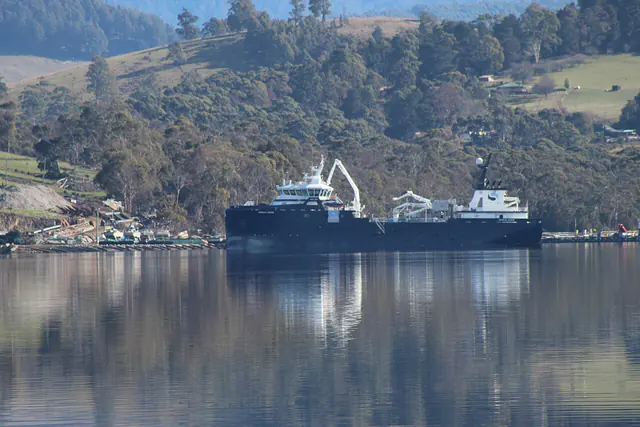
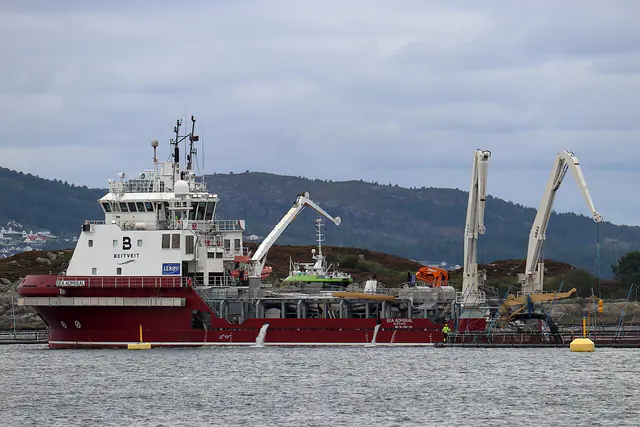
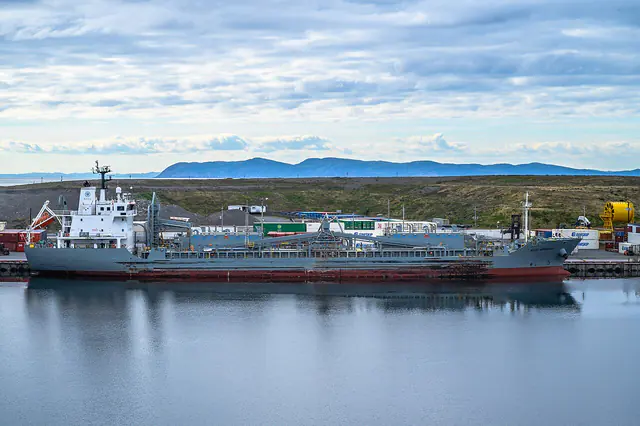
The Offshore Fish Farming Vessel is a highly specialized class of maritime asset engineered to support the expanding offshore aquaculture industry. Unlike conventional commercial fishing vessels, which are primarily designed for the capture and transport of wild-caught marine life, these vessels function as mobile, high-tech life-support and service platforms for farmed fish in open-ocean environments.
As the aquaculture industry moves from sheltered coastal waters to more exposed, deep-sea locations—often referred to as “ocean farming”—the technical requirements for these vessels have grown exponentially. They must withstand harsher sea states while providing stable, controlled environments for biological cargo that is extremely sensitive to physical and chemical changes.
The category is fundamentally bifurcated into two operational roles:
Wellboats (Fish Transport Vessels)
Wellboats are the logistics workhorses of the aquaculture sector. Their primary mission is the safe, stress-free transport of live fish between different stages of the production lifecycle. This includes:
- Smolt Transport: Moving juvenile fish from land-based hatcheries to offshore sea sites.
- Grow-out Transfers: Relocating fish between different pens or sites to manage biomass density.
- Harvest Logistics: Moving mature fish from offshore cages to land-based processing plants.
The defining engineering feature of a wellboat is its internal tankage—large, seawater-filled “wells” that must maintain precise water quality and minimize physical agitation to ensure high fish welfare and survival rates.
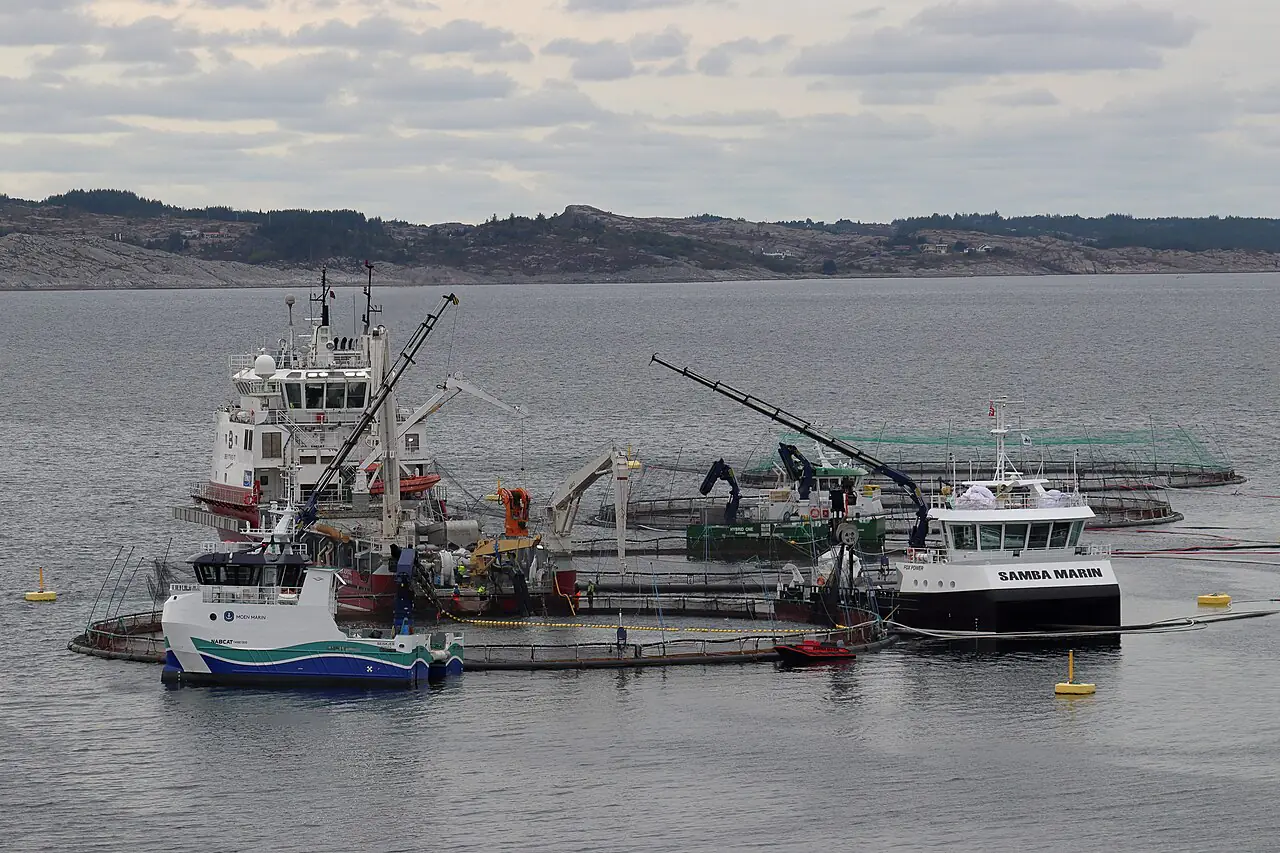
Aquaculture Support Vessels (ASVs)
While wellboats handle the biology, ASVs handle the infrastructure. They are the specialized service craft of the ocean farm, designed to perform the heavy lifting of maintenance, inspection, and operational support. ASVs are equipped with advanced robotics (ROVs), high-pressure cleaning systems, and precision positioning tools. Their missions include net maintenance, mooring inspections, mortality removal, feeding assistance, and environmental monitoring.
2. Mission and Operations
The operational profile of an offshore fish farming vessel is a delicate balance between maritime efficiency and biological management. Every mission is governed by the physiological limits of the target species (most commonly Atlantic Salmon).
Biological Lifecycle Support
- Smolt Management: During the early stages, vessels must provide pristine water conditions. Even minor fluctuations in temperature or salinity can cause mass mortality in juvenile smolts.
- Parasite and Disease Control: A major operational task is “delousing.” Many vessels are designed to perform freshwater treatments or utilize specialized equipment to remove parasites like sea lice without the need for chemical interventions that could harm the wider marine environment.
- Biomass Management: To prevent disease outbreaks and ensure optimal growth, fish must be periodically moved to different pens. Wellboats facilitate this “thinning” process, ensuring that no single cage exceeds its carrying capacity.
Infrastructure and Site Maintenance
- Net Integrity: Submerged nets are subject to intense pressure, biofouling, and mechanical wear. ASVs use ROVs to inspect net mesh for holes and to clean away marine growth that can restrict water exchange.
- Mooring and Station Keeping: Offshore cages are held in place by complex mooring systems. ASVs perform routine inspections of these systems, ensuring that anchors, chains, and lines are secure against the massive forces of wind, waves, and currents.
- Environmental Stewardship: Continuous monitoring of the site is required. Vessels deploy sensors to track dissolved oxygen (DO), nitrogen levels, and temperature, providing the data necessary to manage the farm sustainably.
3. Hull, Size, and Design
The design of an offshore fish farming vessel is an exercise in managing the Free Surface Effect and mitigating the destructive forces of sloshing.
The Sloshing Challenge
In a wellboat, the cargo is a massive, moving volume of water. When the vessel rolls, pitches, or heaves, this water shifts violently within the tanks. This “sloshing” creates two critical risks:
- Hydrodynamic Impact: The kinetic energy of the moving water can exert immense localized pressure on the tank walls and the ship’s hull, potentially leading to structural failure.
- Stability Loss: The shifting center of gravity can cause unpredictable vessel motions, complicating navigation and increasing the risk of capsizing.
Mitigation through Baffle Technology
To counter sloshing, designers integrate sophisticated baffle systems into the tank architecture. Baffles are internal plates or structures designed to disrupt the flow of water and dissipate kinetic energy.
- Geometric Baffles: Traditional vertical or horizontal plates.
- Advanced Porous Baffles: Recent research highlights the effectiveness of porous materials. A baffle with an optimal porosity (approximately 0.1) can significantly reduce wave heights and wall forces by creating micro-turbulence that “breaks” the energy of the wave.
- Tree and Ring Baffles: Specialized geometries, such as “tree-shaped” branched baffles, are being developed to offer superior energy dissipation compared to standard rectangular designs.
Structural Integrity and Materials
- Double-Bottom Construction: To increase structural robustness and provide additional buoyancy/safety, many wellboats utilize a reinforced double-bottom design.
- Material Selection: While high-tensile steel remains the standard for large hulls, the industry is increasingly adopting High-Density Polyethylene (HDPE) and advanced composites (FRP/CRP) for specialized components, such as small-scale tanks, sensor housings, and ROV frames, due to their superior corrosion resistance and durability in saltwater.
| Feature | Typical Wellboat Range | Typical ASV Range |
|---|---|---|
| Length | 40–80 m | 10–60 m |
| Beam | 10–18 m | 6–15 m |
| Deadweight | 500–3,000 tonnes | 50–500 tonnes |
| Tank Capacity | 500–3,000 m³ | N/A |
| Primary Material | Steel (Hull), HDPE (Components) | Steel, Aluminum, HDPE |
4. Propulsion and Engines
Propulsion systems in this sector are moving away from traditional single-engine configurations toward highly integrated, flexible, and sustainable powerplants.
Dynamic Positioning (DP) Requirements
Precision is the most critical requirement for propulsion. Whether a wellboat is loading fish or an ASV is cleaning a net, the vessel must maintain a precise position relative to a stationary cage. Dynamic Positioning (DP) systems use a combination of GNSS, sonar, and motion sensors to automatically control thrusters and propellers, compensating for environmental forces in real-time.
The Shift to Hybrid and Electric Power
The aquaculture industry is a major driver of maritime decarbonization. The high-power demands of pumping, oxygenating, and maneuvering near sensitive sites make these vessels ideal candidates for:
- Diesel-Electric Propulsion: Where diesel engines act as generators to provide electrical power to electric propulsion motors. This allows for much finer control over thrust and better fuel efficiency during DP operations.
- Hybrid-Electric Systems (Shaft Generators): An advanced configuration where electric motors/generators are mounted directly on the propulsion shafts between the diesel engine and the gearbox. This allows the vessel to charge large Energy Storage Systems (ESS) or batteries using the main engines, providing “silent” and emission-free power during delicate operations.
- Battery-Driven Operations: Short-range ASVs are increasingly utilizing pure battery propulsion, reducing both carbon footprint and underwater noise pollution, which can affect fish behavior.
5. Electrical System and Power
An offshore fish farming vessel is effectively a floating power plant. The electrical load is characterized by high-capacity, continuous-duty equipment that is critical to the survival of the biological cargo.
Critical Power Loads
- Water Management Systems: High-power centrifugal and vacuum pumps for well filling, emptying, and circulation.
- Life Support Systems: Continuous power for oxygen injection (O₂), CO₂ stripping (degassing), and water temperature control (chilling/heating).
- Robotics and Subsea Tools: Large power draws for ROV deployment, net cleaners, and underwater lighting.
- Automation and Control: A pervasive network of sensors and PLCs (Programmable Logic Controllers) that manage everything from tank chemistry to vessel stability.
Redundancy and Reliability
Because a power failure can lead to immediate fish mortality, these vessels employ rigorous redundancy standards. This includes dual-bus electrical architectures, uninterruptible power supplies (UPS) for critical control systems, and redundant diesel generators to ensure that life-support systems never lose power.
6. Equipment and How It Is Used
The specialized equipment on these vessels defines their operational capability.
Wellboat Biological Support Equipment
- CO₂ Strippers (Degassers): As fish respire, they release CO₂ into the water. In closed-system transport, CO₂ levels can rapidly rise, lowering the pH and causing acidosis. Strippers use air-stripping or membrane technologies to remove CO₂, maintaining a stable, healthy pH.
- Oxygenation Systems: High-capacity O₂-feedback control systems monitor Dissolved Oxygen (DO) levels and inject pure oxygen to prevent hypoxia, especially during high-density transport or in warmer waters.
- Vacuum Pump Systems: Utilized for the rapid movement of water and fish, often involving large-capacity tanks (e.g., 2 x 6,000 liter tanks) to facilitate pressure-controlled loading and unloading.
- Freshwater Production: Many wellboats feature on-board desalination or freshwater production plants (capable of producing several thousand m³ per day) to allow for freshwater treatments that help manage parasite loads.
ASV Maintenance and Robotic Equipment
- Remotely Operated Vehicles (ROVs):
- Mini-ROVs: Used for routine visual inspections of nets, moorings, and cage structures.
- Work-Class ROVs: Heavy-duty, multi-functional units capable of performing subsea construction, heavy lifting, and complex repairs at significant depths.
- Net Cleaning Robots: Specialized ROVs, such as the AKVA FNC8, designed to traverse net meshes. They use high-pressure water jets to remove biofouling, maintaining the critical water exchange required for fish health.
- Underwater Cameras and Sensors: High-definition surveillance systems used for real-time monitoring of fish behavior and environmental parameters.
| Equipment | Primary Function | Technical Detail/Metric |
|---|---|---|
| CO₂ Stripper | Maintain water pH | Efficient gas-transfer technology |
| Oxygenator | Maintain DO levels | Feedback-controlled O₂ injection |
| ROV (Work-Class) | Subsea maintenance | High-depth, high-payload capability |
| Net Cleaner | Remove biofouling | Up to 5,000 m²/hour cleaning rate |
| Vacuum Pumps | Fish loading/unloading | High-volume, pressure-controlled |
7. Navigation, Communications, and Safety
Safety in the offshore aquaculture environment is a dual-priority: protecting the crew and protecting the biological assets.
Advanced Navigation
- Sensor Fusion for Near-Cage Maneuvering: Combining GNSS, 4D radar, and high-resolution sonar allows operators to navigate safely in the “cluttered” environment of an offshore farm, where submerged nets and mooring lines are often invisible to standard radar.
- Collision Avoidance: New autonomy-assist technologies (e.g., ZeaWatch) provide real-time object detection, alerting operators to potential collisions with infrastructure.
Communication Systems
- Satellite & Broadband: High-bandwidth satellite links are essential for transmitting real-time video from ROVs and sensor data from the farm to shore-based management.
- Acoustic Modems: Used for communication with subsea equipment and sensor arrays that are out of range of radio signals.
Safety and Welfare Protocols
- Fish Surveillance: Continuous monitoring of fish behavior via underwater cameras to detect signs of stress, disease, or hypoxia immediately.
- Containment Integrity: Strict protocols and redundant systems to prevent “escapement”—the accidental release of farmed fish into the wild, which can have devastating ecological consequences.
8. Crew and Organization
The specialized nature of these vessels requires a multidisciplinary crew that bridges the gap between maritime operations and marine biology.
Core Crew Roles
- Deck Officers & Captains: Experts in maritime law, navigation, and advanced DP operations.
- Engineers: Skilled in maintaining complex hybrid propulsion, high-capacity electrical systems, and sophisticated automation.
- Marine Biologists / Aquaculturists: Often the most critical “specialized” crew members. They manage the biological cargo, monitor water chemistry, and make real-time decisions regarding fish welfare and transport protocols.
- ROV Pilots & Technicians: Specialized operators trained in subsea robotics and underwater maintenance.
9. Certificates and Training Requirements
Crew members must hold a combination of standard maritime certifications and industry-specific training.
- STCW (Standards of Training, Certification, and Watchkeeping): The foundational requirement for all professional mariners.
- Advanced DP Certification: Mandatory for officers operating vessels in close proximity to aquaculture infrastructure.
- Fish Welfare & Handling Certification: Specialized training in recognizing physiological stress in fish and managing water quality parameters during transport.
- ROV Pilot Training: Comprehensive training in subsea robotics, electronics, and hydraulic systems.
10. Regulations, Class, and Inspections
The high economic and environmental value of offshore aquaculture necessitates rigorous oversight.
Classification Standards
Leading classification societies, most notably DNV, provide the framework for the design, construction, and maintenance of these vessels. Key DNV standards include:
- DNV-RU-OU-0503: Rules for the design and construction of floating fish farming units.
- DNV-ST-0678: Standards for assessing the environmental impact of marine aquaculture installations.
- DNV-OTG-24: Technical guidelines for the prevention of fish escapes.
Inspection Regimes
Vessels undergo regular, documented inspections by classification surveyors to verify:
- Structural Integrity: Checking for fatigue, corrosion, and hull deformation.
- Equipment Functionality: Testing DP systems, life-support equipment, and ROVs.
- Mooring & Containment: Ensuring that all systems designed to prevent escapes are fully operational.
11. Notable Shipyards, Operators, and Example Vessels
Industry Leaders
- Shipyards: Aas Mek Verksted (Norway) is a premier builder of wellboats; Vard and Ulstein provide large-scale offshore support vessels.
- Technology Providers: AKVA Group and ScaleAQ are global leaders in aquaculture-specific systems (ROVs, feeding, water quality); ABB and Praxis Automation lead in hybrid propulsion.
- Operators: Cooke Aquaculture and Migdale Transport are prominent users of specialized wellboats.
Example Vessels
- Marsali: A 63-meter wellboat built by Aas Mek. It features a 1,500m³ capacity (transporting up to 210 tonnes of fish), advanced CO₂ stripping, and on-board freshwater production.
- Migdale: A predecessor wellboat (650m³), demonstrating the evolution of capacity and technical sophistication in the sector.
12. Environment and Future Outlook
The offshore fish farming vessel is at the center of a technological revolution driven by the need for sustainability and scale.
The Decarbonization Mandate
As global regulations on maritime emissions tighten, the industry is moving rapidly toward zero-emission operations. This includes the widespread adoption of hybrid-electric propulsion and the development of fully electric support craft for intra-site service.
Automation and Autonomy
The “Autonomous Ocean Farm” is a growing concept. Future vessels will likely feature:
- AI-Driven Monitoring: Using machine learning to analyze fish behavior and water chemistry, allowing for autonomous adjustments to life-support systems.
- Unmanned Support Craft: Small, autonomous ASVs that can perform routine net cleaning and inspections without a human crew, reducing operational costs and safety risks.
Multi-Use Platforms
There is increasing interest in integrating aquaculture with other offshore industries, such as offshore wind farms. This will require a new generation of vessels capable of working seamlessly within complex, multi-use maritime environments.
13. Facts, Records, and Common Misconceptions
- Misconception: Sloshing is just a comfort issue.
- Fact: Sloshing is a major structural threat. The kinetic energy of moving water in a wellboat can exceed the structural limits of the tank or the vessel’s stability margin.
- Misconception: Wellboats are essentially “water trucks.”
- Fact: They are highly sophisticated mobile laboratories. A failure in the CO₂ stripping or oxygenation systems can result in the loss of an entire biological harvest in a matter of minutes.
- Fact: Biofouling is a critical operational risk.
- Even a thin layer of marine growth on a net can significantly reduce water exchange, leading to oxygen depletion and disease outbreaks within the cage.
14. Glossary
- ASV (Aquaculture Support Vessel): A vessel dedicated to the maintenance and service of aquaculture farms.
- Baffle: An internal structure used to mitigate sloshing in liquid tanks.
- Biofouling: The accumulation of marine organisms (e.g., algae, barnacles) on underwater surfaces.
- CO₂ Stripper: A device used to remove carbon dioxide from seawater.
- DP (Dynamic Positioning): An automated system for maintaining a vessel’s position.
- DO (Dissolved Oxygen): The amount of oxygen available in the water for fish respiration.
- Escapement: The accidental escape of farmed fish into the wild.
- HDPE (High-Density Polyethylene): A common material used in aquaculture nets and small vessels.
- Mitigation: The action of reducing the severity or impact of a risk.
- ROV (Remotely Operated Vehicle): An unmanned, highly maneuverable underwater robot.
- Sloshing: The movement of liquid within a container caused by the vessel’s motion.
- Smolt: A juvenile fish that has reached a stage of development ready for seawater.
- Wellboat: A vessel specifically designed for the transport of live fish in large water tanks.