1. What Is This Ship?
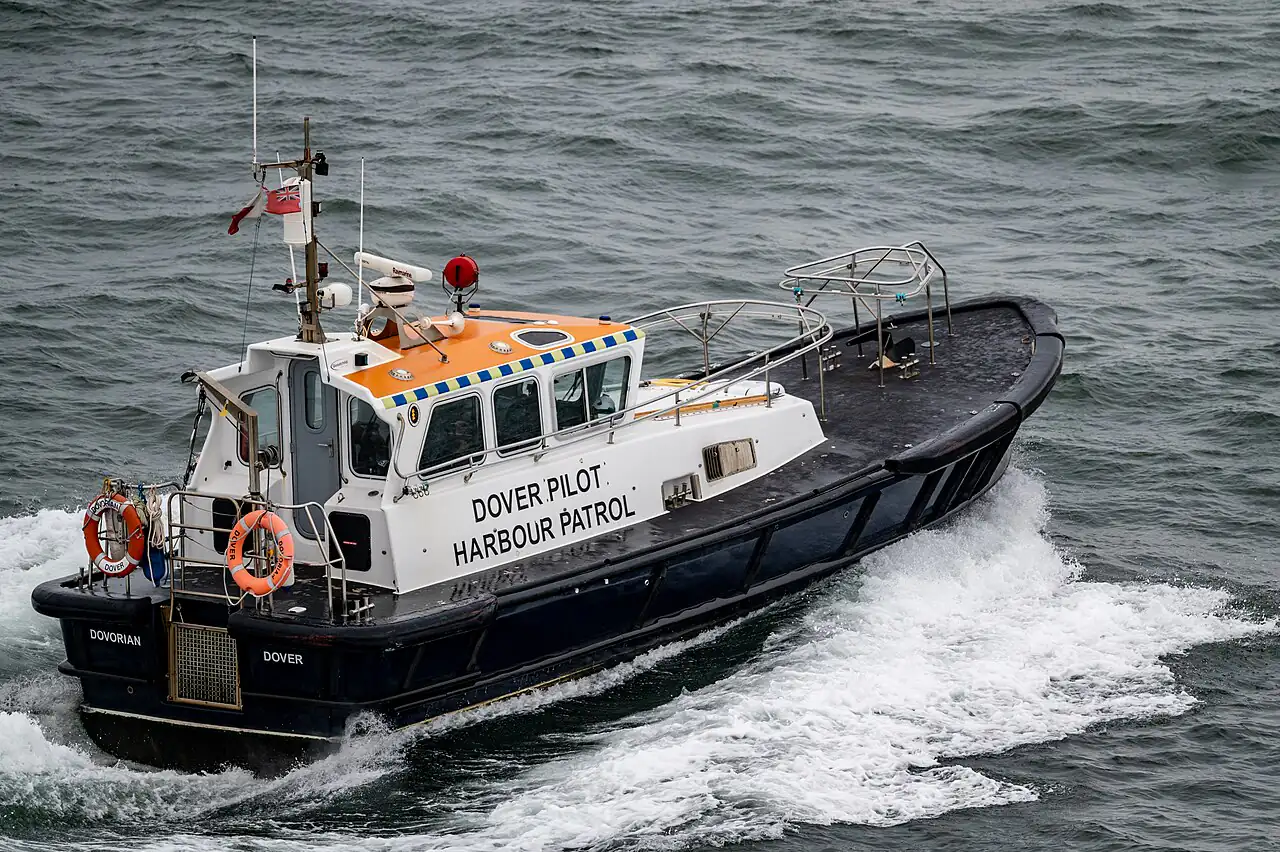
A pilot boat is a highly specialized type of maritime vessel dedicated to a single, critical mission: the safe and efficient transport of maritime pilots between shore-based pilot stations and large incoming or outgoing vessels.
In the complex ecosystem of global shipping, a “pilot” is a local maritime expert with intimate knowledge of the specific waters, currents, hazards, and regulations of a particular harbor or coastal region. When a massive container ship, tanker, or cruise liner approaches a port, they often lack the local nuances required to navigate safely through narrow channels or busy shipping lanes. This is where the pilot comes in. The pilot boat serves as the delivery mechanism for these essential specialists, ensuring they reach the larger vessel at the correct time and location to begin their guidance.
While often grouped with general service boats, pilot boats are distinct in their engineering requirements. They must be capable of performing high-speed transits to meet vessels on time, yet possess the immense durability to withstand “bumping”—the intentional contact with the much larger hulls of commercial ships during boarding operations. They are also designed to operate in a wide range of sea states, from calm harbor waters to turbulent coastal swells, often in the very conditions that make pilotage most necessary.
2. Mission and Operations
The fundamental mission of a pilot boat is to facilitate the process of pilotage. This mission is characterized by tight schedules, high-stakes coordination, and physically demanding maneuvers.
The Pilotage Cycle
The operational cycle typically follows a structured sequence:
- Coordination and Scheduling: Before a vessel’s arrival, ship agents, port authorities, and pilot organizations communicate via radio or digital systems. A pilot boat is dispatched to a rendezvous point, often a specific waypoint or a set distance from the incoming ship.
- Transit: The pilot boat transits from its base (either a harbor or a sea-based pilot station) to the rendezvous area. This stage requires high speed to minimize the time the larger vessel spends waiting, which can be costly.
- Rendezvous and Approach: As the large vessel approaches, the pilot boat must position itself precisely, often alongside the larger ship’s hull or near its bow/stern, depending on the pilot’s preferred boarding location. This requires extreme maneuverability and stability.
- The Boarding Operation: This is the most critical phase. The pilot boat often pulls alongside the much larger vessel. The pilot must then climb a specialized ladder (the pilot ladder) to transition from the boat to the ship. This process can be dangerous due to the relative motion between the two vessels caused by waves and currents.
- Return or Continued Duty: Once the pilot is on board, the pilot boat returns to its station or moves to pick up the next pilot or a departing pilot.
Pilot Station vs. Pilot Tender
It is important to distinguish between two types of vessels involved in this process:
- Pilot Tenders: These are smaller vessels that operate primarily from shore-based facilities. They pick up pilots directly from the harbor and deliver them to ships in the immediate vicinity of the port.
- Pilot Boats: While the terms are often used interchangeably, “pilot boat” can also refer to larger, more robust vessels that operate from pilot stations located further out at sea. These stations act as hubs for pilots who service larger coastal areas, requiring the boats to handle more challenging open-sea conditions.
3. Hull, Size, and Design
The design of a pilot boat is a study in contradictions: it must be lightweight for speed, yet heavy and robust for durability; it must be agile for maneuvering, yet stable for safe boarding.
Typical Dimensions and Scale
Pilot boats vary significantly in size depending on their intended operational area:
| Feature | Small/Harbor Tender | Medium/Coastal Pilot Boat | Large/Deep-Sea Pilot Boat |
|---|---|---|---|
| Length (m) | 7 – 12 m | 12 – 20 m | 20 – 30+ m |
| Beam (m) | 3 – 4.5 m | 4.5 – 6 m | 6 – 8+ m |
| Draft (m) | 0.5 – 1.0 m | 1.0 – 2.0 m | 2.0 – 3.5 m |
| Typical Use | Inner harbor, calm waters | Coastal, moderate seas | Offshore, heavy sea states |
Hull Forms and Stability
The choice of hull form is driven by the required balance of speed, stability, and seakeeping.
- Monohulls: The most common hull form. They offer a good balance of speed and maneuverability. Modern monohulls often incorporate advanced hull shapes to improve efficiency.
- Catamarans (Twin-Hull): These provide a much wider beam relative to their length, resulting in exceptional initial stability. This makes for a steadier platform during boarding operations but can increase drag at very high speeds.
- SWATH (Small Waterplane Area Twin Hull): These vessels use submerged hulls connected to the superstructure by very thin struts. This design minimizes the impact of waves on the hull, providing extraordinary stability in rough seas, though they are more complex and expensive to build.
- Wave Piercing Hulls (e.g., Sea Axe/Axe Bow): A modern innovation, popularized by shipyards like Damen. These hulls feature a very fine, vertical bow designed to pierce through waves rather than riding over them. This reduces pitching and vertical acceleration, significantly improving seakeeping and crew comfort in heavy seas.
Materials and Construction
Historically, pilot boats were built of wood, followed by steel. However, modern requirements for speed and efficiency have shifted the industry toward lighter materials:
- Aluminium: Highly popular due to its excellent strength-to-weight ratio, corrosion resistance, and ease of construction.
- Composites/FRP (Fiber-Reinforced Plastic): Materials like glass-reinforced plastic (GRP) or carbon fiber are used to create lightweight, extremely durable, and low-maintenance hulls. Composites allow for complex hull shapes that are harder to achieve with metal.
- Hybrid Construction: Some vessels use a combination of materials—for example, a steel or aluminium hull with a composite superstructure—to optimize weight and durability.
4. Propulsion and Engines
To meet the demanding requirements of rapid transit and precise maneuvering, pilot boats are equipped with high-performance propulsion systems.
Power Plants
The primary source of power is almost exclusively high-speed diesel engines. These engines are chosen for their high power density, reliability, and ability to provide immediate torque. In modern designs, these engines must also comply with strict environmental regulations, such as IMO Tier III standards, which mandate lower Nitrogen Oxide (NOx) emissions.
Propulsion Systems
How that power is delivered to the water defines the vessel’s handling characteristics:
- Fixed Pitch Propellers (FPP): The traditional method. They are reliable and efficient at cruising speeds. However, they offer less maneuverability compared to other systems.
- Waterjets: Increasingly common in modern, high-speed pilot boats. Waterjets provide exceptional maneuverability, allowing the boat to turn almost within its own length and operate in very shallow waters. They also reduce the risk of damage from submerged debris or contact with other hulls.
- Azimuth Thrusters (Podded Propulsion): These allow the propeller unit to rotate 360 degrees, providing incredible directional control. This is particularly useful for the precise positioning required during boarding operations.
5. Electrical System and Power
The electrical system of a pilot boat is critical for its safety-critical navigation and communication suites.
Redundancy and Reliability
Because a pilot boat cannot afford a power failure during a boarding operation in heavy seas, electrical systems are designed with high levels of redundancy.
- Dual Generators: Most professional pilot boats carry at least two independent diesel generators. If one fails, the second can maintain all essential services (steering, navigation, communications).
- Battery Backups: Emergency battery banks are used to ensure that critical systems, such as radio communications and emergency lighting, remain operational even in a total engine-room failure.
Power Distribution
The electrical load includes:
- Navigation/Communication Electronics: Radar, AIS, GPS, VHF radios.
- Propulsion Controls: Electronic engine management and thruster controls.
- Auxiliary Systems: Lighting, bilge pumps, heating/cooling, and deck equipment.
- Modern Trends: The integration of hybrid-electric systems is increasing. These systems use large battery banks to assist engines during low-speed maneuvering or to allow for silent, zero-emission operations in sensitive harbor areas.
6. Equipment and How It Is Used
A pilot boat is a “tool of the trade,” packed with specialized equipment designed for the unique challenges of pilotage.
Boarding and Fendering
The most distinctive equipment on a pilot boat is designed to facilitate the transfer of the pilot.
- Fendering Systems: Pilot boats must “bump” against vessels that may be several hundred meters long and tens of thousands of tons. They are equipped with heavy-duty, high-absorption fenders (often large rubber tubes or specialized foam-filled cylinders) around the entire perimeter of the hull to protect both the boat and the target vessel.
- Pilot Ladders and Platforms: Specialized boarding arrangements, including retractable platforms or heavy-duty ladders, are used to bridge the gap between the boat and the ship.
- Man Overboard (MOB) Recovery: Given the risks of boarding, high-speed MOB recovery systems (such as recovery cradles or specialized davits) are standard equipment.
Deck and Operational Equipment
- 360-Degree Visibility: The wheelhouse is typically designed with large, wrap-around windows to provide the skipper with an unobstructed view of all sides of the vessel, which is vital during close-quarters maneuvering.
- Searchlights: Powerful, high-intensity searchlights are used for nighttime operations and to assist in locating vessels in poor visibility.
- Modular Equipment: Many modern manufacturers, such as Damen, offer “plug-and-play” modularity, allowing owners to customize deck equipment (e.g., sun awnings, additional seating, or specialized lifting gear) to their specific needs.
7. Navigation, Communications, and Safety
Safety is the paramount concern in pilotage. Consequently, the navigation and communication suites on pilot boats are often more advanced than those on standard utility vessels.
Navigation Technology
To ensure precision in busy channels, pilot boats utilize:
- Radar: Often featuring dual-radar setups (one for long-range detection and one for high-resolution close-range monitoring) to track both large vessels and small obstacles.
- AIS (Automatic Identification System): Essential for tracking the position, speed, and heading of all surrounding commercial traffic.
- ECDIS (Electronic Chart Display and Information System): Provides real-time digital charting and integration with GPS for precise navigation.
- High-Precision GPS/GNSS: Ensures the vessel can meet the rendezvous point with meter-level accuracy.
Communications
Effective communication with the pilot, the ship being boarded, and the port authority is vital.
- GMDSS (Global Maritime Distress and Safety System): Pilot boats are equipped with GMDSS-compliant radios (typically VHF/DSC) to ensure they can communicate in all maritime circumstances and call for help if necessary.
- VHF Radio: The primary tool for tactical communication during the boarding process.
Safety and Signaling
- Signaling Lights: Pilot boats have a unique night-time lighting configuration to distinguish them from other vessels. They carry a standard navigation light suite but also feature a white round light at the top and a red round light below (a configuration used to prevent confusion with fishing vessels).
- Visual Markings: During the day, they fly the “H” flag and typically have the word “PILOT” or “PILOTS” written in large, high-visibility letters on their sides.
- High-Visibility Colors: To ensure they are easily seen in heavy weather or low light, pilot boats are almost always painted in bright, distinctive colors such as orange, red, or yellow.
8. Crew and Organization
The operation of a pilot boat requires a small but highly trained and professional crew.
Typical Crew Roles
A standard pilot boat may be operated by:
- Skipper (Captain): Responsible for the overall command, navigation, and safety of the vessel and crew. They must possess advanced maneuvering skills.
- Engineer: Responsible for the maintenance and operational integrity of the engines and electrical systems.
- Deckhand / Mate: Assists with mooring, boarding operations, lookout duties, and general vessel maintenance.
Organization
Pilot boats are typically owned and operated by:
- Pilotage Authorities: Government or semi-government bodies that manage pilotage services for a specific port or region.
- Private Pilot Associations: Groups of independent pilots who organize their own services and equipment.
9. Certificates and Training Requirements
Operating a pilot boat is a high-responsibility task that requires specific maritime qualifications.
Crew Certification
Crew members must hold certifications that comply with the STCW (Standards of Training, Certification, and Watchkeeping for Seafarers) convention. This includes:
- Certificate of Competency (CoC): Required for the Skipper, proving their ability to command a vessel of a certain size and power.
- Specialized Training: Training in high-speed vessel handling, advanced maneuvering, and emergency procedures (including MOB recovery) is essential.
Pilot Requirements
While the crew operates the boat, the pilot themselves must hold specific local pilotage licenses, which are granted by the relevant maritime or port authority after rigorous testing and experience.
10. Regulations, Class, and Inspections
To ensure safety and reliability, pilot boats are subject to strict international and national regulations.
Regulatory Framework
- IMO (International Maritime Organization): Provides the global standards for safety, construction, and equipment (e.g., COLREGs for preventing collisions, SOLAS for safety of life at sea).
- National Maritime Authorities: Each country has its own set of specific regulations and licensing requirements for pilotage and vessel operation.
Classification Societies
Most professional pilot boats are “classed” by recognized organizations such as:
- DNV (Det Norske Veritas)
- Lloyd’s Register (LR)
- American Bureau of Shipping (ABS)
- Bureau Veritas (BV)
Classification involves rigorous design reviews, material testing, and periodic inspections to ensure the vessel continues to meet the required safety and structural standards throughout its life.
11. Notable Shipyards, Operators, and Example Vessels
The market for pilot boats is dominated by specialized shipyards known for high-quality, high-performance designs.
Leading Shipyards
- Damen Shipyards (Netherlands): A global leader with their highly successful Stan Pilot series. They are known for their “Sea Axe” hull designs and modular approach.
- Vos Shipyards (Netherlands): Another major player specializing in high-speed, high-performance workboats.
- Kewatec (Finland): Known for robust aluminum pilot boats designed for harsh Nordic environments.
Example Vessels
| Vessel Name | Type / Era | Key Features |
|---|---|---|
| Damen Stan Pilot 2205 FRP | Modern (Composite) | 22.7m, 30 knots, Sea Axe hull, FRP construction. |
| Damen Stan Pilot 1605 FRP | Modern (Composite) | 15.7m, 28.5 knots, Waterjet propulsion, IMO Tier III. |
| Artemis Technologies EF-12 | Future (Electric) | Hydrofoil technology, carbon-fiber, 32 knots, zero-emissions. |
| Moses H. Grinnell | Historic (1850) | Designed by George Steers, early specialized pilot boat. |
| Elbe, No. 5 | Historic (Schooner) | Traditional German pilot schooner, now a restored sailing vessel. |
| Zodiac / Adventuress | Historic (Schooner) | US two-masted gaff-rigged pilot schooners. |
12. Environment and Future Outlook
The maritime industry is undergoing a massive transformation, and pilot boats are at the forefront of several key technological shifts.
Environmental Impact and Decarbonization
Traditional diesel-powered pilot boats contribute to local air and noise pollution in busy harbors. To address this, the industry is moving toward:
- Hybrid Propulsion: Combining diesel engines with electric motors and battery banks to reduce emissions during low-speed or idling periods.
- Full Electric Vessels: Small-to-medium pilot tenders are increasingly being designed as fully electric vessels, utilizing advanced battery technology to achieve zero-emission operations.
Advanced Technologies
- Hydrofoil Technology: As demonstrated by the Artemis EF-12 concept, hydrofoils can drastically reduce drag by lifting the hull out of the water. This leads to much higher speeds and significantly lower energy consumption.
- Autonomous and Unmanned Vessels: The development of autonomous surface vessels (ASVs) may eventually lead to unmanned pilot boats, capable of performing routine transits with minimal human intervention, though the complex boarding maneuver remains a significant challenge for autonomy.
13. Facts, Records, and Common Misconceptions
The “White Cap, Red Nose” Mnemonic
A common way to remember the unique night-time lighting for pilot boats is the mnemonic “white cap, red nose.” This refers to the white round light at the top and the red round light below, a design intended to distinguish them from fishing vessels (which have the lights reversed).
Pilot Boat vs. Pilot Tender
A common misconception is that all pilot vessels are the same. In reality, there is a functional distinction between tenders (which operate from shore) and boats (which may operate from offshore stations), and this distinction dictates their size, range, and sea-keeping capabilities.
Speed vs. Durability
It is often incorrectly assumed that because pilot boats are “fast,” they are fragile. On the contrary, a pilot boat’s most important characteristic is its ability to remain operational and stable while undergoing the physical stress of repeatedly bumping against massive commercial hulls in rough seas.
14. Glossary
- AIS (Automatic Identification System): An automated tracking system used on ships for identifying and locating vessels by electronically exchanging data with other vessels, ships, and AIS base stations.
- Axe Bow / Sea Axe: A hull design featuring a fine, vertical bow that pierces through waves rather than riding over them, improving stability and seakeeping.
- Colreg (International Regulations for Preventing Collisions at Sea): The set of rules designed to prevent collisions between vessels at sea.
- ECDIS (Electronic Chart Display and Information System): A computer-based navigation system that integrates electronic charts with real-time position data.
- FRP (Fiber-Reinforced Plastic): A composite material used in shipbuilding for its lightweight and durable properties.
- GMDSS (Global Maritime Distress and Safety System): An internationally agreed-upon set of safety procedures, types of equipment, and communication protocols used to increase safety at sea.
- IMO (International Maritime Organization): The United Nations specialized agency responsible for the safety and security of shipping and the prevention of marine pollution by ships.
- MOB (Man Overboard): A critical emergency situation involving a person falling from a vessel into the water.
- Pilotage: The act of guiding a ship through dangerous or congested waters under the direction of a professional pilot.
- STCW (Standards of Training, Certification, and Watchkeeping): An international convention that sets qualification standards for masters, officers, and watch personnel on seagoing merchant ships.
- SWATH (Small Waterplane Area Twin Hull): A type of catamaran design that uses submerged hulls to provide extreme stability in rough sea conditions.
- Waterjet: A propulsion system that uses a high-pressure stream of water expelled from a nozzle to move a vessel, offering high maneuverability and shallow draft capability.
15. Sources
- Wikipedia: Pilot boat
- Damen Shipyards: Stan Pilot Series
- Artemis Technologies: EF-12 Pilot Hydrofoil
- International Maritime Organization (IMO): Official Website