1. What Is This Ship?
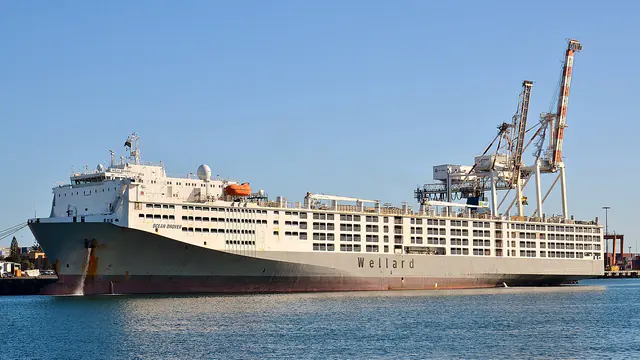
A Reefer ship, or refrigerated cargo ship, is a specialized maritime vessel engineered for the high-integrity transport of perishable commodities. Unlike standard dry cargo ships or bulk carriers, a reefer ship is essentially a massive, floating, climate-controlled warehouse. Its primary purpose is to mitigate the biological and chemical degradation that occurs in temperature-sensitive goods—such as fresh produce, frozen meats, seafood, dairy products, and certain pharmaceuticals—during long-distance sea voyages.
In the modern maritime landscape, a distinction is made between two primary modes of refrigerated transport:
- Dedicated Reefer Vessels: These are purpose-built ships with integrated, centralized refrigeration plants that cool entire insulated cargo holds. They are optimized for high-volume, single-commodity trades (like the “banana trade”) and provide superior environmental control (temperature, humidity, and atmospheric gases).
- Refrigerated Container (Reefer Container) Transport: This involves loading self-contained refrigerated containers onto standard container ships. While this method dominates approximately 80–90% of the refrigerated maritime trade due to its immense flexibility and intermodal compatibility, dedicated reefer ships persist in niche markets where specialized handling and intensive cargo care are paramount.
Reefer ships are the vital backbone of the global “cold chain,” ensuring that seasonal produce from the Southern Hemisphere reaches Northern markets with minimal spoilage and maximum shelf life.
2. Mission and Operations
The mission of a reefer ship is the preservation of cargo quality through precise environmental management. This mission is divided into several critical operational phases:
Cargo Categorization and Temperature Setpoints
Operational success depends on matching the vessel’s refrigeration capacity to the specific thermal requirements of the cargo. Typical temperature regimes include:
- Frozen Cargo: Temperatures ranging from to ( to ). This is common for meat, poultry, and certain seafood.
- Chilled Cargo: Temperatures ranging from to ( to ). This is standard for fruits (like bananas or citrus), vegetables, and dairy.
The Pre-Cooling Phase
Before loading, cargo must often undergo “pre-cooling” to remove “field heat” (the heat generated by biological respiration). If cargo is loaded at ambient temperature, the vessel’s refrigeration plant must work excessively hard to bring the temperature down, risking “temperature abuse” and cargo spoilage during the critical initial hours of the voyage.
Atmospheric Control
Beyond temperature, advanced reefer ships manage the atmosphere within the holds. For “living” cargoes like ripening fruit, ships may utilize Controlled Atmosphere (CA) or Modified Atmosphere (MA) systems. These systems regulate levels of Oxygen (), Carbon Dioxide (), and Nitrogen () to slow down the respiration rate of the produce, thereby extending its freshness.
Port Operations and Loading
Reefer ships often utilize specialized loading equipment, such as pallet lifts or conveyors, to move cargo through watertight side-ports or hatches. Efficient turnaround times are critical, as every hour spent at the pier represents a potential break in the cold chain.
3. Hull, Size, and Design
The design of a reefer ship is dictated by the need for thermal efficiency and structural integrity under the weight of specialized machinery.
Thermal Insulation and the “Cold Box” Concept
The most defining feature of a reefer ship is its insulation. The cargo holds are effectively “cold boxes” lined with high-performance insulation materials.
- Insulation Material: Typically, multi-layer polyurethane (PU) foam or specialized mineral wool is used.
- Thickness: Insulation thickness can range from to over , depending on the intended temperature range.
- Thermal Performance: Design specifications focus on a low U-value (thermal transmittance). For refrigerated holds, the IMO and class societies often require a U-value to minimize heat ingress from the external environment.
- Components: Insulation is applied not only to the bulkheads (walls) but also to the deckheads (ceilings), hatch covers, and even the doors and seals of the access ports.
Hold Architecture and Air Circulation
To prevent “hot spots” and ensure uniform cooling, the internal layout of the hold is engineered for optimized airflow.
- Floor Systems: Rather than flat decks, reefer holds utilize T-bar aluminum flooring or perforated steel gratings. These create a “plenum” space beneath the cargo.
- Airflow Pattern: The standard design is bottom-to-top airflow. Cold air is forced through the floor gratings, rises through the gaps between palletized cargo, absorbs the heat from the products, and is then drawn back to the evaporator coils via return air ducts or ceiling plenums.
- Air Change Rates: Depending on the cargo, ships may provide between and air changes per hour (ACH) to maintain stability and remove metabolic gases like and ethylene.
Typical Dimensions and Tonnage
While sizes vary, dedicated reefer ships are generally smaller than modern ultra-large container ships (ULCS).
| Parameter | Typical Range (Dedicated Reefer) |
|---|---|
| Deadweight Tonnage (DWT) | to |
| Length Overall (LOA) | to |
| Breadth (Beam) | to |
| Cargo Capacity | to |
4. Propulsion and Engines
While the main propulsion system of a reefer ship follows standard maritime diesel-engine configurations (typically two-stroke or four-stroke diesel engines), the “heart” of the vessel’s specialized mission lies in its auxiliary machinery.
Main Propulsion
The main engine provides the thrust required for transit. Because reefer ships often carry high-value, time-sensitive cargo, they are frequently designed for higher service speeds (e.g., ) compared to standard bulk carriers.
The Critical Role of Auxiliary Engines (Gensets)
The refrigeration plant imposes a massive and continuous electrical load. Unlike a container ship, where the power for reefer containers is distributed, a dedicated reefer ship relies on its own high-capacity Auxiliary Engines or Diesel Generator Sets (Gensets) to power the compressors, fans, and pumps.
- Load Management: The electrical system must be able to handle the massive “inrush current” when large compressors start up.
- Redundancy: To prevent catastrophic cargo loss, reefer ships are designed with high levels of electrical redundancy. This usually involves multiple independent generator sets and an automated power management system (PMS) that can prioritize the refrigeration load over non-essential services.
5. Electrical System and Power
The electrical architecture of a reefer ship is significantly more complex and robust than that of a conventional cargo vessel.
High-Demand Power Distribution
The centralized refrigeration plant can consume several megawatts of power. The electrical system must provide:
- Stable Voltage and Frequency: Fluctuations can damage sensitive compressor motors or electronic control units.
- Three-Phase Power: Most heavy refrigeration machinery operates on (or higher) three-phase AC power.
Monitoring and Control Systems
Modern reefer ships utilize integrated Ship Automation and Control Systems (SACS) to manage the electrical and thermal load.
- Automated Load Shedding: If a generator fails, the system automatically “sheds” non-essential loads (like lighting in non-critical areas or certain galley equipment) to ensure the refrigeration plant remains operational.
- Real-time Telemetry: Sensors throughout the holds monitor temperature, humidity, and electrical parameters, transmitting data to the bridge and engine control room for constant oversight.
6. Equipment and How It Is Used
The refrigeration system on a reefer ship operates on the Vapor-Compression Cycle. This cycle moves heat from the cargo holds (the low-temperature area) to the sea (the heat sink).
Core Components of the Refrigeration Plant
| Component | Function | Description |
|---|---|---|
| Compressor | Pressure Increase | Compresses low-pressure refrigerant vapor into high-pressure, high-temperature gas. |
| Condenser | Heat Rejection | Cools the high-pressure gas, causing it to condense into a liquid. Often uses seawater. |
| Receiver | Storage | Collects and stores the liquid refrigerant before it is sent to the expansion valve. |
| Expansion Valve | Pressure Reduction | Drops the pressure of the liquid refrigerant, causing it to rapidly cool as it enters the evaporator. |
| Evaporator | Heat Absorption | The “cooling coil” inside the hold where the cold refrigerant absorbs heat from the cargo air. |
| Drier/Filter | Purification | Removes moisture and contaminants from the refrigerant to prevent ice blockages or corrosion. |
Types of Compressors
- Reciprocating Compressors: Use pistons to compress gas. They are reliable and can handle high pressure ratios, making them suitable for very low-temperature (frozen) applications.
- Screw Compressors: Utilize two intermeshing helical screws. These are the industry standard for large-scale reefer ships because they offer continuous capacity modulation (via a slide valve), allowing the ship to adjust cooling levels as cargo loads change.
Refrigerants: The Industry Transition
The choice of refrigerant is a balance between thermodynamic efficiency and environmental impact.
- Legacy Refrigerants (HFCs): Hydrofluorocarbons like R-134a and R-404A have been widely used due to their stability and efficiency, but they have high Global Warming Potential (GWP).
- Natural Refrigerants: Driven by environmental regulations (like the EU F-gas regulation), there is a major shift toward:
- Ammonia ( / R-717): Extremely efficient and has zero GWP, but is toxic and requires stringent safety measures.
- Carbon Dioxide ( / R-744): Environmentally benign (low GWP) but operates at much higher pressures, requiring specialized equipment.
Secondary Cooling Systems
In some designs, the primary refrigeration plant does not cool the air directly. Instead, it cools a secondary medium—such as a brine solution (saltwater) or glycol—which is then circulated through coils in the cargo holds. This “indirect” method can provide more even temperature distribution and is often used in vessels with multiple temperature zones.
7. Navigation, Communications, and Safety
While reefer ships follow standard maritime navigation protocols, their safety management is heavily augmented by the need to protect the “invisible” cargo.
Specialized Alarms and Monitoring
The bridge and engine room are equipped with specialized alarm systems for:
- Temperature Deviations: Triggers if any hold exceeds its setpoint.
- Humidity Alarms: Critical for fresh produce to prevent dehydration or mold growth.
- and Ethylene Alarms: Vital for detecting abnormal biological activity in “living” cargoes.
Safety Challenges
- Refrigerant Leaks: If ammonia is used, leak detection and specialized ventilation/evacuation protocols are mandatory due to its toxicity.
- Fire Safety: The thick layers of polyurethane insulation can be combustible. Therefore, hold fire suppression systems (often or high-expansion foam) must be designed to penetrate or work around the insulation.
- Asphyxiation Risks: In enclosed spaces like holds or machinery rooms, the buildup of refrigerant or poses a lethal risk to crew members.
8. Crew and Organization
A reefer ship requires a crew with specialized technical knowledge, particularly within the engineering department.
- Engine Department: The Chief Engineer and specialized Refrigeration Engineers (often second or third engineers with advanced training) are the most critical personnel for cargo integrity. They are responsible for the continuous operation, maintenance, and troubleshooting of the complex refrigeration plant.
- Deck Department: Officers and ratings manage the physical security of the cargo, oversee the loading/unloading process, and monitor hold temperatures and ventilation settings.
- Logistical Coordination: While not onboard, the ship’s crew must work closely with shore-based logistics teams to ensure that temperature setpoints are adjusted according to the specific manifest of the voyage.
9. Certificates and Training Requirements
Operating a reefer ship requires compliance with both general maritime and specialized technical standards.
Maritime Certifications
- STCW (Standards of Training, Certification, and Watchkeeping): All crew must meet basic international standards for safety, navigation, and engineering.
Specialized Training
- Refrigeration Plant Operation: Engineers must have documented training in the specific types of compressors and refrigerants used onboard (e.ically if using Ammonia).
- Food Safety and Hygiene: Crew involved in cargo operations may require training in HACCP (Hazard Analysis and Critical Control Points) or ISO 22000 standards to ensure that the handling process does not compromise food safety.
Regulatory Compliance
- Class Certificates: The refrigeration plant must be certified by a classification society (e.g., DNV, LR, ABS).
- F-Gas Certification: For ships operating in EU jurisdictions, technicians must be certified to handle and recover refrigerants.
10. Regulations, Class, and Inspections
Reefer ships are subject to a rigorous layer of international and regional regulations.
International Maritime Organization (IMO)
- SOLAS (Safety of Life at Sea): Governs structural integrity, fire safety, and life-saving appliances.
- MARPOL (Marine Pollution): Regulates the discharge of refrigerants and engine emissions.
Classification Societies
Entities like DNV, Lloyd’s Register (LR), Bureau Veritas (BV), and the American Bureau of Shipping (ABS) provide the technical oversight.
- Initial Certification: Performed at the time of build.
- Annual Surveys: Verify the continued integrity of the refrigeration machinery and pressure vessels.
- Special Surveys: Conducted every five years, these are intensive inspections of the entire vessel and its specialized systems.
Environmental and Food Safety Regulations
- EU F-gas Regulation: Mandates strict record-keeping, leak checks (every 3–6 months for large charges), and the eventual phase-out of high-GWP refrigerants.
- IMDG Code (International Maritime Dangerous Goods): Governs the transport of temperature-sensitive chemicals or “dangerous” perishables, specifying required control temperatures and emergency limits.
11. Notable Shipyards, Operators, and Example Vessels
The reefer industry is characterized by a few major players and specialized shipbuilders.
Major Operators
- Cool Carriers: Headquartered in Limassol, Cyprus, it is widely recognized as the world’s largest operator of specialized reefer vessels.
- Maersk: While primarily a container giant, Maersk is a dominant force in the refrigerated trade through its massive fleet of reefer containers.
Notable Shipbuilders
- Kitanihon Shipbuilding (Japan): A key builder of next-generation specialized reefer vessels, such as the Snow-class series.
Example Vessels
| Vessel Name | Operator/Type | Significance |
|---|---|---|
| Snow Flower | Cool Carriers | Part of a new generation of high-efficiency reefer carriers. |
| Snow Flake | Cool Carriers | Sister ship to Snow Flower, designed for large-scale fruit trade. |
| Cool Express | Cool Carriers | A state-of-the-art example of modern reefer design. |
| Dalfoss Reefer | DNV Classified | An example of a container/reefer hybrid with high Ice class capability. |
| SS Highland Scot | Historical (1890) | An early example of the transition to refrigerated cargo. |
12. Environment and Future Outlook
The reefer industry is currently undergoing a period of profound technological and environmental transformation.
The Green Transition: Refrigerants
The most significant environmental driver is the phase-out of high-GWP synthetic refrigerants. The industry is aggressively moving toward natural refrigerants (Ammonia and ). This shift requires higher capital investment in specialized, high-pressure, or toxicity-resistant machinery.
Digitalization and the “Smart” Cold Chain
- IoT and Real-Time Telemetry: The integration of Internet of Things (IoT) sensors allows for unprecedented visibility. Shippers can now track temperature, humidity, and even the “breath” ( levels) of their cargo in real-time via satellite.
- Blockchain for Traceability: Blockchain technology is being piloted to create an immutable “digital passport” for perishable goods, documenting every temperature reading from the farm to the final consumer.
- 5G and Connectivity: The transition to 4G/5G networks is enabling more robust, high-bandwidth data transmission for sophisticated monitoring devices.
Energy Efficiency and Automation
- EEDI/EEXI Compliance: New regulations are pushing for more fuel-efficient propulsion and more efficient refrigeration plants to reduce the carbon footprint of the cold chain.
- Automation: Increased automation in refrigeration control and cargo handling is reducing human error and optimizing energy consumption.
13. Facts, Records, and Common Misconceptions
Common Misconceptions
- “All reefers are container ships”: While containerized reefers move the most volume, dedicated reefer ships remain essential for specific high-volume, high-sensitivity trades that require superior environmental control.
- “Refrigeration just makes it cold”: Modern reefer management is as much about humidity and atmospheric composition as it is about temperature.
Key Facts
- The Banana Trade: Historically, the “banana boat” was the quintessential reefer ship, often combining passenger accommodations with refrigerated holds.
- The Decline of Dedicated Tonnage: Since the 1990s, the market share of dedicated reefer vessels has declined in favor of the more flexible reefer container.
14. Glossary
- ACH (Air Changes per Hour): The number of times the total volume of air in a space is replaced per hour.
- Brine: A high-concentration salt solution used as a secondary refrigerant.
- Cold Chain: The uninterrupted series of storage and transport activities that maintain temperature-sensitive products.
- Compressor: A machine that increases the pressure of a refrigerant gas.
- Condenser: A heat exchanger that converts a high-pressure gas into a liquid.
- GWP (Global Warming Potential): A measure of how much heat a greenhouse gas traps in the atmosphere relative to .
- HACCP: A systematic preventive approach to food safety from biological, chemical, and physical hazards.
- IMO: International Maritime Organization.
- Reefer: Short for “refrigerated.”
- TEU (Twenty-foot Equivalent Unit): A standard unit of measurement for container capacity.
- U-Value: A measure of the rate of heat transfer through a material.
15. Sources
- Shipfinex: Reefer Ships: Types, Temperatures and How They Work
- Marine Insight: Ships Refrigeration Plant
- Maritime Professional: Reefer Ships: Resilient Link in the Cold Chain
- Shipcalculators: Marine Refrigeration and Cargo Cooling
- Hapag-Lloyd: Reefer Services Overview
- Wikipedia: Reefer Ship
- Ingener: Marine Refrigeration Transport