1. What Is This Ship?
Single-lift decommissioning vessels represent a paradigm shift in offshore engineering. Traditionally, the removal of aging oil and gas platforms—consisting of massive topsides (the visible structures above sea level) and heavy jackets (the steel substructures supporting them)—was performed through a “piece-small” approach. This method involved cutting the platform into smaller, manageable sections using subsea or topside cutting tools, which were then lifted one by one by crane vessels. While effective, this process is time-consuming, weather-dependent, and carries high operational risks for crew and equipment.
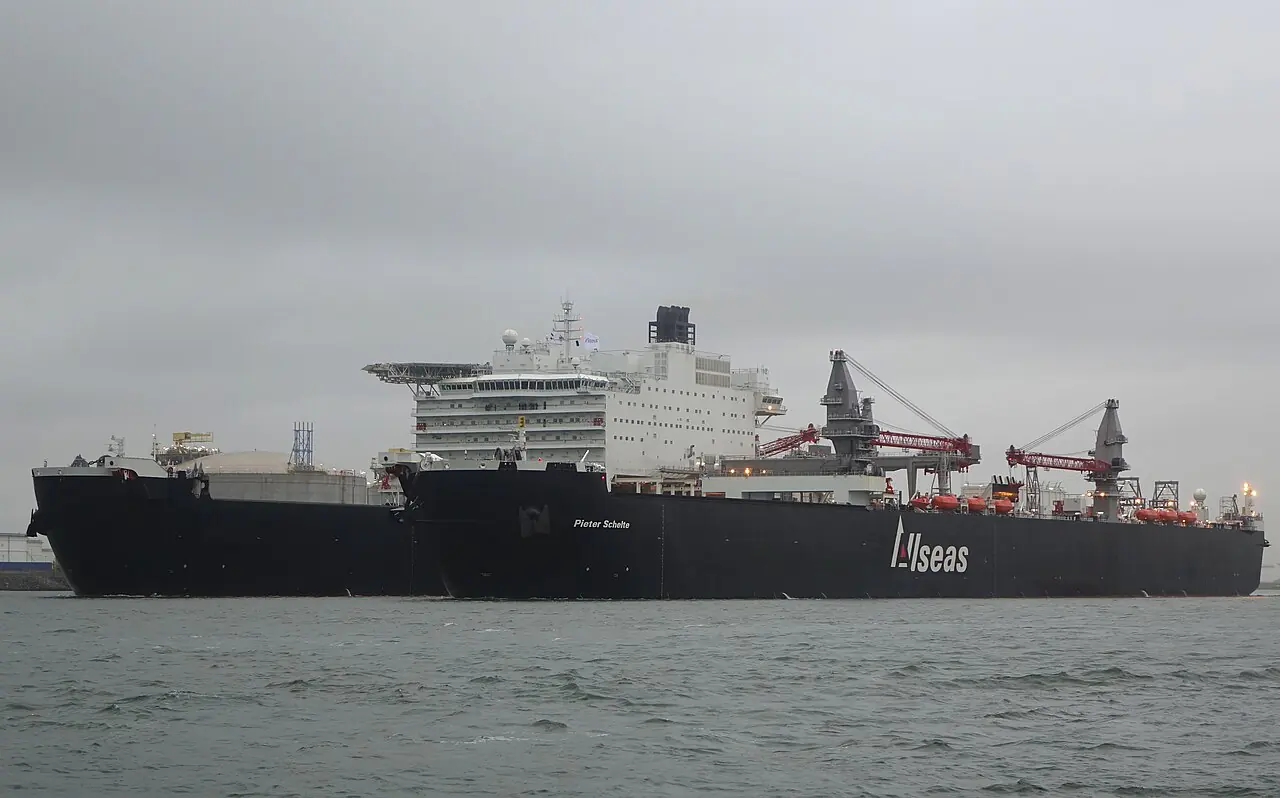
The advent of the single-lift vessel, epitomized by the Pioneering Spirit, has revolutionized this field. These vessels are designed to lift an entire platform topside or a massive jacket structure in a single, continuous motion. By utilizing advanced motion-compensation technology and unique structural designs, they can perform these heavy lifts even in challenging sea states, significantly reducing the offshore exposure of personnel and the duration of decommissioning campaigns.
These vessels are not merely larger crane ships; they are highly specialized, split-hull, motion-compensated heavy-lift platforms. They combine the capabilities of a heavy-lift vessel, a pipelay vessel, and a specialized transport vessel into a single, unprecedented maritime asset.
2. Mission and Operations
The primary mission of a single-lift decommissioning vessel is the safe, efficient, and sustainable removal of offshore infrastructure. This mission is divided into three core operational workflows: topside removal, jacket removal, and pipelaying.
Topside Removal Workflow
The removal of a platform topside is the most complex operation. The process typically follows these stages:
- Preparation: The vessel approaches the platform and establishes a stable position using its Dynamic Positioning (DP) system. Divers or ROVs (Remotely Operated Vehicles) may perform final inspections and preparations on the platform legs.
- Attachment of TLS: The vessel’s split bow is opened, and the Topsides Lift System (TLS) beams are deployed. These beams are positioned beneath the platform’s main structure. Depending on the platform design, specialized horseshoe or yoke attachments are used to secure the beams to the topside.
- The Single Lift: Using active hydraulic motion compensation, the TLS beams lift the entire topside structure. The compensation system adjusts for the vessel’s heave, roll, and pitch, ensuring a smooth and controlled lift that minimizes dynamic loads on the platform and the vessel.
- Transfer and Transport: Once lifted, the topside is either placed into the vessel’s central “slot” (if the design allows for integrated transport) or transferred to a separate heavy-lift barge.
Jacket Removal Workflow
Jackets, the steel foundations of offshore platforms, present a different lifting challenge due to their shape and the need to “upend” them from a vertical to a horizontal position.
- Attachment of JLS: The Jacket Lift System (JLS) is deployed. This system involves specialized lifting beams and an integrated hang-off frame.
- Upending: The JLS is used to grab the jacket and, through a controlled tilting motion, “upend” it from its vertical position in the seabed to a horizontal position.
- Lifting and Removal: Once horizontal, the jacket is lifted from the seabed and secured for transport.
Pipelaying Operations
Beyond decommissioning, these vessels are world leaders in installation. Using an S-lay method, they can install ultra-heavy pipelines across a wide range of water depths. The vessel utilizes a massive, tension-controlled stinger that supports the pipe as it transitions from the vessel to the seabed.
3. Hull, Size, and Design
The design of a single-lift vessel is dictated by the requirement to carry massive, heavy-lift components within its own structure. The most defining characteristic of vessels like the Pioneering Spirit is the split-hull architecture.
The Split-Hull Design
Unlike conventional ships, the bow of the vessel is split into two halves. This allow the vessel to “open up,” creating a massive central slot or cargo area. This slot is essential for:
- Carrying Large Loads: Entire topsides or large sections of jackets can be seated within the slot, lowering the center of gravity and increasing stability during transit.
- TLS/JLS Deployment: The split bow provides the necessary clearance for the heavy lifting beams to be positioned around the target structure.
Key Dimensions (Example: Pioneering Spirit)
| Dimension | Specification (approx.) |
|---|---|
| Length Overall (LOA) | 382 m (hull) / 477 m (with stinger/beams) |
| Beam (Width) | 124 m |
| Slot Length | 122 m |
| Slot Width | 59 m |
| Operational Draught | 10 – 27 m |
| Maximum Draught | 27 m |
| Air Draught | 57 m (at 26 m draught) |
| Gross Tonnage (GT) | ~403,342 |
| Displacement | Up to 1,000,000 tonnes |
The sheer scale of these vessels makes them some of the largest man-made moving objects on Earth. The massive beam (over 120 meters) provides the necessary stability to support the immense weight of a single-lift operation without excessive tilting.
4. Propulsion and Engines
To maintain a precise position near an offshore platform—often in high seas and strong currents—single-lift vessels require an extraordinary level of propulsion and station-keeping capability.
Diesel-Electric Propulsion
These vessels typically utilize a diesel-electric propulsion system. Instead of diesel engines driving shafts directly, they drive massive electrical generators. This electricity is then distributed to electric motors that power the thrusters. This system offers several advantages:
- Flexibility: Power can be diverted dynamically between propulsion and heavy-lift machinery (like the TLS).
- Efficiency: Engines can run at optimal loads, even when the vessel’s speed varies.
- Precision: Electric motors allow for extremely fine control of thrust, which is critical for DP operations.
Azimuth Thrusters
The primary means of propulsion and maneuvering are azimuth thrusters. These are propeller units that can rotate 360 degrees, allowing the vessel to direct thrust in any direction. For a vessel like the Pioneering Spirit, these are massive:
- Quantity: Typically 12 large thrusters.
- Capacity: Each thruster can provide upwards of 6,000 kW of power.
- Configuration: Arranged around the hull to provide maximum control and redundancy.
5. Electrical System and Power
The electrical system is the “nervous system” and “muscle” of the vessel. Given the requirement for both massive propulsion and high-torque lifting, the power management is incredibly complex.
Power Generation
The power is generated by multiple large-scale diesel generator sets. For example, the Pioneering Spirit utilizes:
- Main Generators: Approximately 8 x 11,200 kW MAN diesel generator sets.
- Auxiliary Generators: Additional smaller sets for hotel loads and standby power.
Power Distribution and Redundancy
The system must be highly redundant to comply with DP3 (Dynamic Positioning Class 3) standards. This means that even in the event of a major failure (e.g., a fire in one engine room or a total loss of one electrical bus), the vessel must retain enough power and control to maintain its position safely. This is achieved through:
- Independent Power Grids: Multiple, physically separated electrical systems.
- Automated Power Management Systems (PMS): These systems monitor the load in real-time and can instantly reroute power or start standby generators to prevent a blackout.
6. Equipment and How It Is Used
The “magic” of single-lift decommissioning lies in the specialized lifting systems.
Topsides Lift System (TLS)
The TLS is an engineering marvel designed to lift massive platform topsides.
- The Beams: It consists of a series of heavy-duty beams (e.g., 16 beams in the Pioneering Spirit) that are positioned across the vessel’s split bow.
- Attachment: The beams work in pairs (acting like giant forklifts) or individually, using platform-specific attachments (yokes or horseshoes) that wrap around the platform’s structural members.
- Motion Compensation: This is the most critical component. The TLS is connected to the vessel via high-capacity hydraulic cylinders. These cylinders are controlled by an automated system that senses the vessel’s heave, roll, and pitch and moves the beams in the opposite direction. This “cancels out” the vessel’s movement, allowing the load to remain stable relative to the platform.
Jacket Lift System (JLS)
The JLS handles the removal of the steel jacket substructures.
- Lifting Beams: Large, integrated lifting beams are deployed to engage the jacket.
- Upending Mechanism: The system includes an “upend” mechanism, often utilizing skid tracks and push-pull hydraulic devices, to tilt the jacket from a vertical to a horizontal position.
- Hang-off Frame: A specialized frame allows the jacket to be suspended securely during the transition and subsequent transport.
Special Purpose Crane
While the TLS and JLS handle the “big lifts,” a massive heavy-lift crane is still required for auxiliary tasks, such as moving equipment, handling smaller components, or assisting in the subsea preparation. For instance, the Pioneering Spirit carries a 5,000-tonne crane with a 128-meter boom.
Pipelay Stinger and Tensioners
For installation work, the vessel uses a massive S-lay stinger—a long, curved structure extending from the stern. The stinger supports the weight of the pipeline as it leaves the vessel. To prevent the pipe from slipping or buckling under its own weight, high-capacity tensioners (capable of thousands of tonnes of force) are used to pull the pipe through the stinger and down to the seabed.
7. Navigation, Communications, and Safety
Operating a vessel of this scale near sensitive offshore infrastructure requires state-of-the-art navigation and safety systems.
Dynamic Positioning (DP3)
As mentioned, these vessels are equipped with DP3-rated systems. DP is a computer-controlled system that automatically maintains the vessel’s position and heading by adjusting the azimuth thrusters. DP3 is the highest level of redundancy, ensuring that even with significant mechanical or electrical failures, the vessel remains on station. This is vital to prevent collisions with the platform or damage to subsea assets.
Communication and Monitoring
- GMDSS: Global Maritime Distress and Safety System is standard for international operations.
- Real-time Monitoring: The vessel is equipped with hundreds of sensors monitoring the structural integrity of the hull, the status of the lifting beams, the tension in the TLS/JLS, and the environmental conditions (wave height, wind speed, current).
- ROV Integration: Remotely Operated Vehicles (ROVs) are used for subsea inspections and to assist in the attachment of lifting gear.
Helideck and Safety
Given the size of the crew and the complexity of the operations, a large, certified helideck is essential for crew changes and emergency medical evacuations.
8. Crew and Organization
The operation of a single-lift vessel is a highly coordinated effort involving hundreds of specialists.
Crew Composition
A typical crew for a vessel like the Pioneering Spirit consists of approximately 500–600 persons, including:
- Deck Crew: Specialized heavy-lift operators, crane operators, and deckhands.
- Engineering Team: Marine engineers, electrical engineers, and hydraulic specialists to maintain the complex propulsion and lifting systems.
- Subsea Team: ROV pilots, divers (where applicable), and subsea engineers.
- Pipelay Specialists: Technicians specialized in S-lay operations and tensioner management.
- Offshore Management: Barge masters, captains, and project managers.
- Support Staff: Catering, medical, and logistics personnel to manage the “hotel” functions.
Organization
Operations are usually managed under a strict hierarchy, with a Project Manager overseeing the entire decommissioning campaign, a Captain responsible for the vessel’s movement, and specialized “Lift Supervisors” managing the actual execution of the TLS or JLS operations.
9. Certificates and Training Requirements
The extreme risks involved in single-lift operations demand rigorous certification and training.
Mandatory Maritime Certifications
All crew members must hold standard international maritime certifications (STCW - Standards of Training, Certification, and Watchkeeping), including:
- Basic Safety Training (BST).
- Advanced Firefighting.
- Medical First Aid.
Specialized Training
Beyond standard maritime skills, personnel require highly specialized training:
- DP Certification: Officers and engineers must hold advanced DP certificates (typically Unlimited DP).
- Heavy-Lift Training: Operators of the TLS and JLS undergo extensive simulator-based training to master the motion-compensation systems and the unique dynamics of single-lift operations.
- Crane Certification: Crane operators must be certified for the specific classes of heavy-lift cranes on board.
- Safety Management Systems (SMS): All crew are trained in the vessel’s specific SMS, which dictates every aspect of the decommissioning workflow.
10. Regulations, Class, and Inspections
Single-lift vessels operate under the strictest international and national regulations.
Classification Societies
These vessels are “classed” by major societies like Lloyd’s Register (LR), DNV, or ABS. Classification involves regular, rigorous inspections of the hull, machinery, and lifting equipment to ensure they meet the design standards for their intended service.
International Maritime Organization (IMO)
The vessel must comply with all IMO regulations, including:
- SOLAS (Safety of Life at Sea): For vessel safety and life-saving equipment.
- MARPOL (Prevention of Pollution from Ships): For environmental protection.
- COLREGs (International Regulations for Preventing Collisions at Sea): For navigation.
DP Standards (IMO MSC/Circ.645)
The Dynamic Positioning systems are audited against international standards to ensure they meet the required redundancy and reliability levels for offshore operations.
11. Notable Shipyards, Operators, and Example Vessels
The construction and operation of these vessels are concentrated among a few highly specialized entities.
Notable Shipyards
- DSME (Daewoo Shipbuilding & Marine Engineering): Located in South Korea, DSME is a world leader in constructing ultra-large offshore construction vessels.
Leading Operators
- Allseas: The primary operator of the Pioneering Spirit and the undisputed leader in single-lift technology.
Example Vessels
| Vessel Name | Operator | Primary Capability |
|---|---|---|
| Pioneering Spirit | Allseas | Single-lift (Topsides/Jackets), Pipelay |
| [VERIFY: Other vessels] | [VERIFY] | [VERIFY] |
(Note: While many heavy-lift vessels exist, the specific ‘single-lift’ class for massive topsides is currently dominated by the Pioneering Spirit and its derivatives.)
12. Environment and Future Outlook
As the world transitions toward renewable energy, the demand for offshore decommissioning is set to explode. Thousands of oil and gas platforms in the North Sea, Gulf of Mexico, and elsewhere are reaching the end of their design lives.
Environmental Benefits of Single-Lift
The single-lift approach offers several environmental advantages:
- Reduced Emissions: By performing the lift in one operation, the total time spent on-site by the vessel and support fleet is significantly reduced, lowering fuel consumption and CO2 emissions.
- Minimized Seabed Disturbance: The precision of DP and single-lift technology reduces the need for extensive subsea anchoring and minimizes the physical footprint of the decommissioning process.
- Safety and Waste Management: Removing a platform in one piece makes it easier to transport to a controlled onshore facility for safe recycling and decommissioning, reducing the risk of leaks or spills during the removal process.
Future Trends
- Automation: Increased use of AI and autonomous systems for subsea preparation and even the automated control of lifting systems.
- Increased Scale: As platforms in deeper waters and more remote locations are decommissioned, the demand for even larger and more capable single-lift vessels may arise.
- Integration with Renewables: These vessels may play a key role in the decommissioning of early-generation offshore wind substructures and the installation of next-generation offshore energy infrastructure.
13. Facts, Records, and Common Misconceptions
Key Facts & Records
- World’s Largest Vessel: The Pioneering Spirit holds the record for the largest vessel by gross tonnage (over 400,000 GT).
- The Heaviest Vehicle: Due to its massive displacement, it is often cited as the heaviest man-made moving object.
- Single-Lift Revolution: It is the only vessel capable of removing entire 48,000–60,000 tonne topsides in a single lift.
Common Misconceptions
- “They are just giant cranes”: While they have cranes, their primary lifting capability comes from the TLS and JLS beams and the split-hull architecture, not a traditional crane arm.
- “They can lift anything”: While incredibly powerful, their capacity is highly dependent on the platform’s structural integrity, the sea state, and the specific configuration of the lifting beams.
14. Glossary
- Azimuth Thruster: A propeller unit that can rotate 360 degrees to provide thrust in any direction.
- DP3 (Dynamic Positioning Class 3): The highest level of DP redundancy, capable of maintaining position after a major equipment failure.
- Jacket: The steel substructure that supports an offshore platform.
- Motion Compensation: A system that adjusts lifting gear to counteract the vessel’s movement caused by waves.
- S-lay: A method of pipelaying where the pipe forms an “S” shape as it moves from the vessel to the seabed.
- Single-lift: The process of removing an entire offshore structure in one operation.
- Topsides: The superstructure of an offshore platform located above the sea level.
- TLS (Topsides Lift System): A specialized system of beams and hydraulics used to lift platform topsides.