1. What Is This Ship?
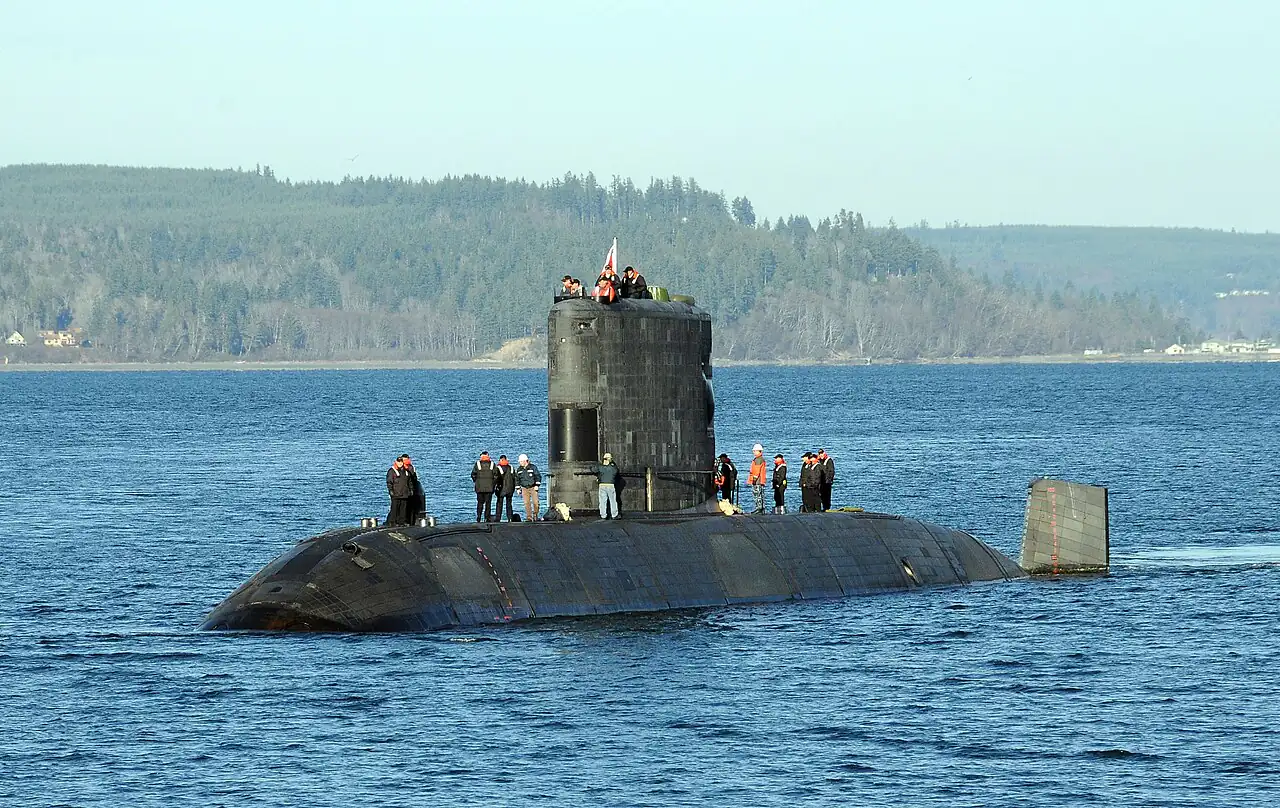
A submarine, or submersible, is a vessel capable of independent operation underwater. Unlike surface ships that primarily interact with the atmosphere, submarines are designed to navigate, operate, and survive in the high-pressure environment of the deep ocean. They are categorized fundamentally by their propulsion systems and primary mission profiles.
Core Classifications
- SSK (Conventional Submarine): Powered by diesel engines and electric motors. They must periodically “snorkel” (use a snorkel mast to draw air for diesel engines and exhaust gases) or rely on Air-Independent Propulsion (AIP) to remain submerged for extended periods.
- SSN (Nuclear-Powered Attack Submarine): Powered by a nuclear reactor. These vessels possess nearly unlimited submerged endurance, limited only by food supplies and crew stamina, making them ideal for high-speed transit and long-duration surveillance.
- SSBN (Nuclear-Powered Ballistic Missile Submarine): A specialized type of SSN designed to carry submarine-launched ballistic missiles (SLBMs). They serve as a primary leg of the nuclear triad, operating in “silent” patrol modes to maintain a continuous deterrent.
- SSG/SSGN: Variants of nuclear submarines optimized for guided missile strikes (SSGN) or specifically designated for gas-turbine/other auxiliary propulsion (though rare in modern contexts).
2. Mission and Operations
Submarines are multi-role assets, though their specific design often dictates a specialized function.
- Intelligence, Surveillance, and Reconnaissance (ISR): Using advanced sonar and optronics, submarines loiter near adversary coasts to intercept communications and monitor naval movements.
- Anti-Submarine Warfare (ASW): Detecting and neutralizing enemy submarines using active and passive sonar suites.
- Anti-Surface Warfare (ASuW): Utilizing torpedoes or cruise missiles to engage surface combatants.
- Strategic Deterrence: SSBNs maintain a “stealthy” presence, providing a survivable second-strike capability.
- Special Operations Support: Deploying divers (SEALs/SBS) or Unmanned Underwater Vehicles (UUVs) for clandestine missions.
3. Hull, Size, and Design
The submarine’s design is a battle between hydrodynamic efficiency and the brutal physical reality of hydrostatic pressure.
The Pressure Hull vs. The Outer Hull
Most modern submarines utilize a double-hull construction. The outer hull is hydrodynamic and provides buoyancy, while the pressure hull (or inner hull) is the watertight cylinder that protects the crew and vital systems.
Pressure Hull Materials
The material of the pressure hull determines the vessel’s maximum operational depth (crush depth).
| Material | Characteristics | Typical Usage |
|---|---|---|
| HY-80 Steel | High-yield strength, low-alloy steel. Proven, cost-effective. | US Navy (Legacy/Standard) |
| HY-100 Steel | Higher yield stress than HY-80; allows for deeper diving. | Modern US Attack Submarines |
| Titanium | Extremely strong, lightweight, corrosion-resistant, and non-magnetic. Very expensive/complex to work. | Russian Alpha/Sierra classes |
| High-Strength Steel Alloys | Specialized modern alloys designed for extreme depth. | Advanced international designs |
Buoyancy and Trim Control
Submarines maintain depth through the manipulation of buoyancy and hydrodynamic forces.
- Main Ballast Tanks (MBTs): Large tanks located between the inner and outer hulls. To dive, these are flooded with seawater; to surface, compressed air is used to “blow” the water out.
- Trim and Depth Control Tanks (DCTs): Smaller, high-pressure tanks used for fine-tuning the submarine’s longitudinal trim (pitch) and vertical position (depth). Water is pumped between these tanks to compensate for changes in weight (e.g., consuming food, firing torpedoes).
- Diving Planes (Hydroplanes): Movable surfaces located on the sail (fairwater planes) or the bow/stern (stern planes). When the submarine is moving, these planes create hydrodynamic lift or downforce, allowing the vessel to “fly” through the water column.
For deeper insights into the physics of these systems, see hull geometry and hydrodynamics.
4. Propulsion and Engines
Propulsion is the defining technical characteristic of a submarine.
Diesel-Electric and AIP (Conventional)
Conventional submarines (SSK) use diesel engines to run generators, which either charge massive battery banks or power electric motors directly. To overcome the limitation of needing air, modern SSKs employ Air-Independent Propulsion (AIP).
Common AIP Technologies:
- Stirling Engine: A closed-cycle external combustion engine. It is quiet and reliable but involves moving parts.
- Proton Exchange Membrane (PEM) Fuel Cells: A chemical process that combines oxygen and hydrogen to produce electricity, with water as the only byproduct. This is considered the “gold standard” for stealth due to its near-silent operation.
- Closed-Cycle Diesel: Using Liquid Oxygen (LOX) to allow diesel engines to run without atmospheric air.
- Lithium-ion (Li-ion) Batteries: Emerging as a high-density alternative to traditional lead-acid batteries, providing significantly higher burst speeds and endurance for conventional boats.
Nuclear Propulsion (SSN/SSBN)
Nuclear submarines utilize a pressurized water reactor (PWR) to generate heat, which produces steam to drive turbines connected to the propeller or pump-jet.
- Advantages: Virtually unlimited range and high sustained speed.
- Disadvantages: Massive complexity, high cost, and the requirement for specialized shielding and reactor safety protocols.
For a comparison of different propulsion philosophies, see engines and propulsion.
5. Electrical System and Power
The electrical grid of a submarine is its lifeblood, powering everything from the reactor coolant pumps to the life-support scrubbers.
- Primary Power: Derived from either the nuclear reactor or diesel generators.
- Energy Storage: Large-scale battery banks (traditionally Lead-Acid, increasingly Li-ion) provide the power for silent running and maneuvering when the primary source is unavailable.
- DC Grid Architecture: Many modern submarines utilize a Direct Current (DC) grid to integrate various power sources (batteries, fuel cells, generators) more efficiently and to simplify the control of electric motors.
6. Equipment and How It Is Used
A submarine’s effectiveness is measured by its ability to “see” without being “seen.”
Sonar Systems
Sonar (Sound Navigation and Ranging) is the primary sensor.
- Passive Sonar: Listening for the acoustic signatures of other vessels. This is the most stealthy method.
- Active Sonar: Emitting a sound pulse (“ping”) and listening for the echo. While highly accurate for localization, it reveals the submarine’s position to everyone in the area.
- Arrays: Submarines use various arrays, including hull-mounted sonar, towed arrays (long cables trailed behind the boat), and flank arrays.
Optronics and Periscopes
Traditional optical periscopes have largely been replaced by Optronic Masts.
- Optronic Masts: Use high-resolution cameras (VIS, SWIR, MWIR) and sensors to provide a digital view to the command center. They are lighter, require no large optical tube through the pressure hull, and can include infrared and low-light capabilities.
- L3Harris and Hensoldt are leading manufacturers of these advanced imaging systems.
Weaponry
- Torpedoes: The primary anti-ship and anti-submarine weapon. Modern heavyweight torpedoes (e.g., Mark 48, Spearfish) are wire-guided or autonomous.
- Cruise Missiles: Launched from torpedo tubes or specialized payload modules (like the VPM in Virginia-class boats) for land-attack missions.
For a broader look at maritime sensors, see equipment encyclopedia.
7. Navigation, Communications, and Safety
Navigating in a three-dimensional, featureless environment requires specialized tools.
- Inertial Navigation Systems (INS): Uses gyroscopes and accelerometers to track position without needing external signals (like GPS, which does not work underwater).
- Communication Masts: Submarines use extremely low frequency (ELF) or very low frequency (VLF) radio waves for communication while submerged, or they must raise a mast to use satellite communications (SATCOM).
- Submarine Escape and Rescue:
- DSRV (Deep Submergence Rescue Vehicle): Manned mini-subs designed to mate with a disabled submarine’s hatch.
- NSRS (NATO Submarine Rescue Service): A coordinated international effort to provide rescue capabilities.
- Escape Pods/Systems: Individual or group escape systems used in emergencies.
8. Crew and Organization
Life on a submarine is defined by confinement, high-stakes responsibility, and extreme discipline.
- Endurance: Limited by food, fresh water, and atmospheric quality (CO2 buildup).
- Habitability: Modern designs focus on space management, noise reduction, and air filtration to maintain crew mental health during long deployments.
- Atmospheric Control: Scrubbers remove CO2, while oxygen generators (electrolyzers) produce breathable O2 from seawater.
9. Certificates and Training Requirements
Submarine service requires highly specialized training beyond standard naval qualifications.
- Diving Qualifications: Crew must master the physics of pressure and the mechanics of every subsystem.
- Specialist Training: Sonar technicians, nuclear engineers, and torpedo officers undergo rigorous, continuous certification.
10. Regulations, Class, and Inspections
Unlike commercial vessels, military submarines are governed by strict naval standards and internal inspections rather than civilian classification societies (though some design standards may overlap). They undergo frequent, intense inspections of pressure hull integrity and reactor safety.
For more on maritime standards, see regulations and class.
11. Notable Shipyards, Operators, and Example Vessels
The following table summarizes several prominent submarine classes.
| Class | Type | Primary Operator | Key Feature |
|---|---|---|---|
| Virginia | SSN | United States Navy | Advanced stealth, VPM payload module |
| Astute | SSN | Royal Navy | High-speed nuclear attack, Rolls-Royce PWR2 |
| Scorpène | SSK/AIP | Various (e.g., India, Brazil) | Highly efficient, multi-national design |
| Type 212CD | SSK/AIP | Germany, Norway, Canada | Cutting-edge PEM fuel cell AIP |
| Ula | SSK | Royal Norwegian Navy | Proven, reliable conventional design |
12. Environment and Future Outlook
The future of undersea warfare is shifting toward uncrewed systems.
- UUVs (Unmanned Underwater Vehicles): Smaller, autonomous drones for mine clearance, scouting, or payload delivery.
- Decarbonization: While nuclear is “clean” in operation, the lifecycle of nuclear power and the push for zero-emission diesel-electric alternatives continue to drive research into high-density Li-ion and next-gen fuel cells.
13. Facts, Records, and Common Misconceptions
- Myth: “Submarines can stay submerged forever.”
- Reality: Only nuclear-powered boats have nearly unlimited submerged time; conventional boats must manage air and energy carefully.
- Myth: “The crush depth is the depth at which the sub implodes.”
- Reality: “Test depth” is the safe operating limit; “crush depth” is a theoretical point where structural failure becomes inevitable, often preceded by significant deformation.
14. Glossary
- AIP (Air-Independent Propulsion): Technology allowing conventional submarines to operate without atmospheric air.
- Ballast Tank: A compartment used to control buoyancy.
- Diving Plane: A hydrodynamic surface used to control depth.
- Hydrostatic Pressure: The pressure exerted by a fluid at equilibrium due to the force of gravity.
- PEM (Proton Exchange Membrane): A type of fuel cell technology.
- SSBN: Submarine launched ballistic missile vessel.
- SSK: Conventional diesel-electric submarine.
- SSN: Nuclear-powered attack submarine.
- Trim: The longitudinal balance (pitch) of a vessel.