1. What Is This Ship?
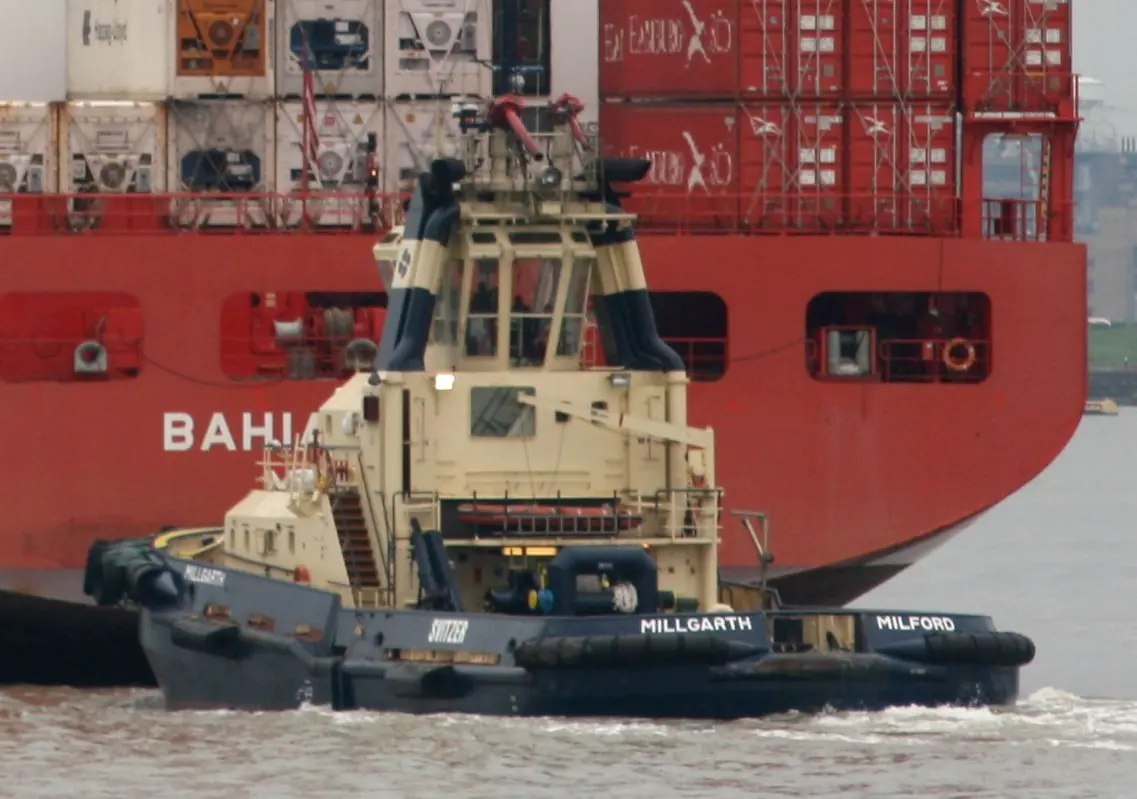
A tugboat, commonly referred to simply as a “tug,” is a specialized marine vessel designed to maneuver other ships, barges, or floating structures by pushing or pulling them. Unlike standard commercial vessels that are built for cargo capacity or passenger transport, tugboats are engineered for extreme power, maneuverability, and durability. They act as the “workhorses” of the maritime world, providing essential assistance in environments where larger vessels lack the precision or ability to maneuver under their own power.
Tugboats are typically employed in scenarios such as crowded harbors, narrow canals, or during inclement weather. Their primary function is to facilitate the safe berthing and mooring of massive vessels, such as container ships, tankers, and bulk carriers, which possess enormous momentum and limited maneuverability in tight spaces. Beyond port assistance, tugs are vital for towing non-self-propelled vessels like barges, oil platforms, and log rafts across open waters.
While many tugboats are optimized for harbor operations, others are designed for deep-sea voyages, salvage operations, or specialized tasks like icebreaking or firefighting. The evolution of the tugboat has seen a transition from early steam-powered paddle vessels to highly sophisticated, computer-controlled diesel-electric machines equipped with advanced propulsion systems like Azimuth Stern Drives (ASD) and Voith Schneider Propellers (VSP).
2. Mission and Operations
The mission of a tugboat is highly varied, depending on its specific design and classification. The following represent the core operational roles:
Ship Assistance and Berthing
In most ports, tugs are tasked with assisting large ships during arrival and departure. By pushing against the hull or pulling from the bow or stern with tow lines, tugs can rotate a vessel in place, push it sideways against a pier (berthing), or hold it steady against wind and current.
Towing Operations
Tugs are frequently used to tow non-self-propelled vessels. This can involve “towing in stream,” where the tug pulls a vessel through open water, or “towing in harbor,” requiring much finer control. Towing can be done via a wire cable for heavy loads or synthetic ropes for lighter, more flexible connections.
Salvage and Emergency Response
Salvage tugs are specialized vessels equipped for heavy-duty recovery operations. They are sent to assist disabled ships, clear wreckage, or manage oil spills. Many tugs are also outfitted with high-capacity deluge guns (water cannons) to serve as firefighting vessels during port emergencies.
Offshore Support
Specialized tugs, often called Anchor Handling Tug Supply (AHTS) vessels, support offshore oil and gas operations. They are responsible for positioning massive anchors for drilling rigs, supplying materials to offshore platforms, and assisting in the deployment of subsea equipment.
Specialized Classifications
- Harbor Tugs: Small to medium-sized vessels optimized for high maneuverability in confined port environments.
- Seagoing (Ocean) Tugs: Large, robust vessels built to withstand the harsh conditions of the open ocean, capable of long-distance towing.
- River/Canal Tugs: Designed for inland waterways, often featuring shallower drafts and specialized hull shapes for narrow channels.
- Escort Tugs: Designed to travel alongside high-speed vessels (like ferries) or large tankers to provide braking or steering assistance in case of mechanical failure.
- Articulated Tug and Barge (ATB): A system where a tug is designed to lock into a specific barge, forming a single, rigid unit that behaves like a larger ship.
- Integrated Tug and Barge (ITB): A vessel where the tug and barge are permanently or semi-permanently joined, legally categorized as a single ship.
3. Hull, Size, and Design
Tugboat design is a study in maximizing power and maneuverability within a compact footprint. Several key design features distinguish them from other vessels:
High Power-to-Tonnage Ratio
The most defining characteristic of a tugboat is its incredible power relative to its size. While a cargo ship might have a power-to-tonnage ratio of 0.35 to 1.20, a large tugboat can reach ratios between 2.20 and 4.50. This ensures that even a relatively small vessel can exert massive force on a much larger object.
Hull Shape and Stability
Tugs typically feature a broad beam (width) relative to their length to provide high stability during towing and pushing operations. A wide beam lowers the center of gravity and provides a stable platform when the vessel is subjected to the heavy lateral forces of a tow line or the impact of pushing a massive hull.
Draft and Maneuverability
Harbor tugs are designed with a moderate draft to allow them to navigate shallow port areas and near piers. However, seagoing tugs require deeper drafts to ensure propeller immersion and stability in heavy seas. The hull is often designed to work in tandem with specialized propulsion systems to allow for “omni-directional” movement, meaning the tug can move in any direction without turning its bow.
Fendering Systems
Because tugboats operate by making direct contact with other ships, their hulls are heavily protected by fendering systems. These fenders absorb the kinetic energy of impacts and distribute the pressure across the hull to prevent damage to both the tug and the assisted vessel. Common types include:
- W-block fenders: Heavy-duty, often used on the bow.
- Cylindrical fenders: Frequently used along the sides (port and starboard).
- D-type fenders: Continuous rubber profiles used for general protection.
4. Propulsion and Engines
Propulsion is the heart of the tugboat. To achieve the required bollard pull and maneuverability, tugs utilize advanced engine and propulsion configurations.
Engine Technology
Historically, tugs were powered by steam engines and paddle wheels. The industrial revolution saw the transition to diesel engines, which provide much higher torque and efficiency.
- Typical Power: Most tugboats utilize engines producing between 680 and 3,400 hp (500–2,500 kW).
- High-Power Tugs: Large deep-sea and AHTS vessels can possess engines exceeding 27,200 hp (20,000 kW).
Propulsion Systems
The evolution of tugboat propulsion has moved from conventional setups toward systems that allow for near-instantaneous direction changes.
| System Type | Description | Key Advantage |
|---|---|---|
| Conventional | Traditional propeller and rudder configuration. | Efficient for long-distance, straight-line towing. |
| Kort Nozzle | A propeller enclosed in a shroud (nozzle) to increase thrust. | Increases the thrust-to-power ratio significantly. |
| Azimuth Stern Drive (ASD) | A propeller unit that can rotate 360 degrees. | Exceptional maneuverability; eliminates the need for a rudder. |
| Voith Schneider (VSP) | A cycloidal propeller system using rotating blades. | Provides instantaneous, omni-directional thrust control. |
| Azimuth Tractor Drive (ATD) | An azimuth unit located at the bow (tractor) rather than the stern. | Enhents pushing capability and bow control. |
The Voith Schneider Propeller (VSP)
The VSP is a landmark in marine engineering. It consists of a circular disk with controllable blades mounted at a 90-degree angle to the disk. By varying the angle of these blades as the disk rotates, the direction and magnitude of the thrust can be changed “steplessly” and instantly. This allows a tug to move sideways, backwards, or rotate in place with extreme precision.
5. Electrical System and Power
The electrical systems of a tugboat must be robust enough to support high-demand machinery like bow thrusters and winches while maintaining reliability for navigation and safety.
Power Generation and Distribution
Most modern tugs use multiple auxiliary engine-driven diesel generators to provide power. These generators feed into a main switchboard, which distributes power throughout the vessel.
- Main Voltage: Typically 400V or 440V (3-phase, 50Hz or 60Hz) for heavy machinery like motors and winches.
- Secondary Voltage: Transformers step this down to 230V for lighting, galley equipment, and electronic systems.
- DC Systems: A 24V DC system, usually backed by heavy-duty batteries and chargers, is standard for critical components like radio equipment, engine control systems, and emergency lighting.
Critical Components
- Bow Thrusters: Require significant electrical power to assist in lateral movement.
- Emergency Power: A dedicated emergency generator or battery bank ensures that essential navigation, communication, and lighting systems remain operational even if the main engines or generators fail.
6. Equipment and How It Is Used
A tugboat is essentially a floating power plant and heavy-duty toolset.
Towing Gear
- Towing Winch: A massive, high-torque winch used to deploy and retract tow lines. It must be able to handle extreme tension and often includes braking systems to prevent “runaway” loads.
- Towing Hook: Used for quick release of a tow line in emergencies.
- Capstan: A vertical rotating cylinder used for pulling lines and ropes, often used for lighter-duty tasks or mooring.
- Bitts and Bollards: Heavy metal structures on the deck used to secure lines.
Fendering and Protection
As mentioned in the design section, fenders are critical. They are not just “bumpers”; they are engineered to absorb energy. Designing a fender system involves calculating the maximum expected impact force (based on bollard pull and approach speed) to ensure the pressure applied to the assisted ship’s hull remains within safe limits (typically < 20 t/m²).
Firefighting Equipment
Many tugs are equipped with high-pressure water monitors or deluge guns. These allow the crew to combat fires on ships, docks, or oil platforms from a safe distance.
7. Navigation, Communications, and Safety
Operating a tugboat requires high situational awareness, especially when working in close proximity to massive, moving vessels.
Navigation Equipment
- Radar: Essential for detecting other vessels, landmasses, and weather conditions, especially in low visibility.
- AIS (Automatic Identification System): Allows the tug to see the identity, position, speed, and heading of surrounding vessels.
- GPS/GNSS: For precise positioning and route planning.
- Echo Sounder: To monitor water depth and avoid grounding in shallow ports.
Communication
- VHF Radio: The primary method for communicating with other ships, port authorities, and pilots.
- Internal Communication: Intercom systems between the bridge, engine room, and deck crew.
Safety Systems
Safety is paramount due to the high-risk nature of towing and pushing. This includes life rafts, life jackets, fire suppression systems, and emergency shutdown procedures for all heavy machinery.
8. Crew and Organization
A tugboat operates with a small, highly skilled crew. The organization is typically hierarchical to ensure clear command during high-stress operations.
Typical Crew Composition
- Master (Captain): The ultimate authority on board, responsible for the safety of the vessel, crew, and cargo. They must have extensive experience in maneuvering.
- Mate (Officer): Assists the Master in navigation and deck operations.
- Chief Engineer: Responsible for the maintenance and operation of the engines, generators, and electrical systems.
- Engineers/Oilers: Support the Chief Engineer in technical maintenance.
- Deckhands/Able Seamen (AB): Perform the physical tasks of handling lines, operating winches, and maintaining the vessel.
9. Certificates and Training Requirements
Because of the specialized nature of tug operations, crew members must hold specific certifications beyond standard maritime qualifications.
Key Certifications
- STCW (Standards of Training, Certification and Watchkeeping): The international standard for minimum requirements for crew training and certification.
- Tug-Specific Endorsements: Many jurisdictions require additional training for operating high-power vessels or specific propulsion types (like ASD).
- Pilotage Qualifications: In many ports, tug captains must undergo local training to become authorized to work within specific harbor boundaries.
- Bollard Pull Certification: While often a vessel certification, crew must be trained to operate within the limits of the vessel’s certified pulling capacity.
10. Regulations, Class, and Inspections
Tugboats are subject to strict international and national regulations to ensure they are fit for their dangerous missions.
Regulatory Bodies
- IMO (International Maritime Organization): Sets global standards for safety, security, and environmental performance.
- Classification Societies: Organizations like DNV, Lloyd’s Register (LR), American Bureau of Shipping (ABS), and Bureau Veritas (BV) establish technical standards for hull construction, machinery, and equipment. A tugboat must be “classed” by one of these societies to operate commercially.
Inspections
Tugs undergo regular, rigorous inspections to verify their structural integrity, the functionality of their towing gear, and the reliability of their engines and propulsion. Bollard pull tests are often conducted as part of these periodic inspections to ensure the vessel’s pulling power remains within its certified limits.
11. Notable Shipyards, Operators, and Example Vessels
The tugboat industry is dominated by several specialized manufacturers and operators.
Major Shipyards and Manufacturers
- Damen Shipyards (Netherlands): One of the world’s largest and most influential builders of tugs and support vessels.
- Sanmar Shipbuilders (Turkey): A major producer of high-quality harbor tugs.
- Voith Schneider (Germany): A key provider of advanced propulsion technology.
Example Vessels
- Island Victory: A world-renowned Anchor Handling Tug Supply (AHTS) vessel, known for its massive bollard pull (approx. 477 tonnes-force).
- Charlotte Dundas: A historical milestone as one of the first steam-powered tugs (built in 1801).
- Reid McAllister / McAllister Responder: Representative examples of high-performance modern harbor tugs used in major US ports.
12. Environment and Future Outlook
The maritime industry is undergoing a massive shift toward sustainability, and the tugboat sector is at the forefront.
Decarbonization and Alternative Fuels
Traditional diesel engines are being challenged by the need to reduce CO2 and NOx emissions. Research is focusing on:
- Hybrid Propulsion: Combining diesel engines with battery banks to optimize fuel consumption and allow for “zero-emission” operations in harbors.
- Electric Tugs: Fully electric tugs (powered by large battery arrays) are becoming viable for short-range harbor duties.
- Alternative Fuels: The potential use of LNG (Liquefied Natural Gas), Methanol, or Hydrogen as fuel sources.
Automation and Digitalization
The rise of “smart ports” is driving interest in autonomous and remotely controlled tugs.
- rcVSP (Remote-Controlled Voith Schneider Propeller): Allows maneuvers to be carried out remotely, increasing safety for the crew.
- Autonomous Tugs: Ongoing research into AI-driven tugs that can assist in berthing with minimal human intervention.
13. Facts, Records, and Common Misconceptions
- Fact: A tugboat’s strength is not measured by speed, but by its Bollard Pull.
- Fact: Many modern tugs can rotate 360 degrees on their own axis due to ASD or VSP technology.
- Misconception: People often think tugboats are just “small boats.” In reality, an AHTS vessel can be a massive, sophisticated machine with more power and technical complexity than many large cargo ships.
- Misconception: Tugboats are only used in ports. Deep-sea salvage tugs are among the most capable ocean-going vessels in existence.
14. Glossary
- AIS (Automatic Identification System): An automated tracking system used for identifying and locating vessels.
- ASD (Azimuth Stern Drive): A propulsion system where the propellers can rotate 360 degrees.
- AHTS (Anchor Handling Tug Supply): A specialized tug for offshore oil and gas support.
- Bollard Pull: The measure of a vessel’s pulling power.
- Bollard: A short, strong post on a pier or ship used for securing lines.
- Capstan: A vertical rotating device used for pulling lines.
- Class (Classification): The process of verifying a ship’s technical standards by a society like ABS or DNV.
- Deluge Gun: A high-capacity water monitor used for firefighting.
- ITB (Integrated Tug and Barge): A vessel where the tug and barge are rigidly joined.
- Kort Nozzle: A shroud around a propeller that increases thrust.
- Master: The captain or person in command of the vessel.
- Notch Tug: A tug designed to fit into a specific “notch” on the stern of a barge.
- Pilotage: The practice of a local pilot guiding a ship through dangerous or congested waters.
- STCW: International standards for maritime training and certification.
- VSP (Voith Schneider Propeller): A cycloidal propulsion system offering extreme maneuverability.
- Winch: A machine used to wind or unwind rope or cable under tension.
- Z-Drive: A type of azimuth thruster with a horizontal input shaft.