1. What Is This Ship?
A yacht is a watercraft specifically engineered and commissioned for the purposes of pleasure, recreation, or competitive racing. While the term is frequently applied loosely in colloquial speech to describe almost any vessel used for leisure, in professional maritime, engineering, and regulatory contexts, it denotes a distinct class of vessel. Unlike commercial ships, which are optimized for the efficient transport of cargo or large volumes of passengers, a yacht is optimized for comfort, aesthetic elegance, and high performance.
Etymology and the “Chaser” Legacy
The linguistic origins of “yacht” provide a fascinating glimpse into its historical function. The term is derived from the Dutch word jaght, which translates to “hunter” or “chaser.” In the 17th century, the Dutch Republic—a global maritime superpower—utilized these light, fast, and highly maneuverable vessels for the vital task of pursuing pirates and smugglers through the narrow channels and turbulent waters of the North Sea.
As the Dutch maritime empire reached its zenith, these functional security vessels were increasingly adapted for the pleasure of the Dutch elite. This evolution from a tool of law enforcement to a symbol of status was rapid. The trend crossed the English Channel during the Restoration period in 1660, when King Charles II, having spent years in exile in the Netherlands, returned to England with a profound appreciation for Dutch maritime culture and pleasure craft. The subsequent fascination with yachting among the British aristocracy laid the foundation for the modern global yachting industry.
Modern Definitions and Distinctions
In the contemporary maritime landscape, the definition of a yacht is expansive. A yacht can range from a small, single-handed sailing dinghy used for local training to a multi-hundred-meter megayacht that functions as a floating palace.
To provide clarity, maritime professionals often use several tiers of distinction:
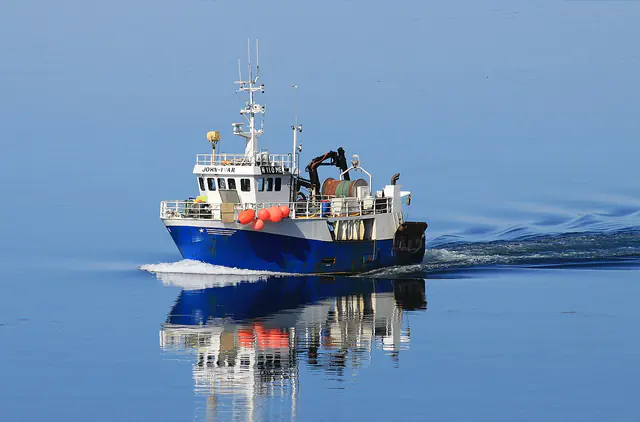
- Yacht vs. Boat: While every yacht is a boat, not every boat is a yacht. The distinction lies in intent. A commercial fishing vessel or a utility tugboat is a “boat,” whereas a vessel designed with amenities for overnight habitation and luxury is a “yacht.”
- Scale-Based Classifications:
- Day Yachts: Designed for short-duration excursions, typically without significant overnight accommodations.
- Cruising Yachts: Equipped with cabins, galleys, and heads (toilets) for multi-day or multi-week voyages.
- Superyachts: Generally defined in the industry as vessels exceeding 40 meters (131 feet) in length.
- Megayachts/Gigayachts: Vessels that push the boundaries of naval architecture, often exceeding 100 meters.
2. Mission and Operations
The “mission” of a yacht is multi-faceted and can change based on the vessel’s design, the owner’s intent, and the economic model under which it operates.
Recreational Cruising: From Coastal to Blue Water
The most common mission for yachts is leisure. This is categorized by the distance from land and the level of autonomy required:
- Coastal Cruising: These vessels operate within the sight of land, navigating through sheltered bays, archipelops, and coastal waterways. The focus is on accessibility, ease of maneuverability, and “day-to-night” convenience.
- Blue Water/Ocean Cruising: These yachts are the true explorers. Designed for long-distance, offshore passages, they must be capable of crossing oceans (e.g., the Atlantic or Pacific) with minimal reliance on land-based support. Their mission requires extreme durability, sophisticated navigation, and massive self-sufficiency in terms of water, power, and provisions.
- Expedition/Explorer Yachts: A specialized subset of blue-water vessels. These are built with rugged, ice-strengthened hulls and advanced technical systems to allow for exploration in extreme environments, such as the Arctic or Antarctic.
Competitive Racing: The Pursuit of Speed
Yachting has a deep-rooted competitive culture. In these contexts, the mission is purely performance-oriented:
- Regatta Racing: Organized competitive events where yachts compete within specific “classes” defined by strict design and measurement rules.
- Grand Prix/One-Design Racing: A format where every vessel is built to identical specifications, ensuring that the winner is determined by the skill of the crew and the technical tuning of the rig, rather than the size of the owner’s budget.
- High-Performance Foiling: The absolute cutting edge of yacht design. Vessels like those seen in the America’s Cup use hydrofoils to lift the hull entirely out of the water, dramatically reducing drag and allowing for speeds that can exceed twice the speed of the wind.
The Charter Economy
A significant portion of the global superyacht fleet operates on a commercial charter model. In this scenario, the yacht is a professional business asset.
- Private Charter: The owner provides the vessel and crew to guests for a specified period, offering a bespoke, highly personalized experience.
- Commercial Charter: These vessels must adhere to much stricter international regulations (such as the Commercial Yacht Code) to accommodate higher passenger counts and more rigorous safety inspections.
3. Hull, Size, and Design
The hull is the foundation of yacht architecture, dictating its hydrodynamic efficiency, its stability in varying sea states, and its total payload capacity.
Classification by Hydrodynamic Motion
How a hull manages its interaction with the water determines its performance envelope.
1. Displacement Hulls
A displacement hull moves through the water by physically pushing it aside. It is fundamentally limited by its “hull speed,” a physical threshold determined by its waterline length.
- Hydrodynamics: As a displacement hull approaches its hull speed, it creates a massive bow wave and a corresponding trough. The vessel effectively attempts to “climb” its own bow wave, leading to a sharp increase in resistance.
- Technical Profile: Characterized by a high displacement-to-length ratio, high efficiency at low speeds, and exceptional sea-keeping qualities in heavy weather.
- Applications: Long-range ocean cruisers, traditional sailing yachts, and massive motor yachts where efficiency is prioritized over raw speed.
2. Semi-Displacement Hulls
These hulls represent a functional compromise between displacement and planing. They are designed to partially rise as speed increases, reducing the resistance caused by the bow wave.
- Hydrodynamics: They do not achieve full hydrodynamic “flight” like a planing hull, but they can exceed the theoretical hull speed of a full displacement vessel.
- Technical Profile: Improved responsiveness and higher top speeds than displacement hulls, though they require more power and consume more fuel.
- Applications: Fast cruising yachts and mid-sized motor yachts.
3. Planing Hulls
Planing hulls are designed to generate dynamic lift. As speed increases, the shape of the hull forces water downward, which in turn pushes the hull upward.
- Hydrodynamics: Once the hull “gets on plane,” it skims across the water’s surface, drastically reducing the wetted surface area and the resulting frictional resistance.
- Technical Profile: Capable of extremely high speeds, but highly dependent on a favorable power-to-weight ratio and constant engine torque.
- Applications: High-speed tenders, sport boats, and high-performance motor yachts.
Hull Geometry and Stability
- Monohulls: The traditional single-hull design. Stability is achieved through a combination of “ballast” (concentrated weight in a keel) and “form stability” (the inherent resistance of the hull shape to tipping).
- Multihulls:
- Catamarans: Two hulls connected by a bridge deck. They offer immense “form stability” because the buoyancy is distributed across two widely separated points. This results in a very stable platform with a wide beam, providing massive interior volume.
- Trimarans: Three hulls (a central hull and two outriggers, or amas). They offer a compromise, combining the stability of a catamaran with the handling characteristics and speed of a monohull.
- Vee Designs:
- Deep-V: Features a sharp, steep angle at the bottom. This design “cuts” through waves, significantly softening the impact (slamming) in high-speed applications.
- Modified-V: A flatter bottom towards the stern, designed to facilitate a smoother transition to a planing state.
- Round Bilge: Characterized by a smoothly curved cross-section, this form is common in displacement yachts to ensure efficient, laminar water flow.
Technical Performance Metrics (Comparative)
| Metric | Displacement | Semi-Displacement | Planing |
|---|---|---|---|
| Froude Number (Fn) | (pref. ) | ||
| Prismatic Coeff. () | |||
| LCB (Location of Center of Buoyancy) | |||
| Power Requirement | Low (~5hp/ton) | Moderate (10-40hp/ton) | High (>60hp/ton) |
Size and Classification Standards
- Day Yacht: Small, intended for short-duration coastal trips.
- Coastal Yacht: Capable of overnight stays and short offshore passages.
- Blue Water Yacht: Built for transoceanic crossings and extreme weather.
- Superyacht: The industry standard for vessels 40m (131 ft).
- Megayacht/Gigayacht: Vessels 100m, featuring highly specialized engineering and massive scale.
Construction Materials
- GRP (Glass Reinforced Plastic/Fiberglass): The industry standard for production yachts due to its versatility, ease of molding, and excellent corrosion resistance.
- Aluminum: Preferred for larger yachts for its exceptional strength-to-weight ratio and durability.
- Steel: The material of choice for massive megayachts and expedition vessels where structural integrity and ease of repair are paramount.
- Carbon Fiber: The premium material for high-performance racing yachts, offering unmatched stiffness and minimal weight.
4. Propulsion and Engines
The advancement of propulsion technology has expanded the yachting horizon from wind-dependent coastal hopping to high-speed, transoceanic cruising.
Wind-Driven Propulsion (Sailing)
Sailing remains one of the most efficient and traditional forms of yacht propulsion.
- Rigging Systems: The arrangement of masts and sails defines the yacht’s character.
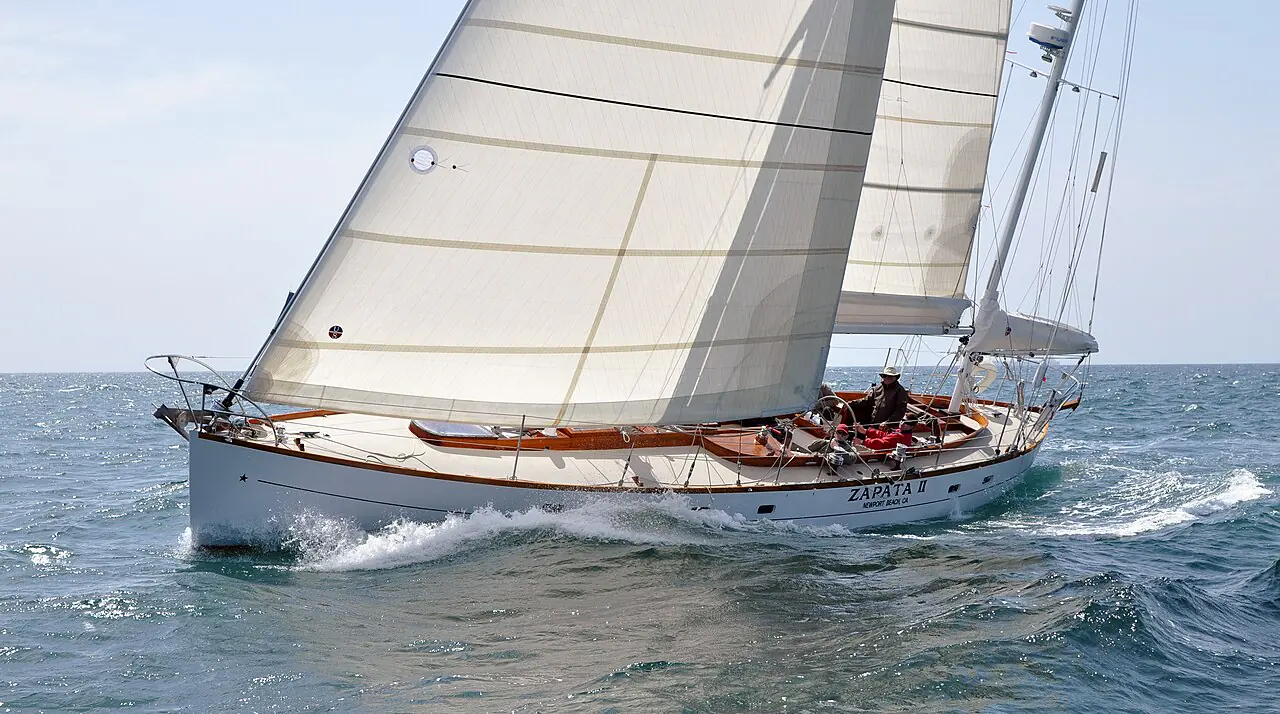
- Sloop: A single mast with a mainsail and a headsail. The most common and efficient modern rig.
- Ketch: Two masts, with the smaller (mizzen) mast positioned forward of the rudderpost.
- Yawl: Similar to a ketch, but the mizzen mast is placed aft.
- Advanced Materials: Modern racing yachts use carbon fiber masts and high-modulus synthetic fibers (like Dyneema) for lines to minimize weight and maximize control.
Motor Propulsion
Most modern motor yachts are powered by high-performance diesel engines.
- Diesel Advantages: High energy density, reliability, and lower risk of fire compared to gasoline.
- Leading Manufacturers: Companies like MTU, Caterpillar, and MAN dominate the superyacht market, providing engines that can deliver thousands of horsepower with high reliability.
- Propulsion Mechanisms:
- Fixed Shaft: A direct connection between the engine and the propeller.
- Waterjets: Instead of a propeller, water is sucked in through an intake and expelled at high velocity through a nozzle. This is ideal for high-speed planing hulls and shallow-water operations.
The Electric Revolution
The industry is moving toward a more sustainable future.
- Diesel-Electric: The engine drives a generator, which then provides electrical power to electric propulsion motors. This allows for silent, vibration-free operation.
- Hybrid Systems: These combine traditional diesel engines with electric motors and battery banks, allowing for “silent mode” in harbors or during low-speed cruising.
- All-Electric: While still rare for large vessels, all-electric cruising sailboats (e.g., the Arcona 435Z) are proving the feasibility of zero-emission maritime travel.
5. Electrical System and Power
A modern yacht’s electrical system is a complex web of generation, storage, and distribution, supporting everything from critical navigation to high-end “hotel services.”
Power Generation
- Main Engines: In many vessels, the primary engines are equipped with high-output alternators for battery charging.
- Auxiliary Generators: Crucial for superyachts, these diesel-powered units provide a continuous, stable supply of electricity. They are essential for running heavy loads like air conditioning, stabilizers, and galley equipment when the main engines are off.
Energy Storage and Chemistries
The ability to store energy is critical for autonomy.
- Battery Banks:
- Lead-Acid: Traditionally used for their reliability and low cost, but heavy and requiring regular maintenance.
- Lithium Iron Phosphate (LiFePO4): The modern standard for high-end yachts. They offer much higher energy density, faster charging, longer cycle life, and significantly lower weight.
- Uninterruptible Power Supply (UPS): High-value yachts utilize UPS systems to protect sensitive electronics (navigation, comms, AV/IT) from voltage fluctuations or total power loss.
Charging and Energy Management
- Shore Power: Connecting to land-based electricity when docked.
- Renewable Integration:
- Solar Photovoltaics: Integrated into the superstructure or bimini tops.
- Wind Generators: Utilizing the vessel’s motion or ambient wind.
- “Hotel Services”: A term used to describe all non-essential electrical loads, including lighting, refrigeration, entertainment systems, and watermakers. Managing the “hotel load” is a key part of a yacht’s energy management strategy.
6. Equipment and How It Is Used
A yacht is equipped with specialized technology designed to maximize comfort and safety.
Stabilization Technologies
Reducing the “roll” of a vessel is essential for passenger comfort and safety.
- Fin Stabilizers: These are external, retractable blades attached to the hull. They work by using hydrodynamic lift to create a counter-force against the waves. They are highly effective but increase drag when deployed.
- Gyro Stabilizers: These are internal, heavy spinning flywheels. Through the principle of conservation of angular momentum, the spinning mass generates a force that resists rolling. They are highly effective even when the boat is at anchor, but they occupy significant internal volume.
Essential Marine Systems
- Desalination (Watermakers): Most ocean-going yachts carry a Reverse Osmosis (RO) system to convert seawater into potable fresh water.
- HVAC (Heating, Ventilation, and Air Conditioning): Advanced climate control systems are essential for maintaining comfort in various global climates.
- Tenders and Toys: Essential for the “lifestyle” aspect of yachting. This includes smaller boats (tenders) for shore excursions and recreational items like jet skis, seabobs, or even submersibles.
7. Navigation, Communications, and Safety
Safe passage in the modern era relies on a sophisticated integration of electronic and manual systems.
Navigation Systems
- Radar: Essential for detecting other vessels, landmasses, and weather patterns, especially in low visibility.
- AIS (Automatic Identification System): An automated tracking system that broadcasts a vessel’s position, speed, and identity to other ships and shore stations, drastically reducing collision risks.
- ECDIS (Electronic Chart Display and Information System): The digital replacement for paper charts, integrating GPS, radar, and AIS data for real-time situational awareness.
Communications
- Satellite Communications: Provides global connectivity for internet, voice, and data. High-speed services like Starlink have revolutionized the ability to work and stay connected while offshore.
- VHF/UHF Radio: The standard for short-range, line-of-sight marine communications.
Safety and Emergency Response
- EPIRB (Emergency Position Indicating Radio Beacon): An automated distress beacon that transmits a vessel’s location via satellite in the event of a catastrophe.
- Life Rafts & Life Jackets: Mandatory safety equipment designed to keep passengers afloat and protected from the elements.
- Pyrotechnics: Flares and smoke signals used for visual distress signaling.
8. Crew and Organization
The professional crew is the most vital component of a yacht’s operation, ensuring the vessel is maintained, the owner is catered to, and the voyage is safe.
Departmental Structure
On professional vessels (typically >30m), the crew is organized into three or four distinct departments, each led by a department head who reports to the Captain.
- Deck Department: Focuses on navigation, exterior maintenance, and tender operations.
- Leadership: Led by the Chief Officer (or First Mate).
- Key Roles: Bosun (leads the working deck team), Deckhands.
- Engineering Department: Responsible for the “heart” of the ship—engines, generators, and all mechanical/electrical systems.
- Leadership: Led by the Chief Engineer.
- Key Roles: Second Engineer, Electro-Technical Officer (ETO) (specialized in AV/IT).
- Interior Department: Focuses on guest services, housekeeping, and aesthetics.
- Leadership: Led by the Chief Stewardess (or Purser on larger vessels).
- Key Roles: Second/Junior Stewardesses.
- Galley Department: (Often considered part of Interior or a separate department) Responsible for all food preparation.
- Leadership: Led by the Head Chef.
Scaling and Contracts
- Crew Count: A 40m yacht may have 7-8 crew, whereas a 100m+ flagship may require 25 or more.
- Rotational Contracts: To manage the intense workload and psychological demands of yachting, senior crew often work on “rotational” schedules (e.g., 2 months on, 2 months off).
9. Certificates and Training Requirements
Professional yacht crew must meet rigorous international standards to ensure safety and operational competence.
International Frameworks
- STCW (Standards of Training, Certification and Watchkeeping): The universal standard for maritime training. It covers essential skills like fire fighting, personal survival techniques, and basic first aid.
- MLC 2006 (Maritime Labour Convention): Known as the “Seafarers’ Bill of Rights,” it mandates minimum standards for crew living and working conditions, including rest hours and food quality.
Professional Certifications
- Officer Certificates of Competency (CoC): Required for those serving in leadership roles on the bridge.
- Specialized Training: Includes advanced firefighting, medical care, and radio operation.
10. Regulations, Class, and Inspections
Yachts are subject to a layered system of regulation designed to protect lives, property, and the marine environment.
Classification Societies
Most high-value yachts are “classed” by recognized organizations such as Lloyd’s Register, DNV (Det Norske Veritas), ABS (American Bureau of Shipping), or BV (Bureau Veritas).
- Purpose: To ensure the vessel is built and maintained to high structural and mechanical standards.
- Process: Regular surveys and inspections by Class surveyors are required to maintain the vessel’s certification.
Regulatory Frameworks
- Flag State: The country where the yacht is registered (e.g., Cayman Islands, Malta). The flag state is ultimately responsible for enforcing maritime law.
- IMO (International Maritime Organization): The UN body that sets the global standards for safety (SOLAS), pollution (MARPOL), and security (ISPS).
- National Authorities: Agencies like the MCA (UK) or USCG (USA) enforce local and international regulations within their jurisdictions.
Key Certificates
- Safety Management Certificate (SMC): Verifies the vessel’s adherence to the International Safety Management (ISM) code.
- Load Line Certificate: Confirms the vessel is operating within safe buoyancy limits.
- Pollution Prevention Certificates: Ensures compliance with MARPOL regarding oil, sewage, and air emissions.
11. Notable Shipyards, Operators, and Example Vessels
The superyacht industry is characterized by extreme craftsmanship and bespoke engineering.
Premier Shipyards
- Lürssen (Germany): Renowned for building the world’s largest and most complex megayachts (e.g., Azzam and Dilbar).
- Abeking & Rasmussen (Germany): Known for expedition yachts and cutting-edge engineering, such as hybrid fuel cell research.
- Feadship (Netherlands): A legendary name in bespoke, high-end superyacht construction.
- Azimut (Italy): A major player in the production of luxury motor yachts.
- Benetti (Italy): Famous for combining classic elegance with modern technology.
Iconic Vessels
- Azzam: One of the longest and most technologically advanced superyachts in existence.
- Dilbar: A massive vessel known for its immense interior volume and luxury.
- Cloudbreak: A premier example of an expedition-class yacht.
- Aviva: Famous for its unique amenities, including a regulation-sized paddle-tennis court.
12. Environment and Future Outlook
As the global community moves toward decarbonization, the yachting industry is at a technological crossroads.
The Path to Sustainability
- Alternative Propulsion: Research into hydrogen fuel cells, methanol-fueled engines, and advanced battery technologies.
- Zero-Emission Operation: The development of fully electric vessels for short-range cruising and zero-emission “green” modes for larger ships.
- Circular Economy: A focus on using sustainable, recyclable materials in construction and minimizing the environmental footprint of operations through improved waste and water management.
13. Facts, Records, and Common Misconceptions
Yacht vs. Boat
A common misconception is that all boats are yachts. In reality, a yacht is a specific category of vessel defined by its purpose (leisure/racing) and often its scale. A fishing trawler or a tugboat is a boat, but it is not a yacht.
The “Racing” Trade-off
There is often a perceived conflict between racing performance and cruising comfort. A vessel optimized for racing (minimal weight, high rigidity) will inherently be less comfortable in rough seas than a vessel optimized for cruising (higher displacement, more damping).
The “Superyacht” Threshold
While “superyacht” is a widely used term, there is no single, globally legally-binding definition. However, within the industry, the 40-meter mark is the standard threshold used to distinguish superyachts from standard pleasure craft.
14. Glossary
- Amas: The outrigger hulls in a trimaran.
- Beam: The maximum width of a vessel.
- Bow: The front part of a ship.
- Draft (or Draught): The vertical distance between the waterline and the bottom of the hull (keel).
- Displacement: The weight of the water displaced by a vessel, which equals the vessel’s weight.
- Froude Number (Fn): A dimensionless number used to characterize the resistance of a hull.
- Knot: A unit of speed equal to one nautical mile per hour.
- Port: The left side of a vessel when facing forward.
- Starboard: The right side of a vessel when facing forward.
- Stern: The rear part of a ship.
15. Sources
- Britannica - Yacht: https://www.britannica.com/technology/yacht
- Wikipedia - Yacht: https://en.wikipedia.org/wiki/Yacht
- Cruising World - Electric Yachts: https://www.cruisingworld.com/story/sailboats/the-promises-and-pitfalls-of-an-all-electric-yacht/
- Superyacht Guide - Electrical Systems: https://superyachtguide.com/marine-engineering/electrical-power-generators/superyacht-battery-banks-chargers-ups-capacity-charging-protection-maintenance/
- Seakeeper - Stabilization: https://www.seakeeper.com/fin-vs-gyro/
- Superyacht Partners - Crewing: https://www.superyachtpartners.com/glossary/yacht-crew
- Carlee Yacht Crew - Ranks: https://caraleesyachtcrew.com/yachting-guides/yacht-crew-positions-and-ranks/
- Robb Report - Shipyards: https://robbreport.com/feature/20-best-superyacht-shipyards-2835363/