1. Incident Overview and Key Facts
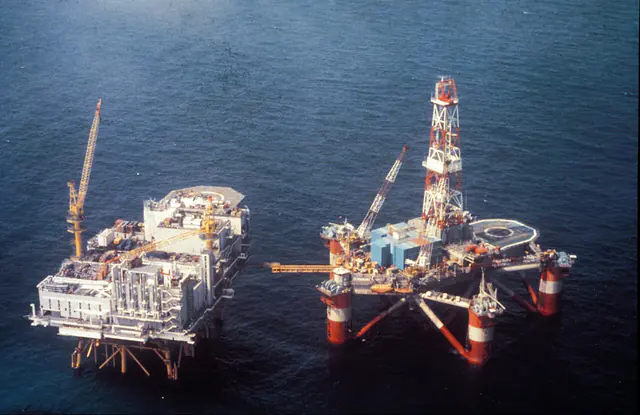
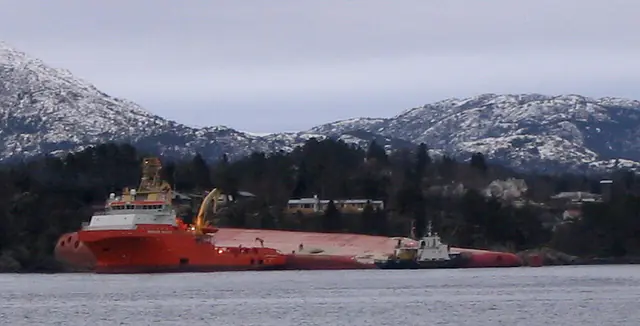
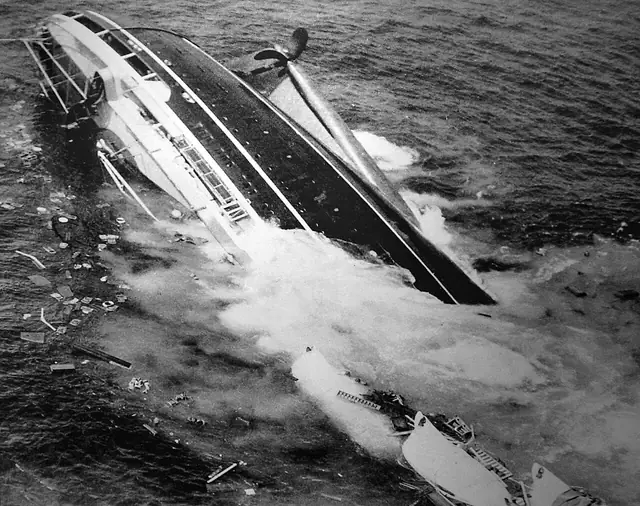
The loss of the Bourbon Dolphin remains one of the most significant maritime accidents in the offshore industry, serving as a stark reminder of the delicate balance between vessel capability and stability. On the afternoon of April 12, 2007, while engaged in a critical rig-moving operation near the Shetland Islands, the vessel experienced a sudden and uncontrollable loss of stability, leading to a rapid capsize.
| Feature | Details |
|---|---|
| Date of Incident | April 12, 2007 |
| Vessel Name | Bourbon Dolphin |
| Vessel Type | AHTS (Anchor Handling Tug Supply) |
| Flag | Norway |
| Location | Off the Shetland Islands, UK |
| Fatalities | 8 |
| Outcome | Total Loss (Capsize) |
| Investigating Authority | Norwegian Commission of Inquiry |
The incident was not the result of a single catastrophic failure but rather a “chain of circumstances” where technical, human, and organizational factors converged. The vessel was operating under significant tension from an anchor-handling chain when a shift in the point of attack, combined with the vessel’s reduced metacentric height (GM) and the environmental conditions, triggered a terminal loss of transverse stability.
2. The Vessel and Crew Context
2.1 Vessel Specifications and Design
The Bourbon Dolphin was an Anchor Handling Tug Supply (AHTS) vessel, a specialized class of ship designed for the demanding tasks of moving offshore drilling rigs and managing heavy anchors. To facilitate these operations, AHTS vessels are typically designed with specific characteristics:
- Large Beam-to-Draft Ratio: To provide the necessary stability for heavy lifting and towing, these vessels often have a wide beam relative to their draft.
- Low Freeboard Aft: The stern area is often designed with a low freeboard to allow easier access to the working deck for anchor handling.
- High Bollard Pull / Winch Capacity: To manage the massive forces associated with rig moves, AHTS vessels are equipped with extremely powerful winches.
However, these design features introduce inherent stability challenges. The Bourbour Dolphin utilized the A102 design, which, as later revealed by the investigation, possessed stability characteristics that were not effectively communicated to the vessel’s operators.
2.2 Stability Management and the Roll Reduction Tank
A critical component of the Bourbour Dolphin’s design was the inclusion of roll reduction tanks. Because the vessel’s wide beam and design intended to provide a high metacentric height (GM) could result in a “stiff” ship—one that rolls violently and rapidly—roll reduction tanks are used to moderate this motion.
These tanks operate on the principle of the Free Surface Effect (FSE). By allowing water to move freely from side to side within a tank that spans the width of the vessel, the movement of the liquid creates a counter-moment that effectively reduces the vessel’s static stability (the GM). While this makes the vessel more comfortable and reduces structural stress from violent rolling, it significantly reduces the margin of safety for transverse stability.
[Cross-link: See ../fundamentals/ship-stability-gm-and-free-surface-effect.md for a detailed explanation of GZ curves and the impact of FSE.]
2.3 Crew and Operational Profile
At the time of the accident, the crew was engaged in a high-stakes rig-moving operation. The investigation highlighted that the company lacked sufficient experience with the specific nuances of the A102 design. Furthermore, there were significant concerns regarding the crew’s familiarity with the vessel-specific requirements for stability management, particularly the crucial instruction that roll reduction tanks should be emptied during anchor-handling operations to maximize stability.
3. Chronological Timeline of Events
The sequence of events leading to the capsize of the Bourbour Dolphin was a progression of increasing risk, where each step brought the vessel closer to its stability limits.
3.1 Pre-Incident Conditions
- Weather Context: The operation was conducted in challenging North Sea conditions, characterized by significant wave heights of approximately 3.5 meters. These environmental forces added dynamic loading to the vessel and its mooring lines.
- Operational Delays: The rig-moving operation had already experienced considerable delays due to the adverse weather. This created an implicit, if not explicit, pressure on the crew to complete the final phase of the operation efficiently.
3.2 The Final Phase of Operations
- Maneuvering: During the final stages of the anchor-handling process, the Bourbour Dolphin attempted to maneuver toward a westerly course to clear mooring line no. 3.
- The Critical Pin Shift: As the vessel changed course, the configuration of the heavy anchor chain at the stern changed. The inner starboard towing pin was depressed (retracted), causing the massive chain to slide and settle against the outer port towing pin.
- The Change in Attack: This shift was the catalyst for the disaster. By moving the point of contact from the starboard side to the port side, the chain’s “angle of attack” relative to the vessel’s centerline changed dramatically. Instead of a controlled tension, the chain began to exert a massive, asymmetric lateral force on the vessel.
3.3 The Capsize Sequence
- Initial List: The sudden lateral force from the chain, combined with the vessel’s movement, caused the Bourbour Dolphin to develop an immediate and significant list to port.
- The Brief Recovery: For a few moments, the vessel appeared to right herself, suggesting that her static stability might still have been sufficient to overcome the initial disturbance.
- The Terminal Roll (17:08h): The recovery was short-lived. The combination of the chain’s tension, the shifting angle of attack, and the dynamic motion from the waves caused a second, much more severe heeling moment. The vessel developed a sudden, powerful list to port.
- Loss of Stability: As the list increased, the deck edge immersed. Once the large forward superstructure began to interact with the sea, the vessel lost its ability to right itself and underwent a rapid, terminal capsize.
4. Technical & Hydrodynamic Failure Analysis
The capsize of the Bourbour Dolphin was not a random event but a predictable consequence of the vessel being pushed beyond its hydrodynamic and stability limits. The failure can be analyzed through three primary lenses: the mechanics of the lateral force, the degradation of the vessel’s stability, and the catastrophic feedback loop triggered by deck immersion.
4.1 The Physics of Lateral Forces in Anchor Handling
In anchor-handling operations, the vessel is subjected to massive tension forces through its winches and towing pins. Under normal operating conditions, these forces are managed to ensure they act as close to the vessel’s centerline as possible, minimizing the creation of a heeling moment.
However, when the point of contact shifts—as it did when the Bourbour Dolphin transitioned from the inner starboard pin to the outer port pin—the tension is no longer centered. This creates a heeling lever (), which is the horizontal distance between the line of action of the tension force and the vessel’s centerline. The resulting heeling moment () is:
In the case of the Bourbour Dolphin, the tension was extreme (reported between 126 and 180 tonnes), and the shift in the pin position caused to increase sharply, creating a torque that the vessel’s righting moment could no longer counteract.
4.2 The Role of the Towing Pin and the “Angle of Attack”
The “angle of attack” refers to the angle between the anchor chain and the vessel’s centerline. This angle is the primary determinant of how much of the chain’s tension is converted into a lateral heeling force.
The investigation revealed a critical progression of this angle:
- Normal Operation: The chain acts at a relatively small angle (e.g., 25°), where the lateral component of the tension is manageable.
- The Pin Shift: The transition between pins caused the angle to jump to approximately 40°.
- The Terminal State: At the moment of capsize, it is believed the angle of attack had increased to as much as 60°.
As the angle increases, the lateral force grows non-linearly, rapidly overwhelming the vessel’s ability to remain upright.
4.3 Stability Degradation: The Perfect Storm
The vessel’s ability to resist this heeling moment was already severely compromised by several factors working in concert.
4.3.1 The Impact of the Roll Reduction Tank
As previously noted, the use of the roll reduction tank was a major contributor. While these tanks are essential for making an AHTS vessel “tender” enough to avoid violent rolling, they do so by introducing a massive Free Surface Effect (FSE).
This FSE effectively raises the vessel’s Center of Gravity (G) and reduces its Metacentric Height (GM). The investigation found that the Bourbour Dolphin was likely operating with these tanks in use, which meant it was fighting the chain’s lateral force with a significantly diminished “reserve” of stability.
4.3.2 The Criticality of the GZ Curve
The vessel’s stability is best understood through its GZ Curve (the Righting Lever curve). The GZ curve represents the vessel’s ability to right itself at any given angle of heel.
The technical analysis shows a terrifying degradation of the GZ curve as the angle of attack increased:
- At 25° Angle of Attack (126t tension): The vessel had a range of positive stability up to 40%, with deck edge immersion occurring at 15%.
- At 40° Angle of Attack (126t tension): The range of positive stability dropped to 34%, and the vessel already exhibited a permanent list of 9%.
- At 60° Angle of Attack (180t tension): The situation became critical. The maximum GZ (the strongest point of the curve) dropped to a mere 0.035 meters, and the range of positive stability was reduced to only 31%.
In this state, the vessel had almost no “reserve” stability. Even a minor wave or a slight shift in weight could push the vessel past its maximum GZ, at which point the forces would actively work to capsize it.
[Cross-link: See ../fundamentals/ship-stability-gm-and-free-surface-effect.md for a detailed explanation of GZ curves and the impact of FSE.]
4.4 The Capsize Mechanism: Deck Immersion and Trim Effects
The final stage of the Bourbour Dolphin’s demise was driven by a catastrophic feedback loop involving its hull geometry and the movement of the center of buoyancy.
As the vessel’s list increased due to the chain’s lateral force, it reached a critical angle of approximately 15%. At this point, the deck edge became immersed. Because the Bourbour Dolphin was designed with a large, high-profile superstructure forward to accommodate crew accommodations and bridge facilities, the immersion of the forward deck had a profound effect on the vessel’s hydrostatics.
When the forward deck is submerged, the volume of displaced water shifts significantly toward the bow. This causes the Center of Buoyancy (B) to move forward. In response, the vessel begins to trim by the stern to maintain equilibrium.
This trim change has two devastating consequences:
- Reduction in Waterplane Area: As the vessel trims, the shape of the underwater hull changes, typically reducing the total waterplane area. This, in turn, reduces the vessel’s transverse metacentric radius () and its overall righting lever ().
- Rapid Loss of Righting Moment: The reduction in means the vessel’s ability to resist the heeling moment of the chain is further diminished.
The vessel was caught in a “death spiral”: the more it listed, the more water came on deck; the more water came on deck, the more it trimmed; and the more it trimmed, the less stable it became. This feedback loop culminated in the rapid, unstoppable capsize observed by witnesses on the rig.
5. Human Factors, Bridge/Engine Management, and Organizational Issues
The technical failure of the Bourbour Dolphin was facilitated by systemic organizational shortcomings. The investigation concluded that the accident was not the result of a single human error, but a failure of multiple safety barriers.
5.1 Communication and Coordination Failures
A primary finding of the Norwegian Commission was the defective communication and coordination between the rig and the vessel during the final, critical phase of the operation. The rig personnel and the vessel crew were not operating with a shared understanding of the risks associated with the current maneuver or the vessel’s changing stability state.
5.2 Lack of Vessel-Specific Procedures
Despite anchor handling being the primary design function of the Bourbour Dolphin, the investigation found that no vessel-specific anchor-handling procedures existed. While the company had general procedures, they were generic and failed to address the specific operational limitations and stability characteristics of the A102 design. This was a direct violation of the ISM Code, which requires procedures tailored to the specific ship and its operations.
5.3 Safety Culture and Operational Pressure
The investigation suggested that the desire to complete the operation—which had already been delayed by inclement weather—may have led to an inadequate focus on safety. This “get finished” mentality can lead to the erosion of safety margins, where crew members might overlook subtle warning signs or skip critical risk assessment steps in the interest of expediency.
6. Emergency Response, Evacuation, and Search & Rescue
The capsize was so sudden that the crew had almost no time to initiate an orderly evacuation.
6.1 Lifeboat and MES Challenges
The rapid loss of stability and the extreme angle of the vessel rendered the launching of standard lifeboats and Marine Evacuation Systems (MES) nearly impossible. In many such high-angle capsizes, lifeboats can become trapped by the vessel’s own hull or simply fail to clear the deck before the vessel rolls completely over.
6.2 Survivability and Rescue Efforts
The eight fatalities were a result of the overwhelming speed of the event. Rescue efforts were complicated by the challenging sea state and the remote location of the incident. The disaster highlighted a critical need for improved survival equipment, including better placement of rescue floats and more robust survival suits that remain effective in extreme, high-energy maritime environments.
7. Salvage, Wreck Removal, or Environmental Impact
Following the capsize, the vessel remained a hazard to navigation and a potential environmental risk. The wreck was eventually located, and recovery operations were planned to mitigate the risk of fuel oil spills. While the environmental impact was managed, the incident underscored the massive logistical and financial complexities involved in salvage and wreck removal operations following a major offshore casualty.
8. Official Investigation Findings and Root Causes
The Norwegian Commission of Inquiry concluded that the Bourbour Dolphin accident was the result of a “chain of circumstances” rather than a single error.
8.1 Primary Root Causes
- Design-to-Operator Communication Gap: The vessel’s stability-related challenges and the consequences of its design (specifically the A102 design) were not clearly communicated from the shipyard to the owners and operators.
- Inadequate Stability Management: The failure to ensure the roll reduction tanks were empty during anchor-handling operations significantly reduced the vessel’s stability margin.
- Inappropriate Winch-to-Stability Ratio: The winches were over-dimensioned relative to the vessel’s ability to withstand the lateral forces they could generate.
- Procedural Deficiencies: The lack of vessel-specific anchor-handling procedures and the failure to conduct rigorous, operation-specific risk assessments.
8.2 Systemic Failures
The Commission emphasized that “system failures on the part of many players caused necessary safety barriers to be lacking, were ignored or were breached.” This included failures by the shipyard, the vessel owner, the operator, and the rig personnel.
9. Regulatory and Industry Reforms Triggered
The Bourbour Dolphin disaster became a catalyst for significant changes in maritime regulation and industry best practices.
9.1 Regulatory Changes
- Mandatory Stability Calculations: New requirements were proposed for the preparation and approval of stability calculations specifically for anchor-handling operations.
- Improved Training Standards: The incident led to calls for more formal, specialized training for winch operators and anchor-handling specialists.
- Survival Equipment Review: A review of requirements for survival suits and the placement of rescue floats was initiated to improve survivability in rapid capsize scenarios.
9.2 Industry Best Practices
- Enhanced Risk Assessment: The industry moved toward more robust, operation-specific risk assessments, moving away from generic checklists toward detailed, scenario-based evaluations.
- ISM Code Enforcement: There is now a much stronger emphasis on the implementation of vessel-specific procedures as required by the International Safety Management (ISM) Code.
- Communication Protocols: Improved protocols for coordination between vessels and offshore installations have been implemented to ensure a shared understanding of operational risks.
10. Key Takeaways for Modern Mariners
The Bourbour Dolphin remains a definitive case study in maritime safety. The key lessons for modern mariners and offshore professionals are:
- Stability is Not Static: A vessel’s stability can change drastically in seconds due to changes in loading, equipment configuration (like towing pins), or environmental forces.
- Understand Your Design: Knowing the “why” behind your vessel’s features—such as the purpose and danger of roll reduction tanks—is as important as knowing how to operate them.
- Respect the Lateral Force: In anchor handling, the chain tension is not just a pulling force; it is a massive heeling moment waiting to happen.
- Procedures Must Be Specific: Generic procedures are a recipe for disaster. Safety management must be tailored to the specific vessel and the specific operation.
- Safety Over Expediency: The pressure to “get finished” must never override the fundamental requirement for a rigorous, undisturbed risk assessment.
11. Sources and Official Reports
- Norwegian Commission of Inquiry: Report on the Loss of the “Bourbon Dolphin” (Official Government Report).
- IMCA Safety Flash 05/08: Loss of the Bourbon Dolphin.
- Riviera Maritime Media: No Single Factor to Blame for Loss of Bourbon Dolphin.
- Safety4Sea: Bourbon Dolphin Case History.
- Steamship Mutual: Bourbon Dolphin Case History Technical Analysis.