1. Incident Overview and Key Facts
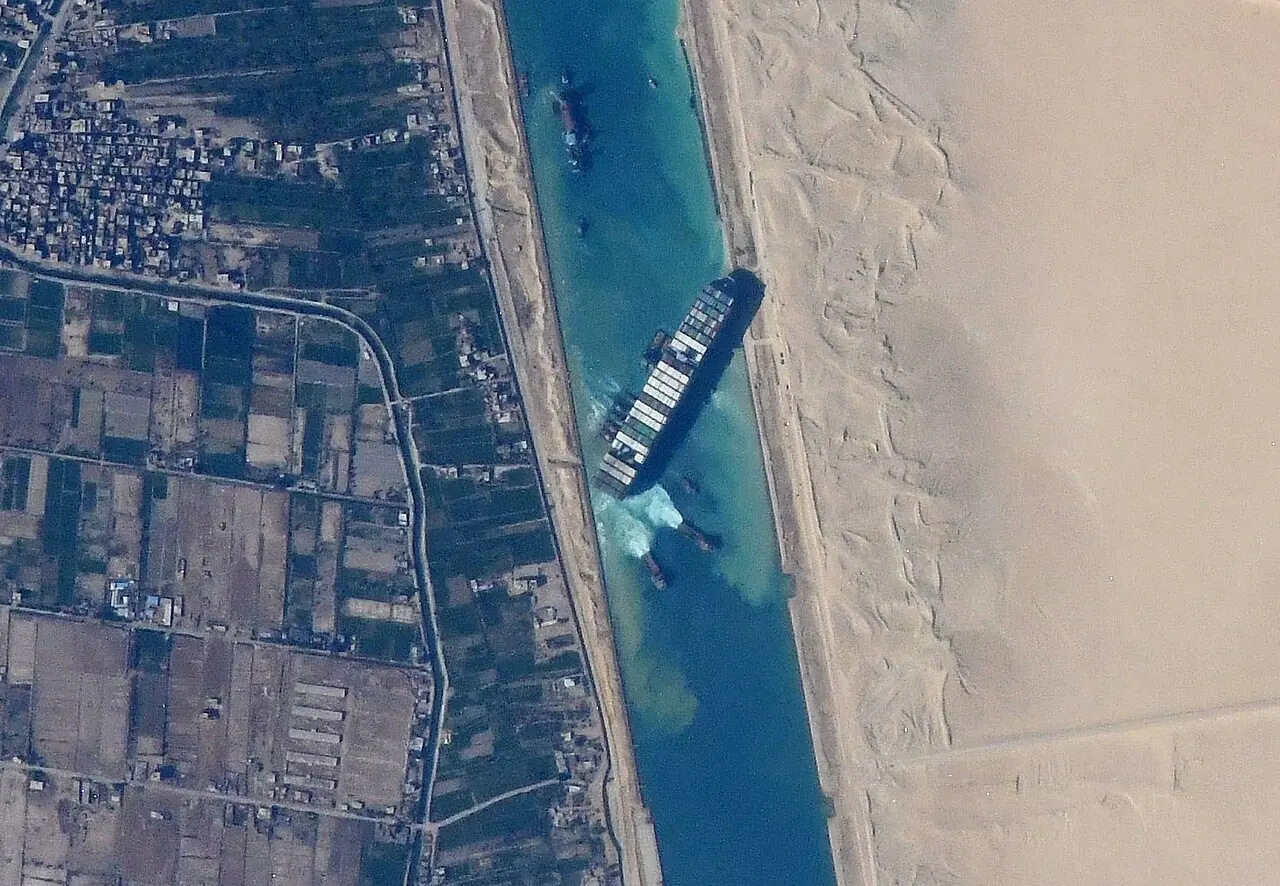
The grounding of the MV Ever Given represents one of the most significant maritime accidents of the 21st century, not merely due to the scale of the vessel involved, but because of its profound impact on global commerce. On the morning of March 23, 2021, the vessel became wedged diagonally across the southern section of the Suez Canal, a critical artery for international trade. The resulting blockage halted all transit through the canal for six consecutive days, creating a massive maritime traffic jam and disrupting the flow of goods, energy, and commodities across the globe.
| Fact | Detail |
|---|---|
| Date of Incident | March 23, 2021 |
| Vessel Name | MV Ever Given |
| IMO Number | 9811000 |
| Vessel Type | Ultra Large Container Vessel (ULCV) |
| Flag State | Panama |
| Location | Suez Canal, Egypt (Southern Section) |
| Casualties | 0 |
| Outcome | Vessel grounded; 6-day blockage; successfully refloated on March 29, 2021 |
| Investigating Authority | Suez Canal Authority (SCA) / International maritime investigations |
2. The Vessel and Crew Context
The MV Ever Given is a state-of-the-art Ultra Large Container Vessel (ULCV), part of the Ever Green fleet. Designed for maximum efficiency in long-haul East-West trade routes, the vessel’s physical characteristics played a decisive role in the accident.
Vessel Specifications
- Length Overall (LOA): ~400 meters (1,312 feet)
- Beam: ~59 meters (197 feet)
- Deadweight Tonnage (DWT): ~220,000 MT
- Capacity: ~20,000 TEU (Twenty-foot Equivalent Units)
- Draft: ~16 meters (loaded)
- Propulsion: Single low-speed diesel engine driving a single controllable pitch propeller.
Design Features and Operational Profile
The vessel’s design features a massive “sail area”—the total surface area of the container stacks above the waterline. For a 20,000 TEU vessel, this area is immense, making the ship highly susceptible to lateral forces from wind. In the context of the Suez Canal, where the navigable channel is relatively narrow (approx. 265-300 meters), this windage becomes a critical factor in maneuverability.
The vessel was operating in a heavily laden condition, maximizing its cargo capacity. This increased its draft and altered its hydrodynamic response, particularly in the confined, shallow waters of the canal. (See ../fundamentals/hydrodynamics.md for more on vessel-water interaction).
3. Chronological Timeline of Events
The incident was not a singular moment but the culmination of several deteriorating conditions during the vessel’s transit.
- March 23, 2021, ~05:40 UTC: The Ever Given enters the southern section of the Suez Canal. Environmental conditions are deteriorating, with high winds and a sandstorm reducing visibility and increasing windage pressure.
- 06:00 - 06:30 UTC: The vessel begins to experience significant lateral drift. Wind gusts act upon the high-profile container stacks, pushing the bow and stern away from the intended centerline.
- 06:35 UTC: The vessel loses control of its heading. It makes contact with the eastern bank of the canal. The impact is not immediately fatal but initiates a sequence of hydrodynamic instabilities.
- 06:40 UTC: The vessel becomes wedged diagonally across the canal. The bow is firmly embedded in the eastern bank, and the stern is pushed toward the western bank, effectively sealing the waterway.
- March 24 - March 28, 2021: A massive international salvage operation is launched. The Suez Canal Authority (SCA) engages specialized salvage firms (notably Boskalis/Smit Salvage). Attempts to refloat the ship via tugboat pressure and initial dredging prove insufficient.
- March 28, 2021: Intensive dredging operations successfully remove approximately 27,000 to 30,000 cubic meters of sand and silt from beneath the bow.
- March 29, 2021, ~15:05 UTC: Leveraging a combination of high spring tides, increased tugboat power (including the arrival of high-bollard-pull vessels like the Alp Guard), and the loosened seabed, the Ever Given is successfully refloated and moved into the Great Bitter Lake.
4. Technical & Hydrodynamic Failure Analysis
The grounding of the Ever Given was a “perfect storm” of physical phenomena. Forensic analysis points to three primary hydrodynamic and aerodynamic drivers: Windage, Bank Effect, and Squat.
4.1 Windage and Aerodynamic Force
The primary external trigger was the sandstorm. The high-density container stacks created a massive lateral surface area. As wind gusts hit the vessel, the resulting aerodynamic force acted as a lever, pushing the ship’s heading. Because the vessel was in a confined channel, it had limited room to correct this drift through rudder input alone.
4.2 Bank Effect (Suction and Cushion)
In narrow channels, a vessel’standing close to a bank experiences significant hydrodynamic forces known as the “Bank Effect.” This is composed of two distinct phenomena:
- Bank Cushion: As the bow approaches a bank, water is compressed between the hull and the bank, creating a high-pressure zone that pushes the bow away from the bank.
- Bank Suction: As the stern passes the bank, the water velocity between the stern and the bank increases, creating a low-pressure zone (Bernoulli’s principle). This low pressure “sucks” the stern toward the bank.
In the case of the Ever Given, the bank cushion likely pushed the bow toward the center or the opposite bank, while the bank suction simultaneously drew the stern toward the near bank, forcing the ship into the diagonal, wedged position. (See ../subsystems/hydrodynamics.md for detailed modeling).
4.3 Squat Effect
The vessel was recorded traveling at speeds of 12–13 knots, significantly exceeding the canal’s speed limit of 8 knots. In shallow, confined waters, increased speed leads to a decrease in water pressure under the hull, causing the ship to “squat” or sink deeper into the water. This increased draft reduced the under-keel clearance (UKC), making the vessel even more susceptible to the hydrodynamic pressures of the bank effect and the physical grounding on the seabed.
5. Human Factors and Organizational Issues
While the physical forces were undeniable, the investigation into the incident highlights significant human factors and organizational failures.
5.1 Bridge Resource Management (BRM)
Forensic reviews suggest a breakdown in situational awareness on the bridge. The decision to maintain a speed of 12-13 knots during a sandstorm in a narrow transit was a critical error. High speed, while intended to maintain steerage, actually exacerbated the squat effect and reduced the time available to react to the wind’s influence.
5.2 Pilotage and Communication
The role of the Suez Canal Authority (SCA) pilots is central to the incident. The pilots are responsible for navigating the vessel through the canal, but the division of responsibility between the ship’s Master and the Pilot can lead to ambiguity during emergencies. There are questions regarding whether the impact of the wind on such a high-profile vessel was adequately assessed by the bridge team and the pilots during the initial stages of the storm.
5.3 Organizational Culture
The pressure to maintain transit schedules can sometimes lead to “normalization of deviance,” where speed limits or weather protocols are stretched to meet operational goals. The incident has prompted a review of how ULCV transits are managed by canal authorities globally.
6. Salvage, Wreck Removal, and Economic Impact
The salvage operation was an unprecedented feat of marine engineering, involving a coordinated effort between the SCA and international specialists.
6.1 Salvage Operations
The operation relied on three pillars:
- Dredging: The use of massive suction dredgers, such as the Mashhour and 10th of Ramadan, to remove the sand that had “caged” the bow. Over 30,000 cubic meters of material were moved.
- Tugboat Maneuvers: A fleet of approximately 14 tugboats was used. The strategy involved a combination of “pushing” the bow and “pulling” the stern. The arrival of high-capacity tugs like the Alp Guard (285t bollard pull) was essential for providing the necessary force to overcome the suction of the bank.
- Tidal Assistance: Salvors timed the final breakthrough to coincide with the spring high tides, providing the extra centimeters of draft necessary to break the seal with the seabed.
6.2 Economic Impact
The economic consequences were staggering. The Suez Canal handles approximately 12% of global trade.
- Trade Blockage: At the peak of the crisis, over 400 vessels were waiting to transit, carrying an estimated $9 billion worth of goods per day.
- Supply Chain Disruption: The blockage caused a “bullwhip effect” across global manufacturing and retail, leading to delays in raw materials, intermediate goods, and finished products.
- SCA Revenue Loss: The Suez Canal Authority reported losses of approximately $12–$14 million per day in transit fees.
7. Official Investigation Findings and Root Causes
While a single, unified international report is rare for such incidents, the consensus from maritime experts and preliminary findings from the SCA and academic studies (such as those from the University of Cambridge) points to a multi-causal failure.
Primary Root Causes:
- Loss of Maneuverability: The combination of wind-induced drift and hydrodynamic forces rendered the vessel unable to maintain its course.
- Environmental Factors: The sandstorm provided the external energy (wind) that triggered the instability.
- Operational Deviation: The excessive speed of the vessel amplified the squat and bank effects, turning a manageable drift into a grounding.
8. Regulatory and Industry Reforms Triggered
The Ever Given incident has served as a catalyst for several regulatory discussions:
- ULCV Transit Protocols: The IMO and canal authorities are reviewing the specific requirements for Ultra Large Container Vessels, including minimum required tug assistance and stricter speed limits during adverse weather.
- Pilotage Standards: There is an increased focus on the training and situational awareness of pilots operating in extreme weather for high-windage vessels.
- Hydrodynamic Modeling: The incident has underscored the need for more advanced real-time hydrodynamic modeling in narrow waterway management.
9. Key Takeaways for Modern Mariners
- Windage is a Critical Variable: For ULCVs, the container stack is not just cargo; it is a massive sail. Windage must be a primary consideration in every transit plan.
- Speed is a Double-Edged Sword: In confined waters, speed is required for steerage but detrimental to stability due to squat and bank effects. Finding the “sweet spot” is vital.
- Respect the Bank: The hydrodynamic forces of a narrow channel are non-linear and can become overwhelming very quickly. Early correction is the only effective correction.
11. Sources and Official Reports
- Suez Canal Authority (SCA): Official press releases and navigation reports regarding the refloating of Ever Given (March 2021). https://www.suezcanal.gov.eg/
- Lloyd’s List: Comprehensive coverage of the maritime and legal implications of the Suez blockage. https://lloydslist.com/
- Maritime Executive: Analysis of the General Average and legal fallout. https://maritime-executive.com/
- University of Cambridge (Journal of Navigation): “Learning from failure by using a hybrid model technique: the Suez Canal incident.”
- Reuters/BBC News: Real-time reporting and economic impact analysis.