1. Incident Overview and Key Facts
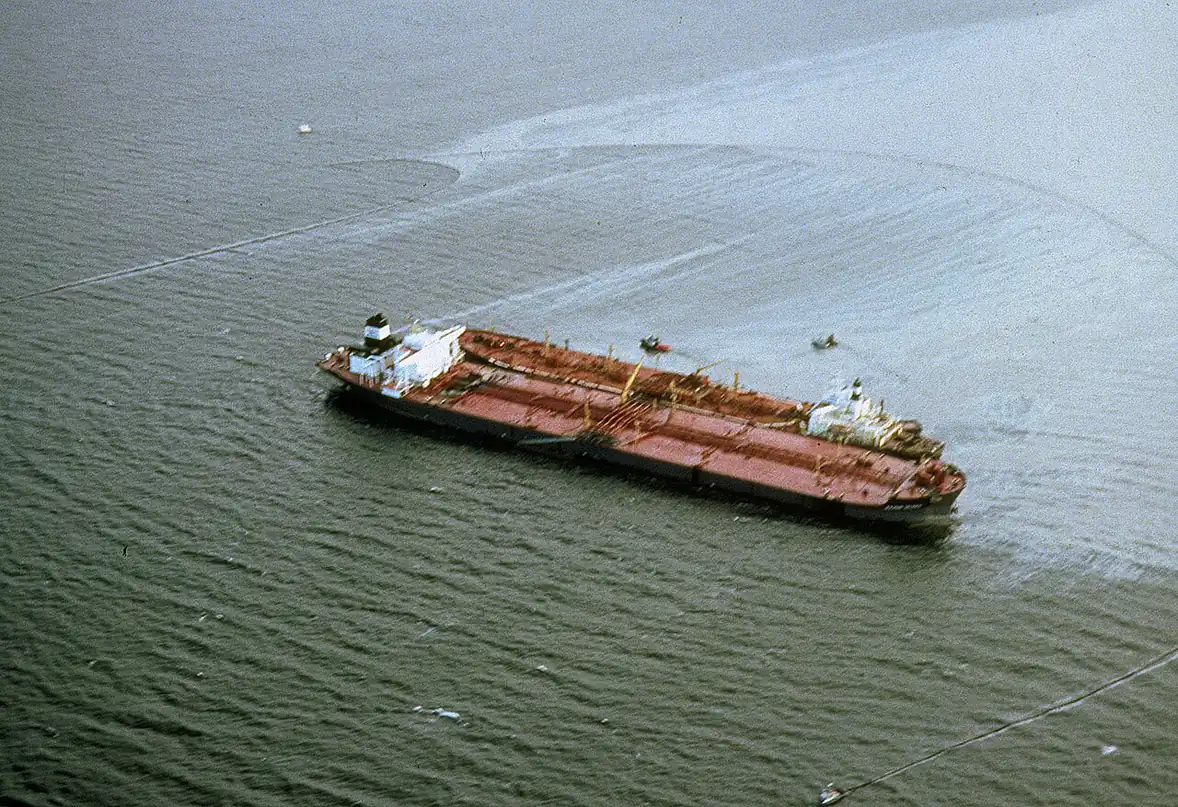
The grounding of the Exxon Valdez on March 24, 1989, remains a seminal event in maritime history, acting as the catalyst for the most significant regulatory overhaul in the history of the oil tanker industry. Occurring in the relatively pristine and ecologically sensitive waters of Prince William Sound, Alaska, the incident resulted in the release of approximately 258,000 barrels (roughly 11 million gallons) of North Slope crude oil.
The disaster was not merely a navigational mishap; it was a systemic failure that exposed the vulnerabilities of single-hull tanker design, the dangers of acute crew fatigue, and the catastrophic consequences of negligent corporate safety cultures. This forensic report provides a comprehensive analysis of the incident, utilizing the investigative findings of the National Transportation Safety Board (NTSB) to dissect the mechanical, human, and organizational factors that converged to cause this catastrophe.
| Feature | Details |
|---|---|
| Date of Incident | March 24, 1989 |
| Time of Grounding | ~00:09 local time |
| Vessel Name | Exxon Valdez |
| Vessel Type | VLCC (Very Large Crude Carrier) / Supertanker |
| Flag State | United States |
| Location | Bligh Reef, Prince William Sound, Alaska, USA |
| Casualties (Fatalities) | 0 |
| Cargo Spilled | ~258,000 barrels of crude oil |
| Investigating Authority | National Transportation Safety Board (NTSB) |
| Primary Outcome | Passage of the Oil Pollution Act of 1990 (OPA 90) |
2. The Vessel and Crew Context
2.1 Vessel Specifications and Design Vulnerabilities
2.1.1 The VLCC Paradigm and Single-Hull Vulnerability
The Exxon Valdez was an advanced Very Large Crude Carrier (VLCC) of its era, optimized for the high-volume transport of crude oil from the Trans-Alaska Pipeline System (TAPS). However, its design contained a fundamental structural flaw that magnified the impact of the grounding.
- Single-Hull Construction: At the time of the accident, the Exxon Valdez utilized a single-hull design. In this configuration, the outermost steel plating of the vessel serves as the primary barrier between the cargo and the sea. From a forensic engineering perspective, this design lacks “structural redundancy.” Unlike modern double-hull vessels, which possess an inner skin to contain cargo even if the outer shell is breached, the Exxon Valdez had no secondary containment. Once the outer hull was compromised by the impact with Bligh Reef, the crude oil had an unimpeded path to the marine environment.
- Inertia and Kinetic Energy: The vessel’s enormous mass—with a deadweight tonnage (DWT) exceeding 200,000 metric tons—meant it possessed immense kinetic energy. In the confined waters of the Valdez Narrows, this inertia created a “lag effect” between navigational commands and vessel response. Any error in course heading was compounded by the vessel’s momentum, leaving an extremely narrow window for corrective action once a deviation was detected.
2.1.2 Navigational Systems and Technical Failures
A critical component of the vessel’s navigational suite was the Raytheon Collision Avoidance System (RAYCAS) radar. Forensic investigation revealed a significant failure in the maintenance and operation of this system.
- Radar Reflector Failure: To assist in local navigation, a radar reflector had been placed on Bligh Reef. However, due to the technical state of the RAYCAS radar, the system failed to provide an accurate or timely detection of this reflector. This failure stripped the bridge team of a vital electronic redundancy, forcing them to rely almost exclusively on visual bearings in an environment where visibility and situational awareness were already compromised.
2.2 Crew and Command Profile: The Human Element
The failure of the Exxon Valdez is a classic study in the breakdown of the human-machine interface and the failure of leadership.
2.2.1 Fatigue and Physiological Impairment
The investigation into the Third Mate’s performance revealed a state of acute, systemic sleep deprivation.
- Circadian Dysrhythmia and Fatigue: The deck officers had been subjected to grueling, irregular work schedules during recent cargo operations at the Alyeska terminal. This resulted in severe “circadian dysrhythmia”—a disruption of the body’s internal clock. The Third Mate had likely received as little as 4 to 6 hours of sleep in the 24 hours preceding the grounding.
- Cognitive Degradation: Physiological research confirms that acute sleep deprivation causes cognitive degradation comparable to alcohol intoxication. This manifested in the Third Mate as “cognitive tunneling”—a state where his focus became so narrow that he failed to process peripheral environmental cues, such as the ship’s actual position relative to the reef, despite visual and radar indicators.
- Task Saturation: The simultaneous requirements of navigating through ice, managing the autopilot, and monitoring a vessel that had drifted from the Traffic Separation Scheme (TSS) led to extreme task saturation, effectively paralyzing the officer’s ability to perform critical error-detection tasks.
2.2.2 Master’s Impairment and the Failure of Command
The role of the Master, Captain Joseph Hazelwood, was central to the NTSB’s findings.
- Alcohol Impairment: Extensive evidence indicated that the Master was impaired by alcohol at the time of the accident. This impairment fundamentally compromised his judgment and his ability to provide the necessary oversight during a high-risk transit.
- Failure of Bridge Resource Management (BRM): The Master’s decision to leave the bridge during a critical navigational phase was a direct violation of BRM protocols. The absence of the most senior officer during a period of high workload and technical uncertainty removed the final, essential layer of command oversight, leaving an exhausted Third Mate to manage a VLCC alone.
Cross-link: For more on vessel stability and hull integrity, see ../fundamentals/hull-geometry-hydrodynamics-and-resistance.md and ../fundamentals/hull-geometry-hydrodynamics-and-resistance.md.
3. Chronological Timeline of Events
The following timeline reconstructs the sequence of failures based on the NTSB’s forensic reconstruction.
March 23, 1989: Pre-Incident Conditions
- Daylight/Evening: The crew’s workload at the Alyeska terminal was excessive. The Third Mate entered his watch in a state of significant physiological fatigue.
March 24, 1989: The Sequence of Failure
- 23:24: The maritime pilot departed the vessel near Rocky Point, transferring navigational responsibility to the ship’s officers.
- 23:26: To avoid floating ice in the outbound lane of the Traffic Separation Scheme (TSS), the vessel began to deviate from the established track, crossing into the inbound lane.
- 23:30: The course was adjusted to 200° and speed was reduced to 12 knots to navigate through the ice.
- 23:39: The vessel’s course was changed to 180° (due south), and the ship was placed on autopilot. This decision was made without a formal reassessment of the new course’s safety.
- 23:47: The Exxon Valdez officially exited the TSS, sailing into the inbound lane without a revised passage plan or formal communication of this change to the Valdez Vessel Traffic Center (VTC).
- 23:52: Master Hazelwood informed the Third Mate that he would be leaving the bridge to attend to communications. He instructed the Third Mate to return the vessel to the TSS once the Busby Island Light was abeam to port.
- 23:55: The Third Mate took a visual bearing of the Busby Island Light.
- 23:57 (Estimated): Realizing the vessel’s position, the Third Mate ordered the rudder to 10° starboard. However, due to cognitive fatigue, he failed to verify via the rudder angle indicator if the command had been successfully executed.
- 00:01: Despite the starboard rudder command, the vessel’s heading continued to swing toward the reef. The radar (RAYCAS) failed to provide a timely warning of the approaching reef.
- 00:02: The emergency was recognized. The Master was notified.
- 00:04 - 00:09: The vessel struck Bligh Reef with a series of violent, high-energy impacts. The course recorder indicated the grounding at approximately 00:09.
4. Technical & Hydrodynamic Failure Analysis
4.1 Grounding Mechanics and Structural Rupture
4.1.1 Impact Dynamics and Point Loading
The grounding was not a glancing blow but a high-energy impact against the jagged granite formation of Bligh Reef.
- Kinetic Energy Concentration: The vessel’s massive kinetic energy was concentrated on the reef’s protruding rocks. This resulted in intense “point loading,” where the force of the impact was focused on very small areas of the hull plating.
- Hull Breach: The point loading caused the single-hull plating to tear instantly. The impact resulted in the catastrophic rupture of eight cargo tanks. Because the vessel was a single-hull design, there was no secondary containment layer to slow the egress of the crude oil.
4.1.2 Hydrodynamic and Structural Stress
The grounding triggered a complex series of structural failures. The sudden deceleration caused massive longitudinal bending stresses (hogging and sagging), while the impact against the reef induced severe transverse forces. Furthermore, as seawater rapidly entered the ruptured tanks, it created internal hydrodynamic pressures that exacerbated the structural damage, contributing to the widespread failure of the tank boundaries.
4.2 Navigational and Sensor Failures
A critical technical failure involved the Raytheon Collision Avoidance System (RAYCAS) radar. Forensic investigation revealed that the system was in a state of disrepair, failing to detect the radar reflector placed on Bligh Reef to assist in local navigation. Had the system been fully operational, the Third Mate would have received an early warning of the proximity to the reef, potentially providing the minutes necessary to correct the course.
Cross-link: For more on radar systems and collision avoidance, see ../subsystems/marine-radar-and-arpa.md.
5. Human Factors and Organizational Issues
The NTSB investigation concluded that the accident was the result of a “systemic failure” occurring at multiple levels of responsibility.
5.1 Fatigue and Cognitive Impairment
The Third Mate’s inability to maintain situational awareness was directly linked to acute sleep deprivation.
- Cognitive Tunneling: The officer experienced “cognitive tunneling,” where his focus became so narrow that he failed to integrate critical environmental cues (such as the position of the Bligh Reef light) with the vessel’s actual heading.
- Task Saturation: The combination of navigating through ice, managing autopilot, and monitoring a deviating course led to severe task saturation, leaving no mental capacity for error detection.
5.2 Master’s Impairment and Leadership Breakdown
The Master’s failure to provide a safe navigation watch was a central finding.
- Alcohol Impairment: Evidence indicated the Master was impaired by alcohol at the time of the accident. This impairment directly affected his judgment and his decision to leave the bridge during a critical maneuver.
- Failure of Command: The Master’s absence during a high-risk transit violated the fundamental principles of Bridge Resource Management (BRM).
5.3 Organizational Failures (Exxon Shipping Company)
The NTSB placed significant responsibility on Exxon Shipping Company for creating an environment where error was almost inevitable.
- Manning and Fatigue Management: The company’s practice of reduced manning and prioritizing efficiency over rest periods directly contributed to the officers’ fatigue.
- Normalization of Deviance: A corporate culture that allowed for deviations from standard operating procedures—such as the Master being off the bridge or the use of malfunctioning equipment—had become a systemic issue. This “normalization of deviance” meant that unsafe practices were no longer viewed as risks, but as standard operational procedures.
6. Emergency Response and Environmental Impact
6.1 Response Challenges
The response to the Exxon Valdez spill was characterized by extreme difficulty and a lack of preparedness.
- Logistical Hurdles: The remote location of Prince William Sound made the mobilization of containment equipment, such as booms and skimmers, slow and inefficient.
- Environmental Extremes: Heavy seas and freezing temperatures hampered the deployment of response assets and threatened the safety of cleanup workers.
6.2 Ecological Devastation
The spill caused one of the most significant ecological disasters in history, with long-term impacts on the entire Prince William Sound ecosystem.
- Wildlife Mortality:
- Seabirds: ~250,000 individuals.
- Sea Otters: ~2,800 individuals.
- Harbor Seals: ~300 individuals.
- Bald Eagles: ~250 individuals.
- Killer Whales: At least 22 members of the AT1 pod.
- Fish and Eggs: Billions of salmon and herring eggs were lost.
- Trophic Cascades and Long-Term Effects: The collapse of the Pacific herring population had a cascading effect on the entire food web. Many species, including certain killer whale pods and specific seabird populations, have failed to recover decades later.
- Shoreline Contamination: Over 1,300 miles of coastline were oiled, with oil persisting in the sediments for decades.
Cross-link: For studies on marine pollution and ecosystem recovery, see ../salvage-and-incidents/oil-spill-response-and-marine-pollution-control.md.
7. Official Investigation Findings and Root Causes
The NTSB concluded that the grounding was a “preventable accident” caused by several interlocking factors:
- Third Mate’s Failure: Inability to maneuver the vessel due to acute fatigue and workload.
- Master’s Failure: Failure to provide a proper navigation watch due to alcohol impairment.
- Organizational Negligence: Exxon Shipping Company’s failure to provide a fit master and a rested, sufficient crew.
- VTS Deficiencies: Inadequate Vessel Traffic Service (VTS) oversight and equipment.
- Technical Failure: Malfunctioning radar and lack of effective pilotage.
8. Regulatory and Industry Reforms Triggered
The Exxon Valdez disaster fundamentally changed the maritime legal landscape.
8.1 The Oil Pollution Act of 1990 (OPA 90)
The passage of OPA 90 in the United States introduced several transformative mandates:
- Double-Hull Mandate: Required all tankers in U.S. waters to be double-hulled, effectively phasing out single-hull vessels by 2015.
- Increased Liability: Significantly raised the financial liability for oil spills, ensuring that the “polluter pays.”
- Enhanced Preparedness: Mandated more rigorous spill contingency planning and response capabilities.
- OSLTF: Established the Oil Spill Liability Trust Fund to finance cleanups.
8.2 International Reform (IMO/MARPOL)
The disaster forced the International Maritime Organization (IMO) to act. The 1992 updates to the MARPOL convention established international standards for double-hull construction, ensuring that the safety improvements seen in the U.S. were implemented across the global merchant fleet.
9. Key Takeaways for Modern Mariners
- Fatigue Management is Non-Negotiable: Sleep deprivation is a physiological impairment as dangerous as intoxication. Crew scheduling must prioritize restorative rest.
- Bridge Resource Management (BRM) is Critical: A functional bridge team requires active supervision, open communication, and the authority to challenge unsafe practices.
- Technology is a Support, Not a Solution: Navigational aids must be maintained, and their limitations must be understood. Mariners must never rely solely on automation.
- Safety Culture is Top-Down: Organizational safety is only as strong as the company’s commitment to manning standards, maintenance, and oversight.
10. Sources and Official Reports
- National Transportation Safety Board (NTSB): Grounding of the U.S. Tankship Exxon Valdez near Valdez, Alaska, March 24, 1989. https://www.ntsb.gov/investigations/AccidentReports/Reports/MAR9004.pdf
- Exxon Valdez Oil Spill Trustee Council: Final Environmental Impact Statement for the Exxon Valdez Oil Spill Restoration Plan.
- NOAA Office of Response and Restoration: Exxon Valdez Oil Spill Fact Sheet. https://darrp.noaa.gov/oil-spills/exxon-valdez
- U.S. Coast Guard: Oil Pollution Act of 1990 (OPA 90) Regulatory Documentation.
- International Maritime Organization (IMO): MARPOL Convention - Double Hull Requirements.