1. Incident Overview and Key Facts
| Feature | Detail |
|---|---|
| Incident Date | April 14–15, 1912 |
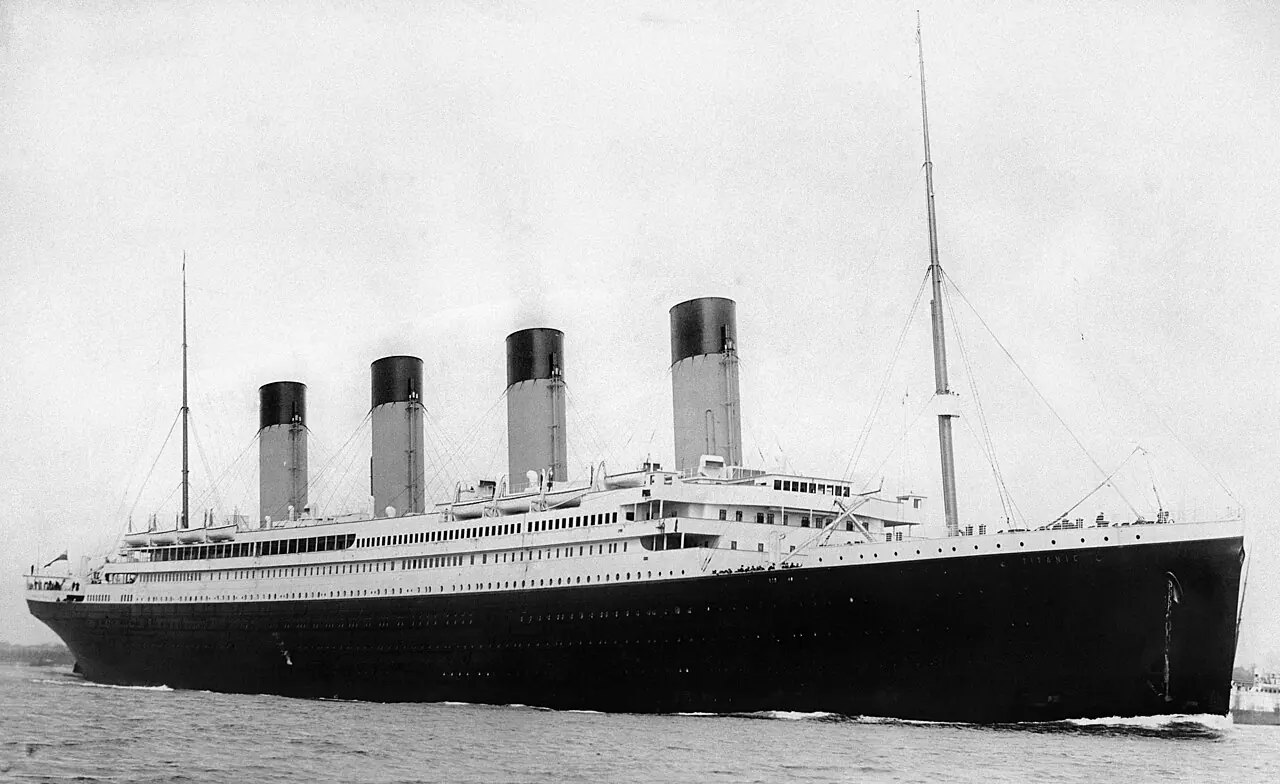
| Vessel Name | RMS Titanic |
| Vessel Type | Olympic-class Ocean Liner |
| Operator | White Star Line |
| Flag State | United Kingdom |
| Location | North Atlantic Ocean, near Iceberg Alley |
| Casualties | ~1,496 fatalities |
| Outcome | Total loss of vessel; catastrophic structural failure |
| Investigating Authority | British Board of Trade; U.S. Senate Committee on Commerce |
Summary: On the night of April 14, 1912, the RMS Titanic struck an iceberg during its maiden voyage from Southampton to New York. The collision breached the ship’s watertight compartments, leading to a progressive flooding sequence that exceeded the vessel’s design survivability threshold. The ship ultimately fractured in two before sinking in its entirety in the early hours of April 15.
2. The Vessel and Crew Context
The RMS Titanic was the second of three Olympic-class ocean liners operated by the White Star Line. At the time of her maiden voyage, she represented the pinnacle of maritime engineering, designed for unprecedented scale, luxury, and—crucially—safety.
Vessel Specifications
- Length: 882 feet 9 inches (269.1 m)
- Beam: 92 feet 6 inches (28.2 m)
- Draft: 34 feet 7 inches (10.5 m)
- Gross Tonnage: 46,328 GRT
- Propulsion: Two reciprocating engines and one low-pressure Parsons turbine
- Design Feature: A system of 16 watertight compartments divided by transverse bulkheads.
The Titanic was more than just a transport vessel; she was a floating palace of the Edwardian era. The architectural design, overseen by Harland and Wolff, prioritized both grandeur and structural integrity. The vessel featured an unprecedented array of luxury amenities, including a Turkish bath, a squash court, a reading and writing room, and the famed Grand Staircase, which served as a social nexus for first-class passengers.
The structural design utilized a combination of steel plating and a massive longitudinal framing system. However, the reliance on riveting for the watertight integrity of the hull introduced a critical vulnerability. While the midship sections were riveted using pneumatic hammers, the more complex curves of the bow and stern required manual riveting, leading to a lower density of high-strength fasteners in the areas most susceptible to impact. For a detailed analysis of the ship’s structural design, see ../subsystems/hull_design.md.
Crew and Passenger Profile
The Titanic carried a total of approximately 2,208 souls, comprising roughly 885 crew members and 1,323 passengers across three classes. The crew was a highly stratified group, divided into deck, engineering, and victualling departments.
- First Class: Represented the global elite, including industrialists, aristocrats, and financiers. Their survival rate was remarkably high (approx. 62%) due to their proximity to the upper boat decks and the “women and children first” prioritization.
- Second Class: Comprised of professionals, clergymen, and middle-class families. Their survival rate was moderate (approx. 42%).
- Third Class (Steerage): Primarily immigrants seeking new lives in America. They faced the greatest challenges, with survival rates plummeting to roughly 25% due to the labyrinthine layout of the lower decks and the barriers between their quarters and the embarkation points.
- Crew: Divided between the highly trained deck officers and the manual labor of the engineering and victualling departments. The engineering crew suffered devastating losses as they worked to maintain power until the final moments.
3. Chronological Timeline of Events
The following timeline reconstructs the final hours of the Titanic based on official inquiry testimonies and maritime records.
| Time (Ship’s Clock) | Event Description |
|---|---|
| Apr 14, 21:00 | Titanic receives multiple wireless warnings regarding ice presence in the North Atlantic. The warnings, transmitted by vessels like the Mesaba, were often ignored or treated as routine. |
| Apr 14, 23:35 | Iceberg Sighting. Lookout Frederick Fleet sights an iceberg directly ahead. He rings the warning bell three times and telephones the bridge. |
| Apr 14, 23:40 | Collision. First Officer Murdoch orders “hard-a-starboard” and signals the engine room for a full reversal. The vessel grazes the iceberg along its starboard bow. |
| Apr 14, 23:50 | Damage Assessment. Captain Smith and Thomas Andrews (designer) inspect the flooding. Andrews determines that the ship’s buoyancy is compromised across six compartments. |
| Apr 15, 00:05 | Evacuation Order. Captain Smith orders all lifeboats to be uncovered and the crew to prepare for embarkation. |
| Apr 15, 00:10 | Boat Preparation. Lifeboats are swung out to the embarkation decks. Initial confusion among passengers leads to delays. |
| Apr 15, 00:25 | First Launch. The first lifeboats are loaded under the “women and children first” protocol. Some boats are lowered significantly under-capacity. |
| Apr 15, 01:00 | Rising Water. Sea water is observed at the base of the Grand Staircase on E-Deck. The trim of the vessel is noticeably increasing. |
| Apr 15, 01:30 | Extreme Trim. The bow has settled so deeply that the stern’s propellers are visible above the water line. |
| Apr 15, 02:00 | Submersion. The bow is completely submerged. The vessel is now in a near-vertical orientation. |
| Apr 15, 02:05 | Bridge Inundation. The waterline reaches the base of the bridge rail. |
| Apr 15, 02:10 | Total Power Failure. The boilers are flooded, causing the main electrical generators to fail. The ship is plunged into darkness. |
| Apr 15, 02:17 | Structural Catastrophe. Massive longitudinal stresses cause the hull to fracture in two between the third and fourth funnels. |
| Apr 15, 02:20 | Final Submersion. The stern section, having lost all buoyancy, disappears beneath the surface. |
| Apr 15, 04:00 | Rescue. The RMS Carpathia arrives, having received the CQD/SOS signals. |
4. Technical & Hydrodynamic Failure Analysis
The sinking of the Titanic was not a singular failure but a complex, cascading sequence of structural and hydrodynamic collapses.
4.1 Collision Physics and Impact Dynamics
The collision was characterized by a “grazing” impact rather than a direct head-on collision. A head-on collision would have likely crushed the bow but kept the watertight compartments intact. Instead, the iceberg’s passage along the starboard side caused a longitudinal deformation of the hull.
The impact energy was transferred into the ship’s framing, causing a “buckling” effect. As the iceberg’s mass pressed against the hull, the steel plates were pushed inward, exceeding their elastic limit. This triggered a chain reaction in the fastening systems.
4.2 Forensic Metallurgy: The Failure of Rivets and Steel
A critical component of the forensic investigation involves the material properties of the ship’s construction, specifically focusing on the interplay between steel grade, temperature, and stress.
4.2.1 Brittle Fracture in Steel
The steel used in the Titanic’s hull was “mild steel” of the era, which possessed a relatively high ductile-to-brittle transition temperature (DBTT). In the extremely cold North Atlantic waters (approx. -2°C), the steel’s molecular structure became significantly less capable of absorbing energy through plastic deformation. When the iceberg struck, the steel did not “dent” so much as it “cracked” or underwent brittle fracture. This phenomenon, known as cleavage, occurs when the applied stress exceeds the cohesive strength of the atomic bonds, allowing cracks to propagate at nearly the speed of sound through the material. This facilitated the rapid ingress of water through micro-fissures that would have otherwise been closed by a more ductile material.
4.2.2 Wrought Iron Rivet Failure
While the midship sections used high-strength steel rivets, the bow and stern sections—where the hull curvature was more extreme and the assembly was more complex—relied on wrought iron rivets. Forensic analysis of recovered fragments has shown that these rivets contained an excessive amount of slag (glassy residue) left over from the puddling process.
- Slag Orientation: The slag was often oriented in long, longitudinal stringers. This created “planes of weakness” within the rivet, which were highly susceptible to shear.
- Shear Failure and Decapitation: Under the asymmetric shear stress of the collision, the rivet heads simply sheared off, a process often referred to as “decapitation.” This caused the hull plates to separate at the seams, a phenomenon known as “unzipping.” This created a series of narrow, elongated openings rather than a single large gash, making the damage much harder to detect visually during the initial moments and allowing water to stream in along the entire length of the damaged seam.
4.3 Hydrodynamics of Progressive Flooding
The Titanic’s watertight bulkhead system was designed to manage flooding in a controlled manner, but it failed to account for the “spilling” effect of a multi-compartment breach.
4.3.1 The “Spilling” Effect
The transverse bulkheads were not watertight at the top; they only extended to the E or D deck. As the first five compartments flooded, the increasing weight of the water caused the ship’s bow to settle deeper into the ocean. Once the water level in a flooded compartment reached the top of its bulkhead, it flowed over into the next adjacent compartment. This created a continuous, progressive flooding sequence that made the ship’s descent inevitable.
4.3.2 The Sixth Compartment Threshold
The ship was designed to remain buoyant with any four compartments flooded. However, the collision breached six compartments. Once the sixth compartment was lost, the vessel’s reserve buoyancy was exhausted, and the downward force of the water exceeded the upward buoyant force of the remaining intact sections.
4.4 Oceanographic and Environmental Factors
The environmental conditions on the night of April 14, 1912, played a decisive role in the collision and subsequent sinking.
4.4.1 The Calm Sea Anomaly
Contrary to common perception that rough seas might make an iceberg more visible due to breaking waves, the North Atlantic was experiencing an unusually calm, “mirror-like” sea state. This lack of wave action meant there were no whitecaps or breaking waves to provide visual contrast against the dark mass of the iceberg. This “black-on-black” phenomenon significantly reduced the reaction time available to the lookouts.
4.4.2 Water Temperature and Thermal Stress
The ambient water temperature, measured at approximately -2°C (28.4°F), was a critical factor. Not only did it contribute to the brittle fracture of the steel, but it also directly impacted the survival rate of those in the water. The physiological effects of hypothermia—specifically the “cold shock response” and subsequent metabolic failure—meant that most individuals who entered the water succumbed to exposure within 15 to 30 minutes, long before any rescue vessels could arrive.
4.5 Structural Failure: Hogging, Sagging, and the Hull Girder
As the ship sank, it was subjected to two competing hydrodynamic forces:
- Hogging: The bow being pulled down by water while the stern remained buoyant.
- Sagging: The middle of the ship being supported by buoyancy while the ends were heavily weighted.
As the bow submerged, the ship transitioned into an extreme hogging state. The massive vertical bending moment placed immense stress on the hull girder, specifically at the junction where the superstructure was most rigid (the area between the third and fourth funnels). The ship’s steel hull could not withstand these bending moments, leading to the catastrophic fracture and separation of the vessel into two pieces. For a more detailed study of these forces, see ../fundamentals/structural_stability.md.
5. Human Factors, Bridge/Engine Management, and Organizational Issues
The disaster was exacerbated by a series of human errors and organizational failures.
5.1 The Lookout Mystery and Navigational Blindness
A major point of contention in both the British and American inquiries was the absence of binoculars for the lookouts. While the lookouts (Fleet and Lee) were trained and vigilant, the lack of optical magnification meant they had to rely on naked-eye sightings. In the vast, dark, and calm conditions of the North Atlantic, an iceberg can appear as a “black mass” against a dark sea, providing almost no visual warning until it is dangerously close.
5.2 Bridge Command and Decision Making
The decision-making process on the bridge during the critical minutes of the collision remains a subject of intense scrutiny.
- First Officer Murdoch: His decision to order “hard-a-starboard” and reverse engines was an attempt to evade the iceberg. However, some experts argue that this maneuver actually increased the length of the hull contact, exacerbating the damage.
- Captain Smith: The decision to maintain high speed despite numerous ice warnings reflected a prevailing maritime culture of the era that favored punctuality and perceived “seaworthiness” over extreme caution.
5.3 The Marconi Wireless Gap
The role of the wireless operators, Phillips and Bride, was critical. While they were highly efficient, they were not trained as professional maritime safety officers; they were commercial operators. The focus on passenger telegrams often came at the expense of monitoring the official, slower-cadence distress and ice-warning channels. This communication gap meant that critical information from ships like the Mesaba was not reaching the bridge with the necessary urgency.
5.4 The Social Stratification of Survival
The survival statistics of the Titanic are not merely a function of proximity to lifeboats, but a reflection of the rigid social stratification of the Edwardian era. The physical layout of the ship was designed to mirror this hierarchy. First-class passengers occupied the upper decks, providing them with immediate access to the boat deck. Second-class passengers were located mid-ship, requiring more effort to reach the embarkation points. Third-class passengers, however, were relegated to the lowest decks, separated from the upper levels by a series of watertight doors and corridors that were often kept locked to prevent unauthorized movement. This architectural segregation, combined with the linguistic and cultural barriers between the crew and the immigrant population, turned the ship’s very design into a death trap for those in steerage.
6. Emergency Response, Evacuation, and Search & Rescue
The evacuation of the Titanic was a catastrophic failure of preparedness and resource management.
6.1 The Lifeboat Deficit and Capacity Mismatch
The most glaring failure was the inadequacy of the lifesaving equipment. The Titanic carried 20 lifeboats with a total capacity of approximately 1,178 people. Given the population of over 2,200, the ship was mathematically incapable of saving everyone. This deficit was not merely a matter of numbers, but of regulatory compliance; the ship met the outdated Board of Trade requirements of the time, which were based on vessel tonnage rather than passenger count.
6.2 Evacuation Dynamics and Class Disparity
The “women and children first” protocol, while intended to ensure the safety of the most vulnerable, contributed to a chaotic and uneven evacuation.
- Lower Deck Barriers: Third-class passengers faced significant physical and social barriers. The labyrinthine corridors and locked gates between the steerage decks and the upper boat decks meant that many could not reach the lifeboats in time.
- Inefficient Launching: Many lifeboats were lowered significantly under-capacity due to a lack of clear direction and the panic mounting on the decks.
6.3 The Role of the SS Californian and RMS Carpathia
The tragedy was compounded by the failure of nearby vessels to respond. The SS Californian, though within sight of the Titanic, failed to respond to the distress signals, partly due to the wireless operator being off-duty. Conversely, the RMS Carpathia’s response was a testament to maritime duty. After receiving the wireless distress calls, the Carpathia navigated through dangerous ice fields to arrive at the site by 4:00 AM, ultimately rescuing the 712 survivors.
6.4 The Psychological Dimension of the Evacuation
The evacuation was characterized by a profound breakdown in organized command, leading to widespread psychological distress. Testimonies suggest that while some areas of the ship remained remarkably orderly, other sections were gripped by “panic-induced paralysis” or “chaotic flight.” The psychological stress of being trapped in a sinking vessel, coupled with the confusion of the night, contributed to the slow and inefficient launch of many lifeboats. The “women and children first” directive, while providing a moral framework, also created intense cognitive dissonance and stress among male passengers, many of whom found themselves unable to participate in the rescue efforts.
7. Salvage, Wreck Removal, or Environmental Impact
The wreck of the Titanic remains one of the most significant archaeological sites in history.
7.1 The 1985 Discovery
The wreck was located in 1985 by a joint expedition led by Robert Ballard. The discovery provided the first direct evidence of the ship’s final moments, including the location of the breakup and the state of the hull.
7.2 Current State and Biological Decay
The wreck site is currently undergoing a natural process of decay. The presence of Halomonas titanicae, a bacterium that consumes iron, has led to the formation of “rusticles” on the hull. This biological activity is slowly reducing the structural integrity of the ship, leading to fears that the wreck will eventually collapse into a mound of iron oxide on the ocean floor.
8. Official Investigation Findings and Root Causes
Two primary investigations were launched to uncover the circumstances of the disaster.
8.1 The British Board of Trade Inquiry
The British inquiry was highly technical, focusing on the ship’s design and the navigational decisions of the bridge officers. Its primary conclusion was that the collision was caused by excessive speed in ice-prone waters and inadequate lookout procedures.
8.2 The U.S. Senate Inquiry
The American inquiry was more critical of the regulatory framework and the communication failures. It emphasized the need for better wireless monitoring and more stringent lifeboat requirements.
Summarized Root Causes:
- Navigational Negligence: Excessive speed and inadequate lookout.
- Regulatory Failure: Outdated lifeboat requirements based on tonnage.
- Technical Vulnerability: Brittle metallurgy and insufficient bulkhead height.
9. Regulatory and Industry Reforms Triggered
The Titanic disaster fundamentally changed maritime law and safety culture.
9.1 SOLAS 1914
The International Convention for the Safety of Life at Sea (SOLAS) was established as a direct response to the tragedy. Key reforms included:
- Mandatory Lifeboat Capacity: Requirement for enough lifeboats for every person on board.
- Continuous Radio Watch: Requirement for 24-hour wireless monitoring.
- Safety Drills: Mandatory training for both crew and passengers.
9.2 The International Ice Patrol
To mitigate the risk of future iceberg collisions, the International Ice Patrol was established to monitor and report the movement of icebergs in the North Atlantic, a service that continues to this day.
10. Key Takeaways for Modern Mariners
The legacy of the Titanic serves as a constant reminder of the importance of safety culture:
- Redundancy is not absolute safety: A system with redundant compartments is still vulnerable to progressive flooding if the design is flawed.
- Safety Culture over Protocol: Adherence to “standard practice” (like maintaining speed) must always be subservient to real-time environmental hazards.
- The Human Element remains critical: No amount of technological advancement can replace the need for vigilant watchkeeping and sound command decisions.
11. Sources and Official Reports
- British Wreck Commissioner’s Inquiry (1912): https://www.titanicinquiry.org/
- U.S. Senate Committee on Commerce Report: https://en.wikipedia.org/wiki/Titanic_inquiry
- NIST Metallurgical Analysis: https://tsapps.nist.gov/publication/get_pdf.cfm?pub_id=852863
- Encyclopedia Titanica: https://www.encyclopedia-titanica.org/
- International Maritime Organization (IMO) - SOLAS History: https://www.imo.org/